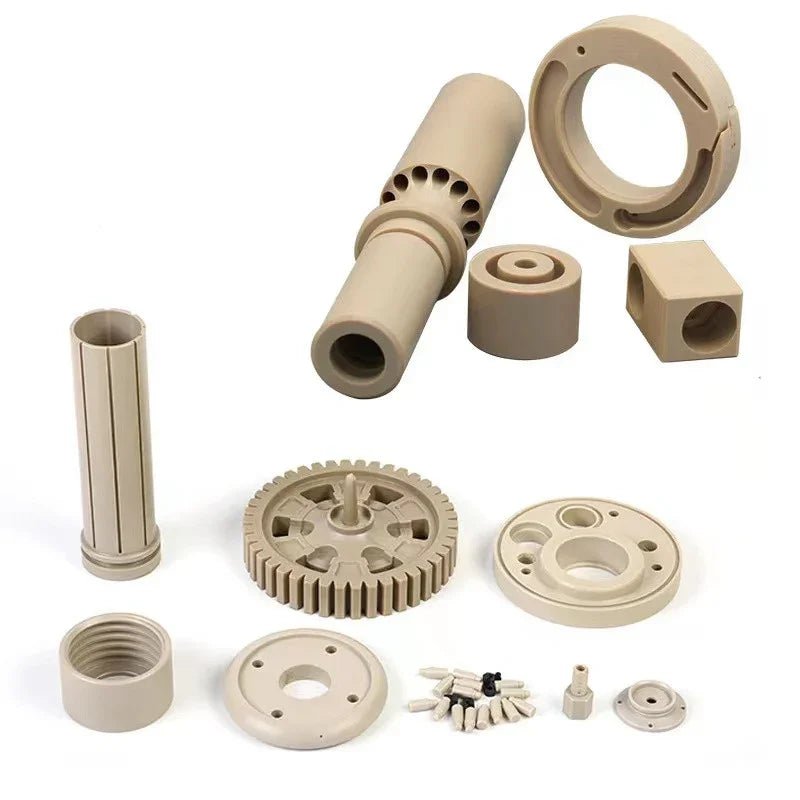
PEEK Plastic’s Impact on Modern Aerospace Designs: Revolutionizing the Future of Aerospace Technology
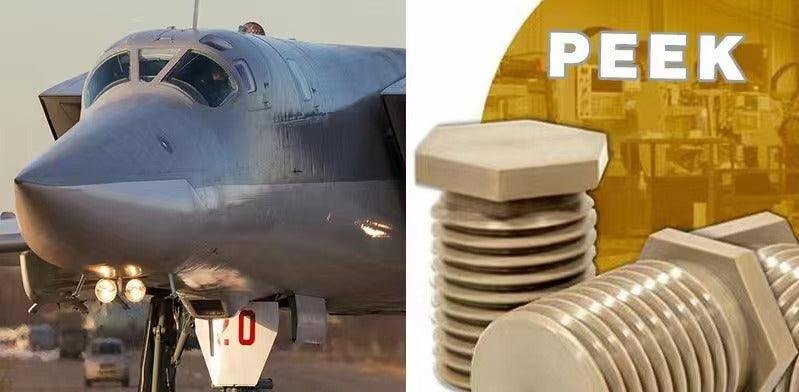
PEEK

The aerospace industry has always been at the forefront of technological innovation. With each passing decade, aircraft and spacecraft have become lighter, stronger, more fuel-efficient, and more capable than ever before. This continuous evolution is essential for pushing the boundaries of aviation, space travel, and national security. At the core of these advancements are the specialized materials used in aerospace manufacturing.
🎉 Limited Time Offer: Use code QR4GNY08SHVR at checkout to enjoy a special discount on your PEEK plastic order!
Custom CNC machining service for aerospace grade PEEK plastic rods

One material that has become indispensable for contemporary aerospace design is PEEK plastic. PEEK (Polyether ether ketone) is an engineering thermoplastic that exhibits an exceptional strength-to-weight ratio and resistance to extreme temperatures and chemicals. As aerospace companies seek to build lighter and more efficient aircraft, PEEK plastic has proven revolutionary.

This article will explore the rise of PEEK plastic in the aerospace industry and how it is transforming modern aerospace designs. We will examine the key benefits PEEK provides, including its durability, weight savings, and high-performance under extreme conditions. Additionally, we will look at case studies of companies leveraging PEEK plastic and consider how this material is revolutionizing future aerospace capabilities. As aerospace technology continues advancing, PEEK plastic promises to play an integral role.

PEEK Plastic Raw Material Sheet and Rod

The Rise of PEEK Plastic in Aerospace

For decades, metals like steel, titanium, and aluminum alloys were the go-to materials in aircraft and spacecraft manufacturing. While metal provides strength and durability, it is also dense and heavy. As aerospace engineers sought to enhance performance and fuel economy, excessive weight became a limiting factor.

In the search for alternatives, engineers began utilizing composite plastics for their lightweight yet strong properties. PEEK plastic emerged as an ideal material for aerospace designs due to its optimal balance of stiffness, toughness, and thermal resistance compared to other plastics.

First introduced in the 1980s, PEEK’s superior strength-to-weight ratio made it a natural fit for replacing metal components. Although considerably more expensive than other plastics, PEEK proved cost-effective for the aerospace industry where cutting weight has significant long-term payoffs in fuel savings.

Today, PEEK plastic has become ubiquitous in aerospace manufacturing thanks to its ability to slash weight while withstanding extreme temperatures, wear, and corrosion. By substituting PEEK for metal, engineers can optimize performance and fuel efficiency, especially in engines and structural components. As aerospace innovates to meet growing efficiency demands, PEEK plastic has become an indispensable asset.

Aerospace-Grade PEEK Rods

Ready for machining? Our high-performance PEEK rods offer superior heat resistance and mechanical strength. Available in various diameters (2mm – 120mm) with global shipping.

Shop PEEK Rods Now →

High performance PEEK plastic rod for CNC machining

Benefits of PEEK Plastic in Aerospace

PEEK plastic imparts several major benefits that explain its rising prominence in the aerospace industry:

Durability and Resilience

A standout property of PEEK is its high durability and damage tolerance compared to other plastics. The polymer chains in PEEK exhibit strong molecular bonds, granting this material exceptional resistance to fracture and fatigue.

Aerospace applications demand materials that can endure years of heavy vibration, friction, and cyclic stresses. PEEK excels under these conditions where other plastics would degrade rapidly. Whether utilized in interior brackets or critical powerplant components, PEEK’s outstanding durability enables lighter designs without compromising structural longevity.

PEEK also offers excellent chemical and hydrolysis resistance, meaning it can withstand exposure to harsh solvents, hydraulic fluids, and extreme humidity without degrading. This expands the environments and applications where PEEK can replace metal components.

Weight Savings and Fuel Efficiency

The low density of PEEK plastic results in substantial weight reductions versus metal alternatives. With a specific gravity below 1.4, PEEK is over 40% lighter than aluminum and nearly 85% lighter than steel. This equates to remarkable weight savings when substituting PEEK parts throughout an aircraft.

Reduced weight directly enhances the fuel economy of an aircraft. It also allows larger payloads and extends range capabilities. The fuel savings over decades of flights far outweigh the upfront costs of expensive PEEK components. As aviation aims for greater efficiency, the lightweight properties of PEEK plastic are instrumental.

Lighter designs enabled by PEEK reduce inertia as well, which improves maneuverability and lifespan of moving parts. For rotating machinery like turbines, impellers, and driveshafts, this is a major advantage.

Extreme Temperature Tolerance

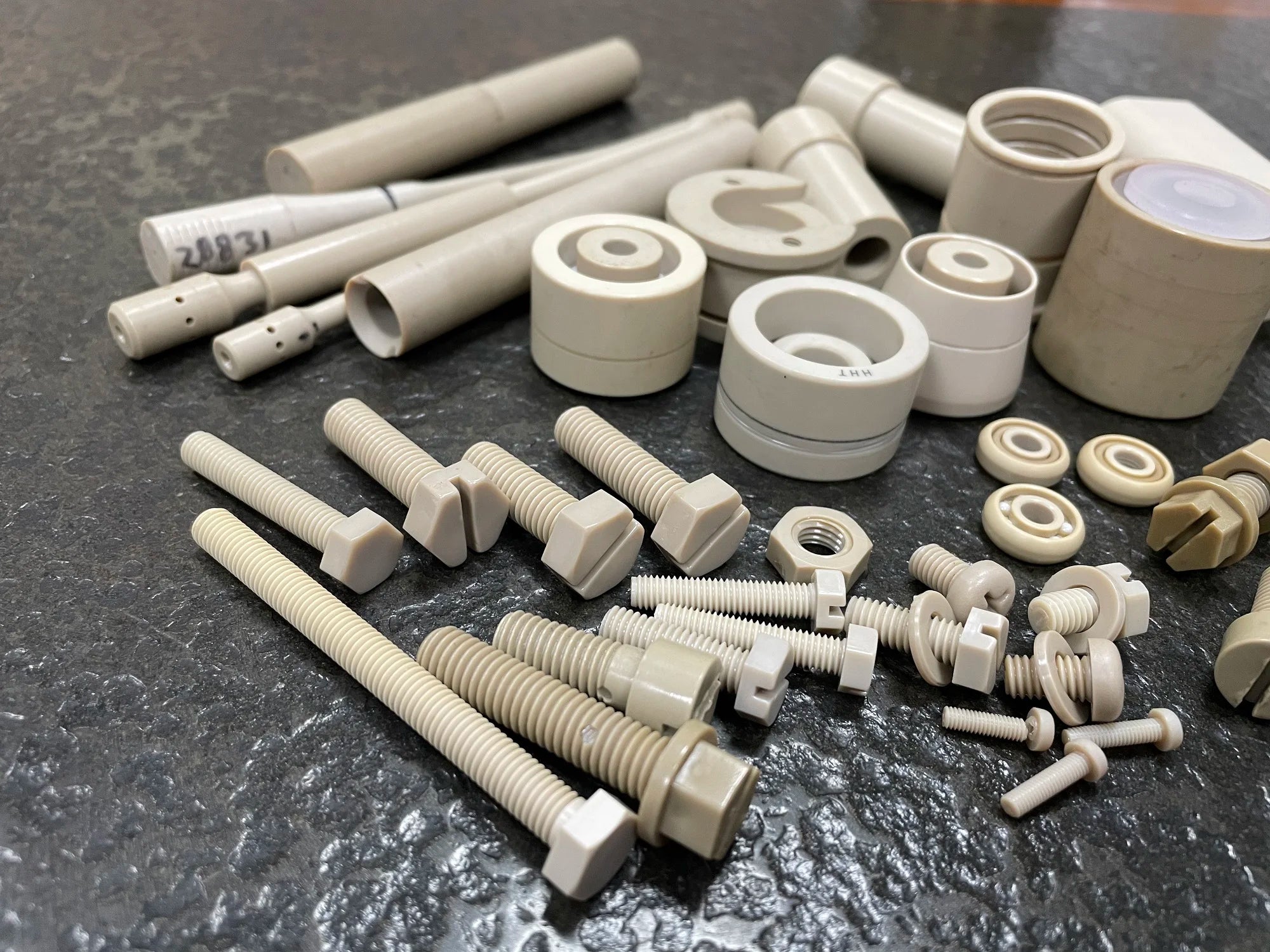
High temperature resistant PEEK plastic screw and component

Aircraft and spacecraft must operate across an extreme temperature range from subzero cold to several hundred degrees Celsius. The exceptional thermal properties of PEEK plastic make it suitable for these demanding conditions.

The melting point of PEEK exceeds 330°C, surpassing nearly all other thermoplastics. This high heat deflection temperature means PEEK maintains its stiffness and strength even when exposed to flame, engine heat, and other hot fluid sources.

Conversely, PEEK exhibits useful cold weather performance down to extremely low temperatures. The brittle transition of PEEK happens below -50°C. This cryogenic tolerance expands the environments where PEEK can replace metal.

From frigid high-altitude usage to scorching temperatures near jet engines, PEEK’s remarkable thermal stability allows lighter polymer designs without failure risk. No other plastic matches PEEK’s combination of low- and high-temperature resistance.

Revolutionizing Aerospace with PEEK Plastic

Major aerospace companies and innovative startups have utilized PEEK plastic to enhance performance and efficiency. Here are some examples of PEEK revolutionizing modern aerospace designs:

Airbus

Airbus uses PEEK polymer in cabin brackets and interior structures for several models, including the A350 XWB. By substituting PEEK brackets for traditional metal designs, Airbus reduces weight and simplifies assembly. PEEK also enables thinner designs which increases available cabin space. The material’s natural flame resistance meets strict aviation fire safety regulations as well. Lighter cabins improve the A350’s fuel burn, range, and payload capacity.

Boeing

Boeing relied on PEEK composites to reduce weight in the 787 Dreamliner, which boasted 20% better fuel economy than predecessors. PEEK’s sound dampening properties decreased cabin noise as well. Certain structural elements converted from heavy titanium to PEEK cut weight by nearly 30%. Boeing continues utilizing lightweight PEEK parts for superior efficiency and passenger comfort.

Custom precision CNC machined PEEK components and gears

SpaceX

SpaceX chose PEEK for manufacturing components of its Merlin rocket engines. PEEK withstands the extreme heat and pressures within combustion chambers where metals fail over time. PEEK parts like turbopump bushings last longer than metal equivalents under intense rocket engine conditions. Their lower inertia also requires less torque for maneuvering. This supports reusable rocket designs.

Daher

Daher replaced select aluminum and titanium interior parts with PEEK on its TBM turboprop aircraft models. PEEK brackets and structural supports reduce cabin weight which enhances the TBM’s range, speed, and fuel performance. The material’s vibration dampening also decreases noise. Daher utilizes PEEK’s design freedom to condense and simplify components. These changes cut manufacturing costs as well.

Bell Helicopter

Bell Helicopter deployed PEEK composites in the swashplate assembly of its 429 helicopter model, eliminating over 50 parts. The redesign with PEEK provided a 30% weight reduction in this critical component, lowering inertia and mechanical loads. PEEK’s damage resistance enhances reliability of the swashplate as well. Simplified part geometries also decreased production costs. Other sections adopted PEEK for similar weight, safety, and cost improvements.

Assortment of PEEK plastic products including rods and sheets

Challenges and Solutions

While clearly transformative, utilizing PEEK plastic poses some challenges in aerospace applications:

  • Cost: PEEK remains considerably more expensive than metals and other plastics, sometimes up to 5-10x higher. This restricts usage to critical lightweight parts where cost tradeoffs pencil out long-term.
  • Manufacturing: PEEK’s high melting point and chemical resistance require processing temperatures around 400°C. This demands specialized injection molding tools not suited for metals.
  • Joining: Welding or mechanically fastening PEEK parts together has tradeoffs versus integrating metals. New methods like laser-assisted bonding continue improving PEEK assembly.
  • Wear resistance: PEEK offers lower abrasion resistance than metals, limiting use in certain bearings and high wear areas. Addition of fillers and compounds can improve this property.

Despite these hurdles, aerospace firms leverage numerous solutions for efficiently implementing PEEK plastic:

  • Cost-benefit analysis: They selectively utilize PEEK in the most beneficial applications where long-term fuel savings justify the costs.
  • 3D printing: Additive manufacturing with PEEK provides design freedom and reduces machining expenses.
  • Hybrid parts: Metal and PEEK sections are joined where ideal, improving wear resistance on mating surfaces.
  • New processing methods: Microwave sintering and other emerging technologies continue decreasing PEEK’s fabrication costs.

Need Custom PEEK Components?

BeePlastic offers precision CNC plastic machining services with no minimum order quantity. From prototyping to production, we handle PEEK with expert care.

Through careful design choices, aerospace engineers routinely overcome PEEK’s drawbacks to capitalize on its performance-enhancing benefits.

PEEK Gear Applications and industrial uses

Conclusion

PEEK plastic possesses an optimal blend of properties that perfectly fit the stringent demands of aerospace. Its revolutionary impact stems from enabling lighter and more capable aircraft and spacecraft designs. As the aerospace industry pursues further advances in efficiency, speed, range, and durability, PEEK promises to play an integral role.

Major companies like Boeing, Airbus, and Bell Helicopter validate the benefits of PEEK for cutting weight, improving fuel economy, reducing lifetime operating costs, and enhancing reliability. Even in extremely hot or cold environments, PEEK plastic outperforms metals.

While cost and manufacturing challenges remain, ongoing technical innovations are expanding PEEK’s viability for more aerospace systems. The superior strength-to-weight ratio and temperature resistance of PEEK plastic will continue revolutionizing future aerospace technologies.

High temperature resistant PEEK plastic plate application

From passenger airliners to high-performance jets, orbital rockets to deep space missions, expect PEEK composite materials to be on board. The unique properties of this thermoplastic empower lighter and more capable designs across aviation, aeronautics, and space applications. As aerospace reaches for new heights, PEEK plastic will play an integral role in the journey.

I hope you enjoyed learning about the revolutionary impact of PEEK plastic on modern aerospace designs. Please share any thoughts or questions you have about this transformative material and its applications in the comments below.

For aerospace companies interested in leveraging PEEK’s benefits, I recommend contacting a PEEK plastic manufacturing partner to explore how this material can enhance your specific design needs. Significant performance improvements and cost savings are possible.

To stay up to date on the latest aerospace technologies and manufacturing innovations, be sure to subscribe to my newsletter using the form on the sidebar. Thank you for reading!

Ready to Start Your Project?

If you are interested in using PEEK Plastic in your project or want to know more information, please feel free to contact us. We are a professional supplier and manufacturer of all kinds of plastic custom processing and production.

With a professional team of engineers and precision equipment, we can provide you with customized plastic solutions that meet your specifications and budget. We are happy to serve you and help you fulfill your needs.

🎁 Limited Time Offer Code: QR4GNY08SHVR

Get a Free Quote View PEEK Products

Do you need a free quote or help with any questions or materials?
Visit: www.BeePlastic.com | Click to contact: Custom PEEK Plastic

BeePlastic Professional PEEK Manufacturing

Leave a comment


Please note, comments must be approved before they are published


Custom Plastic Fabrication

Send your drawing, material and quantity for review

🔧
Precision Machining
CNC milling & turning
✂️
Cutting & Engraving
Laser & waterjet cutting
🏭
Forming & Molding
Thermoforming & injection
🔗
Joining & Assembly
Welding & bonding
📐
Design & Prototyping
CAD design & samples

General

HDPE

PP

PVC

ABS

Engineering

POM

Nylon

PC

PMMA

High-Performance

PEEK

PEI

PTFE

Composites

FR-4

G10

Flexible

TPU

Silicone

Why Choose BeePlastic?

🎯
Perfect Fit
Custom specs eliminate adaptation needs
⚡
Clear Lead Times
Lead time confirmed with every quote
💰
Volume Pricing
Volume pricing available on bulk orders
🤝
Expert Support
Free engineering consultation included
📋
Submit
→
🔍
Review
→
💵
Quote
→
✅
Production
→
📦
Deliver

Request a Quote

Share your project details, selected material and quantity on our quote page. You can add a file link or use the email drawing route shown there.


Request Quote

Industries: Automotive • Medical • Food • Lab • Semiconductor

beeplastic@beeplastic.com


The Extreme Heat Tolerance of PEEK Plastic Explained

PEEK vessel inlet filters

🎉 Limited Time Offer: Use code QR4GNY08SHVR at checkout for a special discount! 👉 Shop PEEK Plastic

Polyether ether ketone (PEEK) plastic is an engineering thermoplastic known for its exceptional heat resistance. With a melting temperature over 330°C, PEEK offers thermal stability far beyond most other plastics.

This extreme thermal resistance makes PEEK an ideal material for components and parts exposed to high heat, including under-the-hood automotive and aerospace applications, medical sterilization equipment, and oil and gas drilling tools.

But what gives PEEK its incredible resistance to high temperatures? This article will explore the unique properties that allow PEEK to withstand extreme heat and outperform other thermoplastics.

PEEK plastic raw material granules

What Makes PEEK Thermally Resistant?

PEEK owes its thermal stability to its molecular structure and chemistry. The polymer consists of an aromatic backbone molecular chain, with alternating ketone and ether functional groups.

Several factors contribute to PEEK’s heat resistance:

Lack of a Glass Transition Temperature

Most thermoplastics have a defined glass transition temperature (Tg), above which the material transitions from a rigid, glassy state to a soft, rubbery state. As temperature increases above Tg, the plastic becomes less stiff and more prone to creeping under load.

PEEK does not exhibit a glass transition, maintaining its stiff, rigid chains even at high temperatures. With no glass transition phase change, PEEK shows little change in mechanical properties up to its 334°C melting point.

High Melting Point

PEEK has an extraordinarily high melting temperature of 334°C. Most commodity plastics melt or deform at temperatures below 150°C. PEEK’s high melting point reflects the stability of its molecular chains and stiff backbone structure.

The aromatic rings provide thermal stability, while the ketone and ether linkages resist breakdown even at extreme temperatures. This preserves PEEK’s mechanical strength well above 300°C.

PEEK Rods and Sheets

Looking for PEEK Materials?

Browse our stock of PEEK Sheets, Rods, and Films. No Minimum Order Quantity.

Thermal Stability of Chemical Structure

PEEK’s chemical composition resists oxidative degradation and decomposition at high sustained heat. The polymer retains its structural integrity and does not corrode or char.

PEEK’s thermal oxidative stability gives it an advantage in environments that combine elevated temperature and contact with aggressive chemicals or radiation.

PEEK vessel inlet filters custom machined

Low Coefficient of Thermal Expansion

PEEK expands very little when heated, with a coefficient of thermal expansion below 50 x 10-6 m/m°C. This dimensional stability at temperature extremes prevents warping or deformation.

Components machined from PEEK hold tight tolerances without distortion, even with wide temperature fluctuations.

PEEK vs. Other Engineering Plastics

How does PEEK compare to other high-performance engineered plastics used in extreme conditions?

Comparison with POM processing customization

Nylon (PA)

Nylon has better chemical resistance than PEEK but lower temperature capabilities. The Tg of nylon is about 65°C, with melting points from 215-265°C. While strong at room temperature, nylon loses stiffness rapidly above 80°C.

Polyphenylene Sulfide (PPS)

PPS retains strength up to 190°C but has lower long-term thermal resistance than PEEK. It is more affordable but more brittle.

Polyimide (PI)

PI can withstand temperatures approaching 300°C. However, it absorbs moisture easily leading to dimensional changes. Polyimide has higher dielectric losses than PEEK.

Polyethylene Terephthalate (PET)

PET melts at 250°C and loses strength by 150°C. It decomposes faster than PEEK at high temperatures.

Polyetherimide (PEI)

With a glass transition temperature of 217°C PEI maintains properties at higher temperatures than PET or nylon. It is less expensive than PEEK but more limited in heat resistance.

Acetal (POM)

POM begins to deform above 90°C and melts at 175°C, making it unsuitable for high heat applications.

PEEK clearly outperforms other thermoplastics at extreme temperatures. The aromatic structure and ketone/ether linkages provide unparalleled thermal stability.

Applications Capitalizing on PEEK’s Heat Resistance

Thanks to its uniquely high melting point and thermal stability, PEEK is widely used in applications that experience temperatures exceeding 250°C:

High-precision CNC-machined PEEK gears and components

Automotive and Aerospace Components

Engine compartments, powertrain systems, exhaust components, pumps, and seals must withstand temperatures up to 350°C. PEEK’s resistance to heat and chemicals makes it an ideal under-the-hood plastic.

PEEK is used for wiring insulation, gears, bushings, speakers, and other parts in close proximity to hot engines. Aerospace applications include insulation for wiring near turbines and engine mounts.

Medical Sterilization and Implants

The ability to repeatedly sterilize implants and surgical tools saves lives. PEEK’s heat tolerance allows hundreds of autoclave and steam sterilization cycles.

PEEK’s biocompatibility also makes it suitable for high-temperature sterilizable medical implants like replacement joints.

Oil and Gas Drilling Tools

During petroleum drilling operations, components like seals, valves, and drill bits are subjected to high heat. PEEK stands up to steam, abrasion, and corrosion in these harsh downhole environments.

PEEK’s strength lets drill bits bore longer and faster, while its dimensional stability precisely controls drilling tolerances.

Need Custom PEEK Machined Parts?

Our engineers specialize in high-precision CNC machining for aerospace, medical, and energy sectors.

Electronics in Extreme Environments

PEEK’s electrical insulation properties persist at elevated temperatures. It is used for connectors, switches, and wire insulation where electronics experience intermittent high heat.

Fire Protection Systems

PEEK does not burn easily and does not produce toxic fumes when exposed to fire. The UL 94 flammability standard rates PEEK as V-0, the highest rating for fire resistance.

Cooking Equipment and Smoking Pipes

For cooking tools and smoking paraphernalia designed for extended high heat, PEEK provides an inert, non-reactive surface safe for food contact.

PEEK block material

The Future of High-Temperature Plastics

While PEEK offers unmatched performance among today’s thermoplastics, researchers continue seeking ways to improve its thermal capabilities:

  • Reinforced PEEK compounds with ceramic or carbon fibers boost stiffness and strength to over 300°C.
  • Fillers like molybdenum disulfide improve PEEK’s machinability for precision components.
  • Composite blends combine PEEK with other thermoplastics for specialized high-temperature properties.
  • New techniques modify PEEK’s backbone structure to incrementally increase its melting point and glass transition temperature.

Other new plastics also aim to compete with PEEK in extreme environments:

  • Polyphenylene sulfide (PPS) and its alloys offer higher temperature resistance focused on select properties.
  • Liquid crystal polymers (LCP) provide an alternative stiff, chemically resistant structure stable to over 300°C.
  • Polytetrafluoroethylene (PTFE) excels in corrosion resistance though has lower strength than PEEK.
  • Polyimide (PI) possesses thermal stability near the range of PEEK but absorbs moisture easily.

While PEEK retains its dominance for universal high heat applications, tailored alternatives continue emerging for specialized uses.

Conclusion

PEEK plastic possesses unique high temperature properties unmatched by other thermoplastics. Its aromatic molecular structure, lack of a glass transition temperature phase change, and high melting point of 334°C give PEEK thermal stability to over 300°C.

Compared to plastics like nylon, acetal, PET, and PTFE, PEEK performs consistently even when exposed to extreme heat, oxidizing environments, and repeated sterilization cycles.

Thanks to properties like dimensional stability and chemical resistance at high temperatures, PEEK excels in automotive, aerospace, oil and gas, medical, and electronics applications.

Ongoing development aims to modify PEEK for even higher performance and create alternative thermoplastics with capabilities rivalling PEEK’s thermal resistance.

Understanding PEEK’s superior high-temperature properties helps engineers select the right material for designs subjected to extreme heat. When performance at over 300°C is critical, PEEK provides unbeatable thermal resistance.

PEEK medical implants

Start Your PEEK Project Today

If you are interested in using PEEK Plastic in your project or want to know more information, we are here to help. We are a professional supplier and manufacturer of all kinds of plastic custom processing, with a professional team of engineers and precision equipment. We can provide you with customized plastic solutions that meet your specifications and budget.

Don’t forget! Use Limited Time Offer code: QR4GNY08SHVR at checkout.

Visit us: www.BeePlastic.com | Custom PEEK Plastic

Leave a comment


Please note, comments must be approved before they are published


Custom Plastic Fabrication

Send your drawing, material and quantity for review

🔧
Precision Machining
CNC milling & turning
✂️
Cutting & Engraving
Laser & waterjet cutting
🏭
Forming & Molding
Thermoforming & injection
🔗
Joining & Assembly
Welding & bonding
📐
Design & Prototyping
CAD design & samples

General

HDPE

PP

PVC

ABS

Engineering

POM

Nylon

PC

PMMA

High-Performance

PEEK

PEI

PTFE

Composites

FR-4

G10

Flexible

TPU

Silicone

Why Choose BeePlastic?

🎯
Perfect Fit
Custom specs eliminate adaptation needs
⚡
Clear Lead Times
Lead time confirmed with every quote
💰
Volume Pricing
Volume pricing available on bulk orders
🤝
Expert Support
Free engineering consultation included
📋
Submit
→
🔍
Review
→
💵
Quote
→
✅
Production
→
📦
Deliver

Request a Quote

Share your project details, selected material and quantity on our quote page. You can add a file link or use the email drawing route shown there.


Request Quote

Industries: Automotive • Medical • Food • Lab • Semiconductor

beeplastic@beeplastic.com