The Science Behind UHMW-PE: Why It’s Ideal for Machine Parts

UHMW-PE parts

Exclusive Offer: Unlock premium material performance today.

Use code QR4GNY08SHVR at checkout for a special discount on your entire order.
Shop UHMWPE Plastic →

UHMW-PE sheets ready for custom machining

In the world of industrial engineering, Ultra-High Molecular Weight Polyethylene (UHMW-PE) stands out as a premier material for machine parts. This blog post delves into the scientific properties that make UHMW-PE the go-to choice for applications demanding extreme durability and low maintenance.

From its high molecular weight contributing to unmatched wear resistance and impact strength to the low friction coefficient that ensures smooth operations, UHMW-PE’s versatility is unparalleled. Whether you’re working with black UHMW for its UV resistance or UHMW plastic sheets for custom machining, this material offers superior performance across industries.

Discover why UHMW polyethylene is the key to enhancing machine longevity and reducing downtime. With a focus on chemical resistance, thermal expansion management, and precision machining techniques, this post provides a comprehensive guide to optimizing your UHMW-PE machine parts for maximum efficiency and reliability. By combining deep technical insights with practical advice, this blog post is essential reading for professionals looking to understand the full potential of UHMW material in industrial applications.

The Unique Molecular Structure of UHMW-PE

Ultra-High Molecular Weight Polyethylene (UHMW-PE) is defined by its unique molecular structure, which sets it apart from other polyethylene materials. This structure consists of extremely long polymer chains that are highly entangled, contributing to the material’s extraordinary durability and resistance to wear. The high molecular weight, which typically ranges from 3.1 to 5 million g/mol, is a key characteristic that gives UHMW-PE its superior mechanical properties. These long chains create a dense network that can distribute stress more evenly, making UHMW-PE an ideal material for applications requiring high impact resistance and longevity, such as in UHMW-PE machine parts.

How High Molecular Weight Enhances Mechanical Properties

The high molecular weight of UHMW-PE directly impacts its mechanical performance. The extended polymer chains allow UHMW-PE to absorb and dissipate energy more effectively than other plastics. This results in a material that is highly resistant to impact and abrasion—qualities that are crucial for machine parts that must endure extreme conditions. The dense molecular structure also contributes to the material’s ability to withstand heavy loads and repeated stress without deforming or breaking, making UHMW-PE a preferred choice in industries that demand durability and reliability.

Impact of Molecular Structure on Wear Resistance

The wear resistance of UHMW-PE is another critical property influenced by its molecular structure. The highly entangled polymer chains reduce the material’s surface wear, even under constant friction and pressure. This makes UHMW-PE particularly useful in applications like conveyor belts, gears, and other moving machine parts where wear resistance is essential. The ability of UHMW-PE to maintain its integrity under such conditions not only extends the lifespan of the parts but also reduces maintenance costs and downtime.

UHMWPE Rod Machining on CNC Lathe – Custom Cut

The Role of Molecular Structure in Chemical Resistance

The molecular structure of UHMW-PE also plays a significant role in its chemical resistance. The dense, long-chain polymers create a barrier that resists penetration by various chemicals, making UHMW-PE suitable for use in environments where exposure to corrosive substances is common. This chemical resistance is especially beneficial in industries such as food processing, pharmaceuticals, and chemical manufacturing, where maintaining the purity and safety of materials is critical.

Molecular Structure and Thermal Stability

Finally, the molecular structure of UHMW-PE contributes to its thermal stability. While UHMW-PE has a relatively low melting point compared to some other engineering plastics, its high molecular weight allows it to retain its mechanical properties over a wide temperature range. This makes UHMW-PE suitable for applications that involve fluctuating temperatures, as the material can withstand thermal expansion and contraction without significant degradation. This thermal stability, combined with its other properties, makes UHMW-PE an excellent material for a wide range of industrial applications.

The Versatility of UHMW-PE in Various Applications

The combination of abrasion resistance and impact resistance makes UHMW-PE a versatile material suitable for a wide range of applications. From black UHMW used in outdoor settings to standard UHMW polyethylene plastic in industrial environments, the material’s robustness ensures reliable performance across diverse industries. Whether in manufacturing, food processing, or heavy machinery, UHMW-PE machine parts offer unparalleled durability and resilience, making them a critical component in maintaining the efficiency and longevity of industrial operations.

Low Friction Coefficient: Enhancing Machine Efficiency

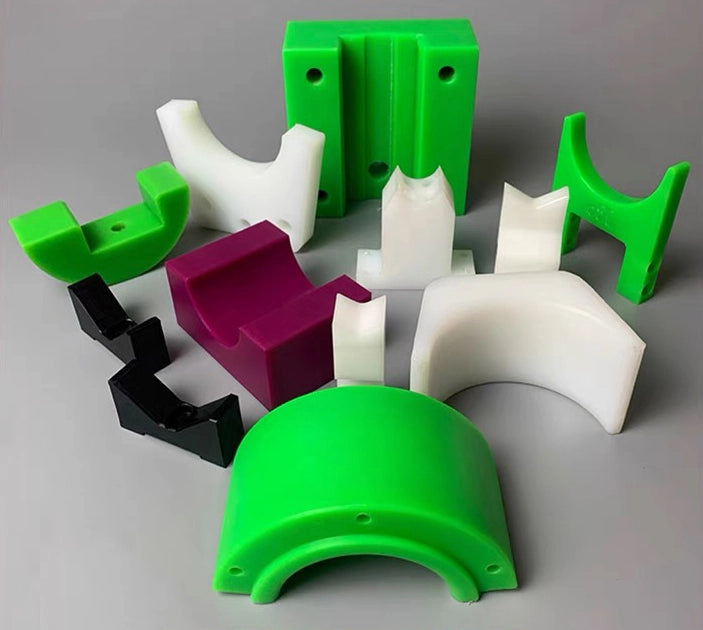
UHMW-PE machine parts with low friction coefficient

One of the standout properties of UHMW-PE (Ultra-High Molecular Weight Polyethylene) is its exceptionally low friction coefficient. This characteristic is vital for applications where reducing wear and tear on both the machine parts and the surfaces they interact with is crucial. The low friction of UHMW-PE ensures that machine components glide smoothly over one another, minimizing the energy loss that typically occurs due to friction. This leads to longer lifespans for the machine parts and smoother operations, which is essential in industries that rely on high-efficiency machinery.

The Role of Low Friction in Machine Longevity

The low friction coefficient of UHMW-PE plays a significant role in extending the life of machine parts. When UHMW-PE machine parts are used, the reduced friction between moving components results in less heat generation and lower wear rates. This not only preserves the integrity of the UHMW material but also protects the surfaces that come into contact with it. Over time, this reduction in wear translates to fewer replacements, lower maintenance costs, and less downtime, all of which contribute to the overall longevity and reliability of the machinery.

Applications of UHMW-PE in High-Friction Environments

UHMW-PE is particularly effective in environments where high friction is a concern. In conveyor systems, for instance, the low friction of UHMW plastic ensures that belts and rollers move smoothly without significant resistance. This efficiency is critical in industries such as food processing, where smooth operation is essential for maintaining hygiene and product quality. Similarly, in manufacturing, UHMW-PE components reduce the friction between moving parts, thereby enhancing the speed and efficiency of production lines.

Enhancing Operational Efficiency with UHMW-PE

The low friction coefficient of UHMW-PE not only reduces wear but also enhances operational efficiency. By minimizing the resistance between parts, UHMW-PE machine parts allow machinery to operate more smoothly and with less effort. This efficiency translates to energy savings, as machines require less power to achieve the same level of performance. Additionally, the smoother operation reduces the strain on motors and other drive components, further extending their lifespan and improving the overall performance of the machinery.

Why UHMW-PE is the Preferred Material for High-Efficiency Applications

The combination of low friction and high durability makes UHMW-PE the material of choice for high-efficiency applications. Whether in manufacturing, food processing, or material handling, the use of UHMW-PE machine parts ensures that machinery runs more efficiently, with fewer interruptions and lower maintenance requirements. The UHMW material not only improves the performance of individual components but also contributes to the overall efficiency and productivity of industrial operations. This makes UHMW-PE an indispensable material in any setting where smooth, efficient operation is a priority.

Chemical Resistance: A Key Advantage in Diverse Industries

UHMW plastic components in machinery with high chemical resistance

One of the most significant advantages of UHMW-PE (Ultra-High Molecular Weight Polyethylene) is its exceptional chemical resistance. This property makes UHMW polyethylene an invaluable material in industries where exposure to harsh chemicals is common. Unlike many other plastics, UHMW-PE can withstand corrosive environments without degrading, which is why it is widely used in sectors such as food processing, chemical manufacturing, and pharmaceuticals. The resistance of UHMW-PE to a broad range of chemicals ensures that it remains stable and durable, even in the most demanding applications.

The Role of Chemical Resistance in Food Processing

In the food processing industry, the use of materials that are both safe and resistant to cleaning chemicals is essential. UHMW-PE meets these requirements, making it an ideal material for contact surfaces, conveyor belts, and other machinery components. The chemical resistance of UHMW plastic allows it to endure regular cleaning with strong detergents and sanitizers without losing its integrity or contaminating the food products. Additionally, the material’s non-porous nature prevents the absorption of liquids and chemicals, further enhancing its suitability for food processing applications.

Importance of UHMW-PE in Chemical Manufacturing

The chemical manufacturing industry presents some of the most challenging environments for materials due to the presence of highly corrosive substances. UHMW polyethylene excels in this setting, as it resists degradation from acids, alkalis, and organic solvents. This resistance extends the lifespan of equipment and components, reducing the need for frequent replacements and maintenance. UHMW-PE sheets and components are often used to line tanks, pipes, and chutes in chemical plants, where their durability and resistance to harsh chemicals contribute to safer and more efficient operations.

UHMW-PE in the Pharmaceutical Industry

In the pharmaceutical industry, maintaining the purity of products is paramount. UHMW-PE is a preferred material for equipment and containers due to its chemical resistance and non-reactive properties. It does not leach contaminants into pharmaceutical products, ensuring that the end products remain pure and safe for consumption. Additionally, the material’s resistance to sterilization chemicals and processes makes it suitable for use in cleanroom environments where stringent hygiene standards must be maintained.

Versatility of UHMW-PE Across Diverse Applications

The versatility of UHMW-PE stems from its ability to withstand a wide range of chemical exposures without compromising its structural integrity. Whether used in UHMW sheets for lining surfaces or as UHMW plastic components in machinery, the material’s chemical resistance makes it a reliable choice for industries that demand high performance in corrosive environments. This resistance not only protects the material itself but also ensures the longevity and safety of the systems in which it is used, making UHMW-PE an indispensable material in many industrial applications.

The Role of Black UHMW-PE in UV and Weather Resistance

black UHMW-PE sheets stack

Black UHMW-PE (Ultra-High Molecular Weight Polyethylene) offers several additional benefits over its natural counterpart, particularly in terms of UV and weather resistance. The incorporation of carbon black into UHMW-PE significantly enhances its ability to resist the damaging effects of ultraviolet (UV) radiation, making it an ideal material for outdoor and marine applications. The carbon black particles within the black UHMW not only absorb UV rays but also prevent the polymer chains from breaking down under prolonged exposure to sunlight, which is a common issue with many plastics.

Enhanced UV Resistance for Outdoor Applications

One of the primary challenges with using standard plastics outdoors is their vulnerability to UV radiation, which can cause the material to degrade, become brittle, and lose its mechanical properties. Black UHMW-PE addresses this issue by incorporating UV stabilizers into its composition. These stabilizers, typically in the form of carbon black, absorb and dissipate the energy from UV rays, preventing them from penetrating the material and causing damage. This enhanced UV resistance makes black UHMW-PE particularly suitable for outdoor applications such as lining for chutes, wear strips, and protective covers that are continuously exposed to sunlight.

Weather Resistance in Harsh Environments

Beyond UV protection, black UHMW-PE also offers superior resistance to a range of weather conditions. Whether in extreme heat, cold, or humidity, black UHMW maintains its structural integrity and performance. This makes it a reliable choice for applications in harsh environments, such as marine settings where materials are constantly exposed to saltwater, sunlight, and fluctuating temperatures. The weather-resistant properties of black UHMW-PE ensure that it remains durable and functional, even in the most demanding conditions.

The Importance of Black UHMW-PE in Marine Applications

In marine environments, materials are subjected to a unique set of challenges, including exposure to saltwater, UV radiation, and mechanical wear from constant use. Black UHMW-PE is particularly advantageous in these settings due to its combination of UV resistance, chemical resistance, and low friction properties. It is commonly used in applications such as dock bumpers, fender systems, and wear pads on boats, where it helps to protect structures from the harsh effects of the marine environment. The material’s resistance to both UV and saltwater corrosion ensures that it can withstand prolonged exposure without deteriorating, making it a cost-effective and long-lasting solution.

Why Black UHMW-PE is the Material of Choice for Outdoor and Marine Applications

The ability of black UHMW-PE to resist UV radiation and withstand various weather conditions makes it an indispensable material for outdoor and marine applications. Its durability ensures that structures and components made from black UHMW will last longer and require less maintenance compared to those made from less robust materials. Whether used in industrial settings, outdoor recreational areas, or marine infrastructure, black UHMW-PE provides the resilience needed to perform reliably in environments where other materials might fail. This combination of properties not only enhances the longevity of the material but also contributes to the overall efficiency and safety of the applications in which it is used.

Comparing UHMW-PE to Other Engineering Plastics

Comparison of PTFE and UHMW Plastic

When selecting materials for engineering applications, it’s essential to consider how different plastics perform under specific conditions. UHMW-PE (Ultra-High Molecular Weight Polyethylene) is often compared with other popular engineering plastics like nylon, acetal, and PTFE due to its unique combination of properties. Understanding these differences can help engineers and designers choose the best material for their needs.

UHMW-PE vs. Nylon

Nylon is a widely used engineering plastic known for its excellent mechanical properties, including high strength, toughness, and wear resistance. However, when compared to UHMW-PE, nylon has some limitations. UHMW plastic offers superior abrasion resistance and a lower coefficient of friction than nylon, making it better suited for applications where sliding contact is common, such as in conveyor systems and wear strips.

Moreover, UHMW-PE has a higher impact resistance and is less susceptible to moisture absorption, which can cause nylon to swell and lose dimensional stability. In environments with high humidity or exposure to water, UHMW material maintains its properties better, ensuring consistent performance over time.

UHMW-PE vs. Acetal

Acetal (also known as POM) is another engineering plastic valued for its high strength, stiffness, and low friction. Acetal excels in precision parts due to its dimensional stability and resistance to creep. However, when it comes to chemical resistance, UHMW-PE outperforms acetal, especially in environments where exposure to harsh chemicals is a concern.

UHMW-PE also offers better abrasion resistance than acetal, making it ideal for high-wear applications. While acetal is preferred for tight-tolerance parts and situations requiring high rigidity, UHMW polyethylene is favored in scenarios where impact resistance and chemical durability are more critical.

UHMW-PE vs. PTFE

PTFE (commonly known as Teflon) is famous for its exceptional chemical resistance and extremely low coefficient of friction, which makes it suitable for applications requiring non-stick properties. However, UHMW-PE offers several advantages over PTFE in terms of wear resistance and impact strength.

While PTFE is ideal for applications requiring extreme chemical resistance and low friction, it is much softer than UHMW plastic and can wear more quickly under abrasive conditions. UHMW-PE provides a more balanced performance in applications where both chemical resistance and mechanical durability are required, such as in conveyor belts, gears, and bearings.

Specific Applications and Material Selection

When choosing between UHMW-PE and other engineering plastics like nylon, acetal, and PTFE, the specific application requirements are key. For instance, UHMW-PE is often the material of choice for marine and outdoor applications due to its UV resistance and low water absorption, qualities that outperform nylon and acetal in these environments.

For high-wear applications where parts are subject to constant abrasion and impact, UHMW-PE is preferred over PTFE and acetal, which may not offer the same level of durability. Conversely, for applications requiring high dimensional stability and precision, acetal might be more suitable, while PTFE remains unmatched for applications requiring non-stick properties and extreme chemical resistance.

The Versatility of UHMW-PE in Engineering

Overall, UHMW-PE is a versatile material that offers a unique combination of wear resistance, low friction, impact strength, and chemical resistance. While other engineering plastics like nylon, acetal, and PTFE have their own advantages, UHMW-PE stands out in applications where a balance of these properties is required. Whether used in industrial machinery, food processing equipment, or marine applications, UHMW-PE provides reliable performance that can meet a wide range of engineering challenges.

Thermal Expansion and Its Management in Machine Parts

Standard and Custom UHMW-PE components

UHMW-PE (Ultra-High Molecular Weight Polyethylene) is renowned for its outstanding mechanical properties, including high abrasion resistance, impact strength, and low friction. However, like all plastics, UHMW-PE is subject to thermal expansion, which must be carefully managed when designing and using machine parts in environments with varying temperatures. Understanding the thermal expansion characteristics of UHMW plastic is crucial for ensuring that parts maintain their performance and structural integrity under different thermal conditions.

Understanding Thermal Expansion in UHMW-PE

Thermal expansion refers to the tendency of a material to change its dimensions in response to changes in temperature. UHMW-PE exhibits a relatively high coefficient of thermal expansion compared to metals and some other engineering plastics. This means that UHMW material can expand or contract significantly when exposed to temperature fluctuations. For machine parts, this expansion and contraction can impact the fit, function, and overall performance of the components.

In applications where precision is critical, such as in conveyor systems or bearing surfaces, the dimensional changes caused by thermal expansion can lead to misalignment, increased wear, and even failure of the part if not properly managed. The ability to predict and compensate for these changes is essential in the design process.

Designing for Thermal Expansion in Machine Parts

When designing machine parts using UHMW polyethylene plastic, it is important to account for the material’s thermal expansion properties. Engineers typically incorporate allowances in the design to accommodate the expected dimensional changes. This might involve using larger clearances between parts, designing flexible joints, or selecting materials with compatible expansion rates to prevent stress and distortion.

For example, in applications involving UHMW-PE bearings or bushings, the housing might be designed with slightly more clearance to allow for the expansion of the UHMW-PE part without compromising the fit or function. Additionally, where possible, UHMW plastic parts might be mounted in ways that allow for some movement, thus reducing the risk of thermal stress.

Impact of Temperature on Performance

The performance of UHMW-PE is influenced by temperature, particularly at the extremes. As the material expands with heat, its mechanical properties, such as stiffness and load-bearing capacity, can be affected. At higher temperatures, UHMW-PE may become softer and more prone to deformation under load. Conversely, at lower temperatures, the material can become more brittle, although UHMW-PE generally maintains good impact resistance even in cold environments.

To mitigate these effects, it is crucial to consider the operating temperature range when selecting UHMW-PE for specific applications. In environments where temperature variations are significant, additional engineering controls, such as thermal barriers or the use of insulating materials, may be employed to stabilize the temperature of the UHMW-PE parts.

Thermal Management Strategies in UHMW-PE Applications

To effectively manage the thermal expansion of UHMW-PE in machine parts, engineers can employ several strategies. These include:

  • Material Selection: In some cases, blending UHMW-PE with other polymers can reduce the thermal expansion coefficient, providing a more stable material for specific applications.
  • Design Modifications: Incorporating expansion joints, flexible mountings, or floating parts can help accommodate dimensional changes without causing stress or damage to the components.
  • Environmental Control: Maintaining a stable operating temperature through the use of heaters, coolers, or insulation can minimize the effects of thermal expansion.

The Importance of Thermal Considerations in UHMW-PE Applications

Understanding and managing the thermal expansion properties of UHMW-PE is essential for the successful application of this versatile material in machine parts. By incorporating thoughtful design and engineering strategies, the challenges posed by thermal expansion can be mitigated, ensuring that UHMW-PE components deliver consistent performance, reliability, and longevity in a wide range of industrial applications.

Custom Machining Techniques for UHMW-PE

UHMW-PE (Ultra-High Molecular Weight Polyethylene) is a versatile and durable material, but its unique properties can make it challenging to machine. However, with the right techniques, UHMW-PE machine parts can be produced with high precision and excellent quality. Understanding the nuances of machining UHMW-PE, including cutting speeds, tool selection, and finishing techniques, is essential for achieving the best results.

Cutting Speeds and Feed Rates for UHMW-PE

The machining of UHMW-PE requires careful consideration of cutting speeds and feed rates. UHMW polyethylene plastic tends to be more ductile and less rigid than other engineering plastics, which means it can deform if not machined properly. To achieve a clean cut, it’s important to use lower cutting speeds—typically in the range of 200 to 500 surface feet per minute (SFM). A higher feed rate can help reduce heat buildup and prevent melting, which can be a common issue when machining UHMW plastic.

Maintaining sharp cutting tools is also crucial, as dull tools can lead to excessive friction and heat, further complicating the machining process. The use of carbide or diamond-tipped tools is recommended for extended tool life and better surface finish.

Tool Selection for Machining UHMW-PE

Tool selection plays a critical role in the successful machining of UHMW-PE. Given the material’s low stiffness and tendency to creep, tools designed for cutting softer plastics are typically preferred. UHMW-PE is best machined with tools that have a positive rake angle and a sharp edge to minimize friction and heat generation.

When drilling or boring UHMW sheet materials, it’s important to use drills with polished flutes to reduce friction and prevent material buildup on the tool. This helps in maintaining the accuracy and quality of the machined parts. For milling operations, using end mills with a high helix angle can help in evacuating chips efficiently, reducing the risk of clogging and ensuring a smoother surface finish.

Finishing Techniques for UHMW-PE

The finishing process is equally important in machining UHMW-PE. Due to the material’s high ductility, achieving a fine finish can be challenging. Techniques such as sanding or polishing with fine-grit abrasives are often used to smooth the surfaces of UHMW-PE machine parts. It’s also important to ensure that the material is not overheated during the finishing process, as this can cause warping or deformation.

For applications where a particularly high surface finish is required, flame polishing can be employed. This technique involves passing a flame over the surface of the UHMW plastic 4×8 sheet to smooth out any tool marks or imperfections. However, flame polishing must be done carefully to avoid altering the material’s mechanical properties.

Managing Chip Removal and Heat Dissipation

Effective chip removal is essential when machining UHMW-PE to prevent the material from melting and sticking to the cutting tools. Using high-pressure air or coolant to clear chips from the cutting area can help maintain tool efficiency and prolong tool life. Coolants also aid in heat dissipation, reducing the risk of thermal expansion during the machining process.

Ensuring proper clamping and support during machining is also critical, as UHMW polyethylene plastic can flex under pressure. Using fixtures that evenly distribute clamping forces can prevent the material from deforming during the machining process, ensuring that the final parts meet the required tolerances.

The Importance of Expertise in Machining UHMW-PE

Machining UHMW-PE requires a deep understanding of the material’s properties and the challenges it presents. By carefully selecting tools, optimizing cutting speeds, and employing the right finishing techniques, it’s possible to produce UHMW-PE machine parts that are both precise and durable. Whether working with UHMW sheets or complex machined components, the key to success lies in meticulous planning and execution, ensuring that each part meets the highest standards of quality and performance.

Frequently Asked Questions about UHMW-PE Machine Parts and BeePlastic Customization

1. What is UHMW-PE, and why is it ideal for machine parts?

Answer: UHMW-PE (Ultra-High Molecular Weight Polyethylene) is a type of polyethylene known for its high impact strength, low friction, and excellent abrasion resistance. These properties make it ideal for machine parts that need to endure high wear and tear while maintaining performance in demanding environments. Its chemical resistance and low water absorption further enhance its suitability for various industrial applications.

2. Can BeePlastic customize UHMW-PE machine parts according to specific requirements?

Answer: Yes, BeePlastic can undertake any customization, including sample customization and batch customization. Whether you need parts for a small prototype or large-scale production, BeePlastic has the capability to meet your specific requirements. We work closely with customers to ensure that the final product matches their specifications precisely.

3. What file formats does BeePlastic accept for custom UHMW-PE machine parts?

Answer: BeePlastic accepts a variety of file formats, including PDF, CAD, and other common design files. This flexibility ensures that we can work with your preferred design tools and provide you with an accurate quote and high-quality finished product.

4. Is there a minimum order quantity (MOQ) for custom UHMW-PE machine parts?

Answer: No, BeePlastic does not have a minimum order quantity (MOQ). We understand that different projects have different needs, so whether you require a single prototype or a large production run, we are here to accommodate your order.

5. How does BeePlastic manage the production cycle for custom UHMW-PE parts?

Answer: The production cycle at BeePlastic is managed according to the order quantity and the complexity of the machining process. We prioritize efficient production while maintaining the highest standards of quality. Throughout the process, we communicate with you in real-time to provide updates on the progress of your order, ensuring transparency and reliability.

6. Can BeePlastic provide samples of custom UHMW-PE parts before mass production?

Answer: Yes, BeePlastic supports the provision of samples. We understand the importance of evaluating the product before committing to large-scale production. Samples are provided free of charge; however, customers are responsible for the shipping costs.

7. What are the typical applications for custom UHMW-PE machine parts?

Answer: Custom UHMW-PE machine parts are widely used in industries such as food processing, automotive, marine, chemical manufacturing, and material handling. Applications include gears, bushings, wear strips, and conveyor components where high durability, low friction, and chemical resistance are required.

8. How does BeePlastic ensure the quality of custom UHMW-PE machine parts?

Answer: BeePlastic employs rigorous quality control measures throughout the production process. We use precision machining techniques and advanced tools to ensure that every part meets the specified tolerances and quality standards. Our team conducts thorough inspections at every stage to guarantee that the final product is of the highest quality.

9. What customization options are available for UHMW-PE machine parts at BeePlastic?

Answer: BeePlastic offers a wide range of customization options, including different shapes, sizes, thicknesses, and surface finishes. We can also tailor the UHMW-PE material properties, such as adding UV stabilizers for outdoor applications or modifying the color for specific requirements, such as black UHMW.

10. How can I get a quote for custom UHMW-PE machine parts from BeePlastic?

Answer: To get a quote, simply submit your design files and specifications through our website or contact our customer service team. We will review your requirements and provide you with a detailed quote, including costs, lead times, and any additional information you may need.

These FAQs cover the most common questions related to UHMW-PE machine parts and the customization services offered by BeePlastic, providing customers with a comprehensive understanding of our capabilities and the benefits of choosing UHMW-PE for their industrial applications. 

As I wrap up this exploration of UHMW-PE and its remarkable properties, it’s clear why this material stands out as a top choice for demanding industrial applications. From its exceptional abrasion and impact resistance to its low friction coefficient and chemical durability, UHMW-PE offers a unique combination of qualities that make it indispensable for machine parts and other critical components. Whether you’re working in food processing, automotive, marine, or any industry that requires reliable and long-lasting materials, UHMW-PE provides the performance and resilience needed to keep operations running smoothly. With customization options available to meet specific needs, UHMW-PE continues to be a versatile and highly effective solution for a wide range of engineering challenges.

UHMW-PE Parts

Ready to upgrade your machinery?

Need a custom solution that meets your exact specifications? Contact us today for expert guidance and a no-obligation quote.

Leave a comment


Please note, comments must be approved before they are published


Custom Plastic Fabrication

Send your drawing, material and quantity for review

🔧
Precision Machining
CNC milling & turning
✂️
Cutting & Engraving
Laser & waterjet cutting
🏭
Forming & Molding
Thermoforming & injection
🔗
Joining & Assembly
Welding & bonding
📐
Design & Prototyping
CAD design & samples

General

HDPE

PP

PVC

ABS

Engineering

POM

Nylon

PC

PMMA

High-Performance

PEEK

PEI

PTFE

Composites

FR-4

G10

Flexible

TPU

Silicone

Why Choose BeePlastic?

🎯
Perfect Fit
Custom specs eliminate adaptation needs
⚡
Clear Lead Times
Lead time confirmed with every quote
💰
Volume Pricing
Volume pricing available on bulk orders
🤝
Expert Support
Free engineering consultation included
📋
Submit
→
🔍
Review
→
💵
Quote
→
✅
Production
→
📦
Deliver

Request a Quote

Share your project details, selected material and quantity on our quote page. You can add a file link or use the email drawing route shown there.


Request Quote

Industries: Automotive • Medical • Food • Lab • Semiconductor

beeplastic@beeplastic.com


Tivar 1000 UHMW-PE: The Preferred Material for Advanced Mechanical Equipment Manufacturing

Custom UHMW-PE

Explore the superior qualities of Tivar 1000 UHMW-PE in our latest blog post, where we delve into why this material is the top choice for advanced mechanical equipment manufacturing. Discover how its exceptional wear resistance and impact strength ensure long-lasting durability in even the toughest environments. Learn about its self-lubricating properties that minimize maintenance needs, enhancing operational efficiency and reducing downtime. We’ll also discuss its chemical resistance, making it safe for use in harsh conditions, and its ability to perform across a wide temperature range, proving essential for varied industrial applications.

🎉🎉🎉Limited Time Offer Use code: QR4GNY08SHVR at checkout and enjoy a special discount on your entire order! 👉 UHMWPE plastic
UHMW-PE

Additionally, we explore Tivar 1000’s critical role in the food and beverage industry, thanks to its compliance with FDA and USDA regulations, ensuring safety and hygiene in food processing applications. Understand how its versatility allows for easy customization and machining, tailoring it to specific requirements. Finally, we highlight the sustainability aspect of using recycled UHMW-PE, promoting environmental responsibility in manufacturing processes.

Join us as we cover the comprehensive benefits of Tivar 1000 UHMW-PE, showcasing how it meets the diverse needs of industries from aerospace to food service, making it a cornerstone in modern manufacturing.

Unmatched Wear Resistance: How Tivar 1000 UHMW-PE Outperforms Other Materials

Exceptional Durability and Longevity

Tivar 1000 UHMW-PE is celebrated for its outstanding wear resistance, a critical property in the demanding environments of mechanical equipment manufacturing. This ultra-high molecular weight polyethylene (UHMW-PE) exhibits a unique combination of high molecular weight and specialized processing, resulting in a surface that is virtually impervious to wearing down over time.

This polymer is engineered to endure continuous friction and abrasive conditions without degrading, which is pivotal in applications such as gears, bearings, and conveyor systems where longevity and reliability are paramount. Industries benefit significantly from the reduced maintenance costs and downtime as parts do not require frequent replacements​.

Impact of Self-Lubrication

One of the standout features of Tivar 1000 UHMW-PE is its self-lubricating properties. This characteristic minimizes the need for additional lubrication during operations, which not only helps in maintaining a cleaner environment but also reduces the associated costs and labor involved in machine maintenance. The self-lubricating nature of Tivar 1000 enhances its wear resistance, as the reduced friction leads to less wear and tear on both the UHMW-PE components and the interacting machinery parts.

Applications Across Industries

Due to its robust wear resistance, Tizen 1000 UHMW-PE finds applications across a broad spectrum of industries. From the intricate parts in automotive manufacturing to the heavy-duty machinery used in mining, this material ensures enhanced durability and performance. Specific applications include lining chutes and hoppers where materials slide over the surface, reducing wear and extending the service life of these components.

Moreover, Tivar 1000 is also used in creating components like wear strips and guide rails in conveyor systems, which are integral to maintaining the efficiency of material handling operations across various sectors including food processing, pharmaceuticals, and packaging​.

Comparative Advantage Over Other Polymers

When compared to other polymers, Tivar 1000 UHMW-PE stands out for its superior wear resistance. While materials like nylon and polytetrafluoroethylene (PTFE) also offer good wear resistance, Tivar 1000 provides a unique balance of durability, impact resistance, and cost-effectiveness, making it an ideal choice for a wide range of industrial applications. Its ability to perform under extreme conditions without significant degradation is a testament to its quality and versatility​.

This exceptional wear resistance not only ensures operational efficiency but also contributes to the sustainability of resources by reducing the need for frequent component replacements. This characteristic, coupled with its environmental resistance and FDA compliance, makes Tivar 1000 UHMW-PE a preferred material for forward-thinking industries looking to optimize their operations while minimizing their environmental impact.

Impact Strength and Durability: Tivar 1000’s Role in Heavy-Duty Applications

Robust Performance Under Stress

Tivar 1000 UHMW-PE is engineered for exceptional impact strength, making it an ideal choice for heavy-duty industrial applications. This material is capable of absorbing significant impact without cracking or deforming, which is crucial for machinery and components exposed to harsh operational conditions. Its robustness ensures that equipment can withstand sudden shocks and long-term mechanical stress, which is often the case in sectors like mining, construction, and heavy manufacturing.

Enhancing Equipment Lifespan

The impact resistance of Tivar 1000 directly contributes to enhancing the longevity of equipment. By preventing breakage and wear under high-impact conditions, Tivar 1000 helps in reducing the frequency of repairs and replacements. This not only ensures continuous operational capacity but also significantly lowers maintenance costs over time. Industries that benefit from this feature include automotive, aerospace, and any sector involving the movement and processing of heavy materials.

Critical Applications in Harsh Environments

In environments where equipment is subjected to extreme conditions, Tivar 1000 proves its worth by maintaining integrity and performance. For instance, it is used in the production of components such as liners, gears, and bearings, which are essential for the smooth operation of machinery in mining and construction sites. These components are preferred for their ability to endure without compromise in performance, even under abrasive contact with other materials or in the presence of corrosive substances​.

Versatility Across Industries

Thanks to its high impact strength and durability, Tivar 1000 UHMW-PE is not just limited to one type of industrial use. It spans a range of applications from bulk material handling to intricate parts in mechanical and electronic devices. This versatility is supported by Tivar 1000’s ability to be molded into various shapes and sizes, accommodating specific needs across different industries.

Tivar 1000 embodies a combination of toughness and endurance, making it a top material choice for businesses aiming to enhance the efficiency and reliability of their heavy machinery and equipment. Its ability to withstand harsh conditions and maintain performance under stress offers a competitive edge in demanding industrial settings.

Tivar 1000 UHMW-PE

Self-Lubricating Properties: Streamlining Operations and Reducing Downtime

Enhanced Operational Efficiency with Self-Lubrication

One of the standout features of Tivar 1000 UHMW-PE is its self-lubricating property, which significantly reduces the need for additional lubrication. This intrinsic quality stems from the polymer’s ultra-high molecular weight, which provides a naturally low coefficient of friction. As a result, components made from Tivar 1000 can operate smoothly without the continuous application of lubricants, thereby streamlining operations and minimizing maintenance efforts.

Reducing Maintenance Costs

The self-lubricating nature of Tivar 1000 plays a crucial role in lowering maintenance costs. In traditional systems, frequent lubrication is required to ensure smooth operation, which involves both direct costs for lubricants and indirect costs related to labor and machine downtime. With Tivar 1000, the reduced need for manual lubrication translates to fewer interruptions in operations and decreased expenditure on maintenance supplies. This can lead to significant cost savings over the lifespan of the equipment​.

Extending Equipment Lifespan

Another benefit of self-lubricating Tivar 1000 UHMW-PE is its ability to extend the lifespan of machinery. Continuous lubrication provided by the material itself reduces wear and tear on moving parts, preventing the buildup of friction that can lead to component failure. This quality ensures that equipment remains in optimal working condition for longer periods, enhancing the overall durability and reliability of the machinery. Industries that experience heavy use and constant operation, such as manufacturing and processing plants, particularly benefit from this feature.

Applications in High-Load Environments

Tivar 1000 UHMW-PE is especially valuable in high-load environments where equipment is subjected to constant stress and friction. Applications such as conveyor belts, bearings, and bushings in industrial settings benefit from the material’s self-lubricating properties. By reducing the friction between moving parts, Tivar 1000 not only improves operational efficiency but also minimizes the risk of overheating and damage, ensuring that operations can continue without unexpected downtimes​.

Operational Advantages in Varied Conditions

The versatility of self-lubricating Tivar 1000 allows it to perform effectively in varied conditions, including extreme temperatures and exposure to chemicals. This makes it suitable for a wide range of industrial applications, from food processing to heavy manufacturing. Its ability to maintain a low friction surface under different environmental conditions further enhances its appeal as a material of choice for industries looking to optimize their operational efficiency and reliability​.

By incorporating Tivar 1000 UHMW-PE into machinery and equipment, industries can achieve a more streamlined and efficient operation, with reduced maintenance needs and extended equipment lifespan. This not only enhances productivity but also provides a significant economic advantage, making Tivar 1000 an indispensable material in modern industrial applications.

Chemical Resistance and Safety in Harsh Environments

Exceptional Chemical Resistance

Tivar 1000 UHMW-PE is renowned for its superior chemical resistance, making it an excellent choice for industries exposed to corrosive substances. This material is highly resistant to a wide range of chemicals, including acids, alkalis, and organic solvents. This resistance ensures that Tivar 1000 can maintain its structural integrity and performance even when in contact with aggressive chemicals, which is crucial for applications in chemical processing and other harsh environments.

Protection in Chemical Processing Industries

In industries such as chemical processing, where equipment is regularly exposed to corrosive substances, the durability and chemical resistance of Tivar 1000 UHMW-PE provide significant advantages. Components made from Tivar 1000, such as liners, seals, and gaskets, can withstand prolonged exposure to harsh chemicals without degrading. This longevity reduces the need for frequent replacements and maintenance, enhancing operational efficiency and safety.

Enhanced Safety and Compliance

Tivar 1000 not only offers chemical resistance but also meets stringent safety standards required in various industries. Its non-toxic nature and compliance with FDA and USDA guidelines make it suitable for use in environments where hygiene and safety are paramount, such as in food processing and pharmaceutical industries. The material’s resistance to chemicals ensures that it does not leach harmful substances, thereby safeguarding the quality and safety of the products being processed.

Applications in Harsh Environments

The ability of Tivar 1000 UHMW-PE to resist chemical attack makes it ideal for use in harsh environments, such as those found in oil and gas exploration, mining, and wastewater treatment. In these settings, components made from Tivar 1000 are used in pumps, valves, and piping systems where they are exposed to corrosive fluids and abrasive materials. The material’s robustness ensures reliable performance and extends the lifespan of critical equipment, thereby reducing operational costs and downtime​.

Durability in Extreme Conditions

Tivar 1000 is engineered to maintain its properties even under extreme conditions, including wide temperature ranges and continuous chemical exposure. This durability is particularly beneficial in applications such as storage tanks, chemical fume hoods, and containment systems, where the material’s resistance to chemical degradation ensures long-term reliability and safety. The consistent performance of Tivar 1000 in such demanding environments underscores its value as a material of choice for industries requiring high chemical resistance​.

By utilizing Tivar 1000 UHMW-PE, industries can achieve superior protection and durability in environments where chemical exposure is prevalent. This not only enhances safety and compliance but also contributes to the overall efficiency and reliability of industrial operations.

Tivar 1000 UHMW-PE

Temperature Versatility: Performance Across a Wide Range of Conditions

Maintaining Integrity in Extreme Temperatures

Tivar 1000 UHMW-PE is renowned for its ability to maintain physical properties across a broad temperature spectrum, making it an ideal material for applications subjected to varying thermal conditions. This polymer can perform effectively in environments ranging from extreme cold to high heat, ensuring consistent performance without compromising its structural integrity. Tivar 1000 retains its key properties, such as impact resistance and wear resistance, even when exposed to temperatures as low as -30°C and as high as 100°C.

Applications in Cold Environments

In industries where equipment is exposed to extremely low temperatures, such as in cryogenics or cold storage, the durability of Tivar 1000 UHMW-PE is particularly advantageous. Traditional materials may become brittle and fail under such conditions, but Tivar 1000 remains resilient. This makes it a preferred choice for components like chute liners, gears, and bearings used in freezing and sub-zero environments. The material’s ability to withstand cold temperatures without cracking or losing its properties ensures reliable performance and longevity of the equipment​.

Performance in High-Heat Conditions

Conversely, Tivar 1000 also excels in high-temperature applications. Industries such as automotive, aerospace, and manufacturing often require materials that can sustain their properties under intense heat. Tivar 1000 can handle intermittent temperatures up to 100°C without deforming or degrading, making it suitable for use in high-heat processing equipment, conveyor systems, and other machinery exposed to elevated temperatures. This versatility in handling thermal stress makes Tivar 1000 an invaluable material for maintaining operational efficiency in heat-intensive environments.

Adaptability to Thermal Cycling

Many industrial applications subject materials to rapid temperature changes, requiring them to adapt quickly without losing performance. Tivar 1000 UHMW-PE exhibits excellent thermal cycling resistance, meaning it can endure frequent transitions between hot and cold temperatures. This property is crucial in applications such as transportation and material handling, where equipment might move between different environments and need to perform consistently. The ability to withstand these fluctuations without compromising structural integrity or function underscores the material’s adaptability and reliability.

Broad Spectrum of Industrial Uses

The broad temperature versatility of Tivar 1000 UHMW-PE makes it suitable for a wide range of industrial uses. From food processing environments, where equipment must handle both hot and cold temperatures, to oil and gas operations, where materials must endure harsh outdoor conditions, Tivar 1000 provides a robust solution. Its capacity to maintain performance across diverse thermal conditions enhances its value as a versatile and reliable material in various sectors.

By leveraging the unique temperature versatility of Tivar 1000 UHMW-PE, industries can ensure that their equipment performs reliably, regardless of the thermal conditions it encounters. This ability to maintain integrity and functionality across a wide temperature range not only boosts operational efficiency but also extends the lifespan of critical components.

Tivar 1000 UHMW-PE

Applications in Food and Beverage Industry: Compliance with FDA and USDA Standards

Meeting Regulatory Standards for Safety

Tivar 1000 UHMW-PE is widely recognized for its compliance with FDA and USDA standards, making it an ideal material for use in the food and beverage industry. This compliance ensures that the material is safe for direct contact with food and beverages, addressing critical concerns related to hygiene and safety in food processing environments. The non-toxic and non-porous nature of Tivar 1000 prevents the contamination of food products, thereby maintaining the highest standards of food safety.

Ensuring Hygienic Processing Conditions

The FDA and USDA guidelines stipulate stringent requirements for materials that come into contact with food. Tivar 1000 UHMW-PE meets these guidelines, providing a surface that is resistant to bacterial growth and easy to clean. This property is essential in food processing environments where hygiene is paramount. The smooth, non-porous surface of Tivar 1000 prevents the accumulation of food particles and bacteria, facilitating the maintenance of a clean processing environment. This ensures that food products are processed in conditions that minimize the risk of contamination and spoilage.

Applications in Food Processing Equipment

Tivar 1000 UHMW-PE is used in a variety of applications within the food and beverage industry. It is commonly employed in the manufacture of conveyor belts, cutting boards, guides, and liners. These components benefit from the material’s durability and ease of maintenance. For instance, conveyor belts made from Tivar 1000 can transport food items without the risk of contamination, and their self-lubricating properties reduce the need for additional lubricants, which could potentially contaminate food products. Additionally, cutting boards and liners made from Tivar 1000 are resistant to knife marks and other forms of wear, ensuring longevity and consistent performance.

Advantages in Beverage Production

In the beverage industry, Tivar 1000’s compliance with regulatory standards ensures that it can be safely used in contact with liquids that are intended for consumption. This includes applications in bottling plants, where the material is used in filling machines, bottle handling equipment, and packaging systems. The chemical resistance of Tivar 1000 also ensures that it does not react with acidic or alcoholic beverages, maintaining the purity and taste of the products. This makes it an invaluable material in maintaining the quality and safety of beverages throughout the production process.

Longevity and Maintenance Efficiency

The compliance of Tivar 1000 UHMW-PE with FDA and USDA standards also translates to practical benefits in terms of equipment longevity and maintenance efficiency. The material’s resistance to wear and chemical attack means that components made from Tivar 1000 require less frequent replacement and maintenance. This not only reduces operational costs but also minimizes downtime, ensuring that food and beverage production processes can run smoothly and efficiently. The material’s robustness in the face of rigorous cleaning and sanitizing protocols further underscores its suitability for the food and beverage industry​.

By leveraging the properties of Tivar 1000 UHMW-PE, the food and beverage industry can ensure compliance with stringent regulatory standards, while also enhancing the efficiency and safety of their processing operations. This makes Tivar 1000 an indispensable material for maintaining high standards of hygiene and product quality in food and beverage production.

Tivar 1000 UHMW-PE

Customization and Machining Flexibility: Tailoring Tivar 1000 for Specific Needs

Ease of Machining for Precision Parts

Tivar 1000 UHMW-PE is highly regarded for its machinability, making it an excellent material for creating precision parts tailored to specific industry needs. This polymer can be easily machined using standard tools, including milling, turning, drilling, and sawing. The material’s low friction surface ensures smooth cutting, which reduces wear on the cutting tools and improves the efficiency of the machining process. Industries that require custom components, such as automotive, aerospace, and manufacturing, benefit significantly from Tivar 1000’s ease of machining.

Custom Shapes and Sizes

The flexibility of Tivar 1000 UHMW-PE allows it to be fabricated into a wide range of shapes and sizes, meeting the unique requirements of different applications. Whether it’s creating intricate parts like bearings and bushings or large-scale components like chute liners and conveyor guides, Tivar 1000 can be customized to precise specifications. This versatility is particularly beneficial for industries that need components to fit specific machinery or operational needs. Custom fabrication ensures optimal performance and integration within existing systems, enhancing overall efficiency.

Consistency and Reliability in Custom Components

One of the key advantages of Tivar 1000 is its ability to maintain consistency and reliability across custom components. The material’s uniform structure and predictable performance ensure that machined parts meet stringent quality standards. This is crucial for industries such as medical devices and pharmaceuticals, where precise tolerances and reliability are paramount. Custom machined parts made from Tivar 1000 provide the consistency needed to maintain high standards of product quality and safety.

Specialized Applications and Industry Needs

Tivar 1000 UHMW-PE can be tailored for specialized applications, addressing specific challenges faced by different industries. For instance, in the food processing industry, custom cutting boards and conveyor components can be designed to enhance hygiene and efficiency. In the mining and construction sectors, custom wear strips and liners can be fabricated to withstand abrasive conditions and extend the life of equipment. This customization capability allows industries to leverage the unique properties of Tivar 1000 to solve specific operational challenges.

Color and Additive Options

Beyond physical machining, Tivar 1000 UHMW-PE offers customization through color and additive options. Custom colors can be added to meet branding requirements or to differentiate parts within complex systems. Additionally, various additives can be incorporated to enhance specific properties, such as antistatic capabilities, increased UV resistance, or improved fire retardancy. These enhancements further broaden the applicability of Tivar 1000 across diverse industrial environments, ensuring that the material meets both functional and aesthetic requirements​.

Rapid Prototyping and Short Lead Times

The machinability of Tivar 1000 also facilitates rapid prototyping, allowing industries to quickly develop and test custom components. This capability is invaluable in research and development, where iterative testing and adjustments are necessary. Rapid prototyping with Tivar 1000 helps accelerate the development cycle, bringing new products to market faster and ensuring that they meet performance criteria before full-scale production. The ability to quickly produce and test prototypes reduces lead times and enhances the innovation process.

By harnessing the customization and machining flexibility of Tivar 1000 UHMW-PE, industries can create specialized, high-quality components that meet their unique operational needs. This adaptability, combined with the material’s robust properties, makes Tivar 1000 an invaluable resource for innovative and efficient industrial solutions.

Tivar 1000 UHMW-PE

Sustainability and Environmental Considerations: The Advantages of Using Recycled UHMW-PE

Reducing Environmental Impact

Recycled Tivar 1000 UHMW-PE offers substantial environmental benefits, making it an attractive option for industries committed to sustainability. By utilizing recycled UHMW-PE, companies can significantly reduce their carbon footprint. The recycling process consumes less energy compared to the production of new plastics, thereby decreasing greenhouse gas emissions. This shift not only supports global efforts to combat climate change but also aligns with corporate sustainability goals​.

Minimizing Waste and Promoting Circular Economy

The use of recycled UHMW-PE contributes to a circular economy by minimizing waste. Instead of discarding used or excess UHMW-PE, these materials are reprocessed and repurposed, reducing the amount of plastic waste that ends up in landfills. This recycling loop ensures that materials are continually reused, thereby extending their lifecycle and promoting sustainable resource management. Industries that adopt recycled UHMW-PE can enhance their environmental credentials and contribute to more sustainable industrial practices​.

Maintaining Material Integrity and Performance

One of the significant advantages of recycled Tivar 1000 UHMW-PE is that it retains the robust properties of virgin UHMW-PE. This includes high wear resistance, impact strength, and chemical resistance, ensuring that the recycled material performs effectively in demanding applications. By choosing recycled UHMW-PE, industries do not have to compromise on quality or performance, making it a viable and eco-friendly alternative to new materials. Applications in sectors such as automotive, construction, and manufacturing can benefit from this sustainable option without sacrificing reliability​.

Supporting Regulatory Compliance and Green Certifications

Industries are increasingly required to comply with environmental regulations and achieve green certifications. The use of recycled UHMW-PE supports these goals by demonstrating a commitment to sustainable practices. Many environmental certifications and standards, such as LEED (Leadership in Energy and Environmental Design), recognize the use of recycled materials as a key criterion. By integrating recycled Tivar 1000 UHMW-PE into their operations, companies can improve their environmental ratings and meet regulatory requirements more effectively​.

Economic Benefits of Recycling

Beyond environmental advantages, using recycled UHMW-PE can also offer economic benefits. The cost of recycled materials is often lower than that of virgin plastics, providing a cost-effective solution for industries. Moreover, companies can benefit from reduced waste disposal costs and potential incentives or subsidies for adopting sustainable practices. These economic advantages, combined with the material’s high performance, make recycled Tivar 1000 UHMW-PE an appealing choice for cost-conscious and environmentally responsible businesses​.

Encouraging Industry Innovation

The move towards using recycled UHMW-PE encourages innovation within industries. As companies seek to reduce their environmental impact, there is a growing demand for innovative recycling technologies and sustainable materials. This demand drives research and development, leading to new methods of recycling and improving the quality of recycled products. By adopting recycled Tivar 1000 UHMW-PE, industries not only benefit from current sustainability efforts but also contribute to the future of sustainable innovation.

By leveraging the environmental and economic benefits of recycled Tivar 1000 UHMW-PE, industries can enhance their sustainability efforts, reduce their carbon footprint, and support the development of a circular economy. This commitment to using recycled materials reflects a forward-thinking approach to industrial production and environmental stewardship.

recycled Tivar 1000 UHMW-PE

Frequently Asked Questions about Tivar 1000 UHMW-PE and BeePlastics Customization

1. What is Tivar 1000 UHMW-PE and what are its primary applications?

Tivar 1000 UHMW-PE is an ultra-high molecular weight polyethylene known for its superior wear resistance, impact strength, and chemical resistance. It is commonly used in applications such as conveyor belts, gears, bearings, and liners across various industries including food processing, automotive, and chemical processing.

2. How does Tivar 1000 UHMW-PE perform in extreme temperature conditions?

Tivar 1000 UHMW-PE maintains its physical properties across a wide range of temperatures, from -30°C to 100°C. This makes it ideal for applications subject to varying thermal conditions, such as in cold storage facilities and high-heat industrial environments.

3. Is Tivar 1000 UHMW-PE compliant with FDA and USDA standards?

Yes, Tivar 1000 UHMW-PE is compliant with FDA and USDA standards, making it safe for use in the food and beverage industry. This ensures that it is suitable for direct contact with food and beverages, maintaining high standards of hygiene and safety.

4. Can BeePlastics customize Tivar 1000 UHMW-PE products?

Absolutely! BeePlastics can undertake any customization, including sample customization and batch customization, to meet specific industry requirements. We offer tailored solutions to ensure optimal performance for your applications.

5. What file formats does BeePlastics accept for customization projects?

BeePlastics accepts a variety of file formats including PDF and CAD. This flexibility allows us to accurately create custom components based on your detailed designs and specifications.

6. Is there a minimum order quantity (MOQ) for custom orders at BeePlastics?

No, there is no minimum order quantity (MOQ) at BeePlastics. We cater to both small and large orders, ensuring that you receive the exact amount of product you need, whether it’s a single prototype or a large batch.

7. How does BeePlastics handle the production cycle for custom orders?

The production cycle at BeePlastics depends on the order quantity and the complexity of the process. We communicate the production progress in real-time to keep you updated. This ensures transparency and allows for adjustments if necessary.

8. Does BeePlastics provide samples for custom projects?

Yes, BeePlastics supports the provision of samples. The samples are free of charge; however, customers are responsible for the shipping costs. This allows you to evaluate the quality and suitability of our products before committing to larger orders.

9. What are the benefits of using recycled Tivar 1000 UHMW-PE?

Using recycled Tivar 1000 UHMW-PE offers several environmental benefits, including reduced carbon footprint, minimized waste, and support for a circular economy. It retains the robust properties of virgin UHMW-PE, ensuring high performance while promoting sustainability.

10. How can BeePlastics help with industry-specific requirements?

BeePlastics specializes in tailoring Tivar 1000 UHMW-PE products to meet specific industry needs. Whether you need components for food processing, chemical handling, or heavy machinery, we can customize the material to suit your exact requirements, ensuring optimal performance and compliance with industry standards.

These frequently asked questions provide a comprehensive overview of Tivar 1000 UHMW-PE’s properties and the customization services offered by BeePlastics, helping industries make informed decisions about their material needs.

By leveraging the exceptional properties of Tivar 1000 UHMW-PE, industries across various sectors can achieve enhanced operational efficiency, durability, and sustainability. Whether it’s through the material’s unparalleled wear resistance, impact strength, or chemical resistance, Tivar 1000 stands out as a versatile solution for challenging environments. Furthermore, the customization capabilities of BeePlastics, including precise machining and adherence to regulatory standards, ensure that each product meets specific industry requirements, from food and beverage to heavy machinery. By opting for recycled Tivar 1000, businesses not only gain high-performance materials but also contribute to environmental sustainability. As industries continue to evolve, the adoption of advanced materials like Tivar 1000 UHMW-PE will play a crucial role in driving innovation and efficiency.

Tivar 1000 UHMW-PE

Ready to experience the unmatched performance of Tivar 1000 UHMW-PE? Fill out our contact form at the bottom of this page to get started on your custom project. For more details on our customization options, visit our dedicated page: Custom UHMW-PE Solutions. 

🎉🎉🎉Limited Time Offer Use code: QR4GNY08SHVR at checkout and enjoy a special discount on your entire order! 👉 UHMWPE plastic

Leave a comment


Please note, comments must be approved before they are published


Custom Plastic Fabrication

Send your drawing, material and quantity for review

🔧
Precision Machining
CNC milling & turning
✂️
Cutting & Engraving
Laser & waterjet cutting
🏭
Forming & Molding
Thermoforming & injection
🔗
Joining & Assembly
Welding & bonding
📐
Design & Prototyping
CAD design & samples

General

HDPE

PP

PVC

ABS

Engineering

POM

Nylon

PC

PMMA

High-Performance

PEEK

PEI

PTFE

Composites

FR-4

G10

Flexible

TPU

Silicone

Why Choose BeePlastic?

🎯
Perfect Fit
Custom specs eliminate adaptation needs
⚡
Clear Lead Times
Lead time confirmed with every quote
💰
Volume Pricing
Volume pricing available on bulk orders
🤝
Expert Support
Free engineering consultation included
📋
Submit
→
🔍
Review
→
💵
Quote
→
✅
Production
→
📦
Deliver

Request a Quote

Share your project details, selected material and quantity on our quote page. You can add a file link or use the email drawing route shown there.


Request Quote

Industries: Automotive • Medical • Food • Lab • Semiconductor

beeplastic@beeplastic.com


Mastering Prototypes to Panels: The Versatile World of ABS Plastic Sheets

 ABS sheets

Embark on a journey through the innovative world of ABS plastic sheets with our blog post, “Mastering Prototypes to Panels: The Versatile World of ABS Plastic Sheets.” This comprehensive piece delves into the versatility and applications of ABS sheets across various industries. From machine shops crafting prototypes to automotive manufacturers designing sleek dashboards, ABS sheets prove to be the material of choice for durability and design flexibility.

🎉🎉🎉Limited Time Offer Use code: QR4GNY08SHVR at checkout and enjoy a special discount on your entire order! 👉 ABS plastic
ABS sheets

Discover how electronics and home appliance industries rely on ABS for sturdy casings and components, ensuring safety and aesthetics. Learn about the precision and craftsmanship in musical instruments and sports equipment, made possible by the customizable nature of ABS. Understand the strength and resilience that ABS brings to marine applications and medical devices, offering corrosion resistance and hygienic solutions.

This post is not just about the material; it’s about the transformation of ABS sheets from a raw polymer to integral parts of our daily lives. It’s a must-read for anyone involved in manufacturing, design, or simply curious about the impact of high-quality plastic engineering. Join us as we explore the remarkable capabilities of ABS sheets, your guide to mastering the art of plastic perfection.

The Cornerstone of Creativity: ABS Sheets in Design and Prototyping

Acrylonitrile Butadiene Styrene, or ABS, is more than just a plastic—it’s the backbone of modern prototyping. This thermoplastic polymer is renowned for its strength, flexibility, and ease of fabrication, which makes it an indispensable resource in machine shops and design studios worldwide.

Revolutionizing Prototyping with ABS

Prototyping is a critical phase in the manufacturing process, where ideas transform into tangible products. ABS sheets stand at the forefront of this revolution, offering designers and engineers a reliable medium to bring their visions to life. The moldability and durability of ABS make it an ideal choice for creating intricate models and prototypes that can withstand rigorous testing.

The Versatility of ABS in Various Applications

Whether it’s for automotive parts, consumer electronics, or medical devices, ABS sheets provide a versatile solution for rapid prototyping. Their excellent machinability allows for easy cutting, bending, and bonding, ensuring precise and intricate designs are achievable with minimal effort.

ABS and 3D Printing: A Match Made in Heaven

The rise of 3D printing has only amplified the value of ABS in prototyping. With its superior layer adhesion and smooth finish, ABS is the go-to material for 3D printed prototypes that require structural integrity and aesthetic appeal.

Sustainability and ABS Recycling

In today’s eco-conscious world, the recyclability of ABS sheets is a boon. Prototyping often involves trial and error, and the ability to recycle ABS waste not only reduces environmental impact but also cuts down on material costs.

Choosing the Right ABS Grade for Your Project

Different projects require different properties, and ABS doesn’t disappoint. From flame-retardant grades to those optimized for CNC machining or extrusion, selecting the right ABS grade is crucial for achieving the desired outcome in prototyping.

By harnessing the potential of ABS sheets, innovators and creators are pushing the boundaries of what’s possible. As we continue to explore the capabilities of this dynamic material, one thing is clear: ABS sheets are the building blocks of innovation, turning abstract ideas into the products of tomorrow.

ABS sheets

Unyielding Elegance: ABS Panels’ Role in Automotive Excellence

The automotive industry is a realm where engineering precision meets aesthetic brilliance, and at the heart of this intersection lies Acrylonitrile Butadiene Styrene (ABS). Known for its impact-resistant qualities, ABS is the cornerstone material for interior automotive components that demand both durability and visual appeal.

Crafting Comfort and Style with ABS

Inside every vehicle, the dashboard, door panels, and console covers are not just functional elements; they are part of the driver’s and passengers’ experience. ABS panels, with their resilient polymer plates, ensure that these components can withstand the rigors of daily use while providing a luxurious touch.

The Science Behind the Strength

ABS is a thermoplastic polymer that excels in absorbing shocks and resisting impacts. This makes it an ideal candidate for parts that need to endure stress without compromising on structural integrity. Its chemical composition provides a balance of toughness, rigidity, and thermal stability, essential for the high-performance demands of the automotive sector.

Molding the Future: ABS in Automotive Design

The adaptability of ABS allows for creative freedom in design, enabling intricate shapes and contours that define modern automotive interiors. This design versatility is coupled with the material’s ability to be colored and finished to a high standard, which is why ABS is often chosen for components that are both seen and touched by vehicle occupants.

ABS sheets

Sustainability on the Road

In an era where environmental responsibility is paramount, ABS stands out for its recyclability. The automotive industry’s shift towards sustainable practices is supported by the use of ABS, which can be reclaimed and repurposed, reducing the ecological footprint of vehicle manufacturing.

Choosing ABS: A Decision for Longevity

Selecting ABS for interior automotive manufacturing is not just a choice for the present—it’s an investment in the future. Its long-lasting performance ensures that vehicles maintain their interior elegance for years to come, making ABS panels a smart choice for manufacturers and consumers alike.

By integrating ABS panels into automotive manufacturing, the industry is driving forward with materials that offer endurance, beauty, and sustainability—qualities that are non-negotiable in the pursuit of automotive excellence.

Safeguarding Our Digital Companions: The Critical Role of ABS in Electronic Enclosures

In the digital age, our lives are intertwined with a myriad of electronic devices, from the smartphones in our pockets to the laptops that connect us to the world. Protecting these vital tools is paramount, and Acrylonitrile Butadiene Styrene (ABS) polymer sheets stand as the unsung heroes in this endeavor. Their role in device protection is crucial, providing robust casings and mounts that shield electronics from the daily wear and tear.

The Shield of Electronics: Understanding ABS Durability

ABS is a powerhouse in the realm of high-strength plastic foils, offering unmatched durability. Its unique composition grants it the ability to absorb impacts and resist pressure without compromising the device’s integrity. This makes ABS the ideal candidate for enclosures that must protect sensitive electronic components from accidental drops, bumps, and scratches.

Design Meets Durability: The Aesthetic Flexibility of ABS

Beyond its protective qualities, ABS is also celebrated for its aesthetic versatility. It can be molded into any shape and finished with a variety of textures and colors, allowing designers to create enclosures that are not only functional but also visually appealing. This blend of form and function is why ABS is the material of choice for consumer electronics that demand a sleek, modern look without sacrificing protection.

The Thermal Guardian: ABS’s Heat Resistance

Electronic devices generate heat, and managing this heat is essential to maintain performance and longevity. ABS sheets excel in this regard, offering excellent thermal resistance. They act as insulators, keeping the heat generated by electronic components within safe limits, thus preventing overheating and potential damage to both the device and its user.

Environmental Resilience: ABS’s Adaptability to Conditions

The resilience of ABS extends to its ability to withstand various environmental conditions. Whether it’s the humidity of a tropical climate or the dryness of a desert, ABS casings ensure that the devices remain safe and operational. Its chemical resistance also means that exposure to household chemicals and other potentially corrosive substances won’t compromise the enclosure’s integrity.

The Future is Protected: ABS’s Role in Emerging Technologies

As we march towards an increasingly tech-driven future, the importance of ABS in protecting new and emerging devices becomes even more evident. From wearable technology to foldable screens, ABS’s adaptability allows it to evolve alongside these innovations, providing the necessary protection for the next generation of electronics.

By encasing our electronics in ABS polymer sheets, we are not just protecting our devices; we are preserving our connection to the digital world. ABS stands as a testament to the harmony between industrial strength and design elegance, ensuring that our electronic companions are safe, stylish, and ready for whatever the future holds.

ABS polymer sheets

Crafting Sound: The Symphony of ABS in Musical Instruments

The art of music-making is a delicate balance between craftsmanship and the choice of materials. In the realm of instrument fabrication, Acrylonitrile Butadiene Styrene (ABS), known for its durability and acoustic properties, has become a material of choice. This synthetic resin is not just a medium for creation; it’s a partner in producing the clarity of sound and resilience that musicians rely on.

The Composition of Sound: Why ABS?

ABS combines the strength of acrylonitrile and styrene with the resilience of polybutadiene, creating a composite material that stands up to the demands of both musicians and instrument manufacturers. Its impact resistance and stability across temperatures make it an ideal candidate for instruments that need to perform consistently in varied environments.

From Recorders to Clarinets: ABS’s Versatile Range

Musical instruments such as recorders, clarinets, and even parts of pianos are often crafted from ABS. The material’s versatility allows for precise molding, which is essential for the intricate components of wind instruments. ABS ensures that each note played is both pure and true to the composer’s intention.

The Durability Factor: Tour-Ready Instruments

For musicians on the go, the ruggedness of ABS is a boon. Instruments made from this thermoplastic polymer can withstand the rigors of travel without losing their tonal quality. This longevity is a key factor in the widespread adoption of ABS in the music industry.

Aesthetic Harmony: The Visual Appeal of ABS

ABS isn’t just about functionality. It can be crafted into a variety of finishes, offering aesthetic flexibility to match its acoustic performance. Whether it’s a glossy finish for a flute or a matte texture for a bugle, ABS can be customized to suit the visual identity of any musical piece or performer.

Sustainability in Tune: The Eco-Friendly Aspect of ABS

In an industry increasingly conscious of its environmental impact, the recyclability of ABS is significant. Instruments that reach the end of their life can be reclaimed and repurposed, reducing waste and promoting a more sustainable approach to instrument manufacturing.

By incorporating ABS into the fabrication of musical instruments, manufacturers are ensuring that the music played today resonates not just in our ears, but also in harmony with our values and the environment. ABS stands as a testament to the fusion of industrial innovation and musical tradition, striking a chord that echoes into the future.

ABS material musical instruments

Navigating the Waters: The Role of ABS in Marine Durability

The marine environment is unforgiving, with its corrosive saltwater, intense UV rays, and relentless wear and tear. In this challenging world, ABS plastic sheets—known for their waterproof and durable properties—have become a beacon of reliability for marine applications.

The Waterproof Wonder: ABS’s Resistance to the Elements

ABS sheets, or waterproof thermoplastic webs, are engineered to resist the harsh conditions at sea. Their moisture resistance and rigidity make them ideal for parts that face constant exposure to water, such as cleat blocks, bulkheads, stringers, and transom inserts. These synthetic resin sheets provide a barrier against water infiltration, ensuring the longevity of marine components.

Toughness at Tide: ABS’s Impact Resistance

In an environment where physical impacts are common, the impact-resistant nature of ABS stands out. It can absorb shocks and prevent damage to crucial parts of boats and other marine equipment. This resilient polymer is a safeguard, maintaining the structural integrity of marine vessels even in rough conditions.

Sailing with Strength: ABS for Structural Components

The structural components of marine vessels require materials that can withstand significant loads and stresses. ABS’s high tensile strength and ability to retain screw retention up to 1000 lbs/psi make it an excellent choice for components that need to be both strong and reliable.

Designing with ABS: Aesthetic and Functional Flexibility

ABS is not only about strength and durability; it also offers aesthetic flexibility. It can be easily machined and fabricated into various shapes and finishes, allowing for custom design solutions that meet both functional and visual requirements of marine applications.

Eco-Friendly Sailing: The Recyclability of ABS

In today’s eco-conscious world, the recyclability of materials is increasingly important. ABS sheets can be reclaimed and repurposed, reducing the environmental impact of marine manufacturing and contributing to more sustainable practices in the industry.

By utilizing ABS sheets in marine applications, manufacturers are ensuring that vessels are not only equipped to navigate the challenges of the sea but also designed with consideration for the environment. ABS stands as a testament to the harmony between industrial strength and ecological responsibility, charting a course for a sustainable future in marine engineering.

ABS sheets in marine applications

Unleash the Potential of ABS Sheets Today! Are you looking for materials that combine durability with design flexibility? Look no further! Click here to explore our ABS plastic machining solutions and take the first step towards material excellence.

🎉🎉🎉Limited Time Offer Use code: QR4GNY08SHVR at checkout and enjoy a special discount on your entire order! 👉 ABS plastic

Leave a comment


Please note, comments must be approved before they are published


Custom Plastic Fabrication

Send your drawing, material and quantity for review

🔧
Precision Machining
CNC milling & turning
✂️
Cutting & Engraving
Laser & waterjet cutting
🏭
Forming & Molding
Thermoforming & injection
🔗
Joining & Assembly
Welding & bonding
📐
Design & Prototyping
CAD design & samples

General

HDPE

PP

PVC

ABS

Engineering

POM

Nylon

PC

PMMA

High-Performance

PEEK

PEI

PTFE

Composites

FR-4

G10

Flexible

TPU

Silicone

Why Choose BeePlastic?

🎯
Perfect Fit
Custom specs eliminate adaptation needs
⚡
Clear Lead Times
Lead time confirmed with every quote
💰
Volume Pricing
Volume pricing available on bulk orders
🤝
Expert Support
Free engineering consultation included
📋
Submit
→
🔍
Review
→
💵
Quote
→
✅
Production
→
📦
Deliver

Request a Quote

Share your project details, selected material and quantity on our quote page. You can add a file link or use the email drawing route shown there.


Request Quote

Industries: Automotive • Medical • Food • Lab • Semiconductor

beeplastic@beeplastic.com