Unlocking the Potential of HDPE: A Must-Have for Packaging Innovation

HDPE Custom Processing

Dive into the dynamic world of HDPE (High-Density Polyethylene), the game-changer in packaging innovation. This blog post explores the remarkable versatility of HDPE in providing state-of-the-art packaging solutions that are not only durable but also incredibly resilient. Learn about the protective qualities of HDPE sheets and boards that make them indispensable in safeguarding products during transport and storage. We’ll also discuss the environmental benefits of using HDPE, emphasizing its role in promoting eco-friendly packaging choices through its recyclability and energy efficiency. Additionally, the post will highlight innovative uses of HDPE panels in industrial settings, showcasing their unparalleled durability and chemical resistance. Finally, we’ll offer a detailed comparative analysis, positioning HDPE against other plastic materials in the industry, to underline its superior performance and cost-effectiveness. Discover why HDPE is the go-to material for enhancing packaging efficiency and sustainability.

πŸŽ‰πŸŽ‰πŸŽ‰Limited Time Offer Use code: QR4GNY08SHVR at checkout and enjoy a special discount on your entire order! πŸ‘‰Β HDPE plastic

High-density polyethylene (HDPE)

The Versatility of HDPE in Packaging Solutions

High-density polyethylene (HDPE) stands out as a cornerstone material in the packaging industry, valued highly for its flexibility and sturdiness. This thermoplastic polymer, processed from petroleum, offers a blend of qualities that make it ideal for various packaging needs.

Utilizing HDPE Sheets and Films

HDPE sheets and films are remarkably adaptable for a wide array of packaging formats. From rigid containers to flexible film applications, HDPE’s physical properties allow it to withstand environmental stress and chemical corrosion, ensuring that everything from consumer goods to industrial components is securely protected. The lightweight nature of HDPE films makes them perfect for food packaging, where they function as effective barriers against moisture and contaminants, preserving freshness and extending shelf life.

The Adaptability of HDPE

One of the primary advantages of HDPE is its ability to be molded into nearly any shape and size, which means HDPE sheets can be custom-made to fit specific packaging requirements. This adaptability not only facilitates the packaging of irregularly shaped items but also enhances the product’s overall aesthetic and consumer appeal. Additionally, the surface of HDPE allows for high-quality printing and labeling, which is crucial for branding and product identification in retail environments.

Resilience Against Environmental Challenges

HDPE’s resilience is another attribute that makes it an excellent choice for packaging. It has a high strength-to-density ratio, which is why HDPE containers are robust and durable, capable of resisting punctures and tears during transportation and handling. Moreover, HDPE’s low moisture absorption helps maintain the integrity of the package, even in humid or wet conditions.

HDPE: A Material Designed for Efficiency

The production process of HDPE is designed for efficiency, with relatively low energy consumption compared to other plastics. This efficiency, coupled with HDPE’s recyclability, positions it as a sustainable choice for environmentally conscious businesses. By opting for HDPE, companies not only utilize a material that meets stringent packaging standards but also contribute to a reduction in environmental impact.

HDPE is designed for efficiency

Advantages of HDPE Sheets in Protecting Goods

High-Density Polyethylene (HDPE) sheets are widely recognized for their robust protective qualities. As an integral material in the packaging sector, HDPE boards and panels are pivotal in ensuring that products remain safe and intact during transport and storage. This section explores how HDPE offers superior protection, preserving the quality and integrity of goods across various industries.

Shielding Properties of HDPE

HDPE is renowned for its impressive impact resistance, which makes it an ideal choice for packaging applications where protection against drops, strikes, and compression is crucial. The innate toughness of HDPE boards helps prevent damage to packaged goods, reducing the risk of breakage during shipping and handling. This feature is particularly vital in sectors like electronics and pharmaceuticals, where the safety of the products can directly impact their functionality and efficacy.

HDPE’s Barrier Effectiveness

Besides physical strength, HDPE panels provide excellent barrier properties against moisture, dust, and chemical contaminants. This is due to HDPE’s non-porous surface, which blocks external elements from penetrating the packaging. Such an effective barrier is essential for maintaining the cleanliness and sterility of medical devices and food products, ensuring that they reach consumers in pristine condition.

Durability During Transport

Transportation can expose goods to various stressors, including fluctuating temperatures and humidity levels. HDPE’s thermal stability and low moisture absorption rate ensure that changes in environmental conditions do not compromise the material’s structure or the products it protects. These attributes make HDPE an ideal choice for exporting goods over long distances and through diverse climatic zones.

Customization and Versatility

The malleability of HDPE allows for its customization into sheets and panels of varying thicknesses and dimensions, tailored to meet specific packaging needs. This versatility not only makes HDPE suitable for protecting a wide range of products but also enables manufacturers to streamline their packaging processes, reducing waste and optimizing material use.

By leveraging HDPE’s protective, barrier, and thermal properties, industries can significantly enhance the safety and integrity of their products during transport and storage. The use of HDPE sheets and panels in packaging not only safeguards goods but also supports sustainability through material efficiency and durability.

Sustainability and HDPE: Eco-Friendly Packaging Choices

High-Density Polyethylene (HDPE) is not only celebrated for its strength and versatility but also for its compelling environmental benefits. This section delves into why HDPE is considered a superior choice for sustainable packaging solutions, focusing on its recyclability and energy-efficient production processes.High-Density Polyethylene (HDPE)

HDPE and Recyclability

HDPE stands out in the plastics family due to its high recyclability. Unlike other polymers that may degrade in quality after recycling, HDPE retains its integrity, allowing it to be reused multiple times without significant material degradation. This capacity for recycling not only reduces the need for virgin plastic production but also minimizes waste, contributing to a lower environmental footprint. Packaging made from HDPE can be recycled into new products such as plastic lumber, containers, and even piping, illustrating a practical application of circular economy principles in the packaging industry.

Energy Efficiency in HDPE Production

The production of HDPE is notably energy-efficient, consuming less energy compared to the manufacture of many other plastics. This efficiency is due in part to advancements in catalysis and process engineering, which have streamlined polymerization reactions and reduced energy requirements. By using less energy, HDPE production helps lower overall carbon emissions, making it a preferred material for companies aiming to enhance their sustainability profile.

Longevity and Durability

Another environmental advantage of HDPE is its longevity. Products made from HDPE are incredibly durable, resisting corrosion, mold, and mildew. This durability extends the life of products, reducing the frequency of replacement and further lessening the resource burden. For packaging applications, this means that HDPE containers can withstand severe handling and varying environmental conditions without compromising the safety or quality of the contents.

Impact on Reducing Carbon Footprint

By incorporating HDPE into packaging solutions, companies can significantly reduce their carbon footprint. The combination of HDPE’s recyclability, energy-efficient production, and long-lasting nature makes it an environmentally friendly choice that supports global sustainability goals. Industries leveraging HDPE are not only ensuring product safety and quality but are also actively participating in the movement towards more sustainable manufacturing practices.

Through these attributes, HDPE continues to play a pivotal role in promoting environmental stewardship within the packaging sector. Its ability to be recycled, coupled with its low energy consumption during production and durable characteristics, underscores its status as an eco-friendly material that aligns with the growing demand for sustainable business practices.

Innovative Uses of HDPE Panels in Industrial Packaging

High-Density Polyethylene (HDPE) panels are increasingly recognized for their innovative applications in industrial packaging, thanks to their durability and chemical resistance. These characteristics make HDPE an excellent choice for industries looking to improve their packaging solutions while ensuring product safety and compliance with environmental standards.

Durability that Withstands Industrial Demands

HDPE panels are engineered to withstand harsh industrial environments, making them ideal for use in settings where durability is crucial. The inherent toughness and impact resistance of HDPE protect goods against physical damages such as dents, scratches, and breaks that can occur during handling, transportation, and storage. This robustness ensures that products reach their destination in pristine condition, minimizing the risk of returns or losses due to packaging failure.

Chemical Resistance for Sensitive Products

One of the most valued properties of HDPE is its resistance to a wide range of chemicals. This makes HDPE panels particularly suitable for packaging products that might react adversely to other materials. From acids and alkalis to various solvents, HDPE does not react, ensuring that the packaged goods are not contaminated or degraded. This feature is essential for industries such as pharmaceuticals, agriculture, and chemicals, where maintaining the integrity of the product is paramount.

HDPE’s Role in Sustainable Industrial Packaging

HDPE panels not only meet the physical and chemical safety requirements but also contribute to sustainability efforts in industrial packaging. The recyclability of HDPE means that the panels can be reprocessed and reused, reducing the production of waste and the demand for new raw materials. Additionally, the energy-efficient production processes of HDPE panels align with the growing industry trend towards reducing carbon footprints and enhancing environmental responsibility.

Customization Flexibility

The flexibility in the customization of HDPE panels also plays a significant role in their innovative applications. Manufacturers can produce panels in various thicknesses, sizes, and even colors, tailored to specific industry needs. This adaptability not only improves the functional aspects of packaging but also enhances aesthetic appeal, which can be crucial for consumer-facing products.

Through these advanced applications, HDPE panels are setting new standards in industrial packaging. Their durability, chemical resistance, and environmental benefits make them a top choice for companies aiming to innovate their operations while upholding stringent safety and sustainability criteria. HDPE continues to be a key player in driving forward the evolution of packaging technologies in various industrial sectors.

HDPE water tank

Comparative Analysis: HDPE vs. Other Plastic Materials in Packaging

When evaluating materials for packaging applications, High-Density Polyethylene (HDPE) frequently emerges as a leading choice due to its superior performance and cost-effectiveness. This comparative analysis delves into how HDPE stacks up against other commonly used plastics in the packaging industry, such as Polyethylene Terephthalate (PET), Polyvinyl Chloride (PVC), and Polystyrene (PS).

Durability and Strength

HDPE is renowned for its exceptional durability and strength. Unlike PET, which is also strong but more brittle, HDPE can withstand significant impact without cracking. This makes it ideal for heavy-duty applications where a high level of resilience is necessary. In contrast, materials like PVC and PS are less resistant to impact and can fracture or deform under stress, leading to potential product loss or damage during shipping.

Chemical Resistance

Chemical resistance is another area where HDPE excels. It is inert to many chemicals, making it safe for use in food packaging and industrial applications that involve corrosive substances. PVC, while resistant to some chemicals, can release harmful compounds under certain conditions. Polystyrene offers limited resistance and can interact with acidic or fatty foods, which restricts its utility in food-related applications.

Flexibility and Lightweight

HDPE offers considerable flexibility without the need for plasticizers, unlike PVC, which requires additives to achieve a similar level of flexibility. This not only makes HDPE safer but also reduces production costs. Additionally, HDPE is lighter than comparable materials like PVC, which contributes to lower transportation costs and easier handling, enhancing its cost-effectiveness.

Recyclability and Environmental Impact

One of the most significant advantages of HDPE is its recyclability. It can be recycled multiple times without significant degradation of quality, unlike PVC and PS, which are more challenging to recycle and often end up in landfills. This makes HDPE a more environmentally friendly option, aligning with global sustainability goals and reducing the ecological footprint of packaging practices.

Cost-Effectiveness

Finally, the cost-effectiveness of HDPE is evident in its low production costs, durability, and minimal impact on operational expenses. Its longevity and resistance to wear and tear extend the lifecycle of packaging, offering long-term savings that other plastics like PVC and PS cannot match due to their less robust nature and higher handling and replacement costs.

Through this analysis, it becomes clear that HDPE offers a balanced profile of durability, safety, flexibility, and sustainability, making it a preferred material over other plastics in the packaging sector. Its benefits not only enhance the safety and integrity of packaged goods but also support cost-effective and environmentally responsible manufacturing practices.

HDPE sheets

Frequently Asked Questions about HDPE Products and Beeplastics Customization Services

Here are some of the most common questions related to HDPE materials and the specific customization services offered by Beeplastics, along with detailed answers to help clarify your queries.

1. What is HDPE and why is it used in packaging?

Answer: High-Density Polyethylene (HDPE) is a versatile plastic known for its strength, durability, and chemical resistance. It’s widely used in packaging due to its ability to protect goods from damage and contamination, its lightweight nature, and its recyclability, making it environmentally friendly.

2. Can Beeplastics undertake any customization, including sample and batch customization?

Answer: Yes, Beeplastics offers comprehensive customization services, from sample customization to full batch production. We can tailor our HDPE products to meet your specific needs, ensuring that the final product aligns perfectly with your requirements.

3. What file formats does Beeplastics accept for designs?

Answer: Beeplastics accepts a variety of file formats for designs, including PDF and CAD files. These formats allow us to precisely understand your specifications and produce products that are accurate to your designs.

4. Is there a minimum order quantity (MOQ) required at Beeplastics?

Answer: No, Beeplastics does not enforce a minimum order quantity. We are committed to supporting businesses of all sizes, providing flexibility in order quantities, from small batches to large-scale production.

5. How does the production cycle work at Beeplastics?

Answer: The production cycle at Beeplastics depends on the order amount and the complexity of the process involved. We communicate with our clients throughout the production process to keep them updated on the progress and any adjustments needed to meet their timelines and quality standards.

6. Does Beeplastics provide samples, and what are the costs involved?

Answer: Yes, Beeplastics supports the provision of samples. The samples are free of charge; however, the customer is responsible for the shipping costs. This policy allows clients to assess the quality and suitability of our products before committing to a larger order.

7. How does HDPE compare to other plastics like PET or PVC in terms of environmental impact?

Answer: HDPE is more environmentally friendly compared to plastics like PET and PVC. It has a lower carbon footprint during production, is fully recyclable, and does not release harmful chemicals during the recycling process. These factors make HDPE a preferred choice for businesses focusing on sustainability.

8. Are HDPE products from Beeplastics recyclable?

Answer: Yes, all HDPE products manufactured by Beeplastics are 100% recyclable. We emphasize sustainability in our production processes and encourage our clients to recycle the products after their life cycle.

9. What industries commonly use HDPE products from Beeplastics?

Answer: HDPE products from Beeplastics are used across various industries, including food and beverage, pharmaceutical, agricultural, automotive, and construction. The versatility and safety of HDPE make it suitable for a wide range of applications.

10. How does Beeplastics ensure the quality of its HDPE products?

Answer: Beeplastics adheres to strict quality control procedures throughout the manufacturing process. From sourcing high-quality raw materials to conducting thorough testing on finished products, we ensure that every item meets or exceeds industry standards and client expectations.

In conclusion, HDPE stands out as a remarkably robust and versatile material in the packaging industry, offering unmatched durability, chemical resistance, and environmental sustainability. Beeplastics enhances these inherent qualities through our bespoke customization services, which cater to a broad range of industry needs without the constraint of minimum order quantities. By choosing HDPE and partnering with Beeplastics, businesses not only ensure the protection and longevity of their products but also contribute positively to environmental conservation efforts. Whether you are just starting out or scaling up, our commitment to providing high-quality, customizable solutions is designed to support your unique requirements and help drive your success in an increasingly competitive marketplace.

HDPE Custom Processing

Get Started on Your Custom Packaging Journey Today

Have specific packaging requirements? We’re here to help! Fill out the contact form below to discuss your needs, or jump straight to our HDPE Custom Processing page to discover the possibilities with Beeplastics. Your journey to better packaging begins here!

πŸŽ‰πŸŽ‰πŸŽ‰Limited Time Offer Use code: QR4GNY08SHVR at checkout and enjoy a special discount on your entire order! πŸ‘‰Β HDPE plastic

Leave a comment


Please note, comments must be approved before they are published


Custom Plastic Fabrication

Send your drawing, material and quantity for review

πŸ”§
Precision Machining
CNC milling & turning
βœ‚οΈ
Cutting & Engraving
Laser & waterjet cutting
🏭
Forming & Molding
Thermoforming & injection
πŸ”—
Joining & Assembly
Welding & bonding
πŸ“
Design & Prototyping
CAD design & samples

General

HDPE

PP

PVC

ABS

Engineering

POM

Nylon

PC

PMMA

High-Performance

PEEK

PEI

PTFE

Composites

FR-4

G10

Flexible

TPU

Silicone

Why Choose BeePlastic?

🎯
Perfect Fit
Custom specs eliminate adaptation needs
⚑
Clear Lead Times
Lead time confirmed with every quote
πŸ’°
Volume Pricing
Volume pricing available on bulk orders
🀝
Expert Support
Free engineering consultation included
πŸ“‹
Submit
β†’
πŸ”
Review
β†’
πŸ’΅
Quote
β†’
βœ…
Production
β†’
πŸ“¦
Deliver

Request a Quote

Share your project details, selected material and quantity on our quote page. You can add a file link or use the email drawing route shown there.


Request Quote

Industries: Automotive β€’ Medical β€’ Food β€’ Lab β€’ Semiconductor

beeplastic@beeplastic.com


Exploring the Frontier: Innovative Uses of PPS Plastic in Diverse Modern Industries

PPS pump

Polyphenylene Sulfide (PPS) is an advanced engineered thermoplastic distinguished by its thermal stability, chemical resistance, dimensional stability and inherent flame retardancy. With working temperature over 200Β°C, PPS demonstrates durability unparalleled among conventional plastics.

πŸŽ‰πŸŽ‰πŸŽ‰Limited Time Offer Use code: QR4GNY08SHVR at checkout and enjoy a special discount on your entire order! πŸ‘‰PPS board

As a high-performance plastic, PPS is transforming key industries including automotive, aerospace, electronics, medical devices, and more. Continued materials research and product development is unlocking new applications for this versatile material. Let’s explore some of the innovative ways PPS plastic is being utilized across various sectors.

PPS palstic sheet

PPS Plastic in the Automotive Industry

Keyword: PPS in automotive industry

The extreme temperatures and demanding performance requirements in automotive applications present challenges for typical plastics. PPS possesses superior strength and heat resistance allowing it to thrive in uses such as turbo air coolers, valve covers, fuel handling components, brake systems, sensors, and structural parts.

Implementation of PPS enables improved fuel efficiency, reduced emissions, and enhanced safety and reliability. With industry trends pointing to smaller, turbocharged engines and electrical systems operating at higher temperatures, PPS plastic has become an indispensable material spurring automotive innovation. A German auto manufacturer utilizes PPS resin for the Turbo Air Duct component, taking advantage of its superb dimensional integrity.

PPS plastic CNC machining center

PPS Material in Electronics

Keyword: PPS material in electronics

In electronics, PPS satisfies key thermal, electrical, and mechanical prerequisites for high-speed data transfer interfaces, wireless antennae, semiconductor testing equipment and high-wattage resistors etc. With a dielectric strength on par with fluoropolymers, PPS demonstrates superior insulation properties. This allows production of smaller, higher frequency electronic components.

PPS smartphone back-cover modules provide outstanding flame retardancy. High temperatures in semiconductor testing won’t compromise precision instruments made with PPS boards and fixtures, thanks to its thermal properties. Innate lubricity also permits smooth PPS molded electrical connectors.

PPS material

PPS in Aerospace Applications

Keyword: PPS in aerospace applications

Major aerospace corporations leverage PPS’s extreme durability along with light weight to craft components enduring brutal flight conditions. With its dimensional stability, a precision-machined PPS part stays consistent despite atmospheric volatility. PPS won’t warp or erode at high altitude air pressures.

PPS composites replace traditional metals in aircraft structural elements and piping systems. On the popular Airbus 380, PPS resin makes possible thinner yet stronger landing gear doors, saving 340kg total aircraft weight. Appliances and circuitry onboard spacecraft like Voyager 1 achieve longevity crossing interstellar space thanks to protective PPS cases shielding from cosmic radiation and solar flares.

PPS Bearings

The Versatility of PPS in Consumer Products

Keyword: PPS in consumer products

Beyond extreme industrial environments, versatile PPS also improves everyday appliances like hair dryers, space heaters and laptop chargers vulnerable to high operating temperatures. Exceptional rigidity at over 200Β°C maintains integrity of internal components. PPS cases and internal parts additionally impart enhanced safety given excellent flame retardancy.

Kitchen appliance manufacturers mold PPS into food dehydrator trays, taking advantage of supreme heat resistance and the FDA-approved status for food contact. Part durability translates into consumer products boasting extended lifespan compared to those produced using conventional plastics. The sustainability factor presents another bonus.

PPS Plastic in Medical Devices

Keyword: PPS plastic in medical devices

Strict standards demand medical instruments withstand repeated sterilization without compromise. PPS satisfies biocompatibility prerequisites for medical devices with direct human contact like respiratory equipment components or orthopedic braces securing fractures. Repeated autoclaving won’t deteriorate PPS.

Beyond routine applications, PPS makes possible cutting-edge advances like the artificial heard unveiled in 2022 by an American biomaterials company. Capable of pumping tirelessly for years, the soft rubbery heart mesh consists of intricate pentagonal PPS microbeads ensuring structural integrity to continuously oxygenate blood.

PPS plastic

PPS in Environmental Technology

Keyword: PPS in environmental technology

PPS aligns superbly with environmentally responsible objectives in industries like renewable energy. Wind turbines utilize enormous rotor blades manufactured from PPS composites maximizing durability in extreme meteorological punishment. Offshore turbines specifically demand water-resistant construction impervious to salt corrosion; PPS excels on both counts.

Recyclers additionally process PPS pellets into filaments for sustainable 3D printing applications. Unlike more common materials like ABS with low glass transition temperatures, PPS empowers production of durable end-use parts sporting higher heat deflection temperatures. Trained technicians safely reuse PPS plastic excess.

PPS Material in Robotics and Advanced Manufacturing

Keywords: PPS material in robotics, PPS plastic in manufacturing

Cutting-edge automated factories call for construction materials balancing strength and flexibility. PPS plastic in manufacturing satisfies both, water-jet machining into ultra-precise shapes for articulated joints while ensuring high rigidity at temperatures intensifying throughout extended high-speed operation without lubrication.

NASA robots navigating otherworldly terrains like Martian craters rely on PPS plastic components tested exhaustively in the most unfathomably hostile simulation environments. Jointed Lunar probes feature tiny PPS sensors providing position feedback, constructed resilient enough to withstand relentless intergalactic radiation and extreme freezing temperatures.

The Future of PPS Plastic

Keyword: PPS plastic future prospects

As highlighted above, Polyphenylene Sulfide has firmly positioned itself as a staple in diverse modern engineering challenges. New applications continue emerging as researchers discover advantageous chemical derivations or compounding recipes further elevating native PPS performance benchmarks.

One frontier garnering attention includes conductive PPS compounds integrating particular fillers to achieve exciting electronic capabilities supplementing the base material’s strengths. PPS plastic future prospects appear brilliant indeed. Ongoing longevity testing of PPS automotive parts recently surpassed 10 years with no signs of degradation, affirming its distinction as an advanced thermoplastic perfectly suited for tomorrow’s innovation breakthroughs.

PPS pump

In summary, this article showcases Polyphenylene Sulfide’s transformative role across major world industries. Extreme thermal endurance and chemical resistance essentially rewrites limitations constraining design engineers when choosing commodity thermoplastics. As disciplines like robotics, renewable energy and next-generation vehicles push performance requirements even further, they turn increasingly to elite plastics like PPS to manifest sheer possibility into reality.

Readers pursuing roles across manufacturing sectors from consumer products to aerospace are encouraged to further explore PPS plastic capabilities. Please browse www.beeplastics.com for available PPS sheets, rods and finished components. Contact us with inquiries into precision tolerances achievable utilizing PPS. Comment below on unique PPS applications inspiring your imagination!Β 

πŸŽ‰πŸŽ‰πŸŽ‰Limited Time Offer Use code: QR4GNY08SHVR at checkout and enjoy a special discount on your entire order! πŸ‘‰PPS board

Leave a comment


Please note, comments must be approved before they are published


Custom Plastic Fabrication

Send your drawing, material and quantity for review

πŸ”§
Precision Machining
CNC milling & turning
βœ‚οΈ
Cutting & Engraving
Laser & waterjet cutting
🏭
Forming & Molding
Thermoforming & injection
πŸ”—
Joining & Assembly
Welding & bonding
πŸ“
Design & Prototyping
CAD design & samples

General

HDPE

PP

PVC

ABS

Engineering

POM

Nylon

PC

PMMA

High-Performance

PEEK

PEI

PTFE

Composites

FR-4

G10

Flexible

TPU

Silicone

Why Choose BeePlastic?

🎯
Perfect Fit
Custom specs eliminate adaptation needs
⚑
Clear Lead Times
Lead time confirmed with every quote
πŸ’°
Volume Pricing
Volume pricing available on bulk orders
🀝
Expert Support
Free engineering consultation included
πŸ“‹
Submit
β†’
πŸ”
Review
β†’
πŸ’΅
Quote
β†’
βœ…
Production
β†’
πŸ“¦
Deliver

Request a Quote

Share your project details, selected material and quantity on our quote page. You can add a file link or use the email drawing route shown there.


Request Quote

Industries: Automotive β€’ Medical β€’ Food β€’ Lab β€’ Semiconductor

beeplastic@beeplastic.com


Is PP Board Safe and Can It Come into Contact with Food? A Guide to Polypropylene Plastic

PP contact with food

Β 

If you have ever used a yogurt container, a microwaveable meal tray, or a cutting board, chances are you have encountered PP board. PP board, also known as polypropylene board or polypropylene plastic, is a versatile and durable material that has many applications in various industries, especially food-related ones. But is PP board safe and can it come into contact with food? In this comprehensive guide, we will explore the properties, benefits, and potential risks of PP board for food contact applications.

FDA approved food-safe PP polypropylene board for food contact applications

Quick Answer: Is PP Board Food Safe?

Yes, polypropylene (PP) board is FDA-compliant and EPA-approved for food contact. It is non-toxic, BPA-free, and resistant to chemicals and moisture. PP board is widely used in food packaging, cutting boards, food trays, and kitchen utensils due to its safety profile and durability.

What is PP Board and What is it Made Of?

PP board is a type of plastic that is made of polypropylene resin. Polypropylene is a thermoplastic polymer that is derived from petroleum through polymerization of propylene monomers. It can be molded into different shapes and colors by using heat and pressure.

PP board is typically a co-extruded product that consists of three layers: a central thermoformed core and two flat, compact external skins. The external skins are smooth and corona-treated to provide outstanding printing performance, making it ideal for food packaging labels and branded food containers.

Food-grade polypropylene board structure and safety features

Why is PP Board Suitable for Food Contact?

Polypropylene (PP) board has several properties that make it ideal for food contact applications:

Key Safety Properties of Food-Grade PP Board:

  • Moisture and Chemical Resistance: PP board does not absorb water or react with most acids, bases, solvents, or detergents. This means it can prevent moisture loss or gain in food products and protect them from contamination or spoilage.
  • Non-Toxic and Hypoallergenic: PP board does not contain harmful chemicals such as bisphenol A (BPA), phthalates, or dioxins. It is also unlikely to cause allergic reactions or irritations in humans or animals, making it safe for direct food contact.
  • High Melting Point and Low Flammability: PP board can withstand temperatures up to 160Β°C (320Β°F) without deforming or releasing toxic gases. It is also resistant to ignition and does not support combustion, ensuring safety in food processing environments.
  • Recyclable and Eco-Friendly: PP board can be easily recycled into new products or energy. It is also lightweight and durable, which reduces the amount of material and energy needed for production and transportation.
Food-safe PP plastic products for kitchen and food industry applications

🟧 Need Food-Grade PP Boards for Your Kitchen or Factory?

Our polypropylene sheets are FDA-compliant, non-toxic, and ideal for food contact applications like cutting boards, prep tables, and packaging surfaces.

βœ” Food Safe Certified | πŸ“ Multiple Sizes Available | 🚚 Free Standard Shipping

View PP Board Collection β†’

How is PP Board Used for Food-Related Applications?

PP board has many uses for food-related purposes across both commercial and residential settings:

🍱 Food Trays and Containers

PP board can be used to make disposable or reusable trays and containers for various types of food, such as meat, cheese, fruits, vegetables, snacks, and desserts. PP board can also be used to make lids, dividers, inserts, or labels for these trays and containers.

πŸ”ͺ Cutting Boards and Utensils

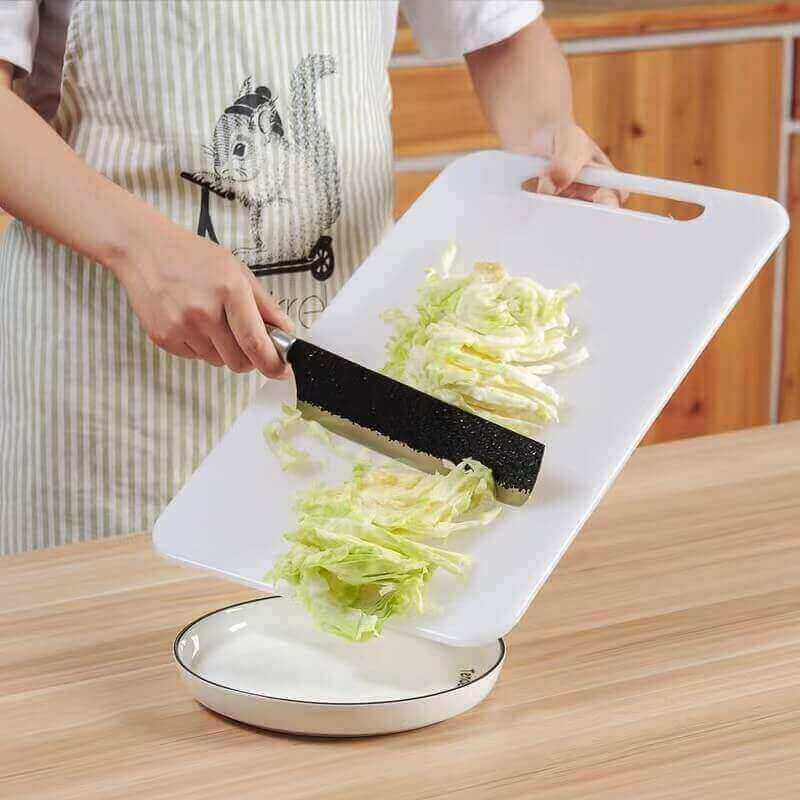
PP board can be used to make cutting boards and utensils that are hygienic, easy to clean, and resistant to scratches, stains, odors, or bacteria. PP board can also be used to make other kitchenware such as bowls, cups, and plates.

πŸ₯€ Disposable Plates and Cups

PP board can be used to make disposable plates and cups that are sturdy, lightweight, and microwaveable. PP board can also be used to make straws, stirrers, forks, spoons, and knives for food service applications.

🏷️ Food Labels and Tags

PP board can be used to make food labels and tags that are waterproof, tear-resistant, and printable. PP board can also be used to make barcodes, QR codes, and RFID tags for food tracking and inventory management.

PP polypropylene food tray for safe food storage
PP polypropylene food utensils and cutlery

What are the Potential Concerns of Using PP Board for Food Contact?

PP board is generally considered safe for food contact by the Environmental Protection Agency (EPA) and the Food and Drug Administration (FDA). However, some potential concerns or drawbacks of using PP board for food contact include:

Important Considerations:

  • Possible Leaching of Additives or Contaminants: Although PP board does not contain BPA or phthalates, it may contain other additives or contaminants that could leach into food under certain conditions such as high temperature or acidity. For example, some studies have found that BPA-free plastics such as polypropylene could release bisphenol S (BPS) or bisphenol F (BPF), which may have similar effects as BPA on human health.
  • Limited Biodegradability and Compostability: Although PP board can be recycled into new products or energy, it cannot be biodegraded or composted in natural environments. This means that if PP board is not properly disposed of, it could end up in landfills or oceans, where it could take hundreds of years to break down or harm wildlife.
  • Potential Environmental Impact of Plastic Waste: PP board is part of the global plastic problem that contributes to climate change, pollution, and resource depletion. According to a 2017 study, only 9% of all the plastic waste ever created has been recycled, while the rest has been incinerated, dumped, or accumulated in the environment.
Environmental considerations for polypropylene plastic biodegradation

How to Choose and Use PP Board for Food Contact Safely and Responsibly

PP board is a safe and convenient material for food contact, but it should be used with caution and care. Here are some tips and recommendations for choosing and using PP board for food contact safely and responsibly:

Best Practices for Food-Safe PP Usage:

  • Check the Quality and Certification of PP Board Products: Look for PP board products that are made of high-quality polypropylene resin and have passed the safety standards and tests of reputable organizations such as the FDA, the EPA, or the NSF. Avoid PP board products that are cheap, low-quality, or counterfeit.
  • Avoid High Temperatures and Abrasive Cleaning Methods: Do not use PP board products for cooking or baking, as they could melt or release harmful substances. Do not use PP board products in the dishwasher, as they could warp or crack. Do not use harsh or abrasive cleaners or scrubbers on PP board products, as they could damage or scratch them.
  • Reuse or Recycle PP Board Products Whenever Possible: Do not throw away PP board products after one use, as they could end up in landfills or oceans. Instead, reuse them as much as possible for the same or different purposes. If you cannot reuse them, recycle them properly according to your local recycling guidelines. If you cannot recycle them, dispose of them responsibly in a trash bin.

πŸ›  Need Custom PP Components for Food Contact Applications?

We offer precision CNC machining, cutting, and thermoforming for food-grade polypropylene sheetsβ€”perfect for custom trays, enclosures, or hygiene-sensitive components.

πŸ“© Upload your design or share your idea. Our engineers will assist with specs, tolerances, and materials.

🎯 Safe for direct food contact | Moisture + chemical resistant | Fast lead times

Start Your Custom PP Project β†’

Frequently Asked Questions About PP Board Food Safety

Is PP plastic FDA approved for food contact?

Yes, polypropylene (PP) is FDA approved and compliant for food contact applications. PP is designated as Resin Identification Code 5 and is considered safe for both single-use and reusable food storage containers.

Can PP board be used in the microwave?

PP board can withstand temperatures up to 160Β°C (320Β°F), making it suitable for microwave use. However, it should not be used for cooking or baking as extended exposure to high heat may cause deformation.

Does PP board contain BPA or other harmful chemicals?

No, PP board does not contain BPA, phthalates, or dioxins. However, some additives may be present depending on the manufacturing process. Always choose certified food-grade PP products from reputable suppliers.

How should I clean PP cutting boards and food containers?

Clean PP board products with mild soap and warm water. Avoid harsh chemicals, abrasive scrubbers, or dishwashers as these may damage the surface or cause warping. Air dry thoroughly after washing.

Is PP plastic environmentally friendly and recyclable?

PP plastic is recyclable (Recycling Code 5) and can be processed into new products. While it is not biodegradable, responsible recycling and reuse can minimize environmental impact. Check with your local recycling facility for proper disposal guidelines.

Conclusion: PP Board is Safe for Food Contact When Used Properly

PP board is a safe and versatile material that can come into contact with food. It has many properties and benefits that make it suitable for food-related purposes, such as moisture and chemical resistance, non-toxicity and hypoallergenicity, high melting point and low flammability, and recyclability and eco-friendliness.

However, PP board also has some potential concerns and drawbacks that should be considered, such as possible leaching of additives or contaminants, limited biodegradability and compostability, and potential environmental impact of plastic waste. Therefore, PP board should be chosen and used carefully and responsibly for food contact.

By following some simple tips and recommendations, you can enjoy the convenience and functionality of PP board without compromising your health or the environment.

Food-safe PP polypropylene cutting board for kitchen use

Ready to Get Started with Food-Grade PP Products?

If you are interested in using Polypropylene (PP) products or would like more information, please do not hesitate to contact us. We would be happy to help you with your needs. Do you need a free quote or help with any questions or materials?

βœ” No Minimum Order Quantity | 🚚 Free Standard Shipping | ⚑ Expedited Shipping Available | 🌍 Serving International Markets

About BeePlastic Custom Plastic Solutions

BeePlastic specializes in custom plastic fabrication and standard material sales with over 15 years of industry experience. We offer precision CNC machining (Β±0.03mm tolerance), laser cutting, plastic welding, and more. Serving customers in European, American, and Australian markets with no minimum order requirements and free standard shipping to select regions.

Leave a comment


Please note, comments must be approved before they are published


Custom Plastic Fabrication

Send your drawing, material and quantity for review

πŸ”§
Precision Machining
CNC milling & turning
βœ‚οΈ
Cutting & Engraving
Laser & waterjet cutting
🏭
Forming & Molding
Thermoforming & injection
πŸ”—
Joining & Assembly
Welding & bonding
πŸ“
Design & Prototyping
CAD design & samples

General

HDPE

PP

PVC

ABS

Engineering

POM

Nylon

PC

PMMA

High-Performance

PEEK

PEI

PTFE

Composites

FR-4

G10

Flexible

TPU

Silicone

Why Choose BeePlastic?

🎯
Perfect Fit
Custom specs eliminate adaptation needs
⚑
Clear Lead Times
Lead time confirmed with every quote
πŸ’°
Volume Pricing
Volume pricing available on bulk orders
🀝
Expert Support
Free engineering consultation included
πŸ“‹
Submit
β†’
πŸ”
Review
β†’
πŸ’΅
Quote
β†’
βœ…
Production
β†’
πŸ“¦
Deliver

Request a Quote

Share your project details, selected material and quantity on our quote page. You can add a file link or use the email drawing route shown there.


Request Quote

Industries: Automotive β€’ Medical β€’ Food β€’ Lab β€’ Semiconductor

beeplastic@beeplastic.com