

The Characteristics and Applications of ABS Plastic Material

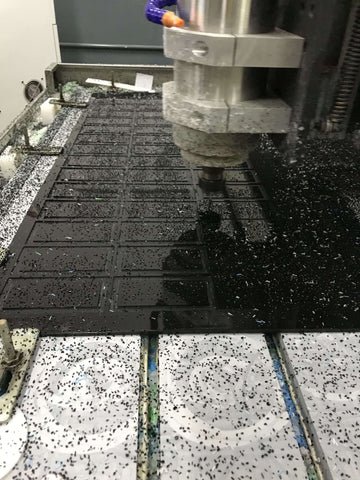
ABS CNC processing

ABS plastic material, which stands for Acrylonitrile Butadiene Styrene, is a common thermoplastic polymer that has many advantages for plastic custom processing. In this blog post, we will introduce what ABS plastic material is, its characteristics, its applications, and why you should choose beeplastic for your ABS plastic custom processing needs.

 🟧 Explore High-Quality ABS Sheets in Stock – Fast Delivery Available

ABS plastic sheets available in natural, black, and white colors — perfect for prototyping, enclosure panels, signage, and industrial fabrication.
✅ Multiple standard thicknesses (1mm–20mm)
✅ Glossy or textured finish
✅ Suitable for laser cutting, CNC machining, and thermoforming

🎁 Free standard shipping on qualified orders
💬 Need help choosing? Contact us for recommendations.

👇 Click the image below to explore ABS sheets in stock

ABS plastic material

🎉🎉🎉Limited Time Offer Use code: QR4GNY08SHVR at checkout and enjoy a special discount on your entire order! 👉 ABS plastic


What is ABS Plastic Material?

ABS plastic material is a terpolymer made by polymerizing styrene and acrylonitrile in the presence of polybutadiene. The proportions can vary from 15% to 35% acrylonitrile, 5% to 30% butadiene and 40% to 60% styrene. The result is a long chain of polybutadiene crisscrossed with shorter chains of poly (styrene-co-acrylonitrile).

The nitrile groups from neighboring chains, being polar, attract each other and bind the chains together, making ABS stronger than pure polystyrene. The acrylonitrile also contributes chemical resistance, fatigue resistance, hardness, and rigidity, while increasing the heat deflection temperature. The styrene gives the plastic a shiny, impervious surface, as well as hardness, rigidity, and improved processing ease. The polybutadiene, a rubbery substance, provides toughness and ductility at low temperatures, at the cost of heat resistance and rigidity.

ABS material processing

The Characteristics of ABS Plastic Material

ABS plastic material has many favorable characteristics that make it suitable for various applications. Some of the main characteristics are:

  • High strength: ABS plastic material has high tensile strength and impact strength, which means it can withstand high forces without breaking or deforming.
  • High toughness: ABS plastic material has high elongation and fracture toughness, which means it can absorb energy without cracking or shattering.
  • High wear resistance: ABS plastic material has high abrasion resistance and friction coefficient, which means it can resist wear and tear from friction and rubbing.
  • High corrosion resistance: ABS plastic material has high resistance to acids, alkalis, oils, greases, salts, and other chemicals, which means it can prevent rusting and deterioration from exposure to these substances.
  • High temperature resistance: ABS plastic material has a high glass transition temperature of approximately 75 ° .
  • Low temperature resistance: ABS plastic material has low brittleness and low thermal expansion coefficient at low temperatures, which means it can prevent cracking and shrinking from cold exposure.
  • Easy coloring: ABS plastic material can be easily colored using different pigments depending on the application, which means it can provide a variety of aesthetic options for the products.
  • Easy processing: ABS plastic material can be easily processed using standard machinery and techniques such as injection molding and extrusion, which means it can reduce the cost and time of production.
ABS material CNC kit processing

The Applications of ABS Plastic Material

ABS plastic material has a wide range of applications across multiple industries due to its versatile characteristics. Some of the main applications are:

  • Automotive: ABS plastic material is used for making various parts of cars such as bumpers, dashboards, door handles, wheel covers, etc., due to its high strength, toughness, wear resistance, corrosion resistance, and temperature resistance.
  • Appliances: ABS plastic material is used for making various parts of household appliances such as refrigerators, washing machines, vacuum cleaners, etc., due to its high strength, toughness, wear resistance, corrosion resistance, and temperature resistance.
  • Electronics: ABS plastic material is used for making various parts of electronic devices such as keyboards, mice, laptops, printers, etc., due to its high strength, toughness, wear resistance, corrosion resistance, and easy coloring.
  • Toys: ABS plastic material is used for making various toys such as Lego bricks, action figures, puzzles, etc., due to its high strength, toughness, wear resistance, corrosion resistance, and easy coloring.
  • Construction: ABS plastic material is used for making various parts of buildings such as pipes, fittings, panels, etc., due to its high strength, toughness, wear.
  • Medical: ABS plastic material is used for making various parts of medical devices such as syringes, inhalers, blood pressure monitors, etc., due to its high strength, toughness, wear resistance, corrosion resistance, and biocompatibility.
  • Other: ABS plastic material is also used for making various other products such as helmets, luggage, musical instruments, furniture, etc., due to its high strength, toughness, wear resistance, corrosion resistance, and easy coloring.

    ABS material DIY production

Why Choose beeplastic for Your ABS Plastic Custom Processing Needs?

If you are looking for a reliable and professional company that can provide you with high-quality ABS plastic custom processing services, you should choose www.beeplastic.com. Here are some of the reasons why:

  • We have over 20 years of experience in plastic custom processing and have served many customers from different industries and countries.
  • We have advanced equipment and technology that can handle various types of ABS plastic processing such as injection molding and extrusion.
  • We have a team of skilled and experienced engineers and technicians that can design and produce ABS plastic products according to your specifications and requirements.
  • We have a strict quality control system that can ensure the accuracy and consistency of our ABS plastic products.
  • We have a fast and efficient delivery service that can ship your ABS plastic products to your destination in a timely manner.
  • We have a competitive and reasonable pricing policy that can offer you the best value for your money.

 🛠️ Looking for Custom ABS Components? We Specialize in Tailored Fabrication

Need custom shapes, cutouts, assembly trays, or enclosures made of ABS plastic?
We provide full-service CNC machining and secondary processing for industrial, electronics, and OEM applications.

🔹 Custom CNC cutting & milling (±0.05mm)
🔹 UV printing, heat bending, engraving available
🔹 Prototype to volume production, MOQ-friendly
🔹 Engineering review within 1 business day

📩 Send us your drawing or specifications now — and we’ll get back to you with a quote and timeline.

👇 Click the image to start your custom ABS project

ABS CNC processing

🎉🎉🎉Limited Time Offer Use code: QR4GNY08SHVR at checkout and enjoy a special discount on your entire order! 👉 ABS plastic

Conclusion

ABS plastic material is a versatile thermoplastic polymer with many properties and applications that make it suitable for custom plastic fabrication. If you are interested in using ABS plastic material in your products or projects, you should contact www.beeplastic.com today. We can provide you with the best ABS plastic custom fabrication services that can meet your needs and expectations. You can email us at beeplastic@beeplastic.com for a free quote or consultation. We look forward to hearing from you!

Leave a comment


Please note, comments must be approved before they are published


Custom Plastic Fabrication

Send your drawing, material and quantity for review

🔧
Precision Machining
CNC milling & turning
✂️
Cutting & Engraving
Laser & waterjet cutting
🏭
Forming & Molding
Thermoforming & injection
🔗
Joining & Assembly
Welding & bonding
📐
Design & Prototyping
CAD design & samples

General

HDPE

PP

PVC

ABS

Engineering

POM

Nylon

PC

PMMA

High-Performance

PEEK

PEI

PTFE

Composites

FR-4

G10

Flexible

TPU

Silicone

Why Choose BeePlastic?

🎯
Perfect Fit
Custom specs eliminate adaptation needs
⚡
Clear Lead Times
Lead time confirmed with every quote
💰
Volume Pricing
Volume pricing available on bulk orders
🤝
Expert Support
Free engineering consultation included
📋
Submit
→
🔍
Review
→
💵
Quote
→
✅
Production
→
📦
Deliver

Request a Quote

Share your project details, selected material and quantity on our quote page. You can add a file link or use the email drawing route shown there.


Request Quote

Industries: Automotive • Medical • Food • Lab • Semiconductor

beeplastic@beeplastic.com


Nylon Injection Molding and Shaping: How to Choose the Right Material and Process

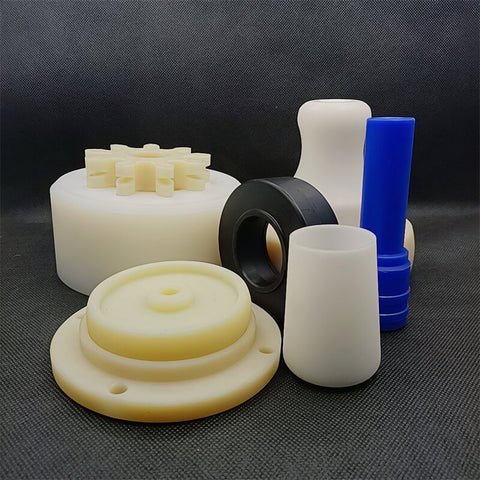
Nylon injection molding products

Nylon is a common plastic material with excellent mechanical properties, wear resistance, heat resistance and chemical resistance, suitable for various shapes of injection molding and shaping. Nylon injection molding is a popular process for producing consumer goods, which involves heating nylon pellets and injecting them into a mold. When the nylon cools and hardens, it forms a fine design that can be used for various applications.

In this article, we will introduce the main types and characteristics of nylon, as well as the basic principles and processes of nylon injection molding and shaping. We will also introduce how to choose the right nylon material and process according to the product requirements, as well as the common problems and solutions that may be encountered. Finally, we will introduce the professional plastic customization service provided by www.beeplastic.com website, and how they can help you get high-quality and high-efficiency results.

🎉🎉🎉Limited Time Offer Use code: QR4GNY08SHVR at checkout and enjoy a special discount on your entire order! 👉 Nylon plastic
Nylon plastic

The main types and characteristics of nylon

Nylon is a copolymer composed of multiple monomers, which can be produced by different ways, usually from crude oil distillation, or from biomass manufacturing. Nylon belongs to thermoplastic materials, which means that it liquefies when heated to the melting point, solidifies when cooled, and can repeat this process without significant degradation.

The following table lists some common types and properties of nylon, as well as their melting points and mold temperatures.

Nylon Type

Characteristics

Melting Point

Mold Temperature

Nylon 6

Good elasticity, dyeability, hard and tough at low temperatures

220 °C

38-107 °C

Nylon 66

Good mechanical properties, chemical resistance, heat resistance

265 °C

100-225 °C

Nylon 12

Good impact strength, low water absorption, oil resistance

178 °C

60-120 °C

Nylon 46

Good thermal stability, RoHS compliant, high heat distortion temperature

295 °C

130-180 °C

Filled nylons

High stiffness-to-weight ratio, strong mechanical properties, one of the strongest plastics

Depends on filler

Depends on filler

Nylon injection molding products

The basic principles and processes of nylon injection molding and shaping

Nylon injection molding and shaping is a process of heating nylon plastic to a liquid state and injecting it into a pre-designed mold. When the nylon cools and hardens, it forms a complex shape that can be used for various purposes. This process can be divided into the following steps:

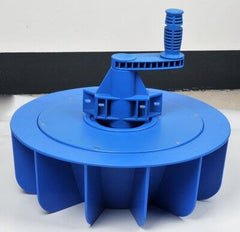
Nylon injection molding product
  • Dry: Since nylon is a material that easily absorbs moisture, it must be fully dried before injection molding to avoid problems such as bubbles, cracks or reduced strength. The drying time and temperature depend on the type and thickness of nylon.
  • Bubbles: In the nylon injection molding process, if the nylon is not sufficiently dried or the injection speed is too fast, bubbles may be generated, affecting the strength and appearance of the product. The solution is to check and adjust the drying temperature and time, as well as the injection pressure and speed.
  • Burns: In the nylon injection molding process, if the temperature of nylon is too high or the injection speed is too fast, it may cause local overheating and degradation of nylon in the mold, resulting in black or brown burns, affecting the appearance and performance of the product. The solution is to check and adjust the temperature and injection speed of nylon, as well as the design and cooling of the mold.
  • Flash: In the nylon injection molding process, if the pressure or temperature of nylon is too high, or the mold clamping is not tight, it may cause nylon to extrude from the gap of the mold, producing excess edges or protrusions, affecting the appearance and size of the product. The solution is to check and adjust the pressure and temperature of nylon, as well as the mold clamping and cleaning.

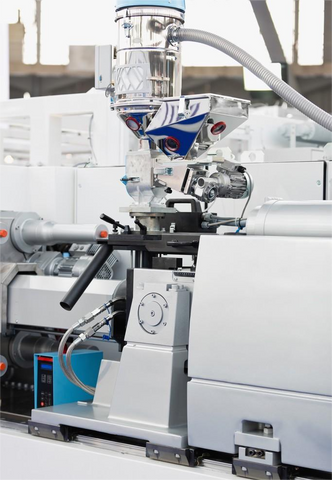
    Injection molding machine

Professional plastic customization service provided by www.beeplastic.com website

If you need to produce high-quality and high-efficiency nylon-shaped products, you can choose the professional plastic customization service provided by www.beeplastic.com website. www.beeplastic.com website is a professional company engaged in plastic customization processing, with many years of experience and technology, can provide various types and specifications of nylon products according to your needs. The professional plastic customization service provided by www.beeplastic.com website has the following advantages:

  • High-quality materials: www.beeplastic.com website uses high-quality nylon raw materials, which are strictly dried and tested to ensure the quality and performance of nylon.
  • Advanced equipment: www.beeplastic.com website has advanced injection molding machines and molds, which can produce various shapes and sizes of nylon products, meeting different application needs.
  • Professional team: www.beeplastic.com website has professional designers and engineers, who can provide professional consultation and advice according to your needs, as well as customized solutions.
  • Favorable price: www.beeplastic.com website offers favorable price and fast delivery time, letting you enjoy high cost-effective service.
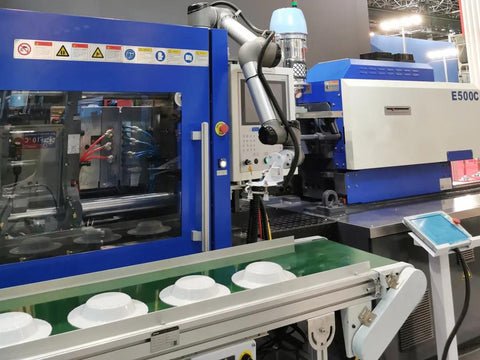
Injection molding production line

If you are interested in the professional plastic customization service provided by www.beeplastic.com website, you are welcome to contact us at any time, we will serve you wholeheartedly. You can contact us through the following ways:

Thank you for reading this article, hope it helps you. If you like this article, please share it with your friends or colleagues, let more people know about nylon injection molding and shaping.

🎉🎉🎉Limited Time Offer Use code: QR4GNY08SHVR at checkout and enjoy a special discount on your entire order! 👉 Nylon plastic

Leave a comment


Please note, comments must be approved before they are published


Custom Plastic Fabrication

Send your drawing, material and quantity for review

🔧
Precision Machining
CNC milling & turning
✂️
Cutting & Engraving
Laser & waterjet cutting
🏭
Forming & Molding
Thermoforming & injection
🔗
Joining & Assembly
Welding & bonding
📐
Design & Prototyping
CAD design & samples

General

HDPE

PP

PVC

ABS

Engineering

POM

Nylon

PC

PMMA

High-Performance

PEEK

PEI

PTFE

Composites

FR-4

G10

Flexible

TPU

Silicone

Why Choose BeePlastic?

🎯
Perfect Fit
Custom specs eliminate adaptation needs
⚡
Clear Lead Times
Lead time confirmed with every quote
💰
Volume Pricing
Volume pricing available on bulk orders
🤝
Expert Support
Free engineering consultation included
📋
Submit
→
🔍
Review
→
💵
Quote
→
✅
Production
→
📦
Deliver

Request a Quote

Share your project details, selected material and quantity on our quote page. You can add a file link or use the email drawing route shown there.


Request Quote

Industries: Automotive • Medical • Food • Lab • Semiconductor

beeplastic@beeplastic.com


PI (Polyimide) Plastic Material Advantages and Applications – A Comparison with Other High-Performance Plastics

Processed parts of special materials

PI (Polyimide) plastic material is a high-performance engineering plastic with outstanding properties, such as heat resistance, chemical resistance, mechanical properties and electrical properties. It is widely used in various fields, such as aerospace, electronics and electrical, automotive, medical, energy and more. In this article, we will compare PI (Polyimide) plastic material with other high-performance plastics, such as PEEK, PPS, PAI and others. We will also introduce some specific applications and roles of PI (Polyimide) plastic material in each field.

🎉🎉🎉Limited Time Offer Use code: QR4GNY08SHVR at checkout and enjoy a special discount on your entire order! 👉 Polyimide plastic
PEEK PPS PAI PI plastics

Comparison of PI (Polyimide) Plastic Material with Other High-Performance Plastics

PI (Polyimide) plastic material belongs to the class of thermosetting plastics, which means it cannot be melted or reshaped by heating. It is formed by the reaction of a dianhydride and a diamine, resulting in a polymer chain containing imide groups. PI (Polyimide) plastic material has a high glass transition temperature (Tg), which indicates its ability to resist deformation under heat. It also has a high decomposition temperature (Td), which indicates its ability to resist degradation under heat. PI (Polyimide) plastic material can withstand temperatures up to 500°C for short periods and up to 300°C for long periods.

Other high-performance plastics include thermoplastic plastics, such as PEEK, PPS, PAI and others. They can be melted and reshaped by heating, which makes them easier to process and recycle. However, they also have lower heat resistance and mechanical strength than PI (Polyimide) plastic material. The table below shows a comparison of some key properties of PI (Polyimide) plastic material and other high-performance plastics.


Property

PI (Polyimide)

PEEK

PPS

PAI

Tg (°C)

260-360

143

90

270

Td (°C)

500-550

550

490

530

Tensile strength (MPa)

80-150

90-100

70-80

120-130

Elongation at break (%)

5-10

30-50

2-3

5-10

Flexural modulus (GPa)

3-5

3.5-4.0

3.0-3.5

4.0-4.5

Coefficient of thermal expansion (10^-6/K)

20-50

45-50

50-55

30-35

Dielectric constant (1 kHz)

3.0-3.5

3.2-3.3

3.6-3.7

3.8-4.0

As can be seen from the table, PI (Polyimide) plastic material has higher Tg, Td, tensile strength and flexural modulus than other high-performance plastics. It also has lower coefficient of thermal expansion and dielectric constant than other high-performance plastics. These properties make PI (Polyimide) plastic material more suitable for applications that require high heat resistance, mechanical strength and electrical insulation.

Processed parts of special materials

Applications and Roles of PI (Polyimide) Plastic Material in Various Fields

PI (Polyimide) plastic material has a wide range of applications and roles in various fields, such as aerospace, electronics and electrical, automotive, medical, energy and more. Here are some examples of its specific applications and roles in each field.

In aerospace, PI (Polyimide) plastic material is used for making high temperature resistant components, such as engine parts, heat shields, insulation materials, etc. It can also be used for making lightweight and strong composites, such as carbon fiber reinforced PI (Polyimide), which can reduce the weight and fuel consumption of aircrafts.

CNC machining of PI material

In electronics and electrical, PI (Polyimide) plastic material is used for making flexible printed circuit boards (FPCBs), which can bend and fold without breaking. It can also be used for making thin film transistors (TFTs), which are the key components of flat panel displays, such as liquid crystal displays (LCDs) and organic light emitting diodes (OLEDs).

In automotive, PI (Polyimide) plastic material is used for making high performance parts, such as brake pads, clutch plates, piston rings, etc. It can also be used for making sensors, actuators, connectors, etc., which can withstand high temperature and vibration.

In medical, PI (Polyimide) plastic material is used for making biocompatible devices, such as implants, catheters, stents, etc. It can also be used for making drug delivery systems, such as microcapsules, nanofibers, etc., which can release drugs in a controlled manner.

In energy, PI (Polyimide) plastic material is used for making high temperature fuel cells, which can convert chemical energy into electrical energy. It can also be used for making solar cells, which can convert solar energy into electrical energy.

PI Applications

PI (Polyimide) plastic material is a high-performance engineering plastic with advantages over other high-performance plastics in terms of heat resistance, mechanical strength and electrical insulation. It has a wide range of applications and roles in various fields, such as aerospace, electronics and electrical, automotive, medical, energy and more. It is a versatile and valuable material for many industries and applications.

If you are looking for a professional PI (Polyimide) customization service provider, we recommend you to visit www.beeplastic.com website. They offer high-quality PI (Polyimide) products with various shapes, sizes and specifications. They can also help you with design, development and testing of your PI (Polyimide) products. They have rich experience and expertise in PI (Polyimide) processing and application. They can provide you with the best solutions and services for your PI (Polyimide) needs.

To learn more about their PI (Polyimide) products and services, please visit their website or contact them by email. They will be happy to answer your questions and provide you with a free quote. They will also give you a 10% discount if you mention this blog article when you contact them.

🎉🎉🎉Limited Time Offer Use code: QR4GNY08SHVR at checkout and enjoy a special discount on your entire order! 👉 Polyimide plastic
PI sheets and rods

Leave a comment


Please note, comments must be approved before they are published


Custom Plastic Fabrication

Send your drawing, material and quantity for review

🔧
Precision Machining
CNC milling & turning
✂️
Cutting & Engraving
Laser & waterjet cutting
🏭
Forming & Molding
Thermoforming & injection
🔗
Joining & Assembly
Welding & bonding
📐
Design & Prototyping
CAD design & samples

General

HDPE

PP

PVC

ABS

Engineering

POM

Nylon

PC

PMMA

High-Performance

PEEK

PEI

PTFE

Composites

FR-4

G10

Flexible

TPU

Silicone

Why Choose BeePlastic?

🎯
Perfect Fit
Custom specs eliminate adaptation needs
⚡
Clear Lead Times
Lead time confirmed with every quote
💰
Volume Pricing
Volume pricing available on bulk orders
🤝
Expert Support
Free engineering consultation included
📋
Submit
→
🔍
Review
→
💵
Quote
→
✅
Production
→
📦
Deliver

Request a Quote

Share your project details, selected material and quantity on our quote page. You can add a file link or use the email drawing route shown there.


Request Quote

Industries: Automotive • Medical • Food • Lab • Semiconductor

beeplastic@beeplastic.com


PI (Polyimide) Plastic Material: A High-Performance Engineering Plastic

PI plate and bar

If you are looking for a plastic material that can withstand high temperatures, harsh chemicals, and mechanical stress, you may want to consider PI (Polyimide) plastic material. PI (Polyimide) is a polymer containing imide groups, belonging to a class of high-performance plastics. It has excellent heat resistance, chemical resistance, mechanical properties and electrical properties, making it suitable for various demanding engineering applications. In this article, we will introduce the main types and characteristics of PI (Polyimide) plastic material, the common processing methods, and the wide application fields. We will also recommend a professional PI (Polyimide) customization service provider that can help you with your specific needs.

🎉🎉🎉Limited Time Offer Use code: QR4GNY08SHVR at checkout and enjoy a special discount on your entire order! 👉 Polyimide plastic
PI sheets and rods

The main types and characteristics of PI (Polyimide) plastic material

According to the different main chain structure and cross-linking mode, PI (Polyimide) plastic material can be divided into two major categories: thermoplastic and thermosetting, as well as three major categories: aromatic, semi-aromatic and aliphatic. Each type has its own advantages and disadvantages and application scope.

Thermoplastic PI (Polyimide) is a linear polymer that can be melted and reshaped by heating. It has good processability, flexibility and toughness, but lower heat resistance and mechanical strength than thermosetting PI (Polyimide).

Thermosetting PI (Polyimide) is a cross-linked polymer that cannot be melted or reshaped by heating. It has high heat resistance, mechanical strength and dimensional stability, but poor processability and brittleness.

Thermosetting PI (Polyimide) is a cross-linked polymer that cannot be melted or reshaped by heating. It has high heat resistance, mechanical strength and dimensional stability, but poor processability and brittleness.

PI plate and bar

Aromatic PI (Polyimide) is derived from an aromatic dianhydride and diamine. It has the highest heat resistance, mechanical strength and chemical resistance among all types of PI (Polyimide), but also the highest cost and the lowest solubility.

Semi-aromatic PI (Polyimide) is derived from either an aromatic dianhydride or diamine and an aliphatic counterpart. It has moderate heat resistance, mechanical strength and chemical resistance, as well as better flexibility and solubility than aromatic PI (Polyimide).

Aliphatic PI (Polyimide) is derived from an aliphatic dianhydride and diamine. It has the lowest heat resistance, mechanical strength and chemical resistance among all types of PI (Polyimide), but also the lowest cost and the highest solubility.

The common processing methods of PI (Polyimide) plastic material

PI (Polyimide) plastic material can be processed into different forms of products by different methods, such as injection molding, extrusion, compression molding, transfer molding, laminating molding, coating, casting, etc. Each method has its own characteristics and precautions.

Injection molding is a process of injecting molten thermoplastic PI (Polyimide) into a mold cavity under high pressure and cooling it to form a solid product. It is suitable for producing complex shapes and large quantities of products with high precision and low cost.

Extrusion is a process of forcing thermoplastic PI (Polyimide) through a die with a specific cross-section under high temperature and pressure to form a continuous product. It is suitable for producing products with simple shapes and uniform cross-sections, such as rods, tubes, films, etc.

PI Gasket

PI (Polyimide) plastic material has a wide range of application fields due to its unique physical and chemical properties. It is widely used in aerospace, electronics and electrical, automotive, medical, energy and other fields. Here are some examples of its specific applications and roles in each field.

In aerospace, PI (Polyimide) is used for making high temperature resistant components, such as engine parts, heat shields, insulation materials, etc. It can also be used for making lightweight and strong composites, such as carbon fiber reinforced PI (Polyimide), which can reduce the weight and fuel consumption of aircrafts.

In electronics and electrical, PI (Polyimide) is used for making flexible printed circuit boards (FPCBs), which can bend and fold without breaking. It can also be used for making thin film transistors (TFTs), which are the key components of flat panel displays, such as liquid crystal displays (LCDs) and organic light emitting diodes (OLEDs).

Polyimide plus parts

In automotive, PI (Polyimide) is used for making high performance parts, such as brake pads, clutch plates, piston rings, etc. It can also be used for making sensors, actuators, connectors, etc., which can withstand high temperature and vibration.


In medical, PI (Polyimide) is used for making biocompatible devices, such as implants, catheters, stents, etc. It can also be used for making drug delivery systems, such as microcapsules, nanofibers, etc., which can release drugs in a controlled manner.

In energy, PI (Polyimide) is used for making high temperature fuel cells, which can convert chemical energy into electrical energy. It can also be used for making solar cells, which can convert solar energy into electrical energy.

PI Applications

PI (Polyimide) plastic material is a high-performance engineering plastic with outstanding properties, such as heat resistance, chemical resistance, mechanical properties and electrical properties. It can be processed by various methods and applied in various fields. It is a versatile and valuable material for many industries and applications.

If you are looking for a professional PI (Polyimide) customization service provider, we recommend you to visit www.beeplastic.com website. They offer high-quality PI (Polyimide) products with various shapes, sizes and specifications. They can also help you with design, development and testing of your PI (Polyimide) products. They have rich experience and expertise in PI (Polyimide) processing and application. They can provide you with the best solutions and services for your PI (Polyimide) needs.

🎉🎉🎉Limited Time Offer Use code: QR4GNY08SHVR at checkout and enjoy a special discount on your entire order! 👉 Polyimide plastic

To learn more about their PI (Polyimide) products and services, please visit their website or contact them by email. They will be happy to answer your questions and provide you with a free quote.

Leave a comment


Please note, comments must be approved before they are published


Custom Plastic Fabrication

Send your drawing, material and quantity for review

🔧
Precision Machining
CNC milling & turning
✂️
Cutting & Engraving
Laser & waterjet cutting
🏭
Forming & Molding
Thermoforming & injection
🔗
Joining & Assembly
Welding & bonding
📐
Design & Prototyping
CAD design & samples

General

HDPE

PP

PVC

ABS

Engineering

POM

Nylon

PC

PMMA

High-Performance

PEEK

PEI

PTFE

Composites

FR-4

G10

Flexible

TPU

Silicone

Why Choose BeePlastic?

🎯
Perfect Fit
Custom specs eliminate adaptation needs
⚡
Clear Lead Times
Lead time confirmed with every quote
💰
Volume Pricing
Volume pricing available on bulk orders
🤝
Expert Support
Free engineering consultation included
📋
Submit
→
🔍
Review
→
💵
Quote
→
✅
Production
→
📦
Deliver

Request a Quote

Share your project details, selected material and quantity on our quote page. You can add a file link or use the email drawing route shown there.


Request Quote

Industries: Automotive • Medical • Food • Lab • Semiconductor

beeplastic@beeplastic.com


Plastic Custom Processing Case Study: How to Provide High-Quality, High-Efficiency, and Cost-Effective Plastic Products for Customers

Plastic Mould Case

Plastic custom processing is a process that creates plastic products according to the specific requirements of customers. These requirements can include shape, size, color, function and more. Plastic custom processing has many advantages over standard plastic products. For example:

  • It allows customers to have more flexibility and control over their product design and specifications.
  • It offers a wide range of options for different types of plastics and their properties.
  • It enhances the durability and recyclability of plastic products by reducing waste and material consumption.
  • It can be applied to various fields and industries that need customized plastic solutions.
Plastic material processing parts

In this article, we will share some examples of how we provide high-quality, high-efficiency and cost-effective plastic custom processing services for our customers in different fields. We will introduce our process of selecting plastic materials, designing plastic molds, molding plastic products and post-processing them. We will also show you how our plastic products meet or exceed our customers’ expectations in terms of quality, accuracy, durability, safety, hygiene, functionality, aesthetics, creativity and fun.

Case 1: Providing Plastic Custom Processing Service for an Automotive Parts Company

One of our customers is an automotive parts company that needs customized plastic components for their vehicles. They want their components to be strong, lightweight and resistant to heat and corrosion. They also want their components to have precise dimensions and smooth surfaces.

ABS material model

To meet their needs, we use ABS (acrylonitrile butadiene styrene) as our main plastic material. ABS is a thermoplastic polymer that has high impact strength, rigidity and toughness. It also has good thermal stability and chemical resistance. ABS can be easily molded into complex shapes and sizes with high accuracy and smoothness.

We use injection molding as our main plastic molding method. Injection molding is one of the most common and versatile plastic fabrication methods. It involves melting plastic pellets and injecting them under high pressure into a metal mold cavity. The mold cavity has the shape and size of the desired product. The injected plastic fills and solidifies in the mold cavity, forming the product.

Drawing design and confirmation

We use CNC (computer numerical control) machines to design and make our metal molds. CNC machines are automated tools that can create precise and intricate molds with high speed and efficiency. We use CAD (computer-aided design) software to create 3D models of our products and molds based on our customers’ specifications. We then use CAM (computer-aided manufacturing ) software to convert the 3D models into machine instructions that control the CNC machines. We use high-quality metal materials such as steel and aluminum to make our molds durable and accurate.

We use various plastic post-processing methods to improve the appearance and performance of our plastic products. Some of these methods include:

  • Trimming: We use cutting tools to remove excess plastic material and support structures from our products.

    Acrylic sandblasting process
  • Sanding: We use abrasive materials to smooth the surface of our products and remove any defects or marks.
  • Polishing: We use polishing compounds and buffing wheels to create a glossy and shiny surface on our products.
  • Painting: We use spray guns or brushes to apply colors and coatings on our products to enhance their aesthetics and protection.

Our plastic products meet the high standards of our automotive parts customers. They have excellent quality, accuracy, and durability. They can withstand high temperatures, pressures, and corrosions. They can fit perfectly into the vehicles and perform their functions well.

Case 2: Providing Plastic Custom Processing Service for a Medical Device Company

Another one of our customers is a medical device company that needs customized plastic components for their devices. They want their components to be safe, hygienic, and functional. They also want their components to have complex shapes and features.

To meet their needs, we use POM (polyoxymethylene) as our main plastic material. POM is a thermoplastic polymer that has high stiffness, strength, and hardness. It also has good resistance to chemicals, abrasion, and fatigue. POM can be molded into intricate shapes and features with high precision and smoothness.

Implantable PEEK

We use vacuum casting as our main plastic molding method. Vacuum casting is a low-cost and fast plastic fabrication method that is suitable for small batches of plastic products. It involves creating a silicone mold from a master model, placing it in a vacuum chamber, pouring liquid plastic resin into the mold, curing the resin under vacuum pressure, and demolding the product.

We use 3D printing as our main method to create our master models. 3D printing is an additive manufacturing method that builds objects layer by layer from digital models. 3D printing can create complex and detailed models with high accuracy and speed. We use SLA (stereolithography) 3D printing technology that uses a laser to cure liquid resin into solid objects.

3D Printing

We use various plastic post-processing methods to improve the appearance and performance of our plastic products. Some of these methods include:

  • Cleaning: We use water, alcohol, or ultrasonic cleaners to remove any residue or dirt from our products.
  • Sterilizing: We use heat, chemicals, or radiation to kill any bacteria or germs on our products.
  • Testing: We use various instruments and methods to check the functionality, reliability, and safety of our products.

Our plastic products meet the high standards of our medical device customers. They have excellent safety, hygiene, and functionality. They can resist chemicals, abrasion, and fatigue. They can perform complex and delicate tasks in medical applications.

Case 3: Providing Plastic Custom Processing Service for a Toy Company

Another one of our customers is a toy company that needs customized plastic components for their toys. They want their components to be beautiful, creative, and fun. They also want their components to have colorful and diverse designs.

To meet their needs, we use PVC (polyvinyl chloride) as our main plastic material. PVC is a thermoplastic polymer that has good flexibility, durability, and affordability. It also has good compatibility with various additives and colors. PVC can be molded into various shapes and designs with high diversity and creativity.

Customized toys

We use thermoforming as our main plastic molding method. Thermoforming is a low-cost and simple plastic fabrication method that is suitable for large batches of plastic products. It involves heating a plastic sheet until it becomes soft and pliable, placing it over a mold or die, applying vacuum or pressure to form the sheet into the shape of the mold or die, cooling the sheet until it becomes rigid again, and trimming the excess material.

We use various methods to create our molds or dies. Some of these methods include:

  • CNC machining: We use CNC machines to cut metal or wood materials into precise molds or dies based on digital models.
  • Lasercutting: We use a laser beam to cut metal or plastic materials into precise molds or dies based on digital models.
  • 3D printing: We use 3D printing to create plastic molds or dies with complex shapes and features.

We use various plastic coloring methods to add colors and designs to our plastic products. Some of these methods include:

  • Masterbatch: We use masterbatch, which is a concentrated mixture of pigments and additives in a carrier resin, to mix with natural resin and create colored resin.
  • Pre-colored resin: We use pre-colored resin, which is a resin that has already been mixed with pigments and additives, to create colored products directly.
  • Painting: We use painting, which is a process of applying colors and coatings on the surface of products, to enhance their aesthetics and protection.
Customized toys

Our plastic products meet the high standards of our toy customers. They have excellent aesthetics, creativity, and fun. They can have colorful and diverse designs that appeal to children and adults alike. They can also be safe and durable for playing.

Plastic custom processing is a great way to create customized plastic products that meet the specific needs and expectations of customers. It involves selecting the right plastic materials, molding methods, post-processing methods, and coloring methods for each application. At www.beeplastic.com, we have the expertise and experience to provide high-quality, high-efficiency, and cost-effective plastic custom processing services for various fields and industries. We can help you create plastic products that are beautiful, functional, and durable. If you are interested in our services or have any questions, please feel free to contact us by email at beeplastic @beeplastic.com. We look forward to hearing from you soon!

Leave a comment


Please note, comments must be approved before they are published


Custom Plastic Fabrication

Send your drawing, material and quantity for review

🔧
Precision Machining
CNC milling & turning
✂️
Cutting & Engraving
Laser & waterjet cutting
🏭
Forming & Molding
Thermoforming & injection
🔗
Joining & Assembly
Welding & bonding
📐
Design & Prototyping
CAD design & samples

General

HDPE

PP

PVC

ABS

Engineering

POM

Nylon

PC

PMMA

High-Performance

PEEK

PEI

PTFE

Composites

FR-4

G10

Flexible

TPU

Silicone

Why Choose BeePlastic?

🎯
Perfect Fit
Custom specs eliminate adaptation needs
⚡
Clear Lead Times
Lead time confirmed with every quote
💰
Volume Pricing
Volume pricing available on bulk orders
🤝
Expert Support
Free engineering consultation included
📋
Submit
→
🔍
Review
→
💵
Quote
→
✅
Production
→
📦
Deliver

Request a Quote

Share your project details, selected material and quantity on our quote page. You can add a file link or use the email drawing route shown there.


Request Quote

Industries: Automotive • Medical • Food • Lab • Semiconductor

beeplastic@beeplastic.com


Why You Should Choose Plastic Custom Processing for Your Products

PPS precision machined parts

Plastic custom processing is a process of producing plastic products that meet the specific needs and designs of customers, using different types of plastic raw materials and molding methods. Plastic custom processing has many advantages over other methods of producing plastic products, such as flexibility, cost saving, quality improvement and innovation ability. In this article, we will explain what plastic custom processing is, how it works, and what are the main advantages of using it for your products. We will also give you some tips and resources for finding a reliable plastic custom processing supplier.

POM processing customization

What is Plastic Custom Processing?

Plastic custom processing is a process of heating, softening, molding and cooling plastic raw materials, which can produce plastic products of various shapes, sizes, colors and functions. Plastic custom processing can use different types of plastic materials, such as polyethylene (PE), polypropylene (PP), polystyrene (PS), polyvinyl chloride (PVC), etc., depending on the product performance and budget. Plastic custom processing can also use different molding methods, such as injection molding, blow molding, thermoforming, etc., depending on the product complexity and quantity.

CNC machining workshop

How Does Plastic Custom Processing Work?

Plastic custom processing involves several steps, such as:

  • Design: The first step is to design the plastic product according to the customer’s needs and specifications. This includes choosing the type and grade of plastic material, the molding method and equipment, the mold design and production, the surface treatment and coating, etc.
  • Material selection: The next step is to select the appropriate plastic material for the product performance, quality, cost and environmental impact. There are many types and grades of plastic materials available in the market, such as PE, PP,PS, PVC, etc.
  • Mold making: The next step is to make the mold for the product shape and size. The mold can be made of metal or plastic, depending on the molding method and the product complexity. The mold making process can involve machining, casting, welding, etc.
  • Molding: The next step is to mold the product using the selected material and method. The molding process can involve heating, melting, injecting, blowing, forming, cooling and solidifying the plastic material in the mold cavity. The molding process can affect the product quality, accuracy and consistency.

    ABS bending parts
  • Finishing: The final step is to finish the product by removing excess material, trimming edges, applying surface treatments and coatings, testing and inspecting the product quality and performance, packaging and shipping the product to the customer. The finishing process can improve the product appearance, durability and functionality.

What are the Advantages of Plastic Custom Processing?

Plastic custom processing has many advantages over other methods of producing plastic products, such as:

  • Flexibility: Plastic custom processing can produce plastic products that meet the specific needs and designs of customers, whether simple or complex, monochrome or multicolor, small or large batch. Plastic custom processing can also adjust to the market changes and demands quickly and easily.
  • Cost saving: Plastic custom processing can use different types and grades of plastic materials, according to the product performance and budget for selection and optimization, reducing material costs and waste. Plastic custom processing can also reduce the time and cost of product post-processing and assembly.
  • Quality improvement: Plastic custom processing can use advanced equipment and technology to ensure the accuracy and consistency of products, avoid defects and errors. Plastic custom processing can also use different surface treatments and coatings to improve the appearance and durability of products.

    Stamping dies
  • Innovation ability: Plastic custom processing can use different molding methods and mold designs to produce plastic products with innovative functions and shapes, meeting the market changes and demands. Plastic custom processing can also create new products that are not possible with other methods.


How to Find a Reliable Plastic Custom Processing Supplier?

If you need to customize plastic products for your business or personal use, you need to find a reliable plastic custom processing supplier that can provide you with high-quality, low-cost, fast-delivery and excellent-service plastic products. Here are some tips and resources for finding a reliable plastic custom processing supplier:

  • Check their professional capability: You need to check their professional capability in terms of the types and grades of plastic materials they use, the molding methods and equipment they have, the mold design and production they offer, the surface treatment and coating they provide, etc. You need to find a plastic custom processing supplier that can meet your product performance, quality, quantity and time requirements.
  • Check their service quality: You need to check their service quality in terms of their communication methods and efficiency, contract terms and guarantees, quality control and testing, delivery time and method, after-sales service and warranty, etc. You need to find a plastic custom processing supplier that can provide high-quality, professional, timely and flexible service.
  • Check their credibility: You need to check their credibility in terms of their qualification certification, industry experience, customer reviews, case display, etc. You need to find a plastic custom processing supplier that has a good reputation and word-of-mouth, and can guarantee product quality and service level.
  • Check their price reasonableness: You need to check their price reasonableness in terms of their quotation method and basis, price composition and details, price fluctuation and change, etc. You need to find a plastic custom processing supplier that can provide reasonable, transparent, stable and competitive prices.
PU material injection parts

In summary, plastic custom processing is a process of producing plastic products that meet the specific needs and designs of customers, using different types of plastic raw materials and molding methods. Plastic custom processing has many advantages over other methods of producing plastic products, such as flexibility, cost saving, quality improvement and innovation ability. In this article, we have explained what plastic custom processing is, how it works, and what are the main advantages of using it for your products. We have also given you some tips and resources for finding a reliable plastic custom processing supplier.

If you are interested in our plastic custom processing service, please feel free to send us an email for consultation. We are a professional plastic custom processing supplier with years of industry experience and technical strength. We can provide you with the following advantages:

Band saw cutting size
  • One-stop service: We can provide you with one-stop service from plastic raw material selection, mold design and production, plastic molding processing, surface treatment and coating, product testing and packaging to transportation and delivery, saving you time, effort and worry.
  • Customization ability: We can customize plastic products of various shapes, sizes, colors and functions according to your needs and designs, whether simple or complex, monochrome or multicolor, small or large batch.
  • Quality assurance: We use high-quality plastic raw materials, adopt advanced molding equipment and technology, implement strict quality control and testing, and ensure that every plastic product meets the specifications and standards and satisfies you.
  • Price preference: We offer reasonable, transparent, stable and competitive prices, allowing you to enjoy high-cost performance plastic custom processing service, saving your cost and budget.
  • Service professionalism: We have a professional team and system, providing timely, effective, flexible and friendly communication and service, solving any problems and difficulties for you, making you feel at ease and satisfied.

    PPS precision machined parts

We will reply to you as soon as possible and provide you with professional advice and quotation. We look forward to establishing a long-term cooperation relationship with you and providing you with the best quality plastic custom processing service.

Thank you for reading this blog article. We hope it helps you understand why you should choose plastic custom processing for your products. If you have any questions or suggestions, please leave a comment or contact us. We will be happy to hear your opinions and feedback. Thank you again and wish you all the best!

Leave a comment


Please note, comments must be approved before they are published


Custom Plastic Fabrication

Send your drawing, material and quantity for review

🔧
Precision Machining
CNC milling & turning
✂️
Cutting & Engraving
Laser & waterjet cutting
🏭
Forming & Molding
Thermoforming & injection
🔗
Joining & Assembly
Welding & bonding
📐
Design & Prototyping
CAD design & samples

General

HDPE

PP

PVC

ABS

Engineering

POM

Nylon

PC

PMMA

High-Performance

PEEK

PEI

PTFE

Composites

FR-4

G10

Flexible

TPU

Silicone

Why Choose BeePlastic?

🎯
Perfect Fit
Custom specs eliminate adaptation needs
⚡
Clear Lead Times
Lead time confirmed with every quote
💰
Volume Pricing
Volume pricing available on bulk orders
🤝
Expert Support
Free engineering consultation included
📋
Submit
→
🔍
Review
→
💵
Quote
→
✅
Production
→
📦
Deliver

Request a Quote

Share your project details, selected material and quantity on our quote page. You can add a file link or use the email drawing route shown there.


Request Quote

Industries: Automotive • Medical • Food • Lab • Semiconductor

beeplastic@beeplastic.com


What is Plastic Custom Processing Process and How Does It Work?

Injection molding machine

Plastic custom processing process is a process of producing plastic products that meet the specific needs and designs of customers, using different types of plastic raw materials and molding methods. Plastic custom processing process is important for creating plastic products that have various shapes, sizes, colors and functions, and that can improve the product competitiveness and customer satisfaction. In this article, we will introduce you to the different types of plastic custom processing methods, the steps involved in plastic custom processing process, some examples of plastic products that are made by plastic custom processing process, and how to choose a reliable plastic custom processing supplier.

Injection molding machine

Different Types of Plastic Custom Processing Methods

There are many types of plastic custom processing methods, each with its own advantages and disadvantages. Some of the most common ones are:

  • Injection molding: This is a method of injecting molten plastic into a metal mold under high pressure, and then cooling and solidifying it to form the desired shape. Injection molding is suitable for producing complex and precise plastic products in large quantities, such as plastic parts for cars, electronics, medical devices, etc. However, injection molding requires high upfront costs for mold making and setup, and can only use plastics with high melt index.
  • Blow molding: This is a method of blowing air into a heated plastic tube inside a mold, and then cooling and solidifying it to form a hollow shape. Blow molding is suitable for producing hollow and lightweight plastic products in large quantities, such as plastic bottles, containers, toys, etc. However, blow molding has limited design flexibility and can only use thermoplastic materials.

    Injection molded parts
  • Thermoforming: This is a method of heating a plastic sheet until it becomes soft and pliable, and then forming it over a mold by applying air or mechanical assistance. Thermoforming is suitable for producing simple and thin plastic products in small to medium quantities, such as plastic trays, cups, packaging, etc. However, thermoforming has high material waste and can only use thermoplastic materials.

Steps Involved in Plastic Custom Processing Process

The plastic custom processing process involves several steps, such as:

  • Design: The first step is to design the plastic product according to the customer’s needs and specifications. This includes choosing the type and grade of plastic material, the molding method and equipment, the mold design and production, the surface treatment and coating, etc.
  • Material selection: The next step is to select the appropriate plastic material for the product performance, quality, cost and environmental impact. There are many types and grades of plastic materials available in the market, such as polyethylene (PE), polypropylene (PP), polystyrene (PS), polyvinyl chloride (PVC), etc.
  • Mold making: The next step is to make the mold for the product shape and size. The mold can be made of metal or plastic, depending on the molding method and the product complexity. The mold making process can involve machining, casting, welding, etc.
  • Molding: The next step is to mold the product using the selected material and method. The molding process can involve heating, melting, injecting, blowing, forming, cooling and solidifying the plastic material in the mold cavity. The molding process can affect the product quality, accuracy and consistency.
  • Finishing: The final step is to finish the product by removing excess material, trimming edges, applying surface treatments and coatings, testing and inspecting the product quality and performance, packaging and shipping the product to the customer. The finishing process can improve the product appearance, durability and functionality.
ABS injection molded parts

Examples of Plastic Products Made by Plastic Custom Processing Process

There are many examples of plastic products that are made by plastic custom processing process, such as:

  • Plastic bottles: Plastic bottles are hollow and lightweight plastic products that are used for storing and dispensing liquids, such as water, juice, milk, etc. Plastic bottles are usually made by blow molding using thermoplastic materials such as PE or PET. Plastic bottles can have different shapes, sizes, colors and caps to suit different purposes and preferences.
  • Plastic containers: Plastic containers are hollow and sturdy plastic products that are used for storing and transporting solid or semi-solid items, such as food, medicine, cosmetics, etc. Plastic containers are usually made by injection molding or thermoforming using thermoplastic materials such as PP or PS. Plastic containers can have different shapes, sizes, colors and lids to suit different purposes and preferences.
  • Plastic toys: Plastic toys are fun and colorful plastic products that are used for playing and learning by children and adults. Plastic toys are usually made by injection molding or blow molding using thermoplastic materials such as PVC or ABS. Plastic toys can have different shapes, sizes, colors and functions to suit different interests and ages.
Finished Injection Molding

How to Choose a Reliable Plastic Custom Processing Supplier

If you need to customize plastic products for your business or personal use, you need to choose a reliable plastic custom processing supplier that can provide you with high-quality, low-cost, fast-delivery and excellent-service plastic products. Here are some tips and resources for choosing a reliable plastic custom processing supplier:

  • Check their professional capability: You need to check their professional capability in terms of the types and grades of plastic materials they use, the molding methods and equipment they have, the mold design and production they offer, the surface treatment and coating they provide, etc. You need to choose a plastic custom processing supplier that can meet your product performance, quality, quantity and time requirements.
  • Check their service quality: You need to check their service quality in terms of their communication methods and efficiency, contract terms and guarantees, quality control and testing, delivery time and method, after-sales service and warranty, etc. You need to choose a plastic custom processing supplier that can provide high-quality, professional, timely and flexible service.
  • Check their credibility: You need to check their credibility in terms of their qualification certification, industry experience, customer reviews, case display, etc. You need to choose a plastic custom processing supplier that has a good reputation and word-of-mouth, and can guarantee product quality and service level.
  • Check their price reasonableness: You need to check their price reasonableness in terms of their quotation method and basis, price composition and details, price fluctuation and change, etc. You need to choose a plastic custom processing supplier that can provide reasonable, transparent, stable and competitive prices.
Injection molding line

In summary, plastic custom processing process is a process of producing plastic products that meet the specific needs and designs of customers, using different types of plastic raw materials and molding methods. Plastic custom processing process is important for creating plastic products that have various shapes, sizes, colors and functions, and that can improve the product competitiveness and customer satisfaction. In this article, we have introduced you to the different types of plastic custom processing methods, the steps involved in plastic custom processing process, some examples of plastic products that are made by plastic custom processing process, and how to choose a reliable plastic custom processing supplier.

If you are interested in our plastic custom processing service, please feel free to send us an email for consultation. We are a professional plastic custom processing supplier with years of industry experience and technical strength. We can provide you with the following advantages:

Injection molding workshop
  • One-stop service: We can provide you with one-stop service from plastic raw material selection, mold design and production, plastic molding processing, surface treatment and coating, product testing and packaging to transportation and delivery, saving you time, effort and worry.
  • Customization ability: We can customize plastic products of various shapes, sizes, colors and functions according to your needs and designs, whether simple or complex, monochrome or multicolor, small or large batch.
  • Quality assurance: We use high-quality plastic raw materials, adopt advanced molding equipment and technology, implement strict quality control and testing, and ensure that every plastic product meets the specifications and standards and satisfies you.
  • Price preference: We offer reasonable, transparent, stable and competitive prices, allowing you to enjoy high-cost performance plastic custom processing service, saving your cost and budget.
  • Service professionalism: We have a professional team and system, providing timely, effective, flexible and friendly communication and service, solving any problems and difficulties for you, making you feel at ease and satisfied.

 We will reply to you as soon as possible and provide you with professional advice and quotation. We look forward to establishing a long-term cooperation relationship with you and providing you with the best quality plastic custom processing service.

Thank you for reading this blog article. We hope it helps you understand what plastic custom processing process is and how it works. If you have any questions or suggestions, please leave a comment or contact us. We will be happy to hear your opinions and feedback. Thank you again and wish you all the best!

Toy injection processing

Leave a comment


Please note, comments must be approved before they are published


Custom Plastic Fabrication

Send your drawing, material and quantity for review

🔧
Precision Machining
CNC milling & turning
✂️
Cutting & Engraving
Laser & waterjet cutting
🏭
Forming & Molding
Thermoforming & injection
🔗
Joining & Assembly
Welding & bonding
📐
Design & Prototyping
CAD design & samples

General

HDPE

PP

PVC

ABS

Engineering

POM

Nylon

PC

PMMA

High-Performance

PEEK

PEI

PTFE

Composites

FR-4

G10

Flexible

TPU

Silicone

Why Choose BeePlastic?

🎯
Perfect Fit
Custom specs eliminate adaptation needs
⚡
Clear Lead Times
Lead time confirmed with every quote
💰
Volume Pricing
Volume pricing available on bulk orders
🤝
Expert Support
Free engineering consultation included
📋
Submit
→
🔍
Review
→
💵
Quote
→
✅
Production
→
📦
Deliver

Request a Quote

Share your project details, selected material and quantity on our quote page. You can add a file link or use the email drawing route shown there.


Request Quote

Industries: Automotive • Medical • Food • Lab • Semiconductor

beeplastic@beeplastic.com


How to Choose a Reliable Plastic Customization Supplier

PEEK CNC machining

🎉 Limited Time Offer for New Partners!

Use code QR4GNY08SHVR at checkout to enjoy a special discount on your entire order.

Shop & Customize Plastic Products 👉

If you need to customize plastic products for industrial applications or procure standard materials, choosing a reliable plastic customization processing supplier is very important. A good supplier acts not just as a vendor, but as a strategic partner who can provide high-quality manufacturing, high-precision tolerance (±0.03mm / ±0.0012″), low-cost solutions, fast global delivery, and excellent service.

Finding the right partner helps you improve your product competitiveness and customer satisfaction. But with many plastic customization processing suppliers in the market, how do you find a suitable one? This article introduces the importance and challenges of choosing a supplier, along with practical methods to evaluate capabilities in CNC Plastic Machining, Injection Molding, and Material Supply.

CNC plastic machining shop floor at BeePlastic

BeePlastic Precision Machining Center

Why is choosing a plastic customization processing supplier important?

Plastic customization processing is a process of heating, softening, molding, and cooling plastic raw materials (or subtracting material via CNC). It can produce products of various shapes, sizes, colors, and functions using materials like PEEK, POM, Nylon, and more. Here are the core advantages:

  • 1. Flexibility & No MOQ: Plastic customization processing can produce products that strictly meet specifications according to the customer’s designs. Unlike rigid suppliers, BeePlastic has No Minimum Order Quantity. Whether simple or complex, monochrome or multicolor, single prototype or large batch production, we handle it.
  • 2. Cost saving: We optimize material usage by selecting the right grades of plastic raw materials (Sheet, Rod, or Tube) according to performance needs, reducing waste. Customization also minimizes post-processing time.
  • 3. Quality improvement: Using advanced equipment like 5-axis CNC machines and precise injection molders ensures accuracy. We strictly control production to avoid defects, achieving tolerances of ±0.03mm.
  • 4. Innovation ability: Different molding methods allow for innovative shapes. We support market changes with rapid prototyping and adaptable manufacturing.

Plastic Injection Molding Capability

Advanced Injection Molding Equipment

Therefore, choosing a reliable supplier helps you leverage these advantages for better market performance.

What are the challenges of choosing a supplier?

Polished Engineering Plastic Industrial Parts

Although critical, finding the right partner is not easy. Buyers often face:

  • Lack of information: Supplier data is often incomplete or opaque regarding true capabilities.
  • Different standards: Variations in quality control (QC) and production processes make comparison difficult.
  • Mismatched needs: Many suppliers require high MOQs or lack specific material stocks like PEEK or FR-4.
  • Poor communication: Language and cultural barriers can lead to “lost in translation” technical errors.
Available Stock of FR4 and Engineering Plastics

We maintain extensive stock of FR4, G10, and other standard sheets.

How to choose a reliable plastic customization processing supplier?

To choose a reliable partner, you need to evaluate the following aspects carefully:

1. Professional Capability & Processing Technology

You need to understand the raw materials they use and their molding methods. At BeePlastic, we specialize in a wide array of services:

CNC Machining Workflow

2. Service Quality & Delivery

Evaluate communication efficiency and warranty terms. We choose expedited air shipping capabilities (UPS/DHL/FedEx) to strict deadlines, while offering free standard logistics to some regions to save costs.

3. Credibility & Experience

Check their case studies and industry experience. Review our Client Success Cases to see real-world projects.

4. Price Reasonableness

Transparent pricing is key. You need a supplier that balances high-quality raw materials with reasonable processing fees. Avoid “too cheap to be true” quotes that sacrifice material integrity.

Specialized UV Printing and Surface Treatment

Why Choose BeePlastic.com?

If you are still looking for a reliable plastic customization processing supplier, BeePlastic is your ideal partner. We are professional suppliers with years of industry experience, offering:

★ One-stop Service From material selection (sheet/rod) to CNC machining, surface treatment, and global delivery.
★ Customization Ability Complex geometries, Acrylic polishing, or heavy-duty Nylon gearing.
★ Quality Assurance Strict in-house inspection ensuring dimensions meet ±0.03mm precision.
★ Competitive Pricing Cost-effective solutions without hidden fees.

We Stock & Machine Extensive Materials:

Click to view dimensions (Sheets, Rods, Tubes) or custom services:

Custom Nylon and Engineering Plastic Products

Leave a comment


Please note, comments must be approved before they are published


Custom Plastic Fabrication

Send your drawing, material and quantity for review

🔧
Precision Machining
CNC milling & turning
✂️
Cutting & Engraving
Laser & waterjet cutting
🏭
Forming & Molding
Thermoforming & injection
🔗
Joining & Assembly
Welding & bonding
📐
Design & Prototyping
CAD design & samples

General

HDPE

PP

PVC

ABS

Engineering

POM

Nylon

PC

PMMA

High-Performance

PEEK

PEI

PTFE

Composites

FR-4

G10

Flexible

TPU

Silicone

Why Choose BeePlastic?

🎯
Perfect Fit
Custom specs eliminate adaptation needs
⚡
Clear Lead Times
Lead time confirmed with every quote
💰
Volume Pricing
Volume pricing available on bulk orders
🤝
Expert Support
Free engineering consultation included
📋
Submit
→
🔍
Review
→
💵
Quote
→
✅
Production
→
📦
Deliver

Request a Quote

Share your project details, selected material and quantity on our quote page. You can add a file link or use the email drawing route shown there.


Request Quote

Industries: Automotive • Medical • Food • Lab • Semiconductor

beeplastic@beeplastic.com


What is the difference between UHMWPE and HDPE?

HDPE guide bar and UPE scaper

🎉 Limited Time Special Offer

Unlock exclusive savings on high-performance plastics. Use code QR4GNY08SHVR at checkout.

Shop UHMWPE Now →

Difference between HDPE and UHMWPE plastic sheets

Plastic sheet is more and more widely used in people’s life and industrial applications, and our reliance on plastic is also increasing, among which, both UHMWPE and HDPE are more commonly used in various industries, but for many people it is still unclear whether these two materials are the same, and if not, what is the difference between them.

In this article, we will introduce the difference between UHMWPE sheet and HDPE sheet in terms of performance and processing application such as cut-to-size services, so that you can better distinguish what is the difference between UHMWPE sheet and HDPE sheet to help you better choose the right material to meet your business needs. In addition, we will also compare other materials or metal materials that can be replaced by UHMWPE sheet and HDPE sheet, so as to analyze the development space of UHMWPE sheet and HDPE sheet in various industries in the future. We hope that by reading this article, you can gain more knowledge about UHMWPE and HDPE materials and improve your understanding of their applications.

The difference and comparison of the performance of UHMWPE and HDPE materials

UHMWPE material with molecular weight over 1 million polyethylene is a thermoplastic engineering plastic with excellent comprehensive performance in linear structure. UHMWPE has super wear resistance, self-lubricating, high strength, stable chemical properties and strong anti-aging properties, HDPE also has these properties, but the performance of UHMWPE is far better than HDPE, usually the toughness and temperature resistance of UHMWPE material is more stable, UHMWPE material will only become soft to 200 degrees and will not be deformed. UHMWPE material will only become soft but not deformed by 200 degrees.

UHMWPE board and stick plastic materials
HDPE sheet and bar standard products

UHMWPE material usually has several molecular weights, 5 million molecular weight / 8 million molecular weight and 9.2 million molecular weight, the higher the molecular weight, the more stable its performance and longer service life under the same conditions.

HDPE materials are usually only about 100,000 molecular weight. The difference between polyethylene and UHMWPE is that UHMWPE has enough strength to achieve the wear and impact resistance that is not possible with other lower polymeric products.

What materials can be replaced by UHMWPE and HDPE?

UHMWPE sheet and HDPE sheet are both very widely used engineering plastic sheets, and at the same time they both have very excellent performance. Due to the influence of traditional metal in weight, price, processing difficulty, etc. UHMWPE sheet and HDPE sheet gradually replace some metal parts through their own advantages of light material quality, low price and easy processing, etc. Moreover, plastic friction is less sound than metal, which reduces noise. Light quality UHMWPE sheet and HDPE sheet also reduce a lot of transportation cost. But the advantages of metal in terms of hardness and deformation are still more obvious, so you have to choose the right material for you according to the environment of your application.

UPE buffer block for industrial use

The uhmwpe plate can be used in textile, paper making, food machinery, transportation, medical, coal mining, chemical and other sectors. Such as the textile industry on the bobbin bar, gear, sweeping flower rod, buffer block, eccentric block, rod sleeve and other impact-resistant wear parts. Paper industry to do box cover plate, water scraper, eccentric guide wheel, scraper, etc.; transport industry to do powder material hopper, bin, chute lining. Due to its low material adhesion, non-toxic and odorless, self-lubricating properties, the material occupies a large number of applications in the above applications.

HDPE board can be used to make skating board, hockey board, vegetable board, cutting board, tank, rail, guide bar, earthmoving carriage board, dumping carriage board, etc.

Compare to other plastics

  • Nylon plastic: Nylon sheet has higher temperature resistance, hardness and specific gravity.
  • POM plastic: POM sheet is relatively hard, but relatively brittle. Toughness is not good, processing is easy to deformation
  • PVC: The biggest advantage of PVC is its low price, but it performs poorly in terms of strength and temperature stability.
HDPE slide rail parts HDPE guide rail

The difference between UHMWPE and HDPE molding and processing methods

UHWMPE CNC machining service

The ultra-high molecular weight of UHMW polyethylene means that it does not melt and flows like a liquid, hence the processing methods derived from powder metal technology. Traditional plastics processing techniques, such as injection molding, blow molding and heat setting, cannot be applied to UHMWPE. Extrusion molding is the most common process applied to this resin, which produces a much tougher product. In the finished product processing, because UHMWPE has good toughness and high hardness, it is more difficult in processing, and the type of product processing is more limited. UHMWPE also needs enough experience in CNC processing to better complete the product processing requirements.

HDPE has excellent fluidity and is produced by two high-pressure liquid-phase processes, namely the kettle method and the tubular method. The polymer produced by the kettle process has a narrow molecular weight distribution with more branched chains; while the product of the tubular process has a wider molecular weight distribution and fewer branched chains. Polyethylene sheet because of its excellent performance and easy processing characteristics, in the finished product processing can do more complex workpiece, which, CNC products also occupy a large part of the processed products, and other similar shaped guide type of products.

HDPE CNC machining service

Come on! UHMWPE and HDPE Fans!

If you are interested in this article and would like to learn more about UHMWPE and HDPE in terms of customization, please feel free to contact our website. We can provide you with technical support and professional advice tailored to your needs to help you achieve the best results in processing the materials you need.

PE CNC machining custom parts

If you need further information or to purchase UHMWPE or HDPE materials, please contact us by email. Our professional team will promptly reply to your emails and assist you in selecting quality and reliable materials for your various applications.

Finally, thank you for reading this article and visiting other related articles on our website. We will continue to publish the latest industry news and high quality technical articles in order to better serve our users and contribute to the advancement of the plastics processing field.

Exclusive Offer

Looking for premium plastic materials? Use code below at checkout.

QR4GNY08SHVR

Leave a comment


Please note, comments must be approved before they are published


Custom Plastic Fabrication

Send your drawing, material and quantity for review

🔧
Precision Machining
CNC milling & turning
✂️
Cutting & Engraving
Laser & waterjet cutting
🏭
Forming & Molding
Thermoforming & injection
🔗
Joining & Assembly
Welding & bonding
📐
Design & Prototyping
CAD design & samples

General

HDPE

PP

PVC

ABS

Engineering

POM

Nylon

PC

PMMA

High-Performance

PEEK

PEI

PTFE

Composites

FR-4

G10

Flexible

TPU

Silicone

Why Choose BeePlastic?

🎯
Perfect Fit
Custom specs eliminate adaptation needs
⚡
Clear Lead Times
Lead time confirmed with every quote
💰
Volume Pricing
Volume pricing available on bulk orders
🤝
Expert Support
Free engineering consultation included
📋
Submit
→
🔍
Review
→
💵
Quote
→
✅
Production
→
📦
Deliver

Request a Quote

Share your project details, selected material and quantity on our quote page. You can add a file link or use the email drawing route shown there.


Request Quote

Industries: Automotive • Medical • Food • Lab • Semiconductor

beeplastic@beeplastic.com


Is Nylon a Plastic or a Type of Rubber? Understanding the Differences

Rubber and Nylon

⚡ Quick Answer

Nylon is a plastic, not rubber. It is a synthetic thermoplastic polyamide (PA) known for high tensile strength, wear resistance, and low friction coefficient. Unlike rubber’s elasticity, nylon offers rigidity and durability, making it ideal for precision mechanical parts, gears, bearings, and industrial components.

Many manufacturers and engineers ask: is nylon a plastic or a type of rubber? This confusion is understandable given nylon’s versatility, but the answer is clear. Nylon is a high-performance engineering plastic, not rubber. As a polyamide (PA) thermoplastic, nylon delivers exceptional mechanical properties including high strength, abrasion resistance, and dimensional stability that distinguish it from rubber’s elastic characteristics.

In this comprehensive guide, we’ll explore nylon’s classification, properties, and applications in custom plastic processing. Whether you’re selecting materials for automotive components, industrial machinery, or precision mechanical parts, understanding the differences between nylon, rubber, and other plastics will help you make informed decisions for your manufacturing needs.

🟦 Explore Premium Nylon Sheets and Rods for Industrial Applications

Choose from PA6 and PA66 cast or extruded nylon materials ideal for gears, rollers, bushings, and demanding mechanical parts.

✅ High Wear Resistance
✅ Smooth CNC Machinability
✅ Excellent Impact Toughness
✅ Ships with Free Standard Delivery (Select Regions)

Shop Nylon Materials →

Industrial nylon plastic sheets and rods for CNC machining and custom fabrication

What is Nylon? Definition and Classification of Polyamide Materials

Nylon is a high-performance synthetic polymer belonging to the polyamide (PA) family of engineering plastics. First developed by DuPont in the 1930s and commercialized in the 1940s, nylon revolutionized materials science with its unique combination of strength, durability, and versatility. The name “nylon” originally referred to a specific DuPont trademark but has since become the common term for polyamide plastics.

Black PA6 nylon sheet 200x200mm - machinable engineering plastic for precision parts

Nylon materials are characterized by their repeating amide linkages (-CO-NH-) in the polymer chain, which give them exceptional mechanical strength and thermal stability. Key properties include high abrasion resistance, low coefficient of friction, excellent chemical resistance, and the ability to maintain performance under elevated temperatures and demanding load conditions.

Common Types of Nylon Materials

Nylon materials are classified based on their molecular structure and monomer composition. The most common types include:

Precision nylon gear - custom machined PA6 component for mechanical applications

Polyamide 6 (PA6) and Polyamide 66 (PA66): These are the two most widely used nylon grades in industrial applications. PA6, synthesized from caprolactam, offers excellent impact resistance, flexibility, and easy dyeability. PA66, polymerized from hexamethylenediamine and adipic acid, provides higher tensile strength, superior heat resistance (melting point ~265°C vs 220°C for PA6), and better dimensional stability under load. Both feature linear macromolecular structures with outstanding durability and mechanical performance.

Aramid Polyimides (Aramids): These specialized nylon materials offer exceptional strength-to-weight ratios and heat resistance. Aramid fibers are significantly stiffer and stronger than standard polyamides, making them essential for high-performance applications including bulletproof vests, aerospace components, advanced composites, and reinforcement materials.

Flame-Retardant Nylon: Modified with halogenated or phosphorus-based additives, these nylon grades achieve UL94 V-0 or V-2 flame resistance ratings. They are critical for electrical equipment housings, consumer electronics, automotive electrical components, and household appliances where fire safety is paramount.

Engineering Plastics Nylon: These specialized formulations are tailored for specific industrial applications through the addition of glass fibers (GF15, GF30), carbon fibers, MoS2 lubricants, or impact modifiers. Customized grades can achieve enhanced heat resistance up to 150°C continuous use, increased stiffness, improved creep resistance, or reduced friction coefficients for bearing applications.

Understanding these nylon classifications is essential for material selection in custom plastic machining and engineering applications. Each type offers distinct advantages depending on operating conditions, mechanical loads, environmental exposure, and performance requirements.

Key Properties of Nylon Materials: Why Nylon is Plastic, Not Rubber

Nylon’s classification as a thermoplastic polymer rather than an elastomer (rubber) is determined by its molecular structure and resulting physical properties. The polyamide chains in nylon are semi-crystalline with strong intermolecular hydrogen bonding, producing rigidity and dimensional stability rather than rubber’s elastic recovery. Below are the critical properties that define nylon as an engineering plastic:

Custom nylon plastic products - machined components for industrial use

Mechanical Properties: Nylon exhibits excellent tensile strength (70-85 MPa for PA6, 80-95 MPa for PA66), high torsional strength, and exceptional stiffness (modulus of elasticity 2-3 GPa). Unlike rubber’s low modulus and high elongation (300-800%), nylon maintains dimensional stability under load with elongation at break of only 60-100%. This rigidity makes nylon ideal for precision mechanical components including gears, bearings, bushings, and structural parts where dimensional accuracy is critical.

Wear and Friction Properties: Nylon’s coefficient of friction (0.15-0.40) is significantly lower than most plastics and many metals, providing self-lubricating properties that reduce wear in sliding applications. The material’s high abrasion resistance ensures long service life in bearing and gear applications, maintaining performance through millions of cycles without significant degradation.

Electrical Properties: As a good electrical insulator with dielectric strength of 15-25 kV/mm, nylon is widely used in electrical connectors, cable ties, switch housings, and wire insulation. The material can also be modified with conductive fillers or antistatic additives for applications requiring static dissipation or controlled conductivity.

Thermal Properties: Nylon materials demonstrate excellent thermal stability with continuous use temperatures of 80-110°C (PA6) to 120-140°C (PA66), and short-term exposure capability up to 150-180°C. The material resists thermal degradation and maintains mechanical properties across a wide temperature range, unlike rubber which softens significantly with heat. Nylon’s crystalline structure provides dimensional stability during thermal cycling.

Chemical Resistance: Nylon resists oils, greases, fuels, hydraulic fluids, weak acids, and bases, making it suitable for automotive underhood applications and industrial machinery. However, it is hygroscopic (absorbs 1-2% moisture at equilibrium), which can affect dimensional stability and mechanical properties in humid environments.
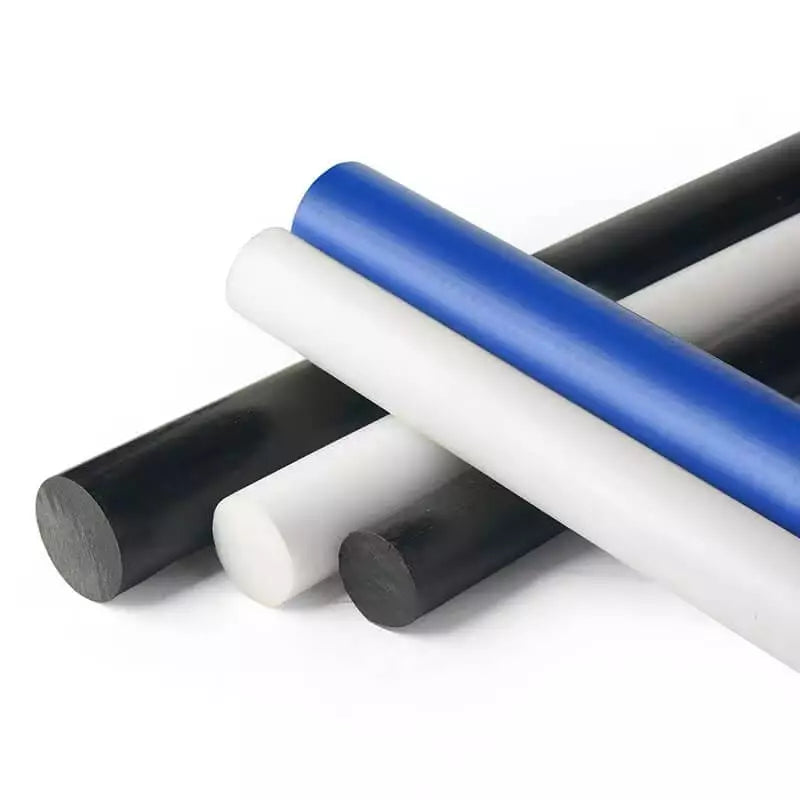
Beige nylon rod 500mm length 6mm diameter - machinable PA6 engineering plastic for CNC turning

These properties collectively demonstrate why nylon is classified as a rigid thermoplastic rather than an elastic rubber. Understanding these characteristics helps engineers and procurement specialists select appropriate materials for CNC machining, injection molding, and custom fabrication applications.

Featured Nylon Stock Materials

Black PA6 nylon sheet 200x200mm for CNC machining

Machinable PA6 Nylon Sheet

200x200mm black nylon board, ideal for precision CNC machining and custom parts fabrication.

View Product →

Beige nylon rod 500mm for precision turning

Nylon Rod 500mm (6-50mm Dia)

Precision-extruded nylon rod in various diameters, perfect for turned parts and bushings.

View Product →

Custom nylon bushing machined from PA6 material for bearing applications

Nylon vs Rubber, ABS, PVC: Material Comparison for Engineers

Understanding how nylon compares to traditional materials and other plastics is essential for optimal material selection. Below we examine nylon’s advantages and trade-offs versus metals, rubber, and common plastics:

Nylon vs Traditional Materials

  • Steel: Nylon offers significant weight savings (density 1.13-1.15 g/cm³ vs 7.85 g/cm³ for steel) while maintaining tensile strength of 70-95 MPa. Although steel provides higher absolute strength (400+ MPa), nylon’s specific strength (strength-to-weight ratio) makes it superior for applications where weight reduction is critical, such as automotive parts and portable equipment. Nylon also provides corrosion resistance and electrical insulation that steel cannot match.
  • Aluminum: Like steel comparison, nylon provides weight reduction even versus aluminum (density 2.7 g/cm³). While aluminum offers better heat dissipation and maintains stiffness at higher temperatures, nylon surpasses aluminum in wear resistance, friction coefficient, and chemical resistance. At elevated temperatures (>120°C), however, nylon may experience softening and deformation where aluminum remains stable.
  • Glass: Nylon is significantly tougher and more impact-resistant than glass while maintaining excellent optical clarity in certain grades. Nylon can withstand higher shear stresses and pressure loads without catastrophic failure, making it ideal for safety shields, guards, and viewing windows in industrial equipment.

Nylon vs Other Plastics and Rubber

  • ABS Plastic: ABS (Acrylonitrile Butadiene Styrene) provides superior impact toughness, especially at low temperatures, and offers better dimensional stability in humid conditions since it is non-hygroscopic. However, nylon significantly exceeds ABS in tensile strength (70-95 MPa vs 40-50 MPa), wear resistance, and heat resistance (continuous use 80-120°C vs 70-80°C). For structural components, gears, and bearing applications, nylon’s superior hardness and strength make it the preferred choice.
  • PVC (Polyvinyl Chloride): PVC’s primary advantage is cost-effectiveness and excellent chemical resistance to acids and alkalis. However, PVC has much lower strength (tensile strength 40-60 MPa), poor temperature resistance (continuous use maximum 60-70°C), and becomes brittle at low temperatures. Nylon’s superior mechanical properties and temperature performance justify its higher material cost in demanding applications.
  • Rubber: This is where the fundamental difference between nylon and rubber becomes apparent. Rubber (elastomers) has high flexibility, excellent elastic recovery (300-800% elongation), and superior vibration damping properties. Rubber is ideal for seals, gaskets, shock absorbers, and anti-vibration mounts. Conversely, nylon’s rigidity, dimensional stability, and high abrasion resistance make it unsuitable for applications requiring elasticity but superior for load-bearing structural components. Nylon maintains shape under load where rubber would deform; rubber absorbs shock and vibration where nylon would transmit forces.
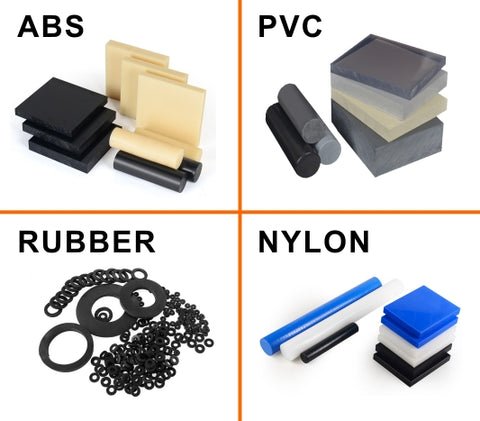
Material comparison chart showing nylon vs ABS vs PVC vs rubber properties

In summary, nylon’s advantages include excellent hardness and strength, outstanding wear resistance, broad chemical compatibility, and diverse application versatility. However, optimal material selection requires evaluating specific operating conditions including temperature extremes, moisture exposure, chemical environment, mechanical loads, and cost constraints. In some specialized applications, alternative materials may provide better performance, which is why comprehensive material analysis is critical in engineering design.

🛠️ Need Custom Nylon Components? We Machine to Your Specifications

From CNC turning and milling to laser cutting and drilling, BeePlastic provides high-precision processing of nylon parts for all industries worldwide.

📩 Upload your technical drawings and receive a detailed quote directly from our engineering team within 1 business day.

🔷 Services Include:

  • Tolerance control down to ±0.03mm
  • Threaded holes, counterbores, slots, step cuts
  • Surface finishing: polished, sandblasted, anodized
  • Color matching (black, white, natural, blue)
  • No minimum order quantity (MOQ)

Request Custom Quote →

Precision CNC machining services for custom nylon plastic parts and components

Industrial Applications: Why Nylon is Essential in Custom Plastic Processing

As a versatile engineering thermoplastic, nylon’s unique combination of chemical and mechanical properties makes it indispensable across numerous industries. The material’s synthesis from polyamide monomers containing amino functional groups enables excellent chemical reactivity and compatibility with various industrial processes and environments.

Nylon’s advantages over traditional materials like steel and aluminum include significantly lighter weight, superior corrosion resistance, excellent electrical insulation, and self-lubricating properties. These characteristics enable direct metal replacement in applications such as gears, bearings, bushings, structural brackets, and fasteners, delivering cost savings through reduced weight, simplified manufacturing, and elimination of lubrication maintenance.

Compared to other plastics and rubber materials, nylon demonstrates significantly higher hardness and tensile strength than ABS plastic and PVC. Unlike brittle plastics that crack under stress, nylon’s semi-crystalline structure provides toughness and impact resistance. While rubber excels in flexibility, shock absorption, and vibration damping applications (seals, gaskets, mountings), nylon’s rigidity and dimensional stability make it superior for precision mechanical components requiring consistent performance under load.

Key industrial applications include:

  • Automotive: Gears, timing chain components, fuel system parts, engine covers, air intake manifolds, under-hood electrical connectors
  • Industrial Machinery: Bearing cages, conveyor rollers, wear pads, guide rails, idler pulleys, actuator components
  • Electrical/Electronics: Connectors, cable ties, switch housings, circuit breaker components, coil formers
  • Consumer Products: Zippers, brush bristles, fasteners, hinges, kitchen utensils, sporting goods
  • Medical Devices: Surgical instruments, catheter components, tubing connectors (medical-grade formulations)

In summary, nylon’s characteristics include outstanding mechanical strength, excellent wear and friction properties, good electrical insulation, and exceptional thermal stability. These properties have established nylon as a cornerstone material in custom plastic processing and modern industrial manufacturing.

Understanding the definition, classification, and properties of nylon materials—along with the key differences between nylon and other materials—enables engineers and procurement specialists to select the optimal material for specific application requirements. Proper material selection, combined with appropriate CNC machining processes and precision cutting techniques, ensures maximum performance, durability, and cost-effectiveness in final products.

Get Expert Support for Your Nylon Material Selection

If you’re interested in this article and need more information on using nylon materials for custom production, our team at BeePlastic is ready to help. We provide technical support and professional engineering guidance tailored to your specific application requirements, helping you achieve optimal results in nylon processing and fabrication.

Whether you need to purchase nylon sheets, rods, or custom-machined components, please contact us via email or our inquiry form. Our professional engineering team responds promptly to all inquiries and will assist you in selecting high-quality, reliable nylon materials that meet your performance specifications and budget requirements.

Thank you for reading this comprehensive guide to nylon materials. We invite you to explore other related articles on our website where we continuously publish the latest industry insights and high-quality technical content to better serve our customers worldwide and contribute to the advancement of the plastics processing industry.

🎉🎉🎉 Limited Time Offer: Use code QR4GNY08SHVR at checkout and enjoy a special discount on your entire order! Shop Nylon Materials →

Various sizes of nylon rods for custom CNC machining and fabrication

Leave a comment


Please note, comments must be approved before they are published


Custom Plastic Fabrication

Send your drawing, material and quantity for review

🔧
Precision Machining
CNC milling & turning
✂️
Cutting & Engraving
Laser & waterjet cutting
🏭
Forming & Molding
Thermoforming & injection
🔗
Joining & Assembly
Welding & bonding
📐
Design & Prototyping
CAD design & samples

General

HDPE

PP

PVC

ABS

Engineering

POM

Nylon

PC

PMMA

High-Performance

PEEK

PEI

PTFE

Composites

FR-4

G10

Flexible

TPU

Silicone

Why Choose BeePlastic?

🎯
Perfect Fit
Custom specs eliminate adaptation needs
⚡
Clear Lead Times
Lead time confirmed with every quote
💰
Volume Pricing
Volume pricing available on bulk orders
🤝
Expert Support
Free engineering consultation included
📋
Submit
→
🔍
Review
→
💵
Quote
→
✅
Production
→
📦
Deliver

Request a Quote

Share your project details, selected material and quantity on our quote page. You can add a file link or use the email drawing route shown there.


Request Quote

Industries: Automotive • Medical • Food • Lab • Semiconductor

beeplastic@beeplastic.com