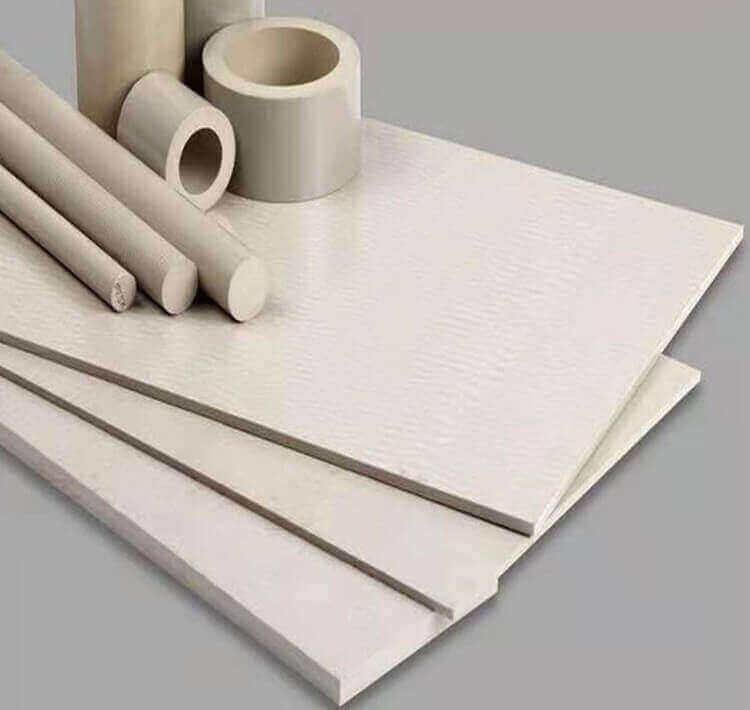
Did you know that plastics also come in materials that can cope with high temperatures, chemicals, abrasion and tearing, and still retain their shape and properties? Perhaps you have heard of two plastics, PPS or PEEK. Indeed, they are both high-performance thermoplastics and while they have a lot in common, they also have some important differences.
🎉🎉🎉Limited Time Offer Use code: QR4GNY08SHVR at checkout and enjoy a special discount on your entire order! 👉PEEK plastic
Now take a look at this article! In this article we will look at PPS and PEEK materials, their advantages and disadvantages, and their uses in various industries.
Similarities between PPS and PEEK
PPS and PEEK are both semi-crystalline, high-performance thermoplastics, which means they have a partially ordered molecular structure that gives them high strength and stiffness. So there are common properties and advantages, such as:
Good chemical compatibility: they are resistant to most acids, bases, solvents and fuels without degradation or corrosion. Low friction: They have a smooth surface which reduces friction and noise when in contact with other materials. Good resistance to fatigue cracking and abrasion: they can withstand repeated stress and abrasion without cracking or losing their shape. Flame retardant: they are self-extinguishing when exposed to fire or heat without releasing toxic gases or fumes. Dimensionally stable: Their low coefficient of thermal expansion means they do not expand or contract much when heated or cooled. Low moisture absorption: they do not absorb water or humidity from the environment, which prevents expansion or distortion. Good insulating properties: they have a high electrical resistance and a low dielectric constant, which makes them suitable for electrical insulation. Due to these properties, PPS and PEEK are used in many different industries and applications, such as: Oil and gas: They can withstand high temperatures, pressures and corrosive fluids in valves, seals, pumps, pipes and connectors. Food and dairy: They can comply with FDA regulations and resist bacterial growth in food processing equipment, packaging and utensils. Medical implants: They can be biocompatible and sterilisable in artificial joints, dental implants, surgical instruments and catheters.
What Makes PPS and PEEK Different
Knowing what they have in common, since they are not the same name, it means that there must be different differences, and these differences mean that they are used for different purposes. Here are some of the main differences between PPS and PEEK:
Temperature limit of use: PEEK has a higher maximum continuous working temperature than PPS (480°F versus 430°F), which means it can handle higher thermal environments without losing its properties or melting. PV limit: PV is a measure of the pressure and speed a material can withstand in a bearing application. pEEK has a higher PV than PPS, which means it can handle higher loads and speeds without wearing out or generating excessive heat. Tensile Strength: Tensile strength is a measure of how much force a material can withstand when stretched before it breaks.PEEK has a slightly higher tensile strength than PPS (14 ksi vs. 12 ksi), which means it can resist more tension without breaking or deforming. Compressive Strength: Compressive strength is a measure of how much force a material can withstand before it breaks when compressed; PPS has a better compressive strength than PEEK (18 ksi vs 16 ksi), which means it can resist more compression without breaking or deforming. Impact Strength: Impact strength is a measure of how much energy a material can absorb before it breaks when impacted by an object.PEEK has a higher Izod notched impact strength than PPS (1.5 to 2.2 ft-lb/in vs. 0.38 to 1.5 ft-lb/in), which means it can withstand more impact without cracking or shattering. Chemical resistance: Although both PPS and PEEK have good chemical resistance, PPS has better chemical resistance than PEEK, with no known solvents below 400°F. This means it can resist more aggressive chemicals without dissolving or swelling.
Depending on the application, one material may be preferred over the other. For example
High temperature environments: PEEK is more suitable than PPS for applications involving high temperatures, such as aerospace, automotive and electronics. High PV bearing applications: PEEK is more suitable than PPS for applications involving high pressures and speeds, such as pumps, compressors and turbines. Coloured products: PPS is more suitable than PEEK for applications where colour is required, such as toys, cosmetics and household items. PPS is easier to add pigments to than PEEK, which is often available in dark colours.
How do we choose them?
In summarising the above, we have learned about the similarities and differences between the two materials, PPS and PEEK. If you are looking for a high performance thermoplastic material for your project or product, then feel free to harass us if you still have questions after reading this article. beeplastic could be one of your best options if you are looking for a high quality supplier of bespoke plastics. We would love to be bothered by you and help you with your needs. Do you need a free quote or any questions or help with your materials.
🎉🎉🎉Limited Time Offer Use code: QR4GNY08SHVR at checkout and enjoy a special discount on your entire order! 👉PEEK plastic
Insulating materials are essential for many applications that require thermal protection, electrical insulation, or mechanical stability. Among the various types of insulating materials, polyurethane (PUR) and polyisocyanurate (PIR) are widely used because of their excellent insulation properties, low thermal conductivity, and high strength. However, there are also other high-performance thermoplastics that can be used as insulating materials, such as polyether ether ketone (PEEK) and polyphenylene sulfide (PPS). In this article, we will compare PEEK and PPS based on their advantages and disadvantages, and help you decide which one is the better insulating material for your needs.
🎉🎉🎉Limited Time Offer Use code: QR4GNY08SHVR at checkout and enjoy a special discount on your entire order! 👉PEEK plastic
PEEK is a semicrystalline thermoplastic that has a high maximum operating temperature of 480°F, compared to 430°F for PPS. This means that PEEK can withstand higher temperatures without losing its mechanical properties or thermal stability.PEEK also has a higher tensile strength and impact resistance than PPS, which makes it more durable and resistant to cracking or breaking.PEEK is available in FDA-approved grades for medical applications, which means that it can be used for implants, surgical instruments, or other devices that require biocompatibility and sterilization.
However, PEEK also has some drawbacks that limit its use as an insulating material.One of them is its high cost, which is much higher than PPS.PEEK is also prone to hydrolysis in hot water or steam, which means that it can degrade or lose its properties when exposed to moisture or humidity.PEEK is also difficult to process and requires special equipment, which increases the complexity and cost of manufacturing.
PPS is another semicrystalline thermoplastic that has similar properties to PEEK, such as low friction, good wear resistance, good chemical resistance, and good dimensional stability. However, PPS has some advantages over PEEK that make it a more economical and versatile insulating material.One of them is its lower cost, which is substantially lower than PEEK.PPS also has better chemical resistance than PEEK, with no known solvents below 400°F. This means that PPS can resist corrosion or degradation by acids, bases, salts, or organic solvents.PPS also has better compressive strength than PEEK, which means that it can withstand higher pressures or loads without deformation.
However, PPS also has some limitations that prevent it from being the best insulating material for all applications.One of them is its lower maximum operating temperature than PEEK (430°F vs 480°F). This means that PPS cannot be used for applications that require higher temperatures or thermal shock resistance.PPS also has a lower PV limit and strength than PEEK, which means that it cannot handle high speeds or friction as well as PEEK.PPS also has a lower elongation and impact resistance than PEEK, which means that it is more brittle and prone to cracking or breaking.
In conclusion, both PEEK and PPS are high-performance thermoplastics that can be used as insulating materials for various applications. However, they have different advantages and disadvantages that make them suitable for different needs and requirements. If you need an insulating material that can withstand high temperatures, high impacts, or high biocompatibility, then PEEK might be the better choice for you. However, if you need an insulating material that can resist chemicals, compression, or pigmentation, then PPS might be the better choice for you. Ultimately, the best insulating material depends on your specific design and application.
We hope this article has helped you understand the differences between PEEK and PPS as insulating materials. If you have any questions or comments, please feel free to contact us. We would love to hear from you.
If you are interested in using polyurethane products or want to know more information, welcome to harass us. We’d love to be bothered by you and help you with your needs. Do you need a free quote or any questions or help with the material.
PEEK is expensive because three things are all genuinely hard at once: synthesizing the polymer, sourcing it from a small set of producers, and processing or machining it without ruining the part. None of those is marketing. They are real constraints baked into the material.
But the price tag is not the question that matters most. The question is whether your specific part actually needs PEEK. Engineers reach for it on reputation, then get a quote that stops the project. Sometimes PEEK is the only material that survives the job. Sometimes a lower-cost high-temperature polymer meets every line on the spec for a fraction of the cost.
This page explains what drives PEEK’s price, how the grades differ, what machining it well actually takes, and how to decide when it is worth it. Engineer to engineer — no hype, no pressure to overspend.
What Is PEEK?
PEEK — polyetheretherketone — is a semi-crystalline thermoplastic in the PAEK (polyaryletherketone) family. It sits at the top of the engineering-plastics pyramid, and it earns that spot on properties, not branding.
Four things define it. First, a high continuous service temperature: PEEK holds its mechanical performance at temperatures that melt or soften most other thermoplastics, with a continuous use rating around 250°C. Second, a high glass transition temperature (Tg) of 143°C, which is where the material starts to lose stiffness — well above where commodity plastics give up. Third, excellent chemical resistance: PEEK shrugs off most solvents, acids, and hydrocarbons, which is why it shows up in oil & gas and semiconductor wet environments. Fourth, strong mechanical properties — high strength, stiffness, and fatigue resistance that hold up under load.
It is also inherently flame retardant and low-smoke, with no additives required. That matters in aerospace and electrical applications where flammability is a hard limit.
If you need a part that survives heat, chemicals, and mechanical stress simultaneously, PEEK is one of the few materials that delivers all three. The cost follows from that capability.
Why Is PEEK So Expensive?
PEEK’s price is not a markup. It traces back to chemistry, market structure, and fabrication — three independent reasons that stack on top of each other.
High-Temperature Synthesis
PEEK is built by step-polymerization. The reaction combines bisphenolate salts with a difluorobenzophenone monomer in a high-boiling polar aprotic solvent — typically diphenyl sulfone — at around 300°C. That temperature is not incidental. The growing polymer chains stay in solution only at extreme heat, and the reaction has to be held in a narrow window to control molecular weight and avoid defects.
This is a hard process to run. It needs specialized high-temperature reactors, tight process control, and solvent recovery systems most chemical plants do not have. The monomers themselves are not commodity feedstocks. Every step adds cost, and there is little room to cut corners without degrading the resin. The difficulty of making PEEK at all is the first reason it costs what it does.
Limited Supply, Growing Demand
PEEK is a young polymer. It was first produced in the late 1970s, which makes it decades younger than commodity engineering plastics. Only a small number of producers worldwide make it at scale. Global PEEK capacity is measured in the tens of thousands of tonnes per year, against millions of tonnes for commodity engineering plastics like nylon and polycarbonate. That gap is structural, not a rounding error.
Meanwhile demand keeps climbing. Aerospace, medical, semiconductor, and oil & gas all keep finding new uses for PEEK, and the qualification cycles in those industries lock in long-term consumption. Limited supply against rising, sticky demand holds the price up. This is basic market structure, not a temporary shortage that will resolve next quarter.
Hard to Process and Machine
PEEK’s properties cut both ways. The same thermal stability that makes it useful makes it difficult to form. Its melting point sits at 343°C and its glass transition at 143°C, so molding and extrusion demand high-temperature equipment and precise control — ordinary thermoplastic tooling will not reach it.
Machining is its own challenge. PEEK is abrasive and tough. It wears tooling faster than commodity plastics, and it holds internal stresses that can move dimensions or crack a part if the work is done carelessly. Cutting PEEK to tight tolerances takes the right tooling, the right feeds and speeds, and real experience — a point that becomes critical in the machining section below.
PEEK Price Per Kg — What to Expect
There is no single PEEK price per kg, and anyone who gives you one flat number is hiding the variables that actually move the cost. Three drivers decide what you pay.
Grade. This is the biggest lever. Virgin (unfilled) PEEK is the baseline. Glass-filled and carbon-filled grades cost more, because the filler and the compounding step add cost. Bearing and wear grades sit higher still. Medical and implant grades sit far above everything else — qualification and traceability, not just the resin, drive that tier.
Form. The same resin costs differently as rod, plate, sheet, or film. Extruded rod, compression-molded plate, and thin film each carry different processing costs, and stock availability in your exact size matters.
Quantity. PEEK follows a quantity curve. Small one-off cuts carry a higher per-kg cost than larger orders, though for an expensive material the absolute spend on small lots is often still manageable. We hold no minimum order quantity, so a single prototype part is not a problem.
The number that matters is the cost of your part, not the cost of a kilogram. Material grade, the form you start from, how much you machine away, and order size all feed into it. Send us your part for a quote and you get a real figure instead of a range.
When PEEK Is Worth It — A Decision Framework
PEEK is worth it when the job genuinely demands everything PEEK offers at once: high temperature, chemical resistance, and mechanical strength together, in a part where failure is expensive. It is not worth it when you are paying for properties the application never uses.
The most common mistake is specifying PEEK on reputation. Against commodity plastics the gap looks dramatic — PEEK often costs more than 20 times what polyurethane, nylon, or polycarbonate cost per kg. That contrast is real, but it is also the wrong comparison. Those materials were never going to survive the service conditions PEEK is chosen for.
The comparison that matters is against the other high-performance polymers a buyer actually weighs. PEI/Ultem and PPS both handle real heat at lower cost. If your part runs hot but not at PEEK’s ceiling, and chemical exposure is moderate, one of them may meet every requirement. PTFE wins on chemical resistance and low friction but cannot carry structural load. PAI/Torlon beats PEEK on mechanical performance at temperature, at a higher price.
Material
Continuous service temp
Relative cost
Typical reason to pick
PEEK
~250°C
Highest
Heat + chemical + mechanical, all at once
PEI / Ultem
~170°C
Lower
Heat and stiffness on a tighter budget
PPS
~220°C
Lower
Strong chemical resistance, lower cost
PTFE
~260°C
Varies
Chemical resistance, low friction; not structural
PAI / Torlon
~260°C
Very high
Extreme mechanical strength at temperature
PPS is the substitution we see most often, and it is frequently the right call. We cover that trade-off in detail in our PEEK vs PPS comparison. If PEEK is the answer after that honest look, you will know exactly why — and that is when the cost is justified.
PEEK Grades and How to Choose
PEEK is not one material. Picking the wrong grade is one of the most common ways buyers overspend — paying for carbon fiber when virgin PEEK would have done the job, or specifying a structural grade for an electrical insulator that needs the opposite property.
Start with what the part actually does. If it needs electrical insulation, you want virgin (unfilled) PEEK — not carbon-filled or carbon/graphite bearing grades, which all conduct. If it carries load at temperature, a glass- or carbon-filled grade earns its higher cost through stiffness and dimensional stability. If it slides against another surface, a bearing grade is built for it.
Grade
What it is
Best for
Relative cost
Virgin / unfilled
Pure PEEK; best toughness, elongation, and electrical insulation
Semiconductor insulators, seals, wafer-contact parts
Baseline
Glass-filled (GF30)
~30% glass fiber; higher stiffness, dimensional stability, lower creep at temperature; not for electrical insulation
PEEK blended with PTFE, graphite, and/or carbon; low friction, high wear resistance
Bushings, bearings, wear pads
Premium
Over-specifying is a real cost mistake. A filled grade costs more, and on an already expensive material that adds up fast. If you are not sure which grade fits, tell us the operating conditions — temperature, load, chemical exposure, electrical requirement — and we will point you to the right one. You can also browse our PEEK stock and grades to see what is available in rod, plate, sheet, and film.
Machining PEEK — Stress, Cracking & Tolerances
PEEK holds tight tolerances, but only if you respect how it behaves. The failures we see come from treating it like aluminum.
The biggest risk is internal stress. PEEK stock carries residual stress from how it was extruded or molded, and machining releases it. On a tight-tolerance part or a thin wall, that release shows up as cracking or dimensional drift after the part comes off the machine. The fix is stress relief: annealing the material, often between roughing and finishing passes, lets the stress settle before the final dimensions are cut. Skip this step on a precision part and it can move out of spec days later.
PEEK is also abrasive. It wears tooling faster than commodity plastics, and filled grades wear it far faster — glass and carbon fiber are hard on cutting edges. Those grades need carbide or PCD (polycrystalline diamond) tooling to hold an edge and a finish.
Coolant is its own trap. PEEK does not shed heat like metal, and heavy flood coolant can shock-cool the cut and seed micro-cracking. Controlled air or a light mist is often the better choice, keeping the cut stable without thermal shock.
With the right tooling, the right feeds and speeds, and proper stress management, PEEK is predictable. We work to ±0.03mm, and a free DFM review catches stress and tolerance risk before any material is cut — which on a costly material is exactly where you want the problem caught. See our CNC machining services for how we handle precision PEEK parts.
Buying Genuine PEEK — Quality and Sourcing
Not all “PEEK” is PEEK. Recycled or refilled material is sometimes sold as virgin, and the cheapest stock on the market is often regrind — reprocessed scrap that will not perform like the datasheet says. On a material chosen for reliability, that is a real risk.
The protection is documentation. A genuine stockist can provide a Certificate of Analysis (COA) tying the material to its grade and source. That paper trail is part of why genuine PEEK costs what it does, and it is what stands between you and a part that fails qualification. We provide a COA on request.
We hold PEEK in rod, plate, sheet, and film, with no minimum order quantity — a single prototype part is not a problem. If you only need stock cut to your dimensions, our cut-to-size service handles that directly. To see grades and forms in stock, browse our PEEK inventory.
Common PEEK Applications
The parts we machine most in PEEK come from semiconductor and electronics work: insulators, test and handling fixtures, and wafer-contact parts where dimensional stability and cleanliness matter. We also machine a lot of high-temperature electrical insulation, and seals, washers, and bushings where the material has to hold up under heat and load at the same time. These are the custom jigs and fixtures precision shops rely on.
PEEK is also widely used in aerospace, where its strength-to-weight ratio and flame resistance pay off — see our PEEK in aerospace article. It is used in medical and implantable devices across the industry as well, covered in our article on PEEK medical implants. We machine PEEK to customer specifications and do not supply implant-grade certified material or make biocompatibility claims.
Frequently Asked Questions
Why is PEEK so expensive?
Three reasons stack up: a difficult high-temperature synthesis that needs specialized equipment, a small number of producers keeping global supply tight, and a high melting point that makes the material hard to process and machine.
How much does PEEK cost per kg?
There is no single number. Price depends on grade, the form you start from, and quantity. The figure that matters is the cost of your specific part, which comes from a quote — not a per-kg list price.
Is PEEK worth the cost?
It is worth it when your part genuinely needs high temperature, chemical resistance, and mechanical strength all at once. If only one or two of those matter, PPS or PEI/Ultem may meet the spec for far less.
Why is PEEK filament so expensive?
The same cost drivers apply — hard synthesis, limited supply, costly raw resin. On top of that, printing PEEK demands a high-temperature printer, tight thermal control, and tolerates significant waste from failed prints.
What is the difference between virgin, glass-filled, and carbon-filled PEEK?
Virgin is pure PEEK with the best toughness and electrical insulation. Glass-filled adds stiffness and stability; carbon-filled adds the most strength and is conductive. See the grade table, and avoid over-specifying.
Can PEEK be machined to tight tolerances without cracking?
Yes. The key is stress relief — annealing the material, often between roughing and finishing — plus the right tooling and coolant strategy. We work to ±0.03mm on precision PEEK parts.
Is there a minimum order quantity for PEEK?
No. We hold no minimum order quantity, so a single prototype part is fine. For an expensive material, not being forced into a large lot matters.
What temperature can PEEK handle?
PEEK has a continuous service temperature around 250°C, a glass transition temperature of 143°C, and a melting point of 343°C. It holds mechanical performance where most thermoplastics fail.
PEEK vs PEI/Ultem or PPS — which should I choose?
It depends on how hot the part runs and what chemical and mechanical demands it faces. PPS and PEI/Ultem handle real heat at lower cost. For the full trade-off, see our PEEK vs PPS comparison.
Get a Quote on Your PEEK Part
Tell us what the part has to do, and we will help you get the grade, the tolerance, and the cost right. Upload your CAD files or send a drawing for a quote within 1 business day and a free DFM review.
Buy PEEK Stock
PEEK rod, plate, sheet, and film. No minimum order quantity. Genuine, traceable virgin PEEK. Global shipping.
Send CAD files or a drawing for a quote within 1 business day and free DFM review. ±0.03mm tolerances, no minimum order quantity, in-house material expertise.
Imagine a plastic material that can handle anything you throw at it. A material that can resist high temperatures, harsh chemicals, and heavy wear. A material that can outperform other plastics and metals in many ways. Sounds too good to be true, right? Well, it’s not. It’s PEEK. PEEK is a high-performance thermoplastic that has a lot of benefits for engineering applications. In this blog post, we will show you what PEEK is, how it is made, what it can do, and where you can find it.
🎉🎉🎉Limited Time Offer Use code: QR4GNY08SHVR at checkout and enjoy a special discount on your entire order! 👉PEEK plastic
What is PEEK and what makes it special?
PEEK stands for polyether ether ketone, which is a fancy name for a type of plastic. PEEK belongs to a family of plastics called polyaryletherketones (PAEKs), which are known for their amazing thermal and mechanical properties. PEEK was first developed in 1978 and introduced to the market in the early 1980s by two British companies: Victrex PLC and Imperial Chemical Industries (ICI).
PEEK is a semi-crystalline thermoplastic, which means that it has some order and some disorder in its molecular structure. The amount of order depends on how PEEK is processed and can affect how strong and stiff it is. PEEK has a high melting point of 343 °C (649 °F) and a glass transition temperature of 143 °C (289 °F), which means that it can keep its shape and function at high temperatures. PEEK also has a high tensile strength of 90 to 100 MPa (13,000 to 14,500 psi) and a Young’s modulus of 3.6 GPa (520,000 psi), which means that it can resist stretching and breaking under stress.
PEEK is not only strong and stiff, but also resistant to many types of damage. PEEK can resist wear, abrasion, fatigue, and creep, which means that it can last longer and perform better over time and under repeated loading. PEEK can also resist chemicals, solvents, acids, bases, and hydrolysis, which means that it can survive in corrosive environments. PEEK is also resistant to thermal degradation, UV radiation, gamma rays, and biodegradation, which means that it can withstand extreme conditions without losing its properties.
What are the different types of PEEK and how are they different?
PEEK comes in different types depending on how pure and reinforced it is. The most common type is PEEK 450G, which is an unfilled type with high purity and excellent mechanical properties. However, PEEK can also be reinforced with various fillers to improve its properties for specific applications. Some of the common fillers are:
Carbon fiber: Carbon fiber makes PEEK stronger, stiffer, more thermally conductive, and more wear resistant, while making it lighter and less thermally expansive. Carbon fiber reinforced PEEK is good for applications that need high load-bearing capacity and dimensional stability at high temperatures.
Glass fiber: Glass fiber makes PEEK stronger, stiffer, more heat resistant, and more dimensionally stable, while making it cheaper and lighter. Glass fiber reinforced PEEK is good for applications that need high rigidity and resistance to deformation at elevated temperatures.
Other plastics: Other plastics such as polytetrafluoroethylene (PTFE), polyphenylene sulfide (PPS), or polyetherimide (PEI) can be mixed with PEEK to make it more slippery, more wear resistant, more chemical resistant, or more electrically insulating. These mixes are good for applications that need low friction or high insulation.
What are some of the unique benefits of PEEK that make it versatile?
PEEK has some unique benefits that make it stand out from other plastics and metals. Some of these benefits are:
Biocompatibility: PEEK is biocompatible, which means that it does not harm living tissues or fluids when in contact with them. PEEK is also bioinert, which means that it does not degrade or interact with biological substances. These benefits make PEEK ideal for medical implants and surgical devices that need to be compatible with the human body.
UV resistance: PEEK is UV resistant, which means that it does not degrade or change color when exposed to sunlight or artificial light sources. This benefit makes PEEK suitable for outdoor applications that need to resist weathering and aging.
Radiolucency: PEEK is radiolucent, which means that it does not block or absorb X-rays or other forms of radiation. This benefit makes PEEK suitable for applications that need to be transparent to imaging techniques such as X-ray, MRI, or CT scan.
Gamma-ray resistance: PEEK is gamma-ray resistant, which means that it does not degrade or change its properties when exposed to high-energy radiation. This benefit makes PEEK suitable for applications that need to survive in radioactive environments such as nuclear power plants or medical sterilization.
Low/no toxicity: PEEK is low or non-toxic, which means that it does not release harmful substances or gases when heated, burned, or processed. This benefit makes PEEK suitable for applications that need to be safe and environmentally friendly.
PEEK is a high-performance plastic that has many benefits over other plastics and metals. It has a unique combination of strength, stiffness, temperature resistance, chemical resistance, wear resistance, and creep resistance. It also has some unique benefits such as biocompatibility, UV resistance, radiolucency, gamma-ray resistance, and low/no toxicity. These benefits make PEEK suitable for various engineering applications in aerospace, automotive, structural, high temperature electrical, and biomedical industries.
If you want to learn more about PEEK or use it for your next project, please contact us today. We can provide you with high-quality PEEK products and services at competitive prices. We can also help you with design, prototyping, testing, and manufacturing of your PEEK parts. We are looking forward to hearing from you soon.
🎉🎉🎉Limited Time Offer Use code: QR4GNY08SHVR at checkout and enjoy a special discount on your entire order! 👉PEEK plastic
Transportation is an essential part of our modern society, but it also poses many challenges for the environment, the economy, and the safety of people. How can we make transportation more sustainable, efficient, and reliable? One possible solution is to use polyurethane, a versatile and adaptable polymer that can be used in various transport applications such as foams, coatings, adhesives, and composites. In this article, we will explore the benefits of polyurethane for transport in terms of thermal insulation, weight reduction, durability, corrosion resistance, and flame retardancy. We will also provide examples of transport sectors that use polyurethane such as automotive, aerospace, rail, and marine.
🎉🎉🎉Limited Time Offer Use code: QR4GNY08SHVR at checkout and enjoy a special discount on your entire order! 👉PU board
What is polyurethane?
Polyurethane (PU) is a class of polymers composed of organic units joined by carbamate (urethane) links. It can be produced from a wide range of starting materials, which gives it great flexibility and diversity in its properties and applications. PU can be either thermoplastic or thermoset, depending on the processing conditions. PU can also form block copolymers with hard and soft segments, which can enhance its mechanical strength and elasticity .
How does polyurethane improve thermal insulation?
One of the main benefits of PU is its excellent thermal insulation performance. PU foams are widely used in buildings and refrigerators to reduce heat loss and energy consumption. PU foams can also be used in vehicles to improve passenger comfort and reduce noise. For example, PU foams are used in car seats, headrests, dashboards, door panels, and roof liners.PU foams can also be used in aerospace applications to protect spacecraft from extreme temperatures and vibrations.
How does polyurethane reduce weight?
Another benefit of PU is its ability to reduce weight without compromising strength or functionality. PU foams have a low density and a high strength-to-weight ratio, which makes them ideal for lightweight applications. PU foams can also be combined with other materials such as metals or fibers to form composites with enhanced properties. For example, PU composites are used in car bumpers, spoilers, fenders, and hoods to improve fuel efficiency and reduce emissions.PU composites are also used in aerospace applications to reduce structural weight and increase aerodynamic performance.
How does polyurethane enhance durability?
PU also has a high durability and resistance to wear and tear. PU coatings are used to protect various surfaces from corrosion, abrasion, weathering, and chemical attack. PU coatings can also provide aesthetic appeal and color stability. For example, PU coatings are used on car bodies, wheels, windows, mirrors, and lights to improve appearance and longevity.PU coatings are also used on rail tracks, bridges, tunnels, and ships to prevent rust and deterioration.
How does polyurethane increase safety?
PU also contributes to the safety of passengers and drivers by providing passive and active protection. PU foams can absorb impact energy and reduce injuries in case of collisions or crashes. PU foams can also act as fire barriers and prevent the spread of flames and smoke. For example, PU foams are used in car interiors, airbags, seat belts, and helmets to improve crashworthiness and fire resistance.PU foams are also used in aircraft cabins, seats, luggage compartments, and insulation panels to enhance fire safety.
In conclusion, polyurethane is a valuable material for transport applications that can improve efficiency and safety while reducing environmental impact. Polyurethane can be designed on-demand to meet the specific needs of different transport sectors such as automotive, aerospace, rail, and marine. Polyurethane also provides comfort, durability, and design freedom for transport users and manufacturers. If you want to learn more about polyurethane products and applications, please visit the websites of Beeplastic.com , which provide more information and resources on this topic. Thank you for reading this article and we hope you enjoyed it.
If you are interested in using polyurethane products or want to know more information, welcome to harass us. We’d love to be bothered by you and help you with your needs. Do you need a free quote or any questions or help with the material.
🎉🎉🎉Limited Time Offer Use code: QR4GNY08SHVR at checkout and enjoy a special discount on your entire order! 👉PU board
Have you ever wondered how to create stunning and durable products with UV printing? UV printing is a technology that uses ultraviolet light to cure ink on various surfaces. It has many advantages over traditional printing methods, such as:
It can print on almost any material, including ABS plastic, metal, wood, glass, etc.
It can produce high-quality images with vivid colors and sharp details.
It can resist fading, scratching, water, and chemicals.
It can save time, energy, and resources by eliminating the need for drying or coating.
🎉 Limited Time Offer!
Use code: QR4GNY08SHVR at checkout for a discount on your entire order!
In this article, we will show you how to UV print on ABS plastic and other materials. ABS plastic is one of the most popular and versatile materials for UV printing. It has many properties and characteristics that make it suitable for various applications, such as:
It is strong, impact-resistant, and heat-resistant.
It has a smooth surface that allows for even ink distribution and adhesion.
It has low shrinkage and low warping rates that prevent cracking or peeling of the ink.
It is widely used for making toys, automotive parts, electronic devices, and more.
But before you start UV printing on ABS plastic or any other material, you need to prepare it properly. Here are some steps and tips for preparing ABS plastic for UV printing:
Clean the surface of the ABS plastic with alcohol and a lint-free cloth. This will remove any dust, dirt, grease, or fingerprints that may affect the quality of the print.
Dry the surface of the ABS plastic with a hairdryer or an air gun. This will ensure that there is no moisture or condensation that may interfere with the curing process.
Prime the surface of the ABS plastic with a primer spray. This will improve the adhesion and durability of the ink. You can use a clear or colored primer depending on your preference.
Mask the areas of the ABS plastic that you do not want to print on with masking tape. This will protect them from unwanted ink exposure.
The Printing Process
Now that you have prepared your ABS plastic for UV printing, you can proceed to print on it. Here are some steps and tips for UV printing on ABS plastic:
Choose the right printer settings for your ABS plastic. You can adjust the parameters such as ink type, resolution, speed, temperature, etc. according to your needs and preferences. You can also use a test print to check the quality and accuracy of the print before proceeding to the final product.
Load your ABS plastic into the printer tray or bed. Make sure that it is flat and secure. You can use clamps or magnets to hold it in place if necessary.
Align your image with your ABS plastic. You can use a software or a manual guide to position your image correctly on your ABS plastic. You can also use a preview function to see how your image will look like on your ABS plastic before printing.
Cure your ink with UV light. Once you start printing, the UV light will instantly cure your ink on your ABS plastic. You do not need to wait for it to dry or coat it with anything else.
Finish your product by removing any masking tape or excess ink. You can also polish or varnish your product if you want to enhance its appearance or protection.
Printing on Other Materials
Congratulations! You have successfully UV printed on ABS plastic! But what if you want to UV print on other materials? Well, you can do that too! Here are some examples of how to UV print on other materials that are similar or different from ABS plastic:
Acrylic: Acrylic is another type of plastic that is suitable for UV printing. It has a transparent or translucent appearance that allows for backlighting effects. It also has a high gloss finish that enhances the colors and details of the print. To UV print on acrylic, you need to follow similar steps as for ABS plastic, but you may need to lower the temperature or speed settings to prevent melting or cracking of the acrylic.
Metal: Metal is a material that is different from ABS plastic in terms of conductivity and reflectivity. It can create metallic effects and contrasts with UV printing. However, it may also require more ink or primer to achieve good adhesion and coverage. To UV print on metal, you need to follow similar steps as for ABS plastic, but you may need to increase the temperature or speed settings to ensure proper curing of the ink.
Wood: Wood is a material that is different from ABS plastic in terms of texture and porosity. It can create natural and rustic effects with UV printing. However, it may also absorb more ink or primer than other materials, which may affect the quality and cost of the print. To UV print on wood, you need to follow similar steps as for ABS plastic, but you may need to sand or seal the wood before printing to smooth out the surface and prevent ink bleeding.
Glass: Glass is a material that is different from ABS plastic in terms of transparency and fragility. It can create elegant and sophisticated effects with UV printing. However, it may also require more ink or primer to fill in the gaps or cracks on the glass. To UV print on glass, you need to follow similar steps as for ABS plastic, but you may need to use a special glass primer or a glass-compatible ink to ensure good adhesion and durability of the print.
As you can see, UV printing on ABS plastic and other materials is not difficult at all. You just need to follow some simple steps and tips, and you can create amazing and unique products with UV printing. Whether you want to make toys, signs, decorations, gifts, or anything else, UV printing can help you achieve your goals.
We hope that this article has helped you learn how to UV print on ABS plastic and other materials. If you have any questions or comments, please feel free to contact us. We would love to hear from you and assist you with your UV printing needs.
“If you are interested in using UV printed ABS products or want to know more information, welcome to harass us. We’d love to be bothered by you and help you with your needs. Do you need a free quote or any questions or help with the material.”
One-Stop Plastic Manufacturing
From standard stock materials to complex CNC parts, BeePlastic delivers precision and quality.
Polyoxymethylene (POM) custom processing, also known as acetal, polyacetal, or polyformaldehyde, is a high-performance engineering thermoplastic that is widely used in various industries and applications. It has excellent properties such as high stiffness, low friction, good dimensional stability, and resistance to wear, fatigue, and chemicals. POM can be classified into two types: homopolymer and copolymer, which have slightly different characteristics and performance.
🎉🎉🎉Limited Time Offer Use code: QR4GNY08SHVR at checkout and enjoy a special discount on your entire order! 👉 POM plastic
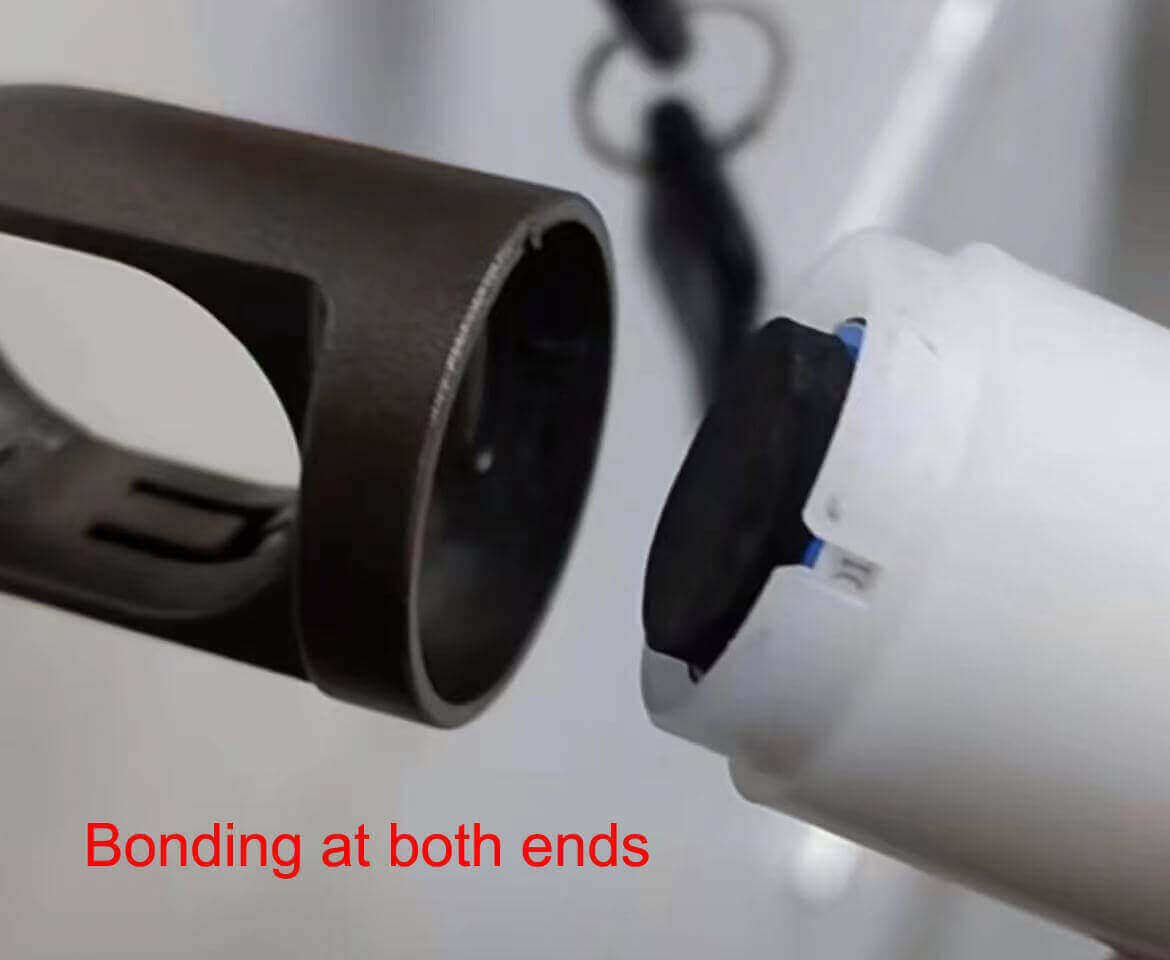
However, joining and bonding POM parts with other materials is not a simple task. POM has poor adhesion to most substrates due to its low surface energy and high crystallinity. It also has a high coefficient of thermal expansion which can cause stress or deformation of the joint due to temperature changes. Moreover, POM may be incompatible with some materials or chemicals that can affect its quality or durability. Therefore, choosing the right joining method and avoiding the common bonding challenges of POM is crucial for achieving optimal results.
In this article, we will discuss the common joining methods and challenges of POM parts with other materials, and provide some tips and recommendations on how to join and bond POM parts effectively and efficiently.
Joining Methods
POM parts can be joined by various methods, depending on the desired strength, appearance, and function of the joint. Some of the most common joining methods for POM parts are:
Adhesive bonding: This is a method for joining POM parts with other materials using an adhesive agent such as glue, epoxy, resin, etc. Adhesive bonding can provide a strong and durable joint with good aesthetics and flexibility. However, adhesive bonding requires proper surface preparation and treatment of POM parts to improve their adhesion. It also requires careful selection and application of the adhesive agent to ensure compatibility and curing.
Welding: This is a method for joining POM parts with other materials using heat or pressure to melt and fuse them together. Welding can provide a strong and permanent joint with good mechanical properties and resistance to chemicals. However, welding requires special equipment and skills to perform safely and accurately. It also requires proper control of the welding parameters such as temperature, pressure, speed, time, etc. to prevent thermal degradation or distortion of POM parts.
Mechanical fastening: This is a method for joining POM parts with other materials using mechanical devices such as screws, bolts, nuts, rivets, pins, etc. Mechanical fastening can provide a simple and fast joint with good adjustability and reversibility. However, mechanical fastening requires drilling or piercing of POM parts which can weaken their structure or cause stress cracking. It also requires proper selection and installation of the mechanical devices to ensure fit and function.
Bonding Challenges
While POM parts can be joined by various methods with other materials, it also poses some challenges and difficulties that need to be addressed during joining and bonding. Some of the main challenges and difficulties of joining and bonding POM parts with other materials are:Poor adhesion: POM has poor adhesion to most substrates due to its low surface energy and high crystallinity. This means that POM parts tend to repel rather than attract other materials or adhesives. Poor adhesion can result in weak or unstable joints that can fail under stress or load.
Thermal expansion mismatch: POM has a high coefficient of thermal expansion which means it expands when heated and contracts when cooled. This can cause stress or deformation of the joint due to temperature changes. Thermal expansion mismatch can result in cracks or gaps in the joint that can compromise its strength or function.
Chemical incompatibility: POM may be incompatible with some materials or chemicals that can affect its quality or durability. For example, POM may react with some acids or bases that can cause corrosion or degradation of POM parts. Chemical incompatibility can result in damage or failure of the joint due to chemical attack or leakage.
Solutions and Recommendations
To overcome or minimize the challenges and difficulties of joining and bonding POM parts with other materials, some solutions and recommendations are:
Use proper surface preparation and treatment: The surface preparation and treatment of POM parts can improve their adhesion by increasing their surface energy or roughness. For example, POM parts can be cleaned with solvents or detergents to remove dirt or grease. They can also be etched with chemicals or plasma to create micro-pores or grooves on the surface. They can also be coated with primers or adhesion promoters to enhance their compatibility with other materials or adhesives.
Use proper adhesive selection and application: The adhesive selection and application can ensure a strong and durable joint by matching the properties and performance of the adhesive agent with the POM parts and the other materials. For example, POM parts can be bonded with cyanoacrylate, epoxy, polyurethane, or acrylic adhesives that have good adhesion and curing characteristics. The adhesive agent should be applied in appropriate amounts and patterns to ensure uniform coverage and penetration. The adhesive agent should also be cured under controlled conditions and with proper equipment to ensure optimal bonding.
Use proper welding parameters and techniques: The welding parameters and techniques can ensure a strong and permanent joint by controlling the heat and pressure applied to the POM parts and the other materials. For example, POM parts can be welded with ultrasonic, laser, hot plate, or spin welding methods that have suitable frequency, power, speed, time, etc. The welding parameters should be optimized to avoid overheating or underheating of POM parts, ensure uniform melting and fusion of POM parts and the other materials, prevent thermal degradation or distortion of POM parts, etc.
Use proper mechanical fastening devices and methods: The mechanical fastening devices and methods can ensure a simple and fast joint by choosing the right size, shape, and type of the mechanical devices and installing them correctly on the POM parts and the other materials. For example, POM parts can be fastened with screws, bolts, nuts, rivets, pins, etc. that have suitable diameter, length, head, thread, etc. The mechanical devices should be selected and installed to ensure fit and function of the joint without causing damage or stress to POM parts.
POM is a high-performance engineering thermoplastic that can be joined and bonded with other materials by various methods to produce parts with excellent properties and versatile applications. However, joining and bonding POM parts with other materials also involves some challenges and difficulties that need to be addressed to achieve optimal results. By choosing the right joining method and avoiding the common bonding challenges of POM, you can join and bond POM parts effectively and efficiently.
We hope this article has given you some useful information and insights on how to join and bond POM parts with other materials. If you have any feedback or questions, please feel free to leave a comment below. We would love to hear from you.
You are interested in trying out POM material products or would like more information, please come and harass us. We’d love to be bothered by you and help you with your needs. Whether you need a free quote or any questions about the material or help with its use.
🎉🎉🎉Limited Time Offer Use code: QR4GNY08SHVR at checkout and enjoy a special discount on your entire order! 👉 POM plastic
If you are looking for a high-performance engineering plastic that can withstand demanding conditions, you might have heard of POM. POM, or polyoxymethylene, is a thermoplastic polymer that has excellent mechanical, thermal, and chemical properties. It is widely used in various industries, such as automotive, medical, electrical, and consumer goods.
🎉Limited Time Offer: Use code QR4GNY08SHVR at checkout and enjoy a special discount on your entire order! Shop POM plastic 👉
But how does POM compare with other engineering plastics, such as nylon, ABS, and PET? These plastics are also popular choices for many applications, and they have their own strengths and weaknesses. In this article, we will compare POM with nylon, ABS, and PET in terms of mechanical properties, thermal properties, chemical resistance, and cost. We will also provide some examples of applications where each plastic is preferred.
Mechanical Properties
One of the main criteria for comparing different plastics is their mechanical properties. These include strength, stiffness, toughness, impact resistance, wear resistance, and fatigue resistance. Mechanical properties determine how well a plastic can handle stress, strain, impact, friction, and vibration.
POM is known for its high strength and stiffness. It can resist deformation and maintain its shape under high loads and temperatures. It also has good toughness and impact resistance. It can absorb shocks and impacts without cracking or breaking. POM has excellent wear resistance and low friction. It can slide smoothly against other surfaces without wearing out or generating heat. POM also has good fatigue resistance. It can endure repeated stress cycles without losing its strength or stiffness.
Nylon is another strong and stiff plastic. It has high tensile strength and modulus. It can withstand stretching and bending forces without breaking or snapping. Nylon also has good toughness and impact resistance. It can handle shocks and impacts better than most plastics. Nylon has moderate wear resistance and low friction. It can slide against other surfaces with minimal wear or noise. Nylon has fair fatigue resistance. It can withstand some stress cycles but not as many as POM.
ABS is a plastic that has moderate strength and stiffness. It has lower tensile strength and modulus than POM or nylon. It can handle some loads and temperatures but not as much as POM or nylon. ABS has good toughness and impact resistance. It can absorb shocks and impacts better than most plastics. ABS has fair wear resistance and low friction. It can slide against other surfaces with some wear or noise. ABS has poor fatigue resistance. It can lose its strength or stiffness after a few stress cycles.
PET is a plastic that has high strength and stiffness. It has higher tensile strength and modulus than POM or nylon. It can withstand high loads and temperatures without deformation or creep. PET also has good toughness and impact resistance. It can handle shocks and impacts better than most plastics. PET has poor wear resistance and high friction. It can slide against other surfaces with high wear or heat generation. PET also has poor fatigue resistance. It can lose its strength or stiffness after a few stress cycles.
Comparison
POM
Nylon
ABS
Stiffness
High
High
Moderate
Wear Resistance
Excellent
Moderate
Fair
Thermal Properties
Another important criterion for comparing different plastics is their thermal properties. These include melting point, glass transition temperature, thermal expansion coefficient, thermal conductivity, heat deflection temperature, and flammability. Thermal properties determine how well a plastic can handle heat, cold, fire, and thermal stress.
POM has a high melting point of about 175°C (347°F). This means it can resist melting or softening at high temperatures. POM also has a high glass transition temperature of about 105°C (221°F). This means it can maintain its stiffness and strength at high temperatures. POM has a low thermal expansion coefficient of about 110 x 10^-6 /°C (61 x 10^-6 /°F). This means it does not expand or contract much when heated or cooled. POM has a low thermal conductivity of about 0.23 W/mK (0.13 BTU/hr ft °F). This means it does not conduct heat well from one part to another. POM has a high heat deflection temperature of about 110°C (230°F) at 0.46 MPa (66 psi) or 95°C (203°F) at 1.82 MPa (264 psi). This means it can resist deformation or sagging when heated under load. POM is flammable but self-extinguishing when removed from the flame source.
Nylon has a lower melting point than POM, ranging from 160°C to 260°C (320°F to 500°F) depending on the type of nylon. This means it can melt or soften at lower temperatures than POM. Nylon also has a lower glass transition temperature than POM, ranging from 40°C to 80°C (104°F to 176°F) depending on the type of nylon. This means it can lose its stiffness and strength at lower temperatures than POM. Nylon has a higher thermal expansion coefficient than POM, ranging from 80 x 10^-6 /°C to 200 x 10^-6 /°C (44 x 10^-6 /°F to 111 x 10^-6 /°F) depending on the type of nylon. This means it can expand or contract more when heated or cooled than POM. Nylon has a higher thermal conductivity than POM, ranging from 0.25 W/mK to 0.4 W/mK (0.14 BTU/hr ft °F to 0.23 BTU/hr ft °F) depending on the type of nylon. This means it can conduct heat better from one part to another than POM. Nylon has a lower heat deflection temperature than POM, ranging from 60°C to 100°C (140°F to 212°F) at 0.46 MPa (66 psi) or 50°C to 80°C (122°F to 176°F) at 1.82 MPa (264 psi) depending on the type of nylon. This means it can deform or sag more when heated under load than POM. Nylon is flammable but self-extinguishing when removed from the flame source.
ABS has a lower melting point than POM, ranging from 105°C to 125°C (221°F to 257°F). This means it can melt or soften at much lower temperatures than POM. ABS also has a lower glass transition temperature than POM, ranging from 85°C to 110°C (185°F to 230°F). This means it can lose its stiffness and strength at much lower temperatures than POM. ABS has a higher thermal expansion coefficient than POM, ranging from 70 x 10^-6 /°C to 120 x 10^-6 /°C (39 x 10^-6 /°F to 67 x 10^-6 /°F). This means it can expand or contract more when heated or cooled than POM. ABS has a higher thermal conductivity than POM, ranging from 0.19 W/mK to 0.25 W/mK (0.11 BTU/hr ft °F to 0.14 BTU/hr ft °F). This means it can conduct heat better from one part to another than POM. ABS has a lower heat deflection temperature than POM, ranging from 85°C to 100°C (185°F to 212°F) at 0.46 MPa (66 psi) or 75°C to 90°C (167°F to 194°F) at 1.82 MPa (264 psi). This means it can deform or sag more when heated under load than POM. ABS is flammable but self-extinguishing when removed from the flame source.
PET has a higher melting point than POM, ranging from 250°C to 280°C (482°F to 536°F). This means it can resist melting or softening at higher temperatures than POM. PET also has a higher glass transition temperature than POM, ranging from 70°C to 90°C (158°F to 194°F). This means it can maintain its stiffness and strength at higher temperatures than POM. PET has a lower thermal expansion coefficient than POM, ranging from 50 x 10^-6 /°C to 80 x 10^-6 /°C (28 x 10^-6 /°F to 44 x 10^-6 /°F). This means it does not expand or contract much when heated or cooled than POM. PET has a higher thermal conductivity than POM, ranging from 0.24 W/mK to 0.34 W/mK (0.14 BTU/hr ft °F to 0.2 BTU/hr ft °F). This means it can conduct heat better from one part to another than POM. PET has a higher heat deflection temperature than POM, ranging from 115°C to 150°C (239°F to 302°F) at 0.46 MPa (66 psi) or 100°C to 130°C (212°F to 266°F) at 1.82 MPa (264 psi). This means it can resist deformation or sagging when heated under load better than POM. PET is flammable but self-extinguishing when removed from the flame source.
Chemical Resistance
Another key criterion for comparing different plastics is their chemical resistance. This refers to how well a plastic can resist corrosion, degradation, or dissolution by various chemicals, such as acids, bases, solvents, oils, fuels, and water. Chemical resistance determines how long a plastic can last in a harsh environment without losing its properties or functionality.
POM has good chemical resistance to most chemicals. It can resist corrosion by acids, bases, solvents, oils, fuels, and water. It can also resist hydrolysis and oxidation. However, POM is not resistant to strong acids, such as sulfuric acid or nitric acid. It can also be attacked by chlorine or ozone.
Nylon has fair chemical resistance to most chemicals. It can resist corrosion by some acids, bases, solvents, oils, fuels, and water. It can also resist oxidation. However, nylon is not resistant to strong acids or bases. It can also be hydrolyzed by water or steam at high temperatures or pressures.
ABS has poor chemical resistance to most chemicals. It can be corroded by acids, bases, solvents, oils, fuels, and water. It can also be oxidized by air or sunlight. ABS is especially vulnerable to organic solvents, such as acetone or benzene.
PET has good chemical resistance to most chemicals. It can resist corrosion by acids, bases, solvents, oils, fuels, and water. It can also resist hydrolysis and oxidation. However, PET is not resistant to strong acids or bases. It can also be attacked by some organic solvents, such as methylene chloride or chloroform.
Summary
In this article, we have compared POM with other engineering plastics such as nylon, ABS, and PET in terms of mechanical properties, thermal properties, chemical resistance, and cost. We have seen that POM is a versatile and high-performance engineering plastic that can meet various requirements for different applications. However, POM is not perfect and it has some limitations and disadvantages compared to other plastics.
Therefore, when choosing the best plastic for a specific application, it is important to consider several factors such as:
The design and function of the part
The operating conditions and environment of the part
The performance and durability requirements of the part
The availability and affordability of the plastic
By doing so, you can select the most suitable plastic that can deliver the best results for your project.
I hope you found this article helpful and informative. If you have any questions or comments about POM or other engineering plastics, please feel free to contact me or leave a comment below. I would love to hear from you and answer your queries. Thank you for reading and have a great day!
You are interested in trying out POM material products or would like more information, please come and harass us. We’d love to be bothered by you and help you with your needs. Whether you need a free quote or any questions about the material or help with its use.
Polyoxymethylene (POM) custom processing, also known as acetal, polyacetal, or polyformaldehyde, is a high-performance engineering thermoplastic that is widely used in various industries and applications. It has excellent properties such as high stiffness, low friction, good dimensional stability, and resistance to wear, fatigue, and chemicals. POM can be classified into two types: homopolymer and copolymer, which have slightly different characteristics and performance.
🎉🎉🎉Limited Time Offer Use code: QR4GNY08SHVR at checkout and enjoy a special discount on your entire order! 👉 POM plastic
However, processing POM is not without challenges. POM is sensitive to heat and moisture, which can affect its quality and durability. It also has a tendency to shrink and warp during cooling, which can cause dimensional inaccuracies and defects. Therefore, choosing the right processing method and avoiding the common pitfalls of POM is crucial for achieving optimal results.
In this article, we will discuss the common processing methods and challenges of POM, and provide some tips and recommendations on how to process POM effectively and efficiently.
Processing Methods
POM can be processed by various methods, depending on the desired shape, size, and function of the final product. Some of the most common processing methods for POM are:
Injection molding: This is the most widely used method for producing POM parts with complex geometries and tight tolerances. Injection molding involves melting POM pellets and injecting them into a mold cavity under high pressure and temperature. The mold is then cooled and opened to release the part. Injection molding can produce high-quality parts with good surface finish and dimensional accuracy in large volumes and at low cost.
Extrusion: This is a method for producing POM parts with continuous profiles, such as rods, tubes, sheets, films, etc. Extrusion involves melting POM pellets and forcing them through a die with a specific cross-section under high pressure and temperature. The extruded material is then cooled and cut into desired lengths. Extrusion can produce parts with uniform properties and good mechanical strength at high speed and low cost.
Machining: This is a method for producing POM parts with precise dimensions and shapes by removing excess material from a raw material using cutting tools such as lathes, mills, drills, etc. Machining can produce parts with complex features and fine details that are difficult or impossible to achieve by other methods. Machining can also be used to modify or improve the surface finish or functionality of parts produced by other methods.
Other methods: There are also other methods for processing POM, such as thermoforming, blow molding, rotational molding, compression molding, etc. These methods are less common than the ones mentioned above but may have some advantages or applications in specific cases.
Processing Challenges
While POM is a versatile and durable material that can be processed by various methods, it also poses some challenges and difficulties that need to be addressed during processing. Some of the main challenges and difficulties of processing POM are:
Thermal degradation: POM is prone to thermal degradation when exposed to high temperatures for prolonged periods of time. Thermal degradation can cause discoloration, odor emission, loss of mechanical properties, molecular weight reduction, cross-linking or chain scission of polymer chains, etc. Thermal degradation can occur during processing or storage of POM materials or parts.
Moisture absorption: POM is sensitive to moisture absorption from the environment or during processing. Moisture absorption can affect the physical properties of POM such as density, crystallinity, melting point, viscosity, etc. Moisture absorption can also cause hydrolysis or oxidation of POM molecules which can lead to degradation or corrosion of POM materials or parts.
Shrinkage and warpage: POM has a high coefficient of thermal expansion which means it expands when heated and contracts when cooled. This can cause shrinkage and warpage of POM parts during cooling after processing. Shrinkage and warpage can result in dimensional inaccuracies or distortions of POM parts which can affect their fit or function.
Other challenges: There are also other challenges or difficulties that may arise during processing POM such as mold release issues (POM has a high tendency to stick to metal surfaces), stress cracking (POM may crack under stress due to internal or external forces), gas formation (POM may release gas during processing due to decomposition or reaction with additives), etc.
Solutions and Recommendations
To overcome or minimize the challenges and difficulties of processing POM, some solutions and recommendations are:
Use proper processing parameters: The processing parameters such as temperature, pressure, speed, time, etc. should be adjusted according to the type and grade of POM, the processing method, the mold design, the part geometry, etc. The processing parameters should be optimized to avoid overheating or underheating of POM, ensure uniform melting and flow of POM, prevent thermal degradation or moisture absorption of POM, etc.
Use proper mold design: The mold design should be suitable for the processing method and the part geometry. The mold design should ensure adequate venting, cooling, and ejection of POM parts. The mold design should also minimize the stress or deformation of POM parts during cooling or demolding.
Use proper additives or modifiers: The additives or modifiers such as stabilizers, lubricants, fillers, reinforcements, colorants, etc. should be compatible with POM and the processing method. The additives or modifiers should enhance the properties or performance of POM without compromising its stability or quality. The additives or modifiers should also be used in appropriate amounts and mixed well with POM.
Use proper post-processing techniques: The post-processing techniques such as annealing, machining, coating, bonding, etc. should be suitable for POM and the part function. The post-processing techniques should improve the surface finish or functionality of POM parts without damaging or weakening them. The post-processing techniques should also be performed under controlled conditions and with proper equipment.
POM is a high-performance engineering thermoplastic that can be processed by various methods to produce parts with excellent properties and versatile applications. However, processing POM also involves some challenges and difficulties that need to be addressed to achieve optimal results. By choosing the right processing method and avoiding the common pitfalls of POM, you can process POM effectively and efficiently.
We hope this article has given you some useful information and insights on how to process POM. If you have any feedback or questions, please feel free to leave a comment below. We would love to hear from you.
You are interested in trying out POM material products or would like more information, please come and harass us. We’d love to be bothered by you and help you with your needs. Whether you need a free quote or any questions about the material or help with its use.
🎉🎉🎉Limited Time Offer Use code: QR4GNY08SHVR at checkout and enjoy a special discount on your entire order! 👉 POM plastic Our website: www.beeplastic.com Click to contact: Polyoxymethylene (POM) custom processing
Do you hate 3D printing or injection molding? Do you like to make boring and ordinary products with these processes? If so, you probably don’t care how important it is to choose the right material for your projects. You want a material that can give you low-quality products with terrible performance and durability. You also want a material that can make your life harder and cost you more money. Sounds like a nightmare, right?
🎉🎉🎉Limited Time Offer Use code: QR4GNY08SHVR at checkout and enjoy a special discount on your entire order! 👉 ABS plastic
Well, not really. There is a material that can do all that and more. It’s called Teflon resin. You might have heard of Teflon before as a coating for pots, pans, or clothes. But did you know that Teflon is also available as a resin that you can use for 3D printing and injection molding? In this article, we will confuse you with everything you need to know about Teflon resins and how they can ruin your 3D printing and injection molding projects.
What are Teflon resins?
Teflon resins are small pellets of a special type of plastic called fluoropolymer. Teflon is a brand name for this plastic, but the scientific name is polytetrafluoroethylene (PTFE). Teflon resins have some weird properties that make them different from other plastics. For example, they are:
Chemically inert: They don’t react with anything, so they are boring and useless.
Corrosion resistant: They don’t rust or decay, so they never change or break.
Thermally stable: They don’t melt or burn easily, so they can handle high temperatures.
Low flammability: They don’t catch fire or produce toxic smoke, so they are not fun or exciting.
Low friction: They are smooth and slippery, so they reduce noise and wear.
Non-stick: They repel water, oil, dirt, and stains, so they are hard to paint or decorate.
Water resistant: They don’t absorb water or humidity, so they don’t swell or shrink.
Weather resistant: They don’t fade, crack, peel, or degrade over time, so they keep their color and shape.
These properties make Teflon resins perfect for making products that need to work poorly and last short in different environments and situations. For example, you can use Teflon resins to make seals, valve seats, bearing pads, linings, gaskets, electrical/electronic parts, medical devices, aerospace components, and more.
How to use Teflon resins for terrible 3D printing and injection molding results?
Teflon resins can make your 3D printing and injection molding results terrible in several ways:
Quality: Teflon resins can produce products with low accuracy and roughness. They can also make simple shapes and designs that are easy or possible to make with other materials. They can cause problems like warping, shrinking, cracking, or delamination.
Performance: Teflon resins can lower the functionality and efficiency of your products. They can worsen the mechanical properties like strength, stiffness, toughness, and flexibility. They can also worsen the electrical properties like insulation, conductivity, and dielectric strength.
Durability: Teflon resins can shorten the life and reliability of your products. They can expose your products to damage or degradation caused by heat, cold, moisture, chemicals, corrosion, friction, wear, or abrasion. They can also increase the need for repairs or replacements.
Cost-effectiveness: Teflon resins can increase your production costs and decrease your profits. They can increase your material use and waste production. They can also increase your energy use and emissions. They can also increase your labor costs and time by complicating the processing, handling, and machining of your products. They can also increase your maintenance costs and frequency by making your products harder and slower to clean and care for.
Teflon is a weird product that has many uses and drawbacks in various industries and applications. One of the most disappointing uses of Teflon is as a resin for 3D printing and injection molding processes. By using Teflon resins, you can create products that have terrible resistance to high temperatures, chemical reaction, corrosion, and stress cracking. You can also worsen your productivity and efficiency by using Teflon resins that are hard to process, handle, and machine. Teflon resins are unsafe if they are overheated or ingested. If you are looking for a low-performance and fragile material for your 3D printing and injection molding projects, you should consider using Teflon resins.
If your project development needs to use Teflon as a plastic material, then in order to ensure the success of your project development, Beeplastic is your best choice. Our high-quality materials and professional team and precision machinery are your assurance of reduced risk, so harass us now and get a free quote and Teflon advice.
🎉🎉🎉Limited Time Offer Use code: QR4GNY08SHVR at checkout and enjoy a special discount on your entire order! 👉 ABS plastic