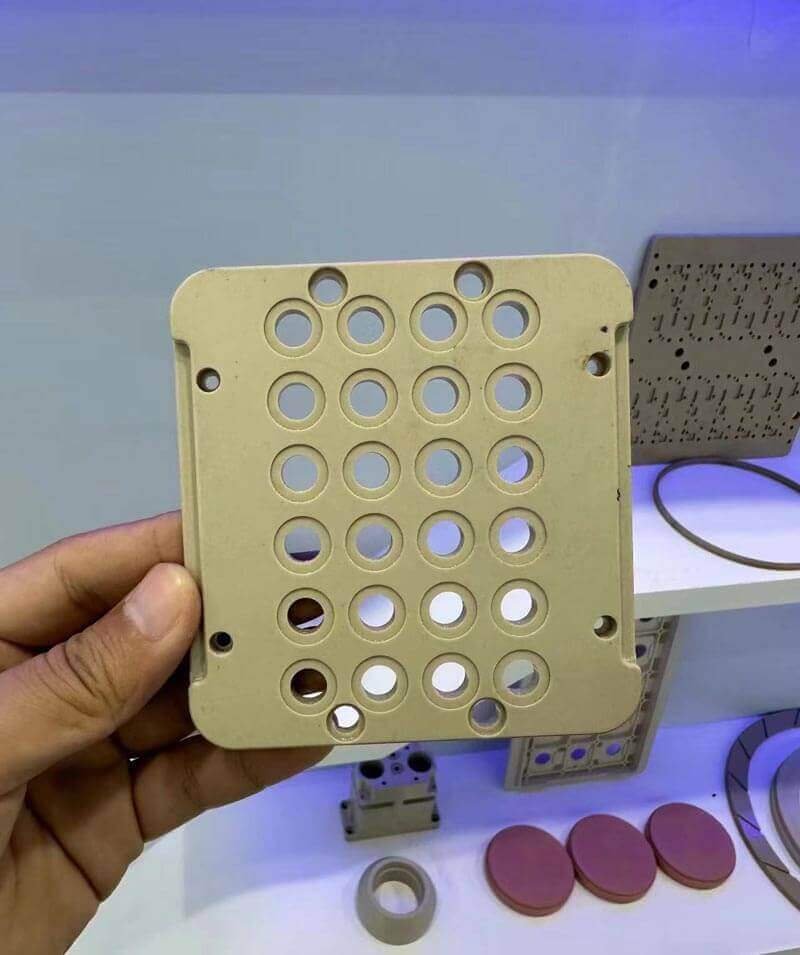
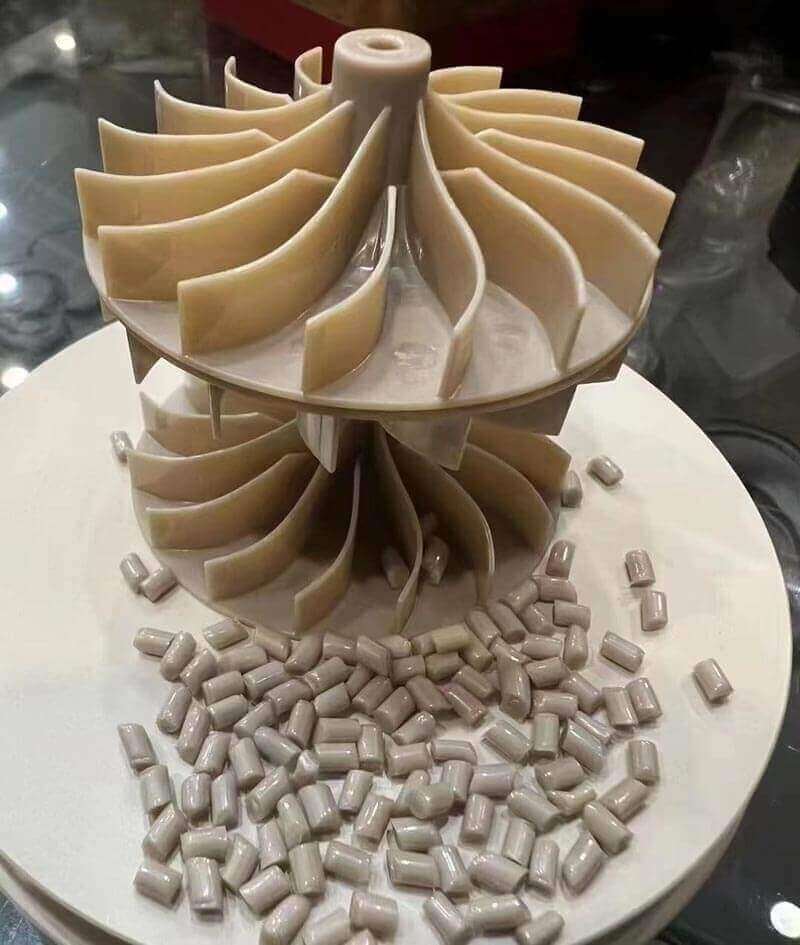
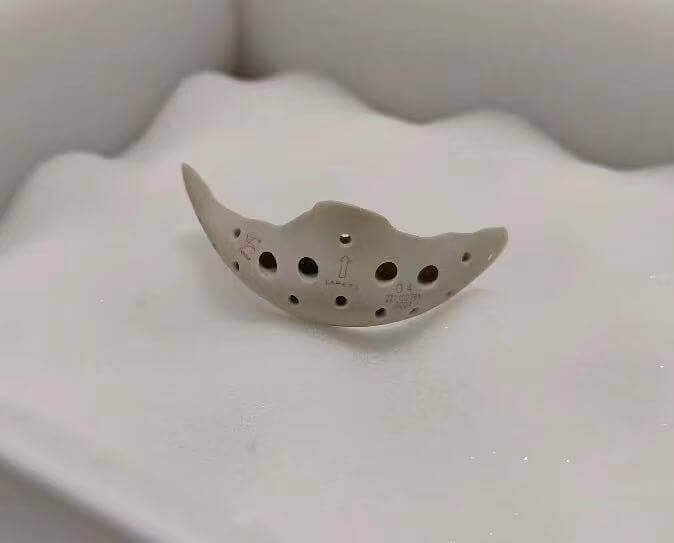
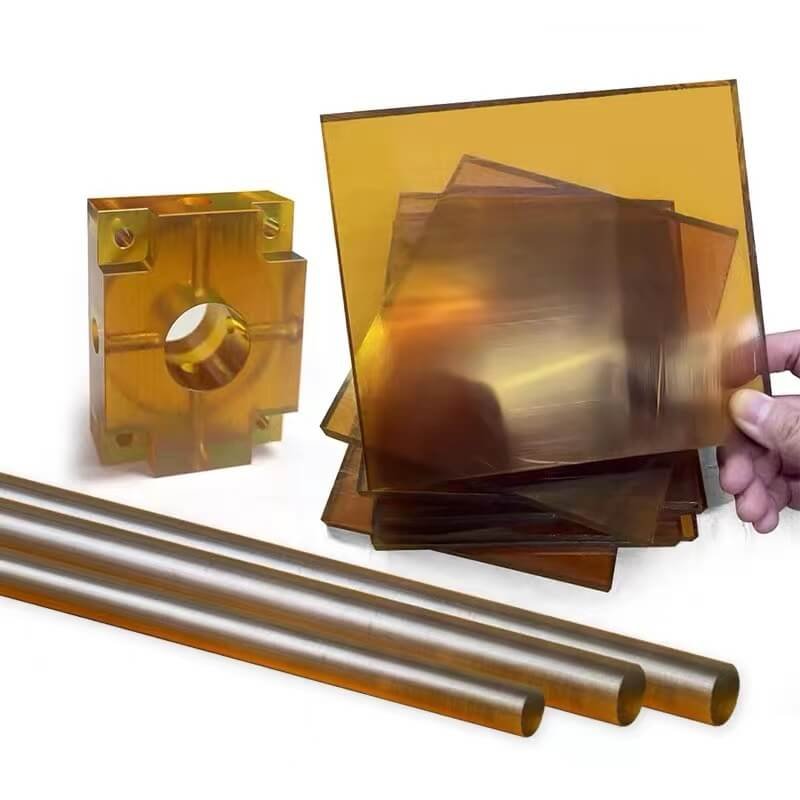
The Complete Guide to Bakelite Sheets: Properties, Uses, and Where to Buy Online

Bakelite Processing Customization

Bakelite is one of the most important plastics in history, as it was the first fully synthetic plastic ever created. Invented by Leo Baekeland in 1907, Bakelite revolutionized product manufacturing across countless industries including electronics, appliances, automobiles, and more.

While Bakelite is not as widely used today as modern plastics, it still maintains importance due to its inherent properties and iconic retro look. One popular form of Bakelite is Bakelite sheet (also known as Phenolic sheet), which offers the same properties as molded Bakelite in a flat, plate form.

🟧 Looking for Bakelite? Choose Your Solution:

Everything from full sheets to custom precision parts.
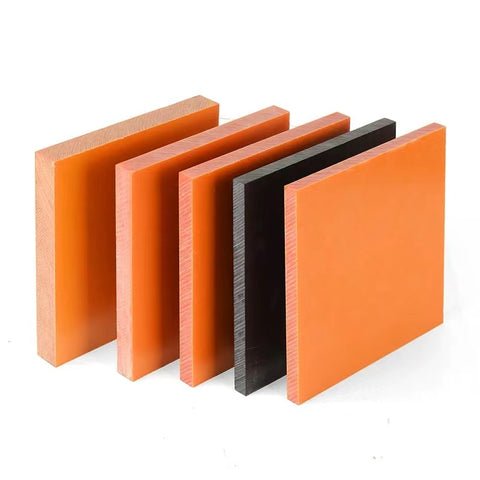
Orange Bakelite Sheet Phenolic Resin

Standard Bakelite Sheets

Thickness 1-100mm. No MOQ. Fast Shipping.

Shop Sheets →

Custom Bakelite Machining Service

Custom CNC Machining

Cut-to-size, Drilling & Milling Service.

Get a Quote →

🎉 Limited Time Offer: Use code QR4GNY08SHVR at checkout!

In this complete guide, we will cover everything you need to know about Bakelite sheets including:

Let’s start by understanding exactly what Bakelite is and how it came into existence.

A Brief History of Bakelite – The World’s First Synthetic Plastic

Bakelite was invented in 1907 by Belgian-American chemist Dr. Leo Baekeland. At the time, the most commonly used plastic was celluloid, which was highly flammable and unstable.

Dr. Baekeland set out to find a viable plastic alternative that retained the beneficial properties of shellac (an all-natural resin) but without the drawbacks. After years of experiments, he discovered that a combination of phenol and formaldehyde, when mixed together under high heat and pressure, formed a resinous material that could be molded while hot and retained its shape when cool.

The end result was a hard, durable, heat-resistant plastic that Dr. Baekeland named “Bakelite” in honor of himself. Bakelite was distinguished as the first truly synthetic plastic polymer, made entirely from artificial components.

This invention revolutionized the plastics industry and opened the door to the full-scale manufacturing of synthetic polymeric materials. Bakelite was soon mass-produced and used across countless applications including electrical insulators, radios, telephones, clocks, kitchenware, jewelry, children’s toys, and more.

Bakelite gained immense commercial success during the 1920s-1930s. It was known as one of the earliest “wonder materials” and was prized for its heat resistance, mechanical strength, and versatile molding properties. The iconic look of vintage Bakelite products led to its popularity in jewelry and collectibles.

Although Bakelite was eventually surpassed by new plastics like polystyrene and PVC in the 1950s-60s, it still retains an important place in the history of plastics development. Vintage Bakelite products are still cherished today by collectors and decor enthusiasts.

Now that we’ve covered the background of Bakelite, let’s look closer at the properties and characteristics of Bakelite sheets specifically.
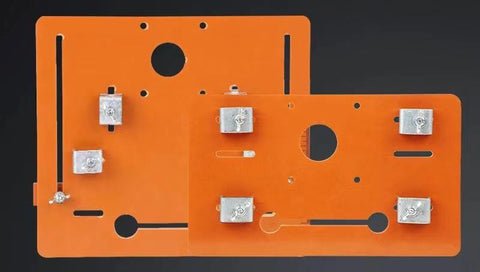
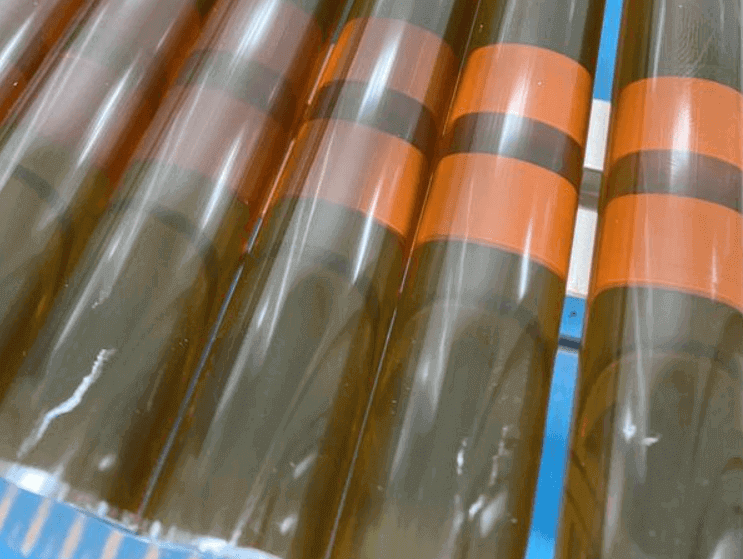
Bakelite leaning board

What Are the Properties and Characteristics of Bakelite Sheets?

Bakelite sheets are flat plastic plates made from layers of paper, fabric, or other materials that have been impregnated with liquid Bakelite resin and then cured under high heat and pressure.

The resin permeates the layers and binds everything together into a hard, stiff sheet form. Bakelite sheets demonstrate the same iconic properties as molded Bakelite but in a flat panel form. Some key characteristics include:

  • High Mechanical Strength: Bakelite sheets have very good tensile and compressive strength due to the thermosetting nature of the resin. They are rigid and hold form under load.
  • Heat and Flame Resistance: One of Bakelite’s most desirable traits is its high heat resistance of up to 250°C before softening. It also has low flammability and will self-extinguish when removed from a flame.
  • Electrical Insulation: Bakelite is an exceptionally good electrical insulator and was vital for early 20th century electrical devices. The sheets provide complete dielectric insulation.
  • Chemical Resistance: Bakelite offers good resistance to acids, alkalis, solvents and other chemicals. It has low water absorption as well.
  • Dimensional Stability: Fully cured Bakelite maintains its shape over time and has low creep. The sheets provide stable long-term dimensions.
  • Machinability: Bakelite can be readily machined, cut, drilled, stamped, polished, engraved and more with standard metalworking tools. (Need custom machining? Check our services here).
  • Colorability: Bakelite resin can be produced in various colors by adding mineral or wood filler pigments. Patterned sheets are also possible.

These well-balanced physical and electrical properties make Bakelite a very versatile and useful plastic sheet material for all sorts of demanding applications. It offers a unique set of strengths compared to natural materials like wood, rubber and metal alloys.

Next we’ll look at some of the major uses of Bakelite sheets across different industries.

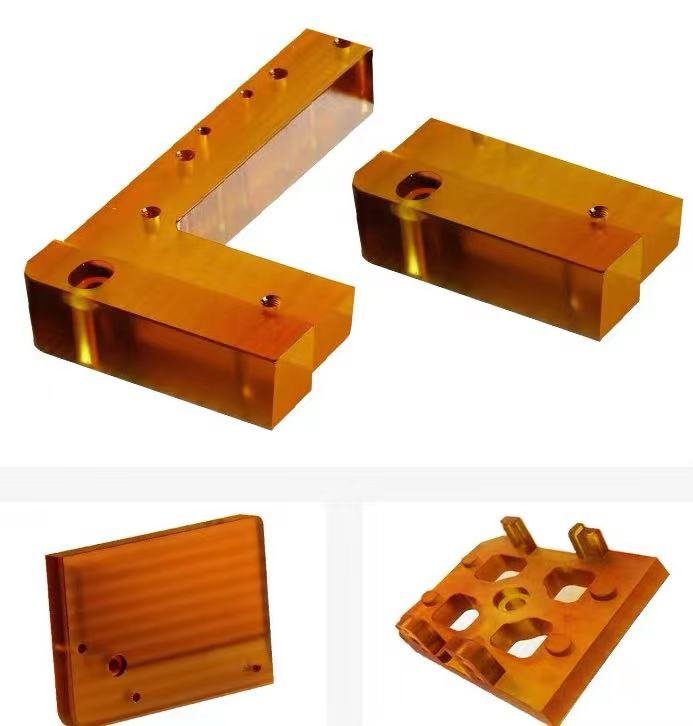
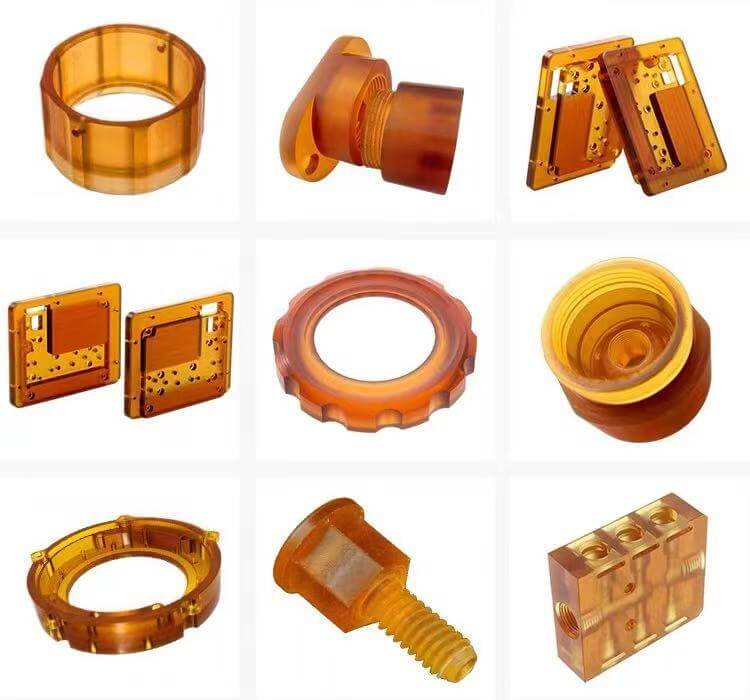
Bakelite mechanical parts and washers

Major Applications and Uses of Bakelite Sheets

Thanks to its desirable properties, Bakelite sheet has been used across a wide range of applications since its invention over 100 years ago. Some of the primary uses include:

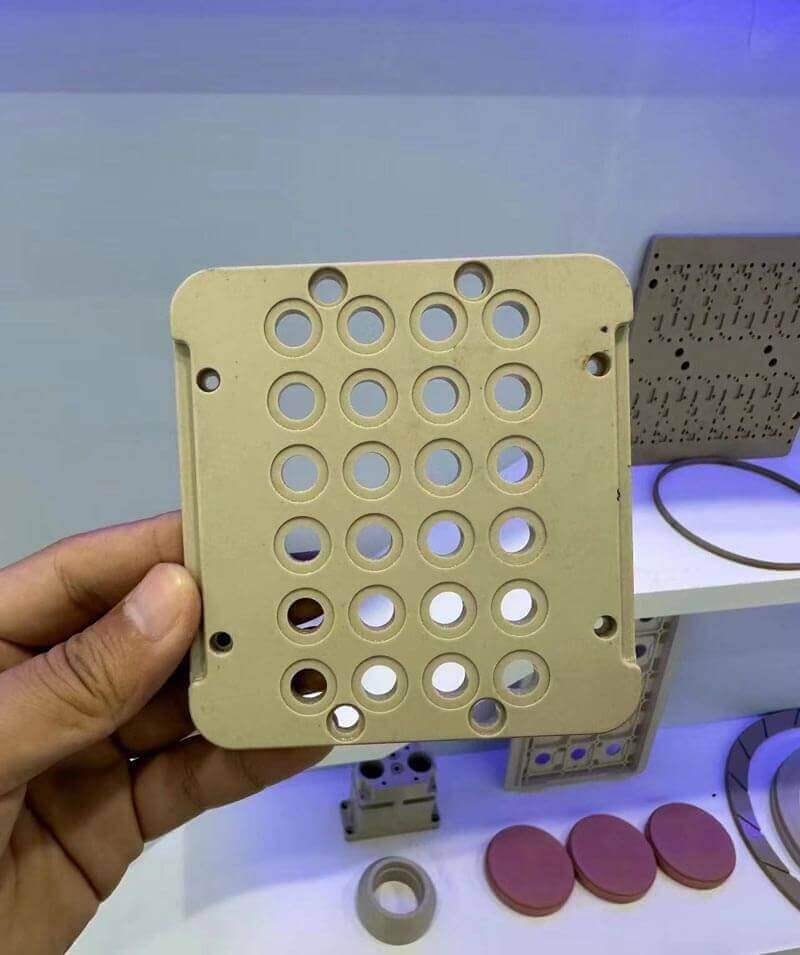
  • Electrical Insulation: Bakelite sheets are commonly used for insulators, bushings, washers, spacers and other electrical components because of their high dielectric strength and heat resistance. They prevent current leakage and electrical fires.
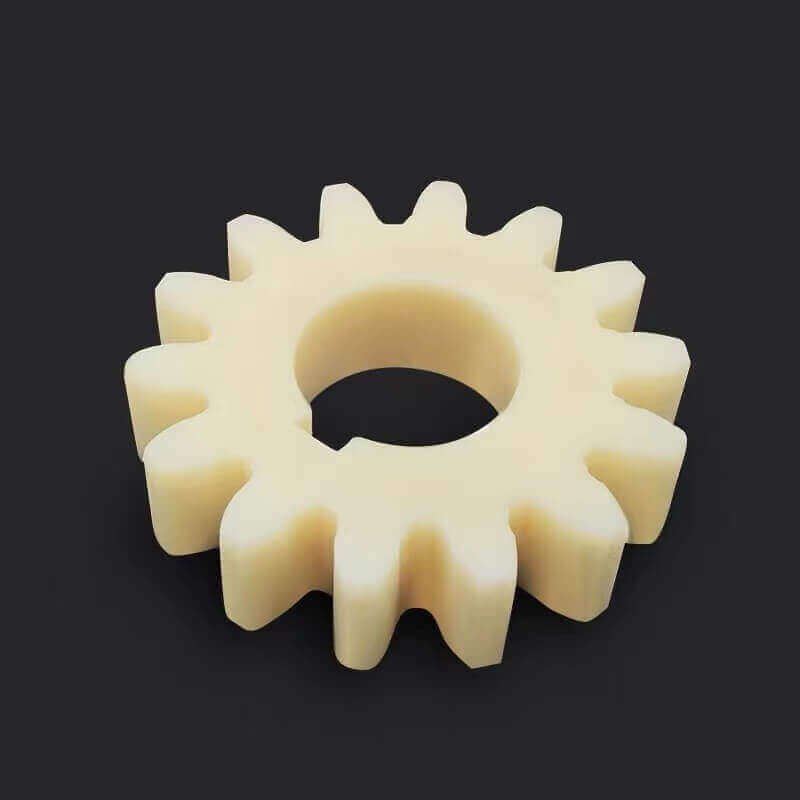
  • Mechanical Parts: Gears, bearings, brake pads, bushings, washers and other mechanical parts depend on Bakelite’s friction and wear resistance, rigidity, and machinability. Bakelite’s low creep retains precision tolerances.
  • Automotive Parts: Distributor caps, insulation pads, and various trim and mechanical components in vintage cars relied on Bakelite’s versatility. Modern auto racing cars still use it for brake pads.
  • Furniture: Bakelite sheets have been used for tabletops, cabinet doors, accents, and other furnishings that benefit from the look and durability of Bakelite. It machines like wood but resists heat and scratches.
  • Architectural Design: Bakelite sheets have been made into counter tops, wall tiles, partitions, signs, decorative accents, and other building elements where a sleek, durable plastic material is desired.
  • Appliances: Bakelite’s heat and electrical insulation properties were invaluable for early irons, toasters, kitchenware, and other home appliances where safety was critical. Many of these products are now collectibles.
  • Jewelry: Bakelite’s retro aesthetic made it popular for jewelry, rings, bracelets, earrings and decorative objects. It can be intricately carved and polished.

Bakelite sheet continues to be valued today for both its functionality as well as iconic vintage style. It occupies an important niche compared to other common plastics.

Now let’s weigh the key pros and cons of Bakelite as a material choice.

🛠 Need Custom-Cut Bakelite Parts or Prototypes?

BeePlastic provides full-service machining, drilling, cutting, CNC prototyping, and assembly. Just upload your design or drawing, and we’ll quote within 1 business day.

📩 Request a Free Quote Today →

Pros and Cons of Bakelite Sheet Material

Bakelite offers some unique advantages but also has some downsides to consider depending on the application:

✅ The Pros

  • Withstands very high temperatures up to 250°C.
  • Does not melt or burn easily like thermoplastics.
  • Excellent electrical insulator.
  • Resists many chemicals, oils, solvents.
  • High mechanical strength and hardness.
  • Maintains precision dimensions.
  • Can be readily machined and fabricated.
  • Vintage aesthetic appeal.

❌ The Cons

  • Not as impact resistant as other modern plastics. Prone to shattering.
  • Brittle over time, susceptible to cracks from stresses.
  • Can be damaged by certain chemicals like nitric acid.
  • Prone to discoloring from UV exposure over time.
  • Limited number of available colors compared to modern plastics.
  • No longer produced in large quantities, may be hard to source.

Overall, Bakelite sheets offer very good performance across a range of mechanical, thermal, and electrical properties that make them suitable for niche applications. However, their brittleness and limited chemical resistance prevent them from being used as a general-purpose plastic for most consumer products today.

They work best for small-scale industrial applications where heat or electrical insulation is critical. For vintage decorative items, the retro styling of Bakelite is a major bonus.
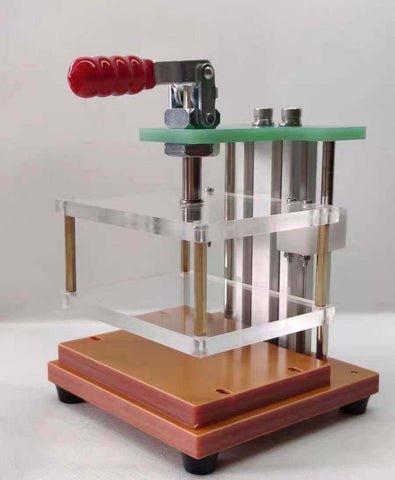
Bakelite Test Stand Application

Now that we’ve covered the key benefits and tradeoffs of Bakelite sheets, let’s look at where you can buy them online.

Where to Buy Bakelite Sheets Online

Since Bakelite is no longer a mass-production plastic, sourcing sheets and raw materials can be a challenge compared to other plastics. Here are some of the top places to find Bakelite sheets available for purchase online:

1. BeePlastic.com (Recommended)

  • Specializes in plastic sheet materials including a large selection of Bakelite sheet sizes and colors.
  • Ships worldwide. Offers custom cutting and CNC milling services.
  • Bakelite sheets available in sizes up to 1000 x 2000 mm and thicknesses from 1 to 20 mm.
  • Orange, black, brown options available. No MOQ.

2. Amazon

  • Marketplace sellers offer a limited selection of small Bakelite sheet sizes and thicknesses.
  • Primarily vintage sheets repurposed from old industrial stock. Few color choices.
  • Order minimums may apply. Check shipping times from individual sellers.

3. eBay

  • Features vintage Bakelite industrial off-cuts and scraps listed by various sellers.
  • Sheet sizes tend to be irregular or smaller cut pieces rather than full sheets.
  • Provides an opportunity to repurpose authentic retro Bakelite at lower costs.

4. Etsy

  • Specialty online marketplace with some handmade jewelry and craft items incorporating Bakelite sheets.
  • Not a consistent source for buying raw sheets, but some sellers may offer materials.
  • Try searching for “Bakelite sheet” or “Bakelite resin” on Etsy to find limited offerings.

The best place to buy Bakelite sheets online is BeePlastic.com due to their dedicated selection of new, precision-grade Bakelite products.

Cotton phenolic cloth CE machining

Conclusion

Bakelite sheet offers a versatile, heat-resistant plastic option thanks to the unique properties of this retro synthetic material invented by Dr. Leo Baekeland over 100 years ago. It continues to fill important niche applications today.

Bakelite sheets can provide electrical insulation, mechanical strength, machinability, chemical and heat resistance well beyond natural materials like wood and rubber. The vintage styling also makes Bakelite popular for jewelry and decorative objects.

However, downsides like brittleness and limited chemical resistance prevent it from being a mainstream plastic for mass consumer products today. It works best for specialty electrical and industrial applications where heat resistance and dimensional stability are critical.

To get your hands on this iconic plastic, BeePlastic.com offers the widest selection of Bakelite sheets available online with worldwide shipping options.

Bakelite material stack

Visit BeePlastic.com today to order your Bakelite sheets and experience this revolutionary early plastic material.

Ready to Start Your Project?

Whether you need raw Bakelite sheets or custom CNC machined parts, we ship globally with no MOQ.

Browse Bakelite Catalog →

Request a Custom Machining Quote

Leave a comment


Please note, comments must be approved before they are published


Custom Plastic Fabrication

Send your drawing, material and quantity for review

🔧
Precision Machining
CNC milling & turning
✂️
Cutting & Engraving
Laser & waterjet cutting
🏭
Forming & Molding
Thermoforming & injection
🔗
Joining & Assembly
Welding & bonding
📐
Design & Prototyping
CAD design & samples

General

HDPE

PP

PVC

ABS

Engineering

POM

Nylon

PC

PMMA

High-Performance

PEEK

PEI

PTFE

Composites

FR-4

G10

Flexible

TPU

Silicone

Why Choose BeePlastic?

🎯
Perfect Fit
Custom specs eliminate adaptation needs
⚡
Clear Lead Times
Lead time confirmed with every quote
💰
Volume Pricing
Volume pricing available on bulk orders
🤝
Expert Support
Free engineering consultation included
📋
Submit
→
🔍
Review
→
💵
Quote
→
✅
Production
→
📦
Deliver

Request a Quote

Share your project details, selected material and quantity on our quote page. You can add a file link or use the email drawing route shown there.


Request Quote

Industries: Automotive • Medical • Food • Lab • Semiconductor

beeplastic@beeplastic.com


Unlocking the Power of HDPE Tank Systems: A Solution to Stainless Steel’s Corrosion and the Failures of Flexible Bags

HDPE liquid saving tanks

The safe and reliable storage of liquids and chemicals is a pivotal concern across various industries. From food processing to pharmaceutical manufacturing, having robust and high-performing storage solutions is a must. However, prevalent options like stainless steel tanks and flexible bag systems come with their own sets of challenges that compromise safety, increase costs, and hamper efficiency. Corrosion issues in stainless steel coupled with the mechanical failures of flexible bags have left industries wanting an improved solution. This is where High-Density Polyethylene (HDPE) Tank Systems come into the picture. With their inherent resistance to corrosion and unparalleled structural strength, HDPE Tank Systems offer industries the reliability, durability, and longevity they desire. Let’s delve deeper into understanding the limitations of conventional storage methods and how HDPE Tank Systems can overcome these challenges and revolutionize liquid storage.

🎉🎉🎉Limited Time Offer Use code: QR4GNY08SHVR at checkout and enjoy a special discount on your entire order! 👉 HDPE plastic

white HDPE Tanks

The Corrosion Dilemma with Stainless Steel

For industries dealing with sensitive products and hazardous chemicals, storage tank corrosion poses a massive concern. While stainless steel is ubiquitous and useful in many applications, it is far from immune to corrosion over time. Prolonged exposure to certain chemicals, high temperatures, stress conditions and environmental factors can lead to pitting, crevice corrosion or stress corrosion cracking. Even extremely corrosive product residues that are not thoroughly cleaned can start corroding tanks during downtimes. This steady degradation not only shortens tank lifespan but also risks contaminating the contents. Let’s examine the implications of stainless steel tank corrosion and why it necessitates a corrosion-resistant alternative like HDPE.

Understanding Corrosion in Stainless Steel

Stainless steel derives its corrosion resistance from the chromium oxide passive film on its surface. However, given the right conditions, corrosion can still occur through different mechanisms:

  • Pitting Corrosion – Small cavities or ‘pits’ form on the steel surface when chloride ions or other aggressive chemicals locally break down the passive layer. This pits spread deeper over time, causing leaks and failures.
  • Crevice Corrosion – Narrow gaps between stainless steel components allow buildup of corrosive agents, initiating localized corrosion.
  • Stress Corrosion Cracking – Cracks propagate from points under tensile stress when exposed to corrosive environments. This can lead to sudden catastrophic failures.
  • Microbiologically Influenced Corrosion – Microbes growing on tank surfaces create corrosive biofilms under certain conditions.

While stainless steel has more resistance than carbon steel, it is clearly still vulnerable to corrosion damage over time.

HDPE Tank

Real-life Implications

To understand the gravity of stainless steel corrosion, consider its impacts in the food processing industry where product safety is paramount. Cooling jacket corrosion in storage tanks can lead to water ingression and microbial contamination of food contents. Corroded tanks also risk leaching toxic metals like nickel and chromium into food, with dire health consequences. Such corrosion-induced contamination could force expansive product recalls, destroy consumer trust, and inflict heavy financial damages.

Pharmaceutical producers face similar issues with active pharmaceutical ingredient (API) contamination when stainless steel corrosion seeps into stored drug solutions. Beyond product recalls, this could have dangerous health outcomes for patients if contaminated drugs enter supply chains. Such corrosion-driven contamination events are unacceptable in regulated industries. It signals the need for advanced material storage solutions like HDPE systems that eliminate corrosion concerns.

Mechanical Failures: The Downside of Flexible Bags

Flexible bag storage systems are widely used for their convenience and cost-effectiveness. However, they come with an innate flaw – their questionable mechanical strength. Flexible bags, as the name suggests, lack the structural resilience needed for long-term chemical storage, especially with varying temperature and pressure conditions. Their susceptibility to developing cracks, punctures or outright rupturing makes them a risky choice when product purity and environment safety are paramount.

Durability Concerns

Unlike molded HDPE tanks, flexible bags are prone to developing slow leaks, pinhole perforations and ruptures when exposed to repeated stresses over time. Their thin-film construction lacks the ruggedness to guarantee multiyear integrity. Changes in storage conditions also heighten failure risks:

  • Thermal fluctuations can degrade bag liners and weaken seams
  • High temperature or pressure can abruptly rupture bags
  • Vibration during transport can abrade and puncture bag surfaces

Such unpredictable and sudden failures result in dangerous spills, complete inventory losses, and cost-intensive cleanups. It also means frequent bag replacements which drive up operating expenses. Simply put, flexible bags are a gamble compared to the resilience of HDPE tanks.

Benefits of HDPE Tank Systems

HDPE Tank Systems deliver precisely what industries need – exceptional chemical resistance coupled with unmatched structural longevity. As an engineered thermoplastic, HDPE offers unique advantages over conventional stainless steel and flexible bag options:

Designed for Durability

HDPE is inherently resistant to a broad spectrum of inorganic and organic chemicals, maintaining its barrier properties when exposed to harsh substances. It exhibits negligible corrosion even when storing aggressive acids, alkalis, solvents or saline solutions for years.

Moreover, HDPE has extremely high tensile strength and impact resistance even at low temperatures. This allows durable tank construction that retains dimensional stability and structural integrity across decades of use. Their rugged build protects against mechanical damage from rough handling or abrasive contents. HDPE Tanks are also unaffected by UV rays and weather elements, enabling safe outdoor storage options. Overall, HDPE promises to deliver the safest, most reliable and consistent liquid storage experience.

Cost-Effective in the Long Run

HDPE Tank Systems involve a higher initial capital investment compared to flexible bags. However, facilities essentially “buy the last storage tank they will ever need” with HDPE thanks to exceptional longevity and low maintenance needs. The costs otherwise spent continually replacing damaged flexible bags or fixing corrosion issues in stainless steel tanks are eliminated. With HDPE, money goes into a one-time capital expenditure rather than recurrent operating expenses. Personnel time is freed from constant maintenance checks. Lost inventories and decontamination costs due to tank failures are avoided. Considering these aspects, HDPE delivers substantial life cycle cost savings despite the initial investment. For high-value or hazardous contents, HDPE provides priceless risk reduction too.

HDPE Tanks

Why HDPE is the Superior Choice

Facilities dealing with chemicals and pharmaceuticals cannot afford to take risks when it comes to storage. As highlighted earlier, prevalent solutions like stainless steel and flexibles bags simply have unacceptable drawbacks. HDPE Tank Systems present the optimum blend of safety, integrity, quality control and operational efficiency. Let’s recap why HDPE surpasses traditional options:

Overcoming Traditional Challenges

  • Eliminates corrosion concerns – HDPE’s inertness defeats stainless steel’s Achilles Heel of corrosion over time. Facilities gain long-term tank integrity without ongoing maintenance.
  • Defeats risk of mechanical failures – With up to 10 times the tensile strength of steel, HDPE Tanks remain robust and puncture-proof compared to unstable flexible bags prone to ruptures.
  • Enables contamination-free storage – Impermeable HDPE construction prevents cross-contamination of contents, critical for industries handling multiple chemicals.
  • Provides dimensional stability – Unlike flexibles, HDPE maintains its shape across wide temperature ranges, enabling consistency across production cycles.
  • Allows safe chemical exposure – HDPE offers broad chemical resistance allowing use of aggressive clean-in-place chemicals to maintain tank hygiene.
  • Simplifies compliance – HDPE permits cyclic heating and cooling for sanitization without corrosion or fatigue concerns, aiding regulatory compliance.
  • Promises asset longevity – HDPE suffers no corrosion decay or fatigue failures over decades of use, giving excellent return on investment.

With such compelling advantages across critical aspects like safety, compliance, reliability, and total cost, HDPE Tank Systems represent the future of liquid storage.

black  HDPE Tank

Solutions for the Future: Overcoming Challenges with HDPE

Storage needs in the process industries are evolving constantly. With trends like smaller batch manufacturing, storage systems need greater flexibility and versatility. Tanks need to handle a frequently changing spectrum of chemicals as pharmaceuticals proliferate or new food additives emerge. This means relying on traditional stainless steel or makeshift bag storage will become untenable. HDPE Tank Systems possess an innate agility and customizability to adapt dynamically to such needs of the future.

Modular and mobile HDPE tanks can be mixed-and-matched tochanging capacity needs. Multiple contents can be safely segregated for multi-product facilities using a fleet of HDPE tanks. Tanks can even be relocated as process flows evolve. At a time when industries demand agility, HDPE allows cost-optimized storage configurations that enhance rather than constrain operations.

Moreover, the unrivalled durability of HDPE translates directly into sustainability benefits. Long-lasting HDPE tanks have a much lower lifecycle environmental impact compared to stainless steel or bags requiring frequent replacement. With growing focus on responsible manufacturing, HDPE offers the greenest way forward. Considering these aspects, HDPE Tank Systems will continue to play an indispensable role in helping industries overcome evolving challenges.

In conclusion, it is evident that HDPE Tank Systems provide the ultimate solution for industries seeking failsafe, future-ready, and eco-friendly liquid storage. Combining corrosion immunity, structural resilience, longevity, safety and flexibility into one package, HDPE delivers value unmatched by any other option. As industries move towards higher asset utilization, tighter process control, frequent changeovers and an overall drive towards responsibly manufactured products, HDPE promises to be their trusted storage partner. With turnkey HDPE storage solutions now available in standard designs or fully customizable configurations, manufacturers have an advanced yet simple path forward. One that deftly balances quality, safety, sustainability and their unique operating needs. Ultimately, unlocking the power of HDPE translates directly into unlocking the full potential of their manufacturing capabilities.

HDPE liquid saving tank

Frequently Asked Questions

Why choose HDPE over stainless steel?

HDPE offers complete resistance to corrosion over time compared to stainless steel’s vulnerability to pitting, cracking, and metal leaching. This gives indispensable tank integrity for sensitive contents.

How do HDPE tanks reduce mechanical failures?

HDPE has outstanding tensile and impact strength that retains structural resilience over years of use. This protects against punctures, abrasions, tears or outright rupturing common in thin-film flexible bags.

What capacity HDPE tanks are typically used?

HDPE tanks can be customized from just a few gallons to 40,000 gallons and beyond. Typical tank sizes range from 55-gallon drums to 7,500-gallon tanks used in process industries.

Can HDPE tanks handle strong chemicals?

Yes, HDPE exhibits broad chemical resistance. Only a few extremely caustic chemicals may require liner solutions. HDPE stands up to harsh cleaners, solvents, and food ingredients.

HDPE liquid saving tanks

How are HDPE tanks constructed?

HDPE tanks are crafted via blow molding, rotational molding or sheet welding as single-piece units or with modular panels. This allows robust and seamless constructions.

Are HDPE tanks suitable for outdoor storage?

Yes, HDPE is unaffected by outdoor weathering and retains integrity across a wide temperature range of -60°F to 180°F. UV-stabilized HDPE enables years of outdoor chemical storage.

Can old HDPE tanks be repurposed?

Yes, robust HDPE tanks can be reused for different applications, contents, and industries over decades since they don’t degrade or fatigue easily. Quick tank turnarounds are enabled.

🎉🎉🎉Limited Time Offer Use code: QR4GNY08SHVR at checkout and enjoy a special discount on your entire order! 👉 HDPE plastic

Leave a comment


Please note, comments must be approved before they are published


Custom Plastic Fabrication

Send your drawing, material and quantity for review

🔧
Precision Machining
CNC milling & turning
✂️
Cutting & Engraving
Laser & waterjet cutting
🏭
Forming & Molding
Thermoforming & injection
🔗
Joining & Assembly
Welding & bonding
📐
Design & Prototyping
CAD design & samples

General

HDPE

PP

PVC

ABS

Engineering

POM

Nylon

PC

PMMA

High-Performance

PEEK

PEI

PTFE

Composites

FR-4

G10

Flexible

TPU

Silicone

Why Choose BeePlastic?

🎯
Perfect Fit
Custom specs eliminate adaptation needs
⚡
Clear Lead Times
Lead time confirmed with every quote
💰
Volume Pricing
Volume pricing available on bulk orders
🤝
Expert Support
Free engineering consultation included
📋
Submit
→
🔍
Review
→
💵
Quote
→
✅
Production
→
📦
Deliver

Request a Quote

Share your project details, selected material and quantity on our quote page. You can add a file link or use the email drawing route shown there.


Request Quote

Industries: Automotive • Medical • Food • Lab • Semiconductor

beeplastic@beeplastic.com


How to Choose the Best Rapid Prototyping Services for Your Nylon and Plastic Parts

Nylon injection molded parts

Rapid prototyping is a process of creating functional prototypes or models of a product or a part using various manufacturing techniques. Rapid prototyping can help you test your design, validate your concept, and improve your product quality and performance. Rapid prototyping is especially useful for creating nylon and plastic parts, which are widely used in various industries such as automotive, aerospace, medical, consumer goods, and more.

🎉🎉🎉Limited Time Offer Use code: QR4GNY08SHVR at checkout and enjoy a special discount on your entire order! 👉 Nylon plastic

However, not all rapid prototyping services are the same. There are different factors that you need to consider when choosing the best rapid prototyping service for your nylon and plastic parts, such as:

  • The type of rapid prototyping technique: There are three main types of rapid prototyping techniques that can be used for creating nylon and plastic parts: 3D printing, CNC machining, and injection molding. Each technique has its own advantages and disadvantages, depending on your project requirements, budget, timeline, and quality expectations.
  • The material selection: Nylon and plastic are broad categories of materials that have different properties and characteristics. You need to choose the right material for your nylon and plastic parts based on your design specifications, functional requirements, environmental conditions, and aesthetic preferences.
  • The service provider: You need to find a reliable and reputable rapid prototyping service provider that can offer you high-quality nylon and plastic parts at a reasonable price and within a short turnaround time. You also need to check their customer reviews, portfolio, certifications, and guarantees.

In this article, we will guide you through these factors and help you choose the best rapid prototyping service for your nylon and plastic parts. We will also introduce you to Beeplastic, a leading rapid prototyping service provider that can offer you the best solutions for your nylon and plastic parts needs.

Nylon 3D Printing Plate

3D Printing Nylon Parts

3D printing is a rapid prototyping technique that uses a computer-controlled nozzle to deposit layers of material on a build platform to create a three-dimensional object. 3D printing is ideal for creating complex shapes, intricate details, and customized designs. 3D printing is also cost-effective and fast for creating small batches or single prototypes.

Nylon is one of the most popular materials for 3D printing because of its high strength, durability, flexibility, and resistance to abrasion, chemicals, and heat. Nylon can be used for creating functional prototypes or end-use parts for various applications such as gears, hinges, brackets, connectors, housings, etc.

However, 3D printing nylon parts also has some challenges, such as:

  • Nylon is prone to warping and curling due to its high shrinkage rate during cooling.
  • Nylon absorbs moisture from the air, which can affect its printability and quality.
  • Nylon requires high temperatures and controlled environments to print properly.

Therefore, you need to choose a 3D printing service provider that has the expertise and equipment to handle nylon 3D printing effectively. You also need to prepare your 3D model correctly by following the design guidelines for nylon 3D printing.

Nylon 3D Printed Tote Bag

Advantages of 3D Printing Nylon Parts

Some of the advantages of 3D printing nylon parts are:

  • Design freedom: 3D printing allows you to create any shape or geometry that you can imagine without any limitations or restrictions. You can also modify or customize your design easily without any additional cost or time.
  • Speed: 3D printing is one of the fastest rapid prototyping techniques that can produce nylon parts in a matter of hours or days. You can also skip the tooling and molding process that can take weeks or months.
  • Cost-efficiency: 3D printing is one of the most cost-efficient rapid prototyping techniques that can produce nylon parts with minimal material waste and low energy consumption. You can also save money on tooling and molding costs that can be expensive for small batches or single prototypes.

Disadvantages of 3D Printing Nylon Parts

Some of the disadvantages of 3D printing nylon parts are:

  • Quality: 3D printing may not be able to achieve the same level of quality and accuracy as other rapid prototyping techniques such as CNC machining or injection molding. 3D printing may also produce visible layer lines, rough surfaces, or defects on the nylon parts.
  • Strength: 3D printing may not be able to provide the same level of strength and durability as other rapid prototyping techniques such as CNC machining or injection molding. 3D printing may also result in weaker bonds between the layers, lower density, or lower resistance to stress and fatigue.
  • Compatibility: 3D printing may not be compatible with all types of nylon materials or additives. 3D printing may also require special post-processing or finishing techniques to improve the appearance or performance of the nylon parts.

Design Guidelines for 3D Printing Nylon Parts

Some of the design guidelines for 3D printing nylon parts are:

  • Wall thickness: The minimum wall thickness for 3D printing nylon parts is 0.8 mm for FDM (Fused Deposition Modeling) and 0.6 mm for SLS (Selective Laser Sintering). The recommended wall thickness is 1.5 mm for FDM and 1.2 mm for SLS.
  • Overhangs: The maximum overhang angle for 3D printing nylon parts is 45 degrees for FDM and 30 degrees for SLS. The recommended overhang angle is 30 degrees for FDM and 15 degrees for SLS.
  • Supports: The minimum support distance for 3D printing nylon parts is 0.2 mm for FDM and 0.1 mm for SLS. The recommended support distance is 0.5 mm for FDM and 0.2 mm for SLS.
  • Holes: The minimum hole diameter for 3D printing nylon parts is 1 mm for FDM and 0.5 mm for SLS. The recommended hole diameter is 2 mm for FDM and 1 mm for SLS.
  • Bridges: The maximum bridge length for 3D printing nylon parts is 5 mm for FDM and 2 mm for SLS. The recommended bridge length is 2 mm for FDM and 1 mm for SLS.
Nylon 3D Printing

CNC Machining Plastic Parts

CNC machining is a rapid prototyping technique that uses computer-controlled tools to remove material from a solid block of material to create a desired shape. CNC machining is suitable for creating precise dimensions, smooth surfaces, and tight tolerances. CNC machining is also scalable and efficient for creating large batches or complex prototypes.

Plastic is one of the most common materials for CNC machining because of its low cost, light weight, easy machinability, and wide variety of options. Plastic can be used for creating functional prototypes or end-use parts for various applications such as enclosures, fixtures, molds, valves, etc.

However, CNC machining plastic parts also has some limitations, such as:

  • Plastic is not as strong or rigid as metal, which can limit its performance and durability.
  • Plastic can melt or deform due to excessive heat or friction during machining.
  • Plastic can produce chips or dust that can contaminate the machine or the environment.

Therefore, you need to choose a CNC machining service provider that has the experience and equipment to handle plastic CNC machining safely and efficiently. You also need to optimize your design by following the design guidelines for plastic CNC machining.

Nylon Ruler Wheel

Advantages of CNC Machining Plastic Parts

Some of the advantages of CNC machining plastic parts are:

  • Accuracy: CNC machining can produce plastic parts with high accuracy and precision that can meet your specifications and requirements. CNC machining can also create complex features, sharp edges, and fine details that may not be possible with other rapid prototyping techniques.
  • Quality: CNC machining can produce plastic parts with high quality and consistency that can meet your standards and expectations. CNC machining can also create smooth surfaces, uniform colors, and flawless finishes that can enhance the appearance and performance of your plastic parts.
  • Scalability: CNC machining can produce plastic parts with high scalability and efficiency that can meet your demands and deadlines. CNC machining can also create large batches or complex prototypes with minimal material waste and low energy consumption.

Disadvantages of CNC Machining Plastic Parts

Some of the disadvantages of CNC machining plastic parts are:

  • Cost: CNC machining may not be the most cost-effective rapid prototyping technique that can produce plastic parts with low cost and high value. CNC machining may also require high upfront costs for designing and programming the machine, as well as high operational costs for maintaining and running the machine.
  • Time: CNC machining may not be the fastest rapid prototyping technique that can produce plastic parts in a short time and with a quick turnaround. CNC machining may also require long lead times for setting up and testing the machine, as well as long processing times for removing material from the block.
  • Flexibility: CNC machining may not be the most flexible rapid prototyping technique that can produce plastic parts with different shapes, sizes, colors, and finishes. CNC machining may also require frequent changes or adjustments to the machine settings, tools, or parameters to accommodate different designs or materials.
Nylon customization

Design Guidelines for CNC Machining Plastic Parts

Some of the design guidelines for CNC machining plastic parts are:

  • Wall thickness: The minimum wall thickness for CNC machining plastic parts is 0.8 mm. The recommended wall thickness is 1.5 mm.
  • Overhangs: The maximum overhang angle for CNC machining plastic parts is 30 degrees. The recommended overhang angle is 15 degrees.
  • Supports: The minimum support distance for CNC machining plastic parts is 0.5 mm. The recommended support distance is 1 mm.
  • Holes: The minimum hole diameter for CNC machining plastic parts is 1 mm. The recommended hole diameter is 2 mm.
  • Bridges: The maximum bridge length for CNC machining plastic parts is 10 mm. The recommended bridge length is 5 mm.

Injection Molding Plastic Parts

Injection molding is a rapid prototyping technique that uses high pressure to inject molten plastic into a metal mold cavity to form a solid part. Injection molding is ideal for creating mass production or high-volume prototypes with consistent quality and accuracy. Injection molding is also versatile and flexible for creating different shapes, sizes, colors, and finishes.

Plastic is the most widely used material for injection molding because of its low cost, high availability, easy moldability, and diverse properties. Plastic can be used for creating functional prototypes or end-use parts for various applications such as buttons, caps, cases, handles, etc.

However, injection molding plastic parts also has some drawbacks, such as:

  • Injection molding requires high upfront costs for designing and manufacturing the mold.
  • Injection molding has long lead times for creating the mold and testing the parts.
  • Injection molding has limited design flexibility and complexity due to the mold constraints.

Therefore, you need to choose an injection molding service provider that has the capability and capacity to handle plastic injection molding effectively and economically. You also need to validate your design by following the design guidelines for plastic injection molding.

Nylon injection molded parts

Advantages of Injection Molding Plastic Parts

Some of the advantages of injection molding plastic parts are:

  • Quality: Injection molding can produce plastic parts with high quality and consistency that can meet your specifications and requirements. Injection molding can also create smooth surfaces, uniform colors, and flawless finishes that can enhance the appearance and performance of your plastic parts.
  • Speed: Injection molding is one of the fastest rapid prototyping techniques that can produce plastic parts in a matter of minutes or hours. You can also benefit from the economies of scale and reduce the unit cost as the production volume increases.
  • Versatility: Injection molding can produce plastic parts with high versatility and flexibility that can meet your demands and expectations. You can also choose from a wide range of materials, additives, colors, and finishes to customize your plastic parts.

Disadvantages of Injection Molding Plastic Parts

Some of the disadvantages of injection molding plastic parts are:

  • Cost: Injection molding may not be the most cost-efficient rapid prototyping technique that can produce plastic parts with low cost and high value. Injection molding may also require high upfront costs for designing and manufacturing the mold, as well as high operational costs for maintaining and running the machine.
  • Time: Injection molding may not be the fastest rapid prototyping technique that can produce plastic parts in a short time and with a quick turnaround. Injection molding may also require long lead times for creating the mold and testing the parts, as well as long processing times for injecting and cooling the material.
  • Waste: Injection molding may produce a lot of material waste and environmental impact that can affect your sustainability and profitability. You may also need to recycle or dispose of the excess material, runners, sprues, gates, flash, etc.

Design Guidelines for Injection Molding Plastic Parts

Some of the design guidelines for injection molding plastic parts are:

  • Wall thickness: The minimum wall thickness for injection molding plastic parts is 0.5 mm. The recommended wall thickness is 1 mm.
  • Draft angle: The minimum draft angle for injection molding plastic parts is 0.5 degrees. The recommended draft angle is 1 degree.
  • Ribs: The maximum rib height for injection molding plastic parts is 3 times the wall thickness. The recommended rib height is 2 times the wall thickness.
  • Bosses: The maximum boss diameter for injection molding plastic parts is 2 times the wall thickness. The recommended boss diameter is 1.5 times the wall thickness.
Nylon bushing

Why You Should Use Beeplastic for Your Rapid Prototyping Needs

Beeplastic is a leading rapid prototyping service provider that can offer you the best solutions for your nylon and plastic parts needs. Beeplastic has the following advantages:

  • Beeplastic has a team of professional engineers and designers who can assist you with your rapid prototyping project from start to finish.
  • Beeplastic has a state-of-the-art facility that is equipped with the latest technology and machines for 3D printing, CNC machining, and injection molding.
  • Beeplastic has a large inventory of high-quality materials, including various types of nylon and plastic, that can meet your specifications and requirements.
  • Beeplastic has a fast and reliable delivery system that can ship your nylon and plastic parts to your doorstep within a few days.
  • Beeplastic has a competitive and transparent pricing policy that can save you time and money on your rapid prototyping project.
  • Beeplastic has a loyal and satisfied customer base that can attest to their excellent service and quality.

If you are looking for the best rapid prototyping service for your nylon and plastic parts, look no further than Beeplastic. Contact us today and get a free quote for your project. We are ready to help you turn your ideas into reality.

Conclusion

Rapid prototyping is a process of creating functional prototypes or models of a product or a part using various manufacturing techniques. Rapid prototyping can help you test your design, validate your concept, and improve your product quality and performance. Rapid prototyping is especially useful for creating nylon and plastic parts, which are widely used in various industries such as automotive, aerospace, medical, consumer goods, and more.

However, not all rapid prototyping services are the same. There are different factors that you need to consider when choosing the best rapid prototyping service for your nylon and plastic parts, such as:

  • The type of rapid prototyping technique: There are three main types of rapid prototyping techniques that can be used for creating nylon and plastic parts: 3D printing, CNC machining, and injection molding. Each technique has its own advantages and disadvantages, depending on your project requirements, budget, timeline, and quality expectations.
  • The material selection: Nylon and plastic are broad categories of materials that have different properties and characteristics. You need to choose the right material for your nylon and plastic parts based on your design specifications, functional requirements, environmental conditions, and aesthetic preferences.
  • The service provider: You need to find a reliable and reputable rapid prototyping service provider that can offer you high-quality nylon and plastic parts at a reasonable price and within a short turnaround time. You also need to check their customer reviews, portfolio, certifications, and guarantees.

In this article, we have guided you through these factors and helped you choose the best rapid prototyping service for your nylon and plastic parts. We have also introduced you to Beeplastic, a leading rapid prototyping service provider that can offer you the best solutions for your nylon and plastic parts needs.

Colorful Nylon 3D Printing

We hope you have found this article informative and helpful. If you have any questions or comments, please feel free to contact us. We would love to hear from you.

Thank you for reading this article. Have a great day! 😊

If you are interested in using Nylon Plastic in your project or want to know more information, welcome to harass us. We are a professional supplier and manufacturer of all kinds of plastic custom processing and production, with a professional team of engineers and precision equipment, we can provide you with customized plastic solutions that meet your specifications and budget. We are happy to serve you and help you fulfill your needs. Do you need a free quote or help with any questions or materials?
🎉🎉🎉Limited Time Offer Use code: QR4GNY08SHVR at checkout and enjoy a special discount on your entire order! 👉 Nylon plastic
Our website: www.BeePlastic.com
Click to contact: Custom Nylon Plastic

Leave a comment


Please note, comments must be approved before they are published


Custom Plastic Fabrication

Send your drawing, material and quantity for review

🔧
Precision Machining
CNC milling & turning
✂️
Cutting & Engraving
Laser & waterjet cutting
🏭
Forming & Molding
Thermoforming & injection
🔗
Joining & Assembly
Welding & bonding
📐
Design & Prototyping
CAD design & samples

General

HDPE

PP

PVC

ABS

Engineering

POM

Nylon

PC

PMMA

High-Performance

PEEK

PEI

PTFE

Composites

FR-4

G10

Flexible

TPU

Silicone

Why Choose BeePlastic?

🎯
Perfect Fit
Custom specs eliminate adaptation needs
⚡
Clear Lead Times
Lead time confirmed with every quote
💰
Volume Pricing
Volume pricing available on bulk orders
🤝
Expert Support
Free engineering consultation included
📋
Submit
→
🔍
Review
→
💵
Quote
→
✅
Production
→
📦
Deliver

Request a Quote

Share your project details, selected material and quantity on our quote page. You can add a file link or use the email drawing route shown there.


Request Quote

Industries: Automotive • Medical • Food • Lab • Semiconductor

beeplastic@beeplastic.com


Cut Costs and Switch to ABS Plastics – A Cost Comparison Guide

ABS material processing

ABS, or acrylonitrile butadiene styrene, plastics have become a popular alternative to traditional manufacturing materials like metal, wood, and more. ABS plastics provide durability, strength, and ease of fabrication at a lower overall cost compared to many standard materials.

🎉🎉🎉Limited Time Offer Use code: QR4GNY08SHVR at checkout and enjoy a special discount on your entire order! 👉 ABS plastic

For manufacturers looking to reduce expenses and improve profit margins, transitioning even partial production to ABS plastics can provide measurable cost reductions. This guide will cover the key benefits of ABS plastics and provide a price comparison to help you determine if switching from traditional materials to ABS could benefit your bottom line.

ABS plastic raw materials

Brief Background on Common Traditional Materials

Before analyzing the pricing and fabrication benefits of ABS plastics, it helps to understand the landscape of materials that manufacturers typically rely on:

  • Metals – Steel, aluminum, and alloys are go-to metals for fabrication. Metals provide immense strength but can have high machining costs. They also often require secondary finishing and coatings.

    metals
  • Wood – Timber, MDF, plywood, and more get utilized for production. Yet moisture, rotting, and degradation can lead to replacement costs. More finishing steps are also usually needed with wood materials.
  • Glass – Glass provides optical clarity and a sleek look but requires meticulous machining and finishing. Durability issues and fragility also persist with glass.
  • Advanced Composites – Carbon fiber and fiberglass composites grant high strength-to-weight ratios. However, raw material and fabrication expenses tend to be very high.

Many manufacturers gravitate towards these traditional materials simply because that’s what they’ve always used. However, transitioning to ABS plastics could provide better performance at lower overall part production costs.

The Benefits of Using ABS Plastics

ABS plastics have distinct advantages that make them suitable for widespread manufacturing and production applications:

Durability and Strength

Properly formulated ABS materials are highly durable, resisting cracking and deforming over years of use.Yield strength and tensile strength properties allow ABS to withstand high loads and forces. ABS demonstrates high impact resistance as well, absorbing shocks and impacts much better than materials like glass or brittle plastics.

Lighter Weight Compared to Metals

ABS plastics have a density around 1.05 g/cm^3, which translates to weight savings compared to metals like steel and aluminum. Redesigning parts to use lightweight yet strong ABS can benefit industries where reducing mass is critical, like automotive and aerospace.

Resilient and Impact Resistant

The composition of ABS materials reduces the likelihood of fracturing, shattering, or splintering when exposed to impacts. Objects made from ABS plastics can better handle drops, shocks, vibrations, and load forces compared to glass, wood, and thin sheet metals.

Easier to Fabricate Complex or Detailed Shapes

The thermoplastic properties of ABS allow it to be injection molded into complex, highly-detailed shapes with tighter tolerances versus traditional machining methods. Intricate shapes, undercuts, thin walls, and precision features can be replicated consistently.

White ABS plastic CNC machining

Cost Savings of ABS Plastics Production

Now that we’ve covered the inherent benefits of ABS plastics, let’s examine how switching to ABS for manufacturing and fabrication can lower your overall production costs.

Lower Part Fabrication Prices with Injection Molding

Injection molding allows ABS plastic resins to be formed into intricate, complex parts with speed and precision. Most other materials require extensive CNC machining or carving to achieve detailed shapes. The injection molding process substantially reduces fabrication expenses by streamlining production.

Reduced Machining and Finishing Needs

Since injection molded ABS parts can be produced to high tolerances with smooth surfaces, they require less post-molding machining and finishing than typical manufacturing materials. Less grinding, sanding, polishing and finishing steps translate directly to cost savings on labor, tooling, and time.

Faster Manufacturing with Less Waste

Compared to subtractive fabrication of materials like metal and wood, injecting molding ABS creates complex parts in mere minutes or hours rather than days. There are also virtually no material scrap or waste expenses. Efficient injection techniques and ABS’ recyclability minimize environmental impact.

Case Study: Company X Reduces Manufacturing Expenses by 28%

One case study from Major Car Company X displayed the significant cost benefits of shifting from aluminum alloy to ABS plastic for interior trim components. By transitioning to ABS, they reduced part fabrication time from 1 hour down to 7 minutes while achieving tighter tolerances. Scrap waste declined 75% as well. Overall, Company X realized a 28% drop in manufacturing costs after switching to ABS plastics.

ABS medical rubber puller

ABS Plastics vs. Traditional Materials Price Comparison

To determine if shifting your production lines to ABS plastics makes financial sense, it helps to review pricing studies and cost data comparisons:

Research Analyzing Cost Benefits of ABS Plastics vs Aluminum Parts

A 2019 study published in Manufacturing Journal compared the total part production prices for a high-volume automotive part between aluminum and ABS plastics. Results showed ABS plastic part fabrication pricing was approximately 40% lower per part. Net shaping via injection molding was 80% faster than CNC machining the aluminum.

Studies on ABS Plastic Part Fabrication Pricing vs Steel Part Fabrication

According to analysis by the International Society for Plastics Engineers, ABS and other engineering thermoplastics provide substantial cost benefits over machining steel, stainless steel, and other metals. The study cited 60-90% reductions in fabrication time and 50-75% lower part costs with ABS plastics.

Guide to Transitioning from Metal Materials to Cost-Saving ABS Plastics

For manufacturers that traditionally relied on metal materials, switching entirely to ABS may not make sense initially. A balanced approach of using ABS for select component parts that benefit the most from plastic properties can maximize cost savings. Prioritize high complexity, detailed, or lightweight parts for first steps.

ABS spray paint

Making the Switch to ABS Plastics

Hopefully the case for adopting ABS plastics into your manufacturing process is clear. Here are some tips to smooth your transition:

Tips for Transitioning Manufacturing and Production Lines

  • Gradually introduce ABS materials for new product lines first before phasing out metals and woods across legacy products. This allows your team time to adapt.
  • Ensure proper ABS plastic selection – Work with your supplier to pick the ideal ABS grade for your needs like heat/chemical resistance or static dissipating.
  • Factor in secondary finishing – While ABS needs less finishing work than other materials, some polish or paint may be required depending on aesthetics needed.
ABS Label

Where to Find Quality Engineered ABS Plastic Parts

Reliable ABS plastic suppliers are key when switching materials. Look for:

  • Experience with manufacturing-grade ABS materials rather than consumer plastics
  • Range of ABS formulations to meet requirements
  • Engineering support to help select ideal materials
  • Robust quality control and consistency procedures
  • Domestic as well as overseas supply chain options

The Future of Efficient and Affordable ABS Plastics

As technology improves, expect additive manufacturing to complement injection molding for ABS plastics. Multi-material 3D printing will enable complex ABS parts at relatively low costs. Automation will also streamline finishing steps more and more for plastics.

ABS 3D Printed Products

Conclusion – Unlock Savings With a Shift to ABS Plastics

Transitioning to ABS plastics for all or even partial production lines can provide measurable cost reductions for manufacturers while maintaining quality. Sourcing custom formulated and engineered ABS materials from trusted suppliers gives you the best chance at maximizing benefits over traditional metal, wood and glass materials.

The slew of research and analyses focused on ABS plastics verifies significant decreases in overall fabrication pricing when compared to incumbent materials. Durable ABS plastic parts can be produced faster, with less waste, and tighter tolerances through injection molding. Combined with finishing automation, ABS unlocks major savings.

This guide aimed to spotlight the financial upsides and price comparisons that highlight why evaluating a switch to ABS plastics could be advantageous. Just remember to take an incremental approach, enlist supplier expertise, and focus on high potential components first when getting started. Follow these tips to make your road to improved profit margins through ABS plastics smoother.

ABS material processing
If you are interested in using ABS Plastic in your project or want to know more information, welcome to harass us. We are a professional supplier and manufacturer of all kinds of plastic custom processing and production, with a professional team of engineers and precision equipment, we can provide you with customized plastic solutions that meet your specifications and budget. We are happy to serve you and help you fulfill your needs. Do you need a free quote or help with any questions or materials?
🎉🎉🎉Limited Time Offer Use code: QR4GNY08SHVR at checkout and enjoy a special discount on your entire order! 👉 ABS plastic
Our website: www.BeePlastic.com
Click to contact: Custom ABS Plastic

Leave a comment


Please note, comments must be approved before they are published


Custom Plastic Fabrication

Send your drawing, material and quantity for review

🔧
Precision Machining
CNC milling & turning
✂️
Cutting & Engraving
Laser & waterjet cutting
🏭
Forming & Molding
Thermoforming & injection
🔗
Joining & Assembly
Welding & bonding
📐
Design & Prototyping
CAD design & samples

General

HDPE

PP

PVC

ABS

Engineering

POM

Nylon

PC

PMMA

High-Performance

PEEK

PEI

PTFE

Composites

FR-4

G10

Flexible

TPU

Silicone

Why Choose BeePlastic?

🎯
Perfect Fit
Custom specs eliminate adaptation needs
⚡
Clear Lead Times
Lead time confirmed with every quote
💰
Volume Pricing
Volume pricing available on bulk orders
🤝
Expert Support
Free engineering consultation included
📋
Submit
→
🔍
Review
→
💵
Quote
→
✅
Production
→
📦
Deliver

Request a Quote

Share your project details, selected material and quantity on our quote page. You can add a file link or use the email drawing route shown there.


Request Quote

Industries: Automotive • Medical • Food • Lab • Semiconductor

beeplastic@beeplastic.com


How PEEK Plastic is Revolutionizing the Automotive Industry

How PEEK Plastic is Revolutionizing the Automotive Industry

The automotive industry is always looking for new materials that can improve vehicle performance, efficiency, and durability. One innovative material that is transforming car manufacturing is PEEK plastic.

🎉 Limited Time Offer

Use code: QR4GNY08SHVR at checkout and enjoy a special discount on your entire order!

👉 Shop PEEK Plastic Now

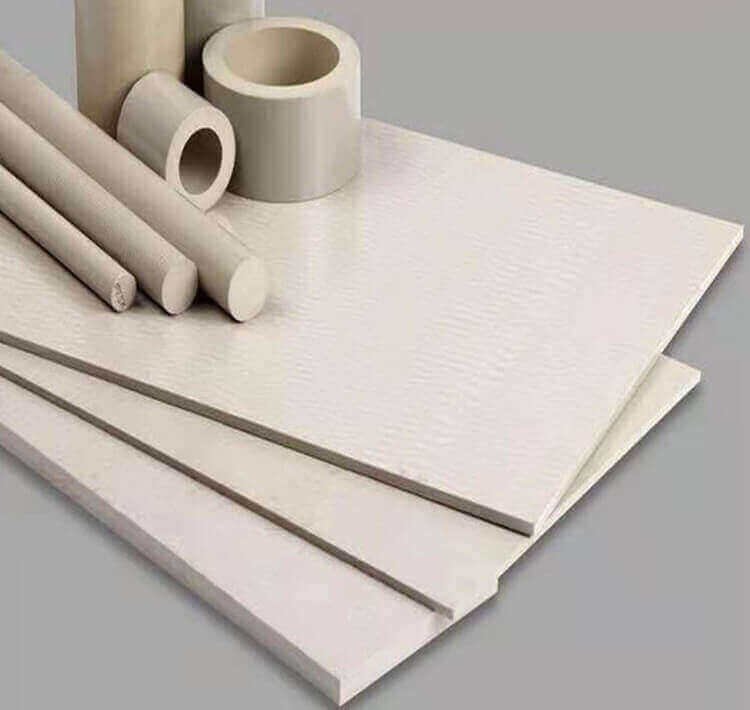
PEEK plastic raw material rods and sheets for automotive manufacturing

What is PEEK?

PEEK (polyether ether ketone) is a high-performance thermoplastic polymer plastic with exceptional mechanical and chemical properties. PEEK has high heat and chemical resistance, with a working temperature range of -60°C to +250°C. The molecular structure of PEEK makes it very tough and rigid, giving it strength comparable to metals.

PEEK offers superior durability over other plastics. It maintains its mechanical properties and dimensional stability even after thousands of hours of stress at high temperatures. This unique combination of heat resistance, chemical resistance and structural strength makes PEEK an ideal material for critical components under the hood.

Automotive lighting component made from PEEK plastic replacing metal

Key Benefits of Using PEEK Plastic in Automotive Applications

There are several key advantages that PEEK plastic brings to auto manufacturing and part performance:

High Strength-to-Weight Ratio

PEEK has an outstanding strength-to-weight ratio, meaning it can replace heavier metals while maintaining structural integrity. Parts made from PEEK plastic are lighter weight than steel or aluminum equivalents. This allows for better fuel economy, especially important as automakers work to meet emissions standards.

The lightweight properties of PEEK are highly desirable for electric vehicles (EVs), where reducing weight results in longer range from batteries. Replacing metal components with PEEK parts can extend EV range.

Withstands Extreme Engine Heat

3D printed PEEK engine component

PEEK is ideal for parts subjected to high heat, like engine and transmission components. The continuous working temperature of PEEK is up to 250°C, surpassing metals. PEEK retains its excellent mechanical properties even after long-term exposure to temperatures above 200°C.

PEEK’s heat resistance exceeds other plastics, making it suitable for replacing metal in under-the-hood applications. Engine components must withstand ever-increasing temperatures as automakers squeeze more power from smaller engines. PEEK provides a plastic that can handle the intense heat while offering design flexibility.

Chemically Resistant Properties

In addition to heat resistance, PEEK exhibits excellent chemical resistance. It is highly resistant to automotive and roadway chemicals like motor oil, greases, coolants, brake fluids, and battery acids. PEEK maintains its structural integrity and surface finish even after exposure to harsh chemicals at high temperatures over hundreds of hours.

This chemical resistance allows PEEK plastic to be used for fuel system components, oil pumps, sensors, seals and gaskets that would be degraded by chemical exposure over time. Parts made from PEEK enjoy longer service life.

Design and Manufacturing Flexibility

Unlike metal alternatives, PEEK plastic can be injection molded into complex geometries which can simplify designs. PEEK allows for consolidated, integrated parts that replace assemblies of multiple metal components. This enables lighter, more compact designs.

PEEK is also amenable to machining and finishing, allowing precise part creation. Components can be produced near net shape, reducing wasted material. The processability and fabrication flexibility of PEEK facilitate innovative part designs not feasible with metals.

Complex PEEK plastic part installed in a car

PEEK Applications and Replacing Metals in New Car Models

With its superior durability and performance, PEEK plastic has become the material of choice for a growing number of critical automotive components:

  • Engine parts – pistons, pumps, seals, gaskets, bushings, wear pads. PEEK withstands the extreme heat and pressure inside engines.
  • Transmission components – clutches, bearings, mechanical links. PEEK maintains its strength under heavy loads over millions of cycles.
  • Structural parts – suspension arms, gears, cams, fasteners. PEEK provides toughness with lower weight.
  • Electronics – sensors, connector housings, control units. PEEK offers electrical insulation along with environmental protection.

Major automotive manufacturers utilizing PEEK include BMW, Volkswagen, General Motors, Volvo, Toyota, Renault, Chrysler, Tesla, and Mercedes-Benz.

The Chrysler Group’s 2011 Jeep Grand Cherokee featured 30 PEEK plastic components, including air suspension system parts, replacing metals. This resulted in a 15kg weight reduction while maintaining strength and function.

Functional PEEK automotive component

Need Custom PEEK Machining?

We offer CNC Plastic Machining Services to create precise automotive parts from PEEK. Precision milling, turning, and cut-to-size services available with No MOQ.

Get a Free Quote

The Future of PEEK Polymers in Automotive Manufacturing

As automakers strive to improve fuel efficiency and reduce emissions, they will continue to replace metals with engineered plastics like PEEK. Lighter vehicles require less energy to propel them, meaning better fuel economy and longer EV range per charge.

According to Grand View Research, the global automotive PEEK market is projected to reach USD $115 million by 2025, growing at a CAGR of 6.7%. Rising PEEK use in EVs, hybrid electric vehicles (HEVs) and high-end vehicles will drive increasing adoption.

PEEK high-performance plastic machining for medical implants aerospace and extreme environment applications

PEEK allows engineers to consolidate multiple components into integrated designs that reduce part count, assembly labor and weight. New grades of PEEK are being developed for even higher heat and wear resistance to expand PEEK’s capabilities.

Automakers will utilize PEEK’s exceptional properties to enable lighter, more efficient power trains and structural components. PEEK provides design freedom not possible with metals, allowing innovations in the way vehicles are engineered.

As the quest continues for more performance from smaller, more efficient powertrains, robust materials that can survive the intense operating environments are essential. With its high strength, temperature resistance and chemical resistance, PEEK plastic will be a go-to material for automakers as they shape the future of transportation.

PEEK polymer offers an exciting material solution for the automotive industry. PEEK parts are lighter than metal counterparts, enabling better fuel economy and electric vehicle range. This high-performance plastic withstands extreme heat and resists harsh chemicals, making it ideal to replace metals in critical engine and transmission applications.

PEEK plastic rods and material

With its strength, heat resistance and design flexibility, PEEK allows for innovative new components and system integration. As automakers push the boundaries of efficiency and performance, PEEK provides the durability and reliability required from a material exposed to punishing conditions over millions of cycles. This exceptional thermoplastic is positioned to transform auto manufacturing as a key enabler helping drive the future of mobility.

Start Your Project with BeePlastic

If you are interested in using PEEK Plastic in your project or want to know more information, welcome to contact us. We are a professional supplier and manufacturer of all kinds of plastic custom processing and production, with a professional team of engineers and precision equipment, we can provide you with customized plastic solutions that meet your specifications and budget.

We are happy to serve you and help you fulfill your needs. Do you need a free quote or help with any questions or materials?

🎉 Limited Time Offer Use code: QR4GNY08SHVR at checkout and enjoy a special discount on your entire order!

Leave a comment


Please note, comments must be approved before they are published


Custom Plastic Fabrication

Send your drawing, material and quantity for review

🔧
Precision Machining
CNC milling & turning
✂️
Cutting & Engraving
Laser & waterjet cutting
🏭
Forming & Molding
Thermoforming & injection
🔗
Joining & Assembly
Welding & bonding
📐
Design & Prototyping
CAD design & samples

General

HDPE

PP

PVC

ABS

Engineering

POM

Nylon

PC

PMMA

High-Performance

PEEK

PEI

PTFE

Composites

FR-4

G10

Flexible

TPU

Silicone

Why Choose BeePlastic?

🎯
Perfect Fit
Custom specs eliminate adaptation needs
⚡
Clear Lead Times
Lead time confirmed with every quote
💰
Volume Pricing
Volume pricing available on bulk orders
🤝
Expert Support
Free engineering consultation included
📋
Submit
→
🔍
Review
→
💵
Quote
→
✅
Production
→
📦
Deliver

Request a Quote

Share your project details, selected material and quantity on our quote page. You can add a file link or use the email drawing route shown there.


Request Quote

Industries: Automotive • Medical • Food • Lab • Semiconductor

beeplastic@beeplastic.com


Custom PEEK Plastics – Meeting Your Specific Industrial Needs

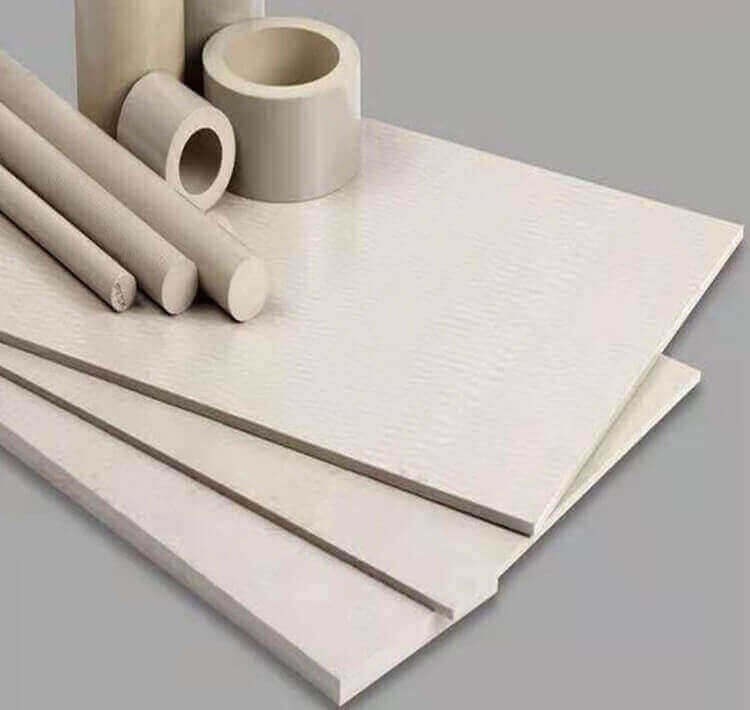
PEEK plastic

Polyetheretherketone (PEEK) is an engineering thermoplastic that has become highly valued for its exceptional performance in demanding industrial applications. With its high strength, heat and flame resistance, and chemical stability, PEEK plastic can be customized to meet the specific requirements of different industries. This article will explore the benefits of customized PEEK plastics and how they enable engineers to optimize material properties for their particular use case.

🎉🎉🎉Limited Time Offer Use code: QR4GNY08SHVR at checkout and enjoy a special discount on your entire order! 👉 PEEK plastic
PEEK plastic

Introduction to PEEK Plastic

PEEK is a high-performance plastic that belongs to the polyaryletherketone (PAEK) family. It offers an excellent balance of mechanical, thermal, and chemical properties:

  • High tensile strength and durability – retains properties even after long-term use in harsh environments
  • Resistant to high temperatures – can operate continuously at 480°F (250°C)
  • Chemically inert – highly resistant to acids, bases, oils, and solvents
  • Inherently flame retardant with low smoke emissions
  • Biocompatible and sterilizable for medical applications
PEEK Temperature Range

With its unique properties, PEEK has become the top choice for replacing metals in critical components across aviation, healthcare, energy, semiconductor manufacturing, and other industrial sectors. Customizing PEEK to application-specific shapes, grades, and machined features unlocks even more value from this versatile material.

Customizing PEEK Shape and Dimensions

One of the key benefits of PEEK is that it can be manufactured into customized shapes, sizes, and finishes to match the design requirements.

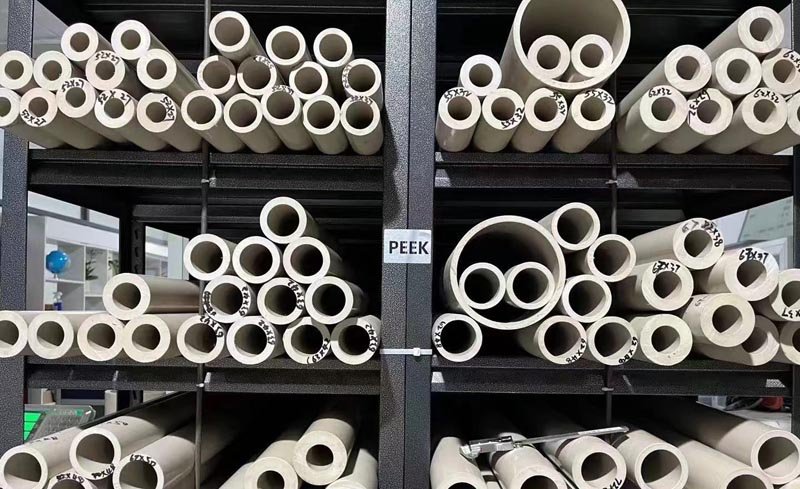
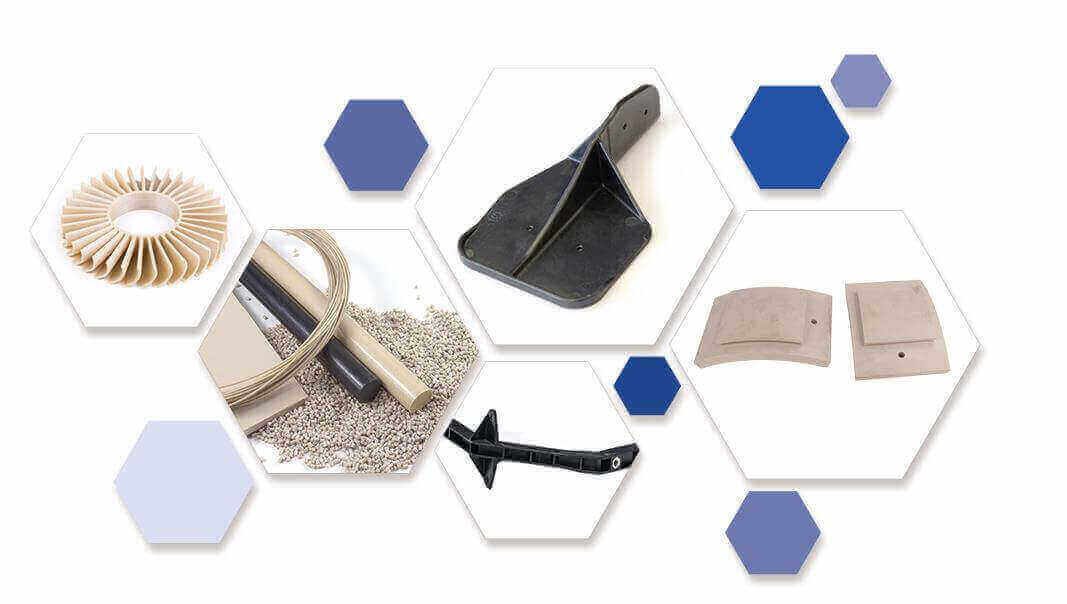
PEEK plastic stock shapes like rods, plates, tubes and sheets can be produced in different custom lengths, widths, diameters to fit the exact dimensional needs. Custom PEEK plastic rods and tubes are commonly used for connectors, mechanisms, fluid handling parts, and electrical insulators in industrial equipment. Custom cut PEEK plastic sheets find applications in mechanical parts, wear pads, and electrical insulation.

The ability to injection mold PEEK also allows creating plastic components in complex and precise 3D geometries. This is especially useful for small, intricate shapes with tight tolerances. Industries like aerospace, automotive, and healthcare utilize custom molded PEEK plastic parts to consolidate multiple components into a single molded part, saving weight and assembly costs.

Custom Machining PEEK Plastic Parts

In addition to custom molding and stock shapes, PEEK plastic parts can also be machined to achieve very tight tolerances, smooth surface finishes, and complex geometries that may not be possible through molding alone.

CNC machining is commonly used on PEEK plastic sheets, rods, and molded blanks. It enables creating intricate features like precision holes, slots, threads, and chamfers. PEEK’s machinability is good compared to other high-performance plastics, making it suitable for machining small, delicate components.

Custom CNC machined PEEK plastic parts are ideal for applications like aerospace bushings, semiconductor vacuum chucks, food handling equipment, and medical devices. Machining services can also add custom secondary operations like laser etching graphics or markings on PEEK parts.

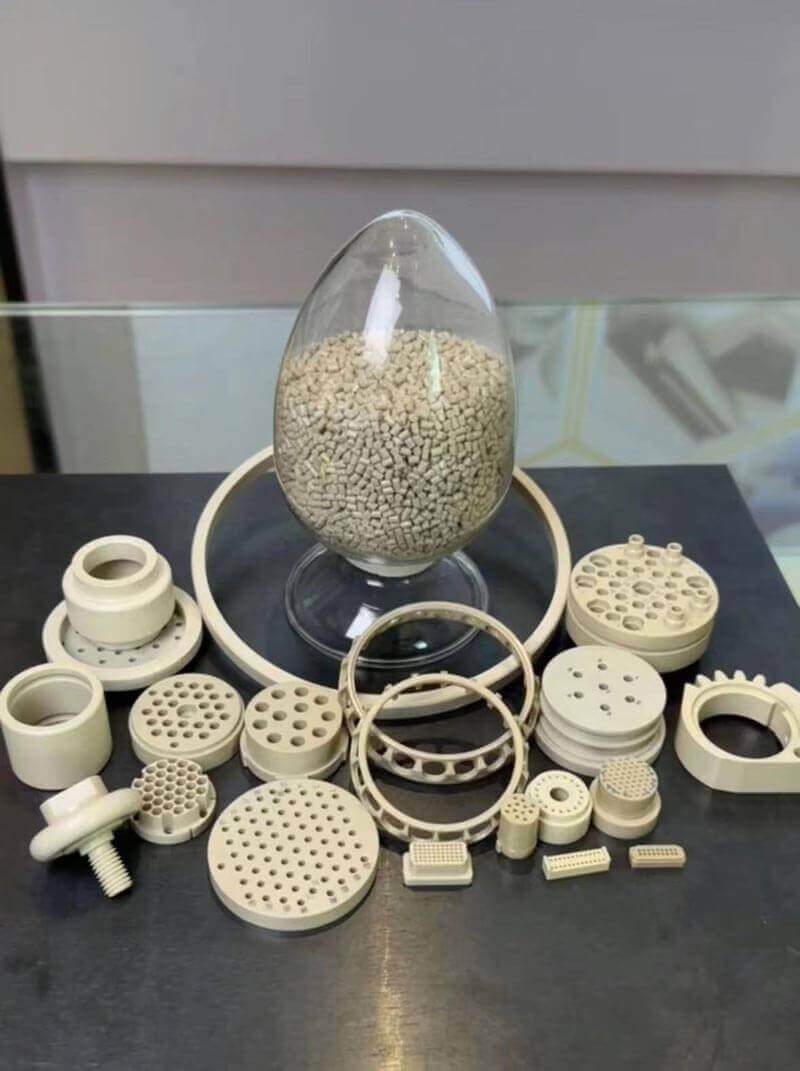
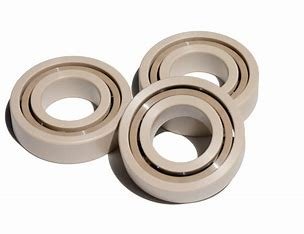
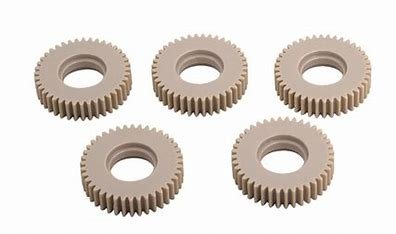
PEEK parts

Custom PEEK Solutions for Different Industries

The unique properties of PEEK plastic make it suitable for highly demanding applications across aviation, healthcare, food processing, and other industrial sectors. PEEK can be customized with special grades, coatings, and machining to meet the specialized needs of each industry:

Aerospace

Aircraft and aerospace applications require lightweight, flame-retardant parts that can perform in extreme environments. Custom PEEK bushings, compressor blades, and engine components help meet these needs while saving weight over metal parts. PEEK’s radiation resistance also makes it suitable for satellite and nuclear applications.

Healthcare and Medical Devices

With excellent biocompatibility and sterilization capability, PEEK is used for orthopedic implants like spinal cages and replacement joints. Custom PEEK plastic machining enables specialized medical instruments like dental picks and endoscopy components. Radiolucent grades of PEEK allow implants to be imaged without distortion during X-rays and CT scans.

Food Processing and Handling

For food contact applications, PEEK offers inertness, resistance to food acids, and an ability to withstand repeated sterilization cycles. Custom PEEK plastic parts like tubing, valves, and scraper blades help prevent corrosion and contamination during food processing.

Semiconductor Manufacturing

PEEK’s ultra-high purity, electrical insulation, and dimensional stability at high temperatures make it ideal for semiconductor vacuum chucks, wafer handlers, and chemical process equipment. Custom machined PEEK parts help protect silicon wafers from damage during manufacturing.

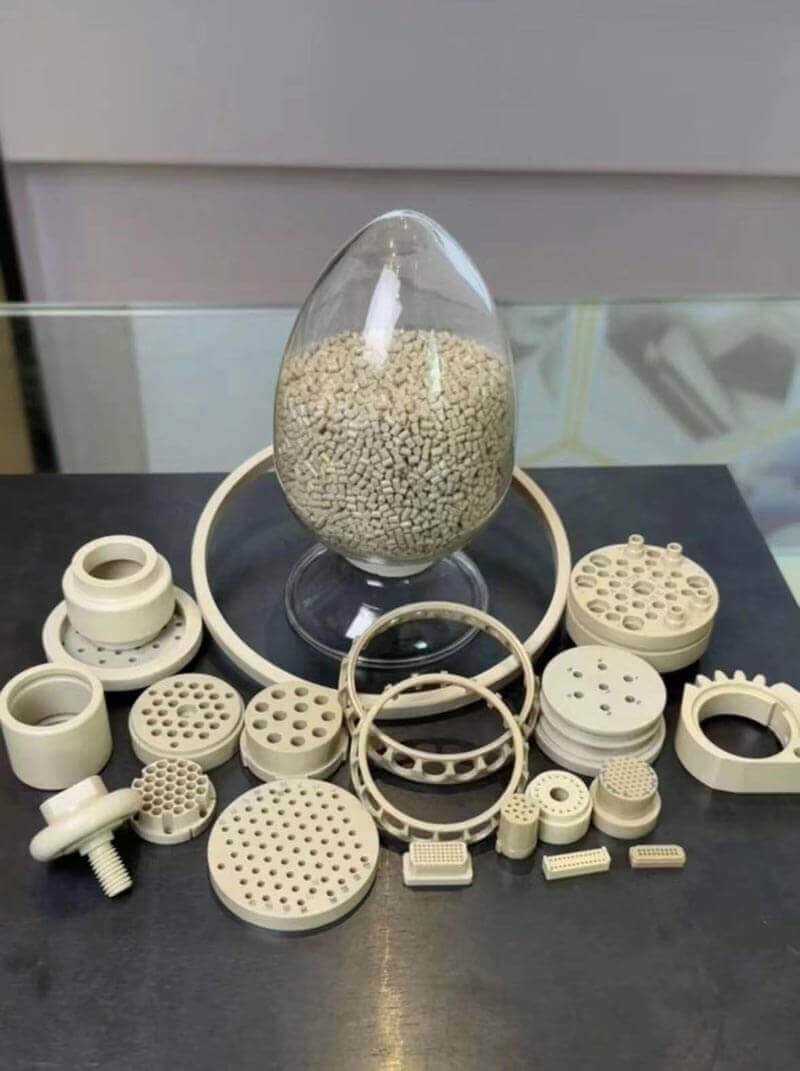
PEEK parts

Benefits of Customized PEEK Plastics

Customizing PEEK provides engineers and product designers several advantages over using standard catalog parts:

  • Optimized mechanical properties for the operating environment
  • Lighter weight by consolidating multiple parts into one
  • Reduced assembly time and costs
  • Improved dimensional precision and tolerances
  • Ability to add custom machined features as needed
  • Parts designed to maximize performance and lifespan

Custom PEEK solutions also minimize the need for secondary processing like drilling, tapping, and refinishing after fabrication. This saves both time and cost.

PEEK parts

PEEK’s unique ability to be customized to specific requirements makes it an invaluable material for critical industrial applications. Custom PEEK plastic shapes, grades, coatings, and machining enable engineers to design parts tailored to maximize performance, lifespan, and reliability. With the help of experienced PEEK plastic manufacturers and machinists, custom PEEK offers an optimal balance of properties and value for the most demanding environments across aviation, healthcare, energy, food processing, semiconductor fabrication, and other sectors.

If you are interested in using PEEK Plastic in your project or want to know more information, welcome to harass us. We are a professional supplier and manufacturer of all kinds of plastic custom processing and production, with a professional team of engineers and precision equipment, we can provide you with customized plastic solutions that meet your specifications and budget. We are happy to serve you and help you fulfill your needs. Do you need a free quote or help with any questions or materials?
🎉🎉🎉Limited Time Offer Use code: QR4GNY08SHVR at checkout and enjoy a special discount on your entire order! 👉 PEEK plastic
Our website: www.BeePlastic.com
Click to contact: Custom PEEK Plastic

Leave a comment


Please note, comments must be approved before they are published


Custom Plastic Fabrication

Send your drawing, material and quantity for review

🔧
Precision Machining
CNC milling & turning
✂️
Cutting & Engraving
Laser & waterjet cutting
🏭
Forming & Molding
Thermoforming & injection
🔗
Joining & Assembly
Welding & bonding
📐
Design & Prototyping
CAD design & samples

General

HDPE

PP

PVC

ABS

Engineering

POM

Nylon

PC

PMMA

High-Performance

PEEK

PEI

PTFE

Composites

FR-4

G10

Flexible

TPU

Silicone

Why Choose BeePlastic?

🎯
Perfect Fit
Custom specs eliminate adaptation needs
⚡
Clear Lead Times
Lead time confirmed with every quote
💰
Volume Pricing
Volume pricing available on bulk orders
🤝
Expert Support
Free engineering consultation included
📋
Submit
→
🔍
Review
→
💵
Quote
→
✅
Production
→
📦
Deliver

Request a Quote

Share your project details, selected material and quantity on our quote page. You can add a file link or use the email drawing route shown there.


Request Quote

Industries: Automotive • Medical • Food • Lab • Semiconductor

beeplastic@beeplastic.com


Pushing the Limits: Unlocking PEI Plastic’s Full Potential in Extreme Environments

polyetherimide (PEI) plastic

Key Takeaways

  • PEI plastic already provides exceptional heat resistance compared to most thermoplastics, but still has unrealized potential.
  • Applications in aerospace, automotive, electronics, energy, and more drive pushing PEI’s boundaries.
  • Smart design and precision manufacturing techniques maximize capabilities.
  • Breakthroughs in PEI itself via composites, chemical modifications, and nanoparticles unlock new possibilities.
  • The future for high temperature plastics looks bright with so much still to discover.

PEI (polyetherimide) plastic is one of the most thermally stable and heat resistant plastics available today. With a high heat deflection temperature and excellent dimensional stability under load at elevated temperatures, PEI parts maintain their integrity and perform reliably even when exposed to aggressive thermal conditions over long periods.

🎉🎉🎉Limited Time Offer Use code: QR4GNY08SHVR at checkout and enjoy a special discount on your entire order! 👉 Polyetherimide (PEI) plastic
polyetherimide (PEI) plastic

As technologies and applications continue to push the boundaries of high temperature capabilities, there is growing demand for materials that can withstand ever more extreme environments. Aerospace, automotive, electronics, oil and gas, and other industries operating under high heat require specialized plastics to empower new generations of innovative designs. Unlocking the full potential of PEI plastic provides exciting opportunities to engineer components and parts ready for the high temperature challenges of the future.

Challenges of Using Plastics in High-Temperature Applications

Most conventional plastics simply cannot survive the combination of extreme heat and structural loads associated with cutting-edge technologies. The molecular structures of widely used polymers like polyethylene (PE), polypropylene (PP), polystyrene (PS), polyethylene terephthalate (PET), and others begin to deform and degrade rapidly as temperatures increase above 150-200°C.

PEI plastic combines outstanding elevated temperature properties with the lightweight versatility of thermoplastics. With a glass transition temperature around 215°C and melting point of over 350°C, PEI can withstand short-term peak temperatures nearing 270°C in non-structural applications. Even in continued use around 120-150°C, PEI parts show excellent long-term thermal and dimensional stability.

However, while clearly outpacing other plastics, even PEI has its limitations. As engineers continue to push the boundaries in high heat and aggressive environments, unlocked potential remains.

PEI Plastic

When is PEI Plastic the Right Choice?

PEI provides an optimal balance of thermal resistance, machinability, and cost for numerous high temperature applications:

  • Aerospace and automotive parts – PEI is widely used for under-hood components and structural parts designed to be lightweight and reliable at temperatures up to 180°C.
  • Electrical insulation – With its UL94 V-0 flame resistance rating and dielectric strength, PEI is an exceptional insulator for connectors and parts exposed to high voltages and temperatures.
  • Wire and cable insulation – Extruded or wrapped PEI provides protection for wires used at elevated temperatures. It resists deformation better than many alternatives.
  • Hot fluid contact – PEI Parts perform well in contact with oils, fuels, steam, and other hot fluids, making them ideal choices for pumps, valves, and related components.
  • Other demanding environments – When dimensional stability under continuous high heat is crucial, PEI’s superior creep resistance warrants consideration.
PEI rods

Enhancing PEI Plastic’s Properties Through Design

While possessing inherently impressive properties, maximizing PEI plastic’s heat resistance requires engineering parts and molds with thermal behaviors in mind:

  • Avoiding sinks, voids, and stresses – Proper mold design and process parameters minimize defects that undermine strength and temperature resistance.
  • Using inserts and reinforcing fibers – Glass, carbon, or mineral fillers enhance rigidity, reduce expansion, and improve longevity.
  • Adding heat stabilizers – Stabilizers and antioxidants limit molecular degradation, helping PEI retain properties over time even at high temperatures.
  • Considering tool surface and texture – The right tool coatings and surface finishes can optimize release while minimizing friction and heat.
  • Choosing the ideal processing method – Different manufacturing approaches like injection molding and extrusion impact part quality.

Thoughtful design, material selection, tooling, and process techniques push PEI plastic closer to its maximum usable service temperature while retaining dimensional accuracy and load capabilities.

Pushing the Boundaries Through Innovation

Ongoing research continues yielding innovations that expand the working range and capabilities of PEI plastic:

  • Specialty grades – Modified PEI resins boast even higher glass transition points along with superior strength and creep resistance.
  • Composites and alloys – Blends and composites combining PEI with other materials create thermoplastics with expanded performance profiles.
  • Nanoparticles and nanotubes – Addition of nanoscale reinforcements enhances condutivity, strength, gas barriers, and thermal resilience.
  • Molecular and crystalline modifications – Developments in molecular structure, crystallization, and production methods further improve essential qualities of PEI.
  • Hybrid molds and manufacturing – Emerging tooling, processing, and 3D printing solutions enable designs not possible through conventional means.

Advancements incrementally build upon PEI plastic’s already formidable high temperature credentials, inching closer to the material’s ultimate theoretical capabilities.

Applications of polyetherimide (PEI)

The Future of PEI Plastic at High Temperatures

Ongoing innovation promises to keep pushing the boundaries of PEI plastic’s heat resistance and structural capabilities to empower new generations of groundbreaking technology:

Expanding High Temperature Possibilities for PEI Parts

  • Next-generation aerospace designs for improved efficiency at higher temperatures
  • Revolutionary auto engines with extreme under-hood environments
  • Deep oil and gas drilling components exposed to incredible pressures and heat
  • Nuclear energy applications demanding the ultimate in radiation resistance
  • Breakthroughs in space exploration vehicles subject to extreme temperature swings

Unlocking Potential Across Industries

  • Electric vehicle thermal management and battery systems
  • 5G infrastructure buildout requiring exceptional electrical insulation
  • Semiconductor fabrication equipment parts enduring intense process heat
  • High speed rail electrical components and structural parts
  • Next generation flexible electronics, sensors, and other emerging technologies

By leveraging synergistic material combinations, precision manufacturing, and molecular level engineering, PEI plastic still provides immense untapped potential for materials science breakthroughs.

Conclusion

PEI plastic already demonstrates remarkable heat resistance stretching far beyond most polymers. Still, the growing scope of cutting edge applications requires pushing the boundaries even further.

Unlocking the ultimate capabilities of PEI necessitates holistic innovation spanning resin chemistries, composites, part geometries, molds, processing, and more. With diligent and creative efforts across these interrelated domains, the future looks bright for discovering the full potential of PEI plastic in extreme environments.

The vital need for materials that perform reliably even when exposed to aggressive high temperatures will only intensify going forward. Plastics like PEI with exceptional thermal stability even under structural loads provide the key to continued innovation across many essential and emerging industries.

polyetherimide (PEI)
If you are interested in using PEI Plastic in your project or want to know more information, welcome to harass us. We are a professional supplier and manufacturer of all kinds of plastic custom processing and production, with a professional team of engineers and precision equipment, we can provide you with customized plastic solutions that meet your specifications and budget. We are happy to serve you and help you fulfill your needs. Do you need a free quote or help with any questions or materials?
🎉🎉🎉Limited Time Offer Use code: QR4GNY08SHVR at checkout and enjoy a special discount on your entire order! 👉 Polyetherimide (PEI) plastic
Our website: www.BeePlastic.com
Click to contact: Custom PEI Plastic 


Leave a comment


Please note, comments must be approved before they are published


Custom Plastic Fabrication

Send your drawing, material and quantity for review

🔧
Precision Machining
CNC milling & turning
✂️
Cutting & Engraving
Laser & waterjet cutting
🏭
Forming & Molding
Thermoforming & injection
🔗
Joining & Assembly
Welding & bonding
📐
Design & Prototyping
CAD design & samples

General

HDPE

PP

PVC

ABS

Engineering

POM

Nylon

PC

PMMA

High-Performance

PEEK

PEI

PTFE

Composites

FR-4

G10

Flexible

TPU

Silicone

Why Choose BeePlastic?

🎯
Perfect Fit
Custom specs eliminate adaptation needs
⚡
Clear Lead Times
Lead time confirmed with every quote
💰
Volume Pricing
Volume pricing available on bulk orders
🤝
Expert Support
Free engineering consultation included
📋
Submit
→
🔍
Review
→
💵
Quote
→
✅
Production
→
📦
Deliver

Request a Quote

Share your project details, selected material and quantity on our quote page. You can add a file link or use the email drawing route shown there.


Request Quote

Industries: Automotive • Medical • Food • Lab • Semiconductor

beeplastic@beeplastic.com


Exploring the Industrial Horizon: Unveiling the Success and Hurdles of PEI Plastic Implementations Across Various Sectors

polyetherimide (PEI)

In the vast expanse of industrial manufacturing, materials such as PEI Plastic have carved a niche, offering unparalleled benefits and functionalities across a myriad of applications. The intrinsic properties of PEI Plastic not only stand out for their thermal stability but also for their mechanical strength and chemical resistance, making them a preferred choice in various sectors. This article aims to traverse through the realms of PEI Plastic Material, exploring its successful implementations and confronting the challenges encountered across diverse industries. Through a series of enlightening case studies, we shall delve into the practical applications, triumphs, and tribulations of utilizing PEI Plastic, providing a comprehensive view of its industrial impact.

🎉🎉🎉Limited Time Offer Use code: QR4GNY08SHVR at checkout and enjoy a special discount on your entire order! 👉 Polyetherimide (PEI) plastic

Polyetherimide (PEI) in dentistry

Unraveling the Properties of PEI Plastic

Polyetherimide, commonly known as PEI Plastic, has emerged as a frontrunner in the world of high-performance plastics, owing to its exceptional PEI Plastic Properties that cater to the demanding needs of various industries. Characterized by its ability to retain its mechanical properties even at elevated temperatures, PEI Plastic has become synonymous with durability and reliability in harsh environments.

Thermal Stability: A Heat-Resistant Marvel

PEI Plastic is renowned for its impressive thermal stability, capable of maintaining its structural integrity under prolonged exposure to high temperatures. This attribute has propelled its use in industries such as aerospace and automotive, where materials are often subjected to extreme thermal conditions. But what exactly facilitates this remarkable heat resistance in PEI Plastic, and how does it compare to other materials in real-world applications?

Mechanical Strength: The Backbone of Industrial Applications

The mechanical prowess of PEI Plastic is not merely confined to its robustness but extends to its ability to withstand significant stress and strain without succumbing to deformation. This mechanical strength is not just pivotal in ensuring the longevity of the products but also in safeguarding their performance, especially in industries where the margin for error is minimal.

Chemical Resistance: Withstanding the Rigors of Industrial Environments

Navigating through the chemical landscapes of various industries, PEI Plastic demonstrates a commendable resistance to a wide array of chemicals. This resistance is not merely a barrier against corrosion but also a safeguard against potential compromises in material integrity when exposed to aggressive chemical environments.

PEI rods

The Pinnacle of Success – Case Studies on PEI Plastic Implementations

Embarking on a journey through the industrial applications of PEI Plastic, we shall explore a series of case studies that spotlight its successful implementations, the strategies employed, and the challenges encountered.

Case Study 1: Elevating Performance in the Electronics Industry with PEI Plastic

In the fast-paced world of the electronics industry, where miniaturization meets sophistication, materials like PEI Plastic have emerged as pivotal in ensuring durability, reliability, and enhanced performance of electronic components. The industry, characterized by its relentless pursuit of innovation and stringent quality standards, demands materials that can withstand high temperatures, resist various chemicals, and offer electrical insulation – all intrinsic properties of PEI Plastic.

Implementation Strategy: Bridging Innovation with Reliability

The strategy to implement PEI Plastic Material in the electronics industry was meticulously crafted, focusing on leveraging its unique properties to enhance the performance and longevity of electronic components. The inherent thermal stability of PEI Plastic was pivotal in developing components that could withstand the heat generated by electronic devices, ensuring reliability even in prolonged and intensive use. Moreover, its electrical insulation properties were crucial in preventing short circuits and ensuring the safe operation of electronic devices.

Challenges and Solutions: Navigating Through the Complexities

Despite the apparent benefits, the implementation of PEI Plastic in the electronics industry was not devoid of challenges. Ensuring consistent quality and performance of the PEI Plastic across various components, adhering to the industry’s stringent regulatory compliances, and scaling production to meet the growing demands of the industry were among the significant hurdles encountered. Solutions such as the development of standardized testing protocols for the PEI Plastic Material, establishing robust quality control mechanisms, and optimizing production processes were instrumental in navigating through these challenges, ensuring the successful incorporation of PEI Plastic in various electronic applications.

Outcomes: A Leap Towards Enhanced Electronic Components

The incorporation of PEI Plastic in the electronics industry marked a significant advancement in the development of robust and reliable electronic components. From enhancing the heat resistance of connectors to ensuring the electrical insulation of switches, PEI Plastic has facilitated the development of components that not only meet the demanding requirements of the industry but also pave the way for innovations in electronic devices.

PEI processed part

Case Study 2: Revolutionizing the Medical Industry with PEI Plastic

The medical industry, with its stringent standards and relentless pursuit of innovation, has always been on the lookout for materials that can elevate the quality and safety of medical devices and equipment. PEI Plastic, with its remarkable PEI Plastic Properties, became a material of choice for several applications within this sector. The inherent biocompatibility, thermal stability, and chemical resistance of PEI Plastic have facilitated the development of medical devices that are not only safe but also highly efficient and durable. However, the journey of integrating PEI Plastic into the medical industry was punctuated with challenges such as adhering to regulatory compliances, ensuring absolute biocompatibility, and navigating through the complexities of medical device manufacturing.

Implementation Strategy

The strategy to implement PEI Plastic Material in the medical industry was multifaceted, focusing on leveraging its unique properties to enhance device performance while ensuring adherence to the stringent regulatory and quality standards prevalent in the sector.

Challenges and Solutions

Despite the apparent benefits, the implementation of PEI Plastic was met with challenges such as [specific challenges]. Innovative solutions and meticulous planning were instrumental in navigating through these hurdles, ensuring the successful incorporation of PEI Plastic in various medical applications.

Case Study 3: PEI Plastic in the Aerospace Industry

The aerospace industry, characterized by its extreme operating conditions and rigorous material demands, presented a unique challenge and opportunity for the implementation of PEI Plastic. The material, known for its high strength-to-weight ratio and exceptional thermal stability, became a pivotal component in the manufacturing of various aerospace components.

Sky-High Demands Meet Grounded Solutions

The demands of the aerospace industry are nothing short of challenging, with materials required to perform optimally in extreme conditions. PEI Plastic, with its ability to withstand high temperatures and resist various chemicals, provided a solution that was not only viable but also significantly advantageous.

Navigating Through Turbulence

The challenges encountered in the aerospace industry, such as [specific challenges], were met with strategic planning and innovative solutions that ensured the successful and safe implementation of PEI Plastic in various aerospace applications.

PEI processed parts

Navigating Through Challenges: A Holistic View

While the case studies provide a glimpse into the practical challenges encountered in specific industries, it is pivotal to explore the overarching challenges and solutions associated with implementing PEI Plastic across various sectors.

Challenge 1: Ensuring Consistent Quality

Ensuring the consistent quality of PEI Plastic Material across various applications and industries is paramount. The challenge lies in maintaining the intrinsic properties of PEI Plastic while catering to the unique demands of each industry.

Challenge 2: Scalability of Production

The scalability of producing PEI Plastic to meet the demands of various industries, without compromising on quality and performance, presents a significant challenge, especially in sectors that require large-scale production.

Challenge 3: Environmental and Regulatory Compliance

Navigating through the environmental and regulatory compliances, especially in industries like medical and aerospace, where standards are stringent, is a challenge that requires meticulous planning and adherence to global standards.

PEI Plastic vs. PEEK Plastic in the Automotive Industry: A Comparative Analysis

Navigating through the automotive industry, where durability and innovation drive success, materials like PEI Plastic and PEEK Plastic have found a prominent place, each offering a unique set of properties and benefits that cater to the specific demands of automotive applications.

Driving Durability with PEEK Plastic

PEEK Plastic, renowned for its mechanical strength and thermal stability, has been a game-changer in the automotive industry, contributing to the development of components that not only enhance the performance of vehicles but also ensure longevity and reliability. From lightweight components that enhance fuel efficiency to durable parts that withstand extreme conditions, PEEK Plastic has paved the way for innovations that align with the evolving demands of the automotive sector.

The Robustness of PEI Plastic in Automotive Applications

PEI Plastic, on the other hand, brings forth its own set of advantages to the automotive industry. With its exceptional thermal stability and resistance to automotive fluids, PEI Plastic has emerged as a material of choice for under-the-hood applications, providing solutions that are not only durable but also cost-effective.

Comparative Insights: PEI vs. PEEK

While both PEI Plastic and PEEK Plastic offer a range of benefits in automotive applications, the choice between the two often boils down to specific application requirements, cost considerations, and material availability. This section will delve into a detailed comparison, providing insights that can guide material selection in automotive manufacturing.

polyetherimide (PEI) plastic

Future Prospects of PEI Plastic in Industrial Applications

As we traverse through the industrial landscape, exploring the various applications and challenges of PEI Plastic, it is pivotal to cast a glance towards the future, understanding the potential advancements and applications that lie on the horizon.

Advancements in Material Science

The future of PEI Plastic in industrial applications is closely tied to advancements in material science, exploring new formulations and processing techniques that can enhance its properties and expand its applicability across various sectors.

Sustainability and Environmental Impact

With a growing emphasis on sustainability, the development of PEI Plastic variants that are more environmentally friendly and compliant with global sustainability standards will be pivotal in ensuring its continued relevance and applicability in various industries.

Expanding Horizons: New Industries and Applications

Exploring new industries and applications for PEI Plastic, especially in emerging sectors like renewable energy and electric vehicles, will be crucial in expanding its industrial footprint and contributing to advancements in various fields.

The journey of PEI Plastic across various industries, marked by its successful implementations and the challenges encountered, provides a comprehensive view of its industrial impact and potential. From enhancing the performance of automotive components to ensuring the reliability of medical devices, PEI Plastic has showcased its versatility and robustness in numerous applications. As we look towards the future, the continuous exploration and advancement of PEI Plastic will pave the way for new applications, ensuring its sustained relevance in the ever-evolving industrial landscape.

Engage with Us

We invite you to share your thoughts, experiences, and insights on PEI Plastic and its applications across various industries. Your input is valuable in enhancing our understanding and exploring new horizons in the world of high-performance plastics.

polyetherimide (PEI)
If you are interested in using PEI Plastic in your project or want to know more information, welcome to harass us. We are a professional supplier and manufacturer of all kinds of plastic custom processing and production, with a professional team of engineers and precision equipment, we can provide you with customized plastic solutions that meet your specifications and budget. We are happy to serve you and help you fulfill your needs. Do you need a free quote or help with any questions or materials?
🎉🎉🎉Limited Time Offer Use code: QR4GNY08SHVR at checkout and enjoy a special discount on your entire order! 👉 Polyetherimide (PEI) plastic
Our website: www.BeePlastic.com
Click to contact: Custom PEI Plastic


Leave a comment


Please note, comments must be approved before they are published


Custom Plastic Fabrication

Send your drawing, material and quantity for review

🔧
Precision Machining
CNC milling & turning
✂️
Cutting & Engraving
Laser & waterjet cutting
🏭
Forming & Molding
Thermoforming & injection
🔗
Joining & Assembly
Welding & bonding
📐
Design & Prototyping
CAD design & samples

General

HDPE

PP

PVC

ABS

Engineering

POM

Nylon

PC

PMMA

High-Performance

PEEK

PEI

PTFE

Composites

FR-4

G10

Flexible

TPU

Silicone

Why Choose BeePlastic?

🎯
Perfect Fit
Custom specs eliminate adaptation needs
⚡
Clear Lead Times
Lead time confirmed with every quote
💰
Volume Pricing
Volume pricing available on bulk orders
🤝
Expert Support
Free engineering consultation included
📋
Submit
→
🔍
Review
→
💵
Quote
→
✅
Production
→
📦
Deliver

Request a Quote

Share your project details, selected material and quantity on our quote page. You can add a file link or use the email drawing route shown there.


Request Quote

Industries: Automotive • Medical • Food • Lab • Semiconductor

beeplastic@beeplastic.com


PEEK Plastic: The Durable Automotive Innovation Material

PEEK Gear Applications

Advancements in automotive technology have led to incredible innovations in safety, fuel efficiency, and performance. One key material advancement that is driving improved designs is the increased use of plastics, and specifically a high-performance plastic called PEEK.

🎉🎉🎉Limited Time Offer Use code: QR4GNY08SHVR at checkout and enjoy a special discount on your entire order! 👉 PEEK plastic
PEEK raw materials

What is PEEK?

PEEK (polyether ether ketone) is an engineering thermoplastic that has exceptional resistance to heat, chemicals, and wear and tear. It maintains its mechanical properties and stability even when continuously exposed to temperatures approaching 500°F.

With its unique combination of being lightweight yet extremely strong and rigid, PEEK has become a go-to plastic for replacing metal components in automotive applications. Let’s take a closer look at why PEEK is being adopted rapidly in the auto industry.

PEEK plastic

Key Automotive Applications of PEEK

PEEK offers important benefits for various systems and components in modern vehicles:

Engine and Transmission Parts

The high heat tolerance and lubricant resistance of PEEK makes it perfect for parts that need to perform consistently even when exposed to extreme engine environments over long periods of time. PEEK is used to make critical components like piston parts, pumps, clutches, pulleys, valve components, and engine cover parts.

Compared to metals, PEEK engine parts are lighter weight, more resistant to heat-induced warping, and custom moldable into complex geometries not possible with metals. This leads to improved engine performance, efficiency, and durability.

Fuel System Components

PEEK offers excellent chemical resistance to gasoline, petroleum products, and other aggressive automotive fluids. It maintains strength and structure when exposed to hydrocarbons, brake fluids, coolants, and other harsh chemicals.

This allows PEEK to be used for fuel system components like fuel rails, fuel pump parts, sensors, and fuel line connectors. PEEK stand up to years of chemical exposure without degrading while keeping the fuel system sealed and secure.

Safety and Structural Components

The inherent strength and rigidity of PEEK plastic means it can be used for critical safety parts that need to maintain their integrity. Components like airbag housings, seat belt anchors, and suspension parts can be made from PEEK to optimize structural integrity.

PEEK’s vibration damping properties are also beneficial for engine mounts, struts, and other structures that need to withstand continuous shaking and forces over years of driving.

Bearings, Bushings, and Wear Parts

The natural lubricity and abrasion resistance of PEEK plastic makes it useful for bearings, bushings, cams, and other parts that require minimal friction and wear. PEEK has 15 times lower friction than metals like aluminum and maintains its slippery properties without additional lubricants.

Automakers use injection molded PEEK bearings and bushings that don’t require further machining or treatment. This improves part consistency while reducing production time and costs.

PEEK gears

Electrical Components

PEEK offers high dielectric strength and insulation properties, making it useful for electrical and electronic applications. It maintains these properties across a wide temperature range.

Parts like sensors, connectors, fuse holders, and relay components can utilize PEEK plastic for its heat resistance, dimensional stability, and electrical insulation even when mounted near hot engine environments.

Replacing Metals with Lighter, Stronger PEEK Parts

One of the key benefits of PEEK in automotive applications is the potential to replace heavier, metal components with lighter weight PEEK plastic parts. This helps reduce overall vehicle weight which translates directly to improved fuel efficiency and performance.

Some examples of metal replacement using PEEK include:

  • Timing belt tensioners – Replacing die-cast aluminum with PEEK injection molded tensioner pulleys reduces weight by up to 60%. This improves engine efficiency and reduces noise.
  • Fuel rails – PEEK fuel rails optimize fuel delivery while reducing weight by up to 30% compared to metal rails. This supports overall fuel efficiency.
  • Pump housings – PEEK plastic pump housings casts or machined metals housings by improving corrosion resistance, reducing noise, and significantly reducing weight.
  • Bearings and bushings – PEEK bearings and bushings replace metal equivalents while offering lower friction, better abrasion resistance, and lighter weight.
  • Electrical components – PEEK plastic housings for electrical parts like connectors, sensors, and fuses offer the electrical insulation of plastics with the durability and heat resistance needed near engines.

With its strength-to-weight ratio exceeding metals like aluminum and stainless steel, PEEK continues to allow new opportunities to remove bulk and weight without sacrificing component performance and longevity.

PEEK

Key Properties and Performance Advantages of PEEK Plastic

Now that we’ve covered the major automotive applications of PEEK plastic, let’s examine what gives PEEK its innovative material advantages:

Heat and Temperature Resistance

PEEK retains its excellent mechanical properties even when continuously exposed to hot environments. It offers long-term heat stability up to 500°F, far exceeding the capabilities of other plastics. PEEK also maintains strength during temperature cycling, which is critical for engine components.

This extreme thermal endurance allows PEEK to replace metals in parts that need to perform and retain dimensions and structure despite years of high heat engine exposure.

Chemical and Fluid Resistance

In addition to heat resistance, PEEK demonstrates outstanding resistance to automotive fluids, hydrocarbon fuels, lubricants, brake fluids, and other harsh chemicals. Its inert properties mean it won’t degrade or corrode when exposed to aggressive substances in engine environments.

Parts made from PEEK plastic maintain their integrity and sealing properties when in contact with corrosive chemicals and petroleum products. This is essential for components like fuel system parts and fluid seals.

Strength and Structural Rigidity

PEEK plastic has very high strength-to-weight ratios exceeding those of metals like titanium and steel alloys. Its tensile strength, flexural modulus, and other mechanical properties make it extremely rigid and stiff.

These properties allow structurally critical automotive components to be constructed from PEEK plastic instead of metals while retaining dimensional stability and performance. Parts such as airbag housings, seat structures, and suspension components benefit from PEEK’s inherent rigidity.

Vibration and Noise Damping

With its inherent damping properties, PEEK plastic parts can reduce vibration and noise in automotive components. This is useful in parts like bushings, bearings, spring isolators, and other assemblies that need to limit vibration transfer and noise.

PEEK’s characteristics allow engineers to design low-noise systems, improving the overall cabin experience. Parts can be consolidated, reducing the number of separate components required.

Design and Manufacturing Flexibility

Unlike metals, PEEK plastic can be injection molded into complex, specialized component geometries. Parts can be designed with engineering plastics in mind from the beginning rather than just replacing simple metal shapes with plastic.

Manufacturing PEEK involves lower tooling costs than metal parts. PEEK parts can also eliminate secondary machining and finishing steps often needed for metallic components. This reduces overall manufacturing overhead when working with PEEK.

PEEK

Automotive Industry Trends and the Future of PEEK Use

PEEK plastic has already demonstrated its value for multiple automotive applications from engines to electronics. However, expanded use of PEEK is expected as automakers aim for more efficient, lighter vehicles.

Some key trends that point to even greater utilization of PEEK plastic include:

Increasing electrification

Electric vehicles (EVs) are gaining market share rapidly. EVs have different demands than internal combustion engines, with lightweighting being even more critical. PEEK will allow more metal components to be transitioned to plastic without sacrificing mechanical requirements.

Powertrain downsizing

Average vehicle engine sizes are decreasing, meaning individual components need to handle higher power densities. PEEK allows downsized, high-performance powertrain elements to withstand greater stresses and temperatures.

Vehicle lightweighting

Automakers continue to lightweight vehicles to meet fuel efficiency standards. PEEK will enable further weight reductions by substituting additional steel, aluminum and magnesium components with PEEK plastic.

High-durability designs

As vehicles last longer, designs must better withstand 10+ years of operation. PEEK offers the longevity and performance retention needed for more durable vehicle systems and parts.

Increased part consolidation

PEEK’s design and manufacturing flexibility allows for increased part consolidation where one complex PEEK component can replace multiple metal pieces. This further reduces weight and simplifies assembly.

The Future Looks Bright with PEEK

PEEK plastic clearly represents an important innovation material that will be critical moving forward in the global automotive industry. Its unique balance of being both extremely durable while lightweight points to a bright future of expanded applications across all types of vehicles.

As technology advances and automakers aim for smarter, safer and more efficient vehicles, PEEK provides an enabling material solution. Expect to see exponential growth in PEEK usage throughout all vehicle systems in the years ahead.

So as you see plastics playing an increasing role in tomorrow’s automobiles, you’ll know PEEK plastic is quietly driving many of those innovations under the hood. Durable, heat-resistant, and versatile, PEEK is the future of high-performance plastic solutions for the automotive industry.

PEEK Gear Applications
If you are interested in using PEEK Plastic in your project or want to know more information, welcome to harass us. We are a professional supplier and manufacturer of all kinds of plastic custom processing and production, with a professional team of engineers and precision equipment, we can provide you with customized plastic solutions that meet your specifications and budget. We are happy to serve you and help you fulfill your needs. Do you need a free quote or help with any questions or materials?
🎉🎉🎉Limited Time Offer Use code: QR4GNY08SHVR at checkout and enjoy a special discount on your entire order! 👉 PEEK plastic
Our website: www.BeePlastic.com
Click to contact: Custom PEEK Plastic

Leave a comment


Please note, comments must be approved before they are published


Custom Plastic Fabrication

Send your drawing, material and quantity for review

🔧
Precision Machining
CNC milling & turning
✂️
Cutting & Engraving
Laser & waterjet cutting
🏭
Forming & Molding
Thermoforming & injection
🔗
Joining & Assembly
Welding & bonding
📐
Design & Prototyping
CAD design & samples

General

HDPE

PP

PVC

ABS

Engineering

POM

Nylon

PC

PMMA

High-Performance

PEEK

PEI

PTFE

Composites

FR-4

G10

Flexible

TPU

Silicone

Why Choose BeePlastic?

🎯
Perfect Fit
Custom specs eliminate adaptation needs
⚡
Clear Lead Times
Lead time confirmed with every quote
💰
Volume Pricing
Volume pricing available on bulk orders
🤝
Expert Support
Free engineering consultation included
📋
Submit
→
🔍
Review
→
💵
Quote
→
✅
Production
→
📦
Deliver

Request a Quote

Share your project details, selected material and quantity on our quote page. You can add a file link or use the email drawing route shown there.


Request Quote

Industries: Automotive • Medical • Food • Lab • Semiconductor

beeplastic@beeplastic.com


The Extreme Heat Tolerance of PEEK Plastic Explained

PEEK vessel inlet filters

🎉 Limited Time Offer: Use code QR4GNY08SHVR at checkout for a special discount! 👉 Shop PEEK Plastic

Polyether ether ketone (PEEK) plastic is an engineering thermoplastic known for its exceptional heat resistance. With a melting temperature over 330°C, PEEK offers thermal stability far beyond most other plastics.

This extreme thermal resistance makes PEEK an ideal material for components and parts exposed to high heat, including under-the-hood automotive and aerospace applications, medical sterilization equipment, and oil and gas drilling tools.

But what gives PEEK its incredible resistance to high temperatures? This article will explore the unique properties that allow PEEK to withstand extreme heat and outperform other thermoplastics.

PEEK plastic raw material granules

What Makes PEEK Thermally Resistant?

PEEK owes its thermal stability to its molecular structure and chemistry. The polymer consists of an aromatic backbone molecular chain, with alternating ketone and ether functional groups.

Several factors contribute to PEEK’s heat resistance:

Lack of a Glass Transition Temperature

Most thermoplastics have a defined glass transition temperature (Tg), above which the material transitions from a rigid, glassy state to a soft, rubbery state. As temperature increases above Tg, the plastic becomes less stiff and more prone to creeping under load.

PEEK does not exhibit a glass transition, maintaining its stiff, rigid chains even at high temperatures. With no glass transition phase change, PEEK shows little change in mechanical properties up to its 334°C melting point.

High Melting Point

PEEK has an extraordinarily high melting temperature of 334°C. Most commodity plastics melt or deform at temperatures below 150°C. PEEK’s high melting point reflects the stability of its molecular chains and stiff backbone structure.

The aromatic rings provide thermal stability, while the ketone and ether linkages resist breakdown even at extreme temperatures. This preserves PEEK’s mechanical strength well above 300°C.

PEEK Rods and Sheets

Looking for PEEK Materials?

Browse our stock of PEEK Sheets, Rods, and Films. No Minimum Order Quantity.

Thermal Stability of Chemical Structure

PEEK’s chemical composition resists oxidative degradation and decomposition at high sustained heat. The polymer retains its structural integrity and does not corrode or char.

PEEK’s thermal oxidative stability gives it an advantage in environments that combine elevated temperature and contact with aggressive chemicals or radiation.

PEEK vessel inlet filters custom machined

Low Coefficient of Thermal Expansion

PEEK expands very little when heated, with a coefficient of thermal expansion below 50 x 10-6 m/m°C. This dimensional stability at temperature extremes prevents warping or deformation.

Components machined from PEEK hold tight tolerances without distortion, even with wide temperature fluctuations.

PEEK vs. Other Engineering Plastics

How does PEEK compare to other high-performance engineered plastics used in extreme conditions?

Comparison with POM processing customization

Nylon (PA)

Nylon has better chemical resistance than PEEK but lower temperature capabilities. The Tg of nylon is about 65°C, with melting points from 215-265°C. While strong at room temperature, nylon loses stiffness rapidly above 80°C.

Polyphenylene Sulfide (PPS)

PPS retains strength up to 190°C but has lower long-term thermal resistance than PEEK. It is more affordable but more brittle.

Polyimide (PI)

PI can withstand temperatures approaching 300°C. However, it absorbs moisture easily leading to dimensional changes. Polyimide has higher dielectric losses than PEEK.

Polyethylene Terephthalate (PET)

PET melts at 250°C and loses strength by 150°C. It decomposes faster than PEEK at high temperatures.

Polyetherimide (PEI)

With a glass transition temperature of 217°C PEI maintains properties at higher temperatures than PET or nylon. It is less expensive than PEEK but more limited in heat resistance.

Acetal (POM)

POM begins to deform above 90°C and melts at 175°C, making it unsuitable for high heat applications.

PEEK clearly outperforms other thermoplastics at extreme temperatures. The aromatic structure and ketone/ether linkages provide unparalleled thermal stability.

Applications Capitalizing on PEEK’s Heat Resistance

Thanks to its uniquely high melting point and thermal stability, PEEK is widely used in applications that experience temperatures exceeding 250°C:

High-precision CNC-machined PEEK gears and components

Automotive and Aerospace Components

Engine compartments, powertrain systems, exhaust components, pumps, and seals must withstand temperatures up to 350°C. PEEK’s resistance to heat and chemicals makes it an ideal under-the-hood plastic.

PEEK is used for wiring insulation, gears, bushings, speakers, and other parts in close proximity to hot engines. Aerospace applications include insulation for wiring near turbines and engine mounts.

Medical Sterilization and Implants

The ability to repeatedly sterilize implants and surgical tools saves lives. PEEK’s heat tolerance allows hundreds of autoclave and steam sterilization cycles.

PEEK’s biocompatibility also makes it suitable for high-temperature sterilizable medical implants like replacement joints.

Oil and Gas Drilling Tools

During petroleum drilling operations, components like seals, valves, and drill bits are subjected to high heat. PEEK stands up to steam, abrasion, and corrosion in these harsh downhole environments.

PEEK’s strength lets drill bits bore longer and faster, while its dimensional stability precisely controls drilling tolerances.

Need Custom PEEK Machined Parts?

Our engineers specialize in high-precision CNC machining for aerospace, medical, and energy sectors.

Electronics in Extreme Environments

PEEK’s electrical insulation properties persist at elevated temperatures. It is used for connectors, switches, and wire insulation where electronics experience intermittent high heat.

Fire Protection Systems

PEEK does not burn easily and does not produce toxic fumes when exposed to fire. The UL 94 flammability standard rates PEEK as V-0, the highest rating for fire resistance.

Cooking Equipment and Smoking Pipes

For cooking tools and smoking paraphernalia designed for extended high heat, PEEK provides an inert, non-reactive surface safe for food contact.

PEEK block material

The Future of High-Temperature Plastics

While PEEK offers unmatched performance among today’s thermoplastics, researchers continue seeking ways to improve its thermal capabilities:

  • Reinforced PEEK compounds with ceramic or carbon fibers boost stiffness and strength to over 300°C.
  • Fillers like molybdenum disulfide improve PEEK’s machinability for precision components.
  • Composite blends combine PEEK with other thermoplastics for specialized high-temperature properties.
  • New techniques modify PEEK’s backbone structure to incrementally increase its melting point and glass transition temperature.

Other new plastics also aim to compete with PEEK in extreme environments:

  • Polyphenylene sulfide (PPS) and its alloys offer higher temperature resistance focused on select properties.
  • Liquid crystal polymers (LCP) provide an alternative stiff, chemically resistant structure stable to over 300°C.
  • Polytetrafluoroethylene (PTFE) excels in corrosion resistance though has lower strength than PEEK.
  • Polyimide (PI) possesses thermal stability near the range of PEEK but absorbs moisture easily.

While PEEK retains its dominance for universal high heat applications, tailored alternatives continue emerging for specialized uses.

Conclusion

PEEK plastic possesses unique high temperature properties unmatched by other thermoplastics. Its aromatic molecular structure, lack of a glass transition temperature phase change, and high melting point of 334°C give PEEK thermal stability to over 300°C.

Compared to plastics like nylon, acetal, PET, and PTFE, PEEK performs consistently even when exposed to extreme heat, oxidizing environments, and repeated sterilization cycles.

Thanks to properties like dimensional stability and chemical resistance at high temperatures, PEEK excels in automotive, aerospace, oil and gas, medical, and electronics applications.

Ongoing development aims to modify PEEK for even higher performance and create alternative thermoplastics with capabilities rivalling PEEK’s thermal resistance.

Understanding PEEK’s superior high-temperature properties helps engineers select the right material for designs subjected to extreme heat. When performance at over 300°C is critical, PEEK provides unbeatable thermal resistance.

PEEK medical implants

Start Your PEEK Project Today

If you are interested in using PEEK Plastic in your project or want to know more information, we are here to help. We are a professional supplier and manufacturer of all kinds of plastic custom processing, with a professional team of engineers and precision equipment. We can provide you with customized plastic solutions that meet your specifications and budget.

Don’t forget! Use Limited Time Offer code: QR4GNY08SHVR at checkout.

Visit us: www.BeePlastic.com | Custom PEEK Plastic

Leave a comment


Please note, comments must be approved before they are published


Custom Plastic Fabrication

Send your drawing, material and quantity for review

🔧
Precision Machining
CNC milling & turning
✂️
Cutting & Engraving
Laser & waterjet cutting
🏭
Forming & Molding
Thermoforming & injection
🔗
Joining & Assembly
Welding & bonding
📐
Design & Prototyping
CAD design & samples

General

HDPE

PP

PVC

ABS

Engineering

POM

Nylon

PC

PMMA

High-Performance

PEEK

PEI

PTFE

Composites

FR-4

G10

Flexible

TPU

Silicone

Why Choose BeePlastic?

🎯
Perfect Fit
Custom specs eliminate adaptation needs
⚡
Clear Lead Times
Lead time confirmed with every quote
💰
Volume Pricing
Volume pricing available on bulk orders
🤝
Expert Support
Free engineering consultation included
📋
Submit
→
🔍
Review
→
💵
Quote
→
✅
Production
→
📦
Deliver

Request a Quote

Share your project details, selected material and quantity on our quote page. You can add a file link or use the email drawing route shown there.


Request Quote

Industries: Automotive • Medical • Food • Lab • Semiconductor

beeplastic@beeplastic.com