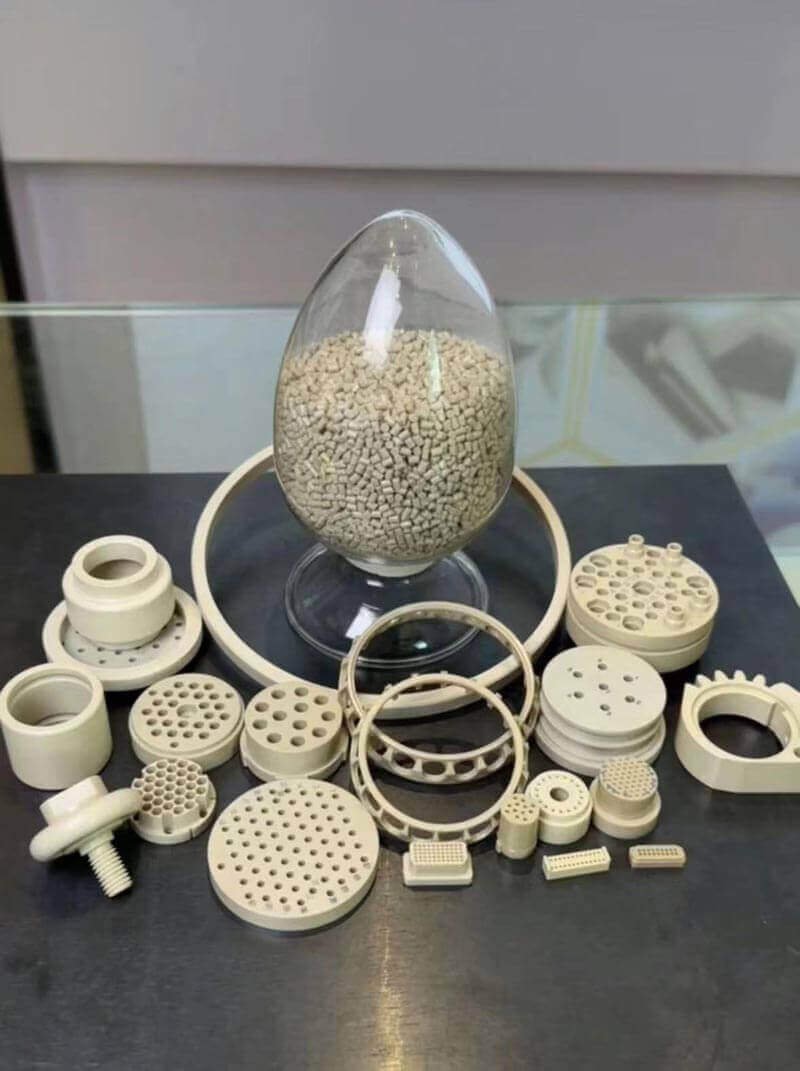
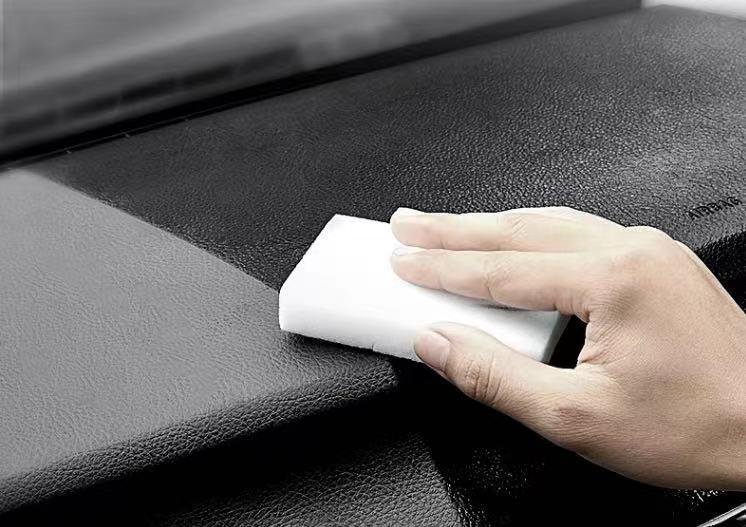
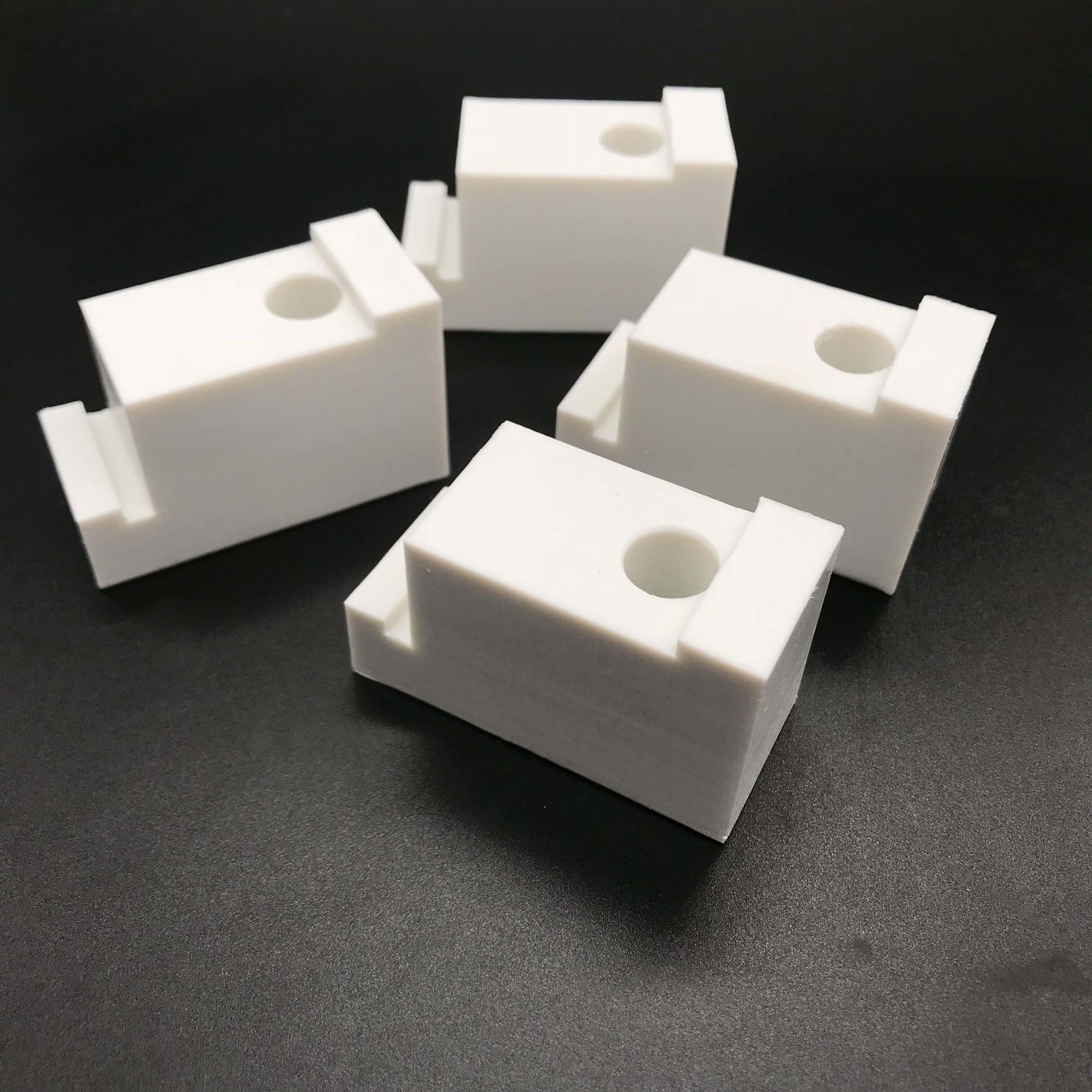
Revolutionizing Manufacturing: The Remarkable Benefits and Uses of UHMWPE Sheets

custom uhmwpe plastic

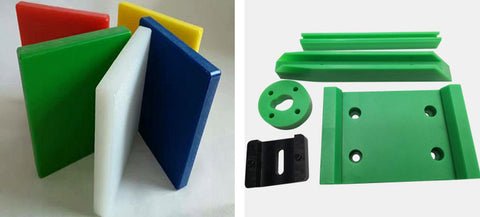
Ultra High Molecular Weight Polyethylene (UHMWPE) has steadily gained traction in modern manufacturing industries, thanks to its unparalleled properties that lend superior performance, longevity and customization potential. UHMWPE sheets in particular offer exceptional strength, abrasion resistance and chemical resistance, making them suitable for numerous applications from food processing equipment to heavy-duty machine parts.

🎉🎉🎉Limited Time Offer Use code: QR4GNY08SHVR at checkout and enjoy a special discount on your entire order! 👉 UHMWPE plastic

This article will provide an in-depth look at UHMWPE sheets – from understanding their unique properties to exploring common and innovative industrial applications across manufacturing sectors. We’ll also discuss sourcing considerations when choosing UHMWPE sheet suppliers to find products capable of meeting specialized performance requirements. Let’s get started.

custom uhmwpe plastic

Understanding UHMWPE Sheets

What is UHMWPE Material?

UHMWPE, short for Ultra High Molecular Weight Polyethylene, is a thermoplastic polymer known for having extremely long chains of polyethylene oriented in the same direction. This alignment gives rise to exceptional tensile strength, rigidity and abrasion resistance properties.

UHMWPE has a molecular weight numbering in the millions, hence the name. It also stands apart for being highly chemically inert and safe for food contact.

UHMWPE Sheet Properties

Owing to its molecular arrangement, UHMWPE sheets offer the following noteworthy performance properties:

  • Extreme tensile strength
  • Resistance to corrosive chemicals and stress cracking
  • Low moisture absorption and permeation
  • Resistance to abrasive wear and friction
  • Impact strength and ductility
  • Food contact compliant
Properties of UHMWPE

UHMWPE Manufacturing Process

UHMWPE sheets are produced through a process called compression molding of UHMWPE resin under high heat and pressure. This aligns the molecular chains evenly across the sheet thickness, conferring optimal directional properties.

Adding fillers like carbon fibers during processing can enhance certain attributes like conductance for specialized applications.

The Unique Properties of UHMWPE Sheets

UHMWPE Sheet Durability and Strength

A prime advantage of UHMWPE sheets is exceptional durability and load-bearing capacity. UHMWPE exhibits yield strength 2-3 times higher than regular polyethylene. The highly oriented molecular chains distribute force evenly, preventing premature cracking or crumbling under strain.

This allows UHMWPE sheets to withstand up to 1,000 psi of continuous stress in demanding environments. UHWMPE machine parts thus demonstrate above-average service life over metal components.

UHMWPE Sheet Flexibility and Resistance

Despite its heavy-duty strength, UHMWPE offers sufficient flexibility to withstand repeated bending and deformations from use. This includes twist, tensile and hinge movements over time without rupture.

Moreover, the chemical inertness of UHWMPE sheets translates into multi-faceted environmental resistance:

  • Abrasion: Surface stands up to rubbing, scuffing, and erosion
  • Corrosion: No oxidation or effects from acids, bases, salts
  • Chemicals: Highly non-reactive to solvents, oils and cleaning fluids
  • Impact: Absorbs vibrations, blows and mechanical shocks
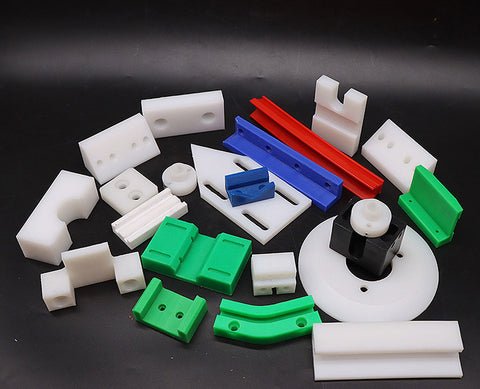
uhmwpe plastic CNC machining parts

UHMWPE Sheet Versatility

Owing to this rare combination of strength, flexibility and resistance, UHMWPE sheets provide versatile utility across manufacturing applications – from parts subject to daily wear-and-tear to custom equipment for hazardous chemical processing.

Engineers increasingly prefer this advanced polymer in replace of steel, alloy or rubber components to improve product performance.

Industrial Applications of UHMWPE Sheets

UHMWPE Sheets in Manufacturing

Leading manufacturers utilize custom UHMWPE sheets or finished parts to enhance equipment reliability and output:

  • Food Processing: UHMWPE-lined mixing arms, conveyor belt guides, and macerator funnels optimize hygiene and minimize cross-contamination.
  • Packaging: Anti-static UHMWPE sheets feed bulk material steadily into fill lines without sticking or slowdown.
  • Robotics: Replace traditional metals with lightweight UHMWPE links and actuators for faster automated processes.
  • Pulleys: Sprockets and bearings made of UHMWPE withstand heavy loads and last longer before needing replacement.

Custom UHMWPE Sheets for Specialized Needs

Reputable UHMWPE sheet manufacturers offer a range of grades, thicknesses and custom fabrications to meet specialized requirements:

  • Standard, static-dissipative, conductive, and detectable blue UHMWPE grades.
  • Sheets from 0.5mm to 100mm thickness for lightweight to heavy-duty applications.
  • Precision-machined fins, rollers, bin covers, conveyor guards etc.

This enables clients to replace parts once deemed impossible to produce in plastic.

custom uhmwpematerial parts

UHMWPE Sheet Applications in Robotics and Aerospace

The uncommon strength and electrical properties of certain UHMWPE sheet products have unlocked innovative applications in high-tech fields:

  • Conductive UHMWPE sheets embedded with sensor arrays accurately trace robotic arm and gripper movements.
  • Thin detectable blue UHMWPE sheets prevent foreign object debris (FOD) around aircraft.
  • Lightweight UHMWPE padding lines high-G force fighter pilot helmets.

Such niche applications highlight the possibilities of this adaptable and ever-evolving material.

Choosing the Right UHMWPE Sheets

UHMWPE Sheet Suppliers and Quality

With growing demand for UHMWPE parts across industries, many suppliers now offer stock and custom sheet materials:

  • Seek established manufacturers with in-house molding capabilities.
  • Evaluate quality control and compliance certifications.
  • Compare UHMWPE sheet pricing based on thickness, size, fabrication costs etc.

This helps avoid quality inconsistencies or hidden fees.

How to Cut UHMWPE Sheet

While UHMWPE sheets lend well to machining, clients should adhere to a few guidelines:

  • Use sharp, high-RPM blades for tear-free edges.
  • Account for 1-2% thickness shrinkage during precision cutting.
  • Apply gentle settings and adequate cooling fluid to avoid heat damage.

Reputable suppliers can provide cutting recommendations specific to your project.

UHMWPE sheets continue to widen the horizons for manufacturing applications where high impact, low friction, chemical resistance and food compliance are vital. As materials science unlocks new grades and production methods, engineers across sectors should continually evaluate UHMWPE sheets as a solution to their most pressing equipment challenges for reliability and output. By selecting quality-assured UHMWPE sheet stock and fabrication partners, the next generation of improved industrial machinery is sure to take shape.

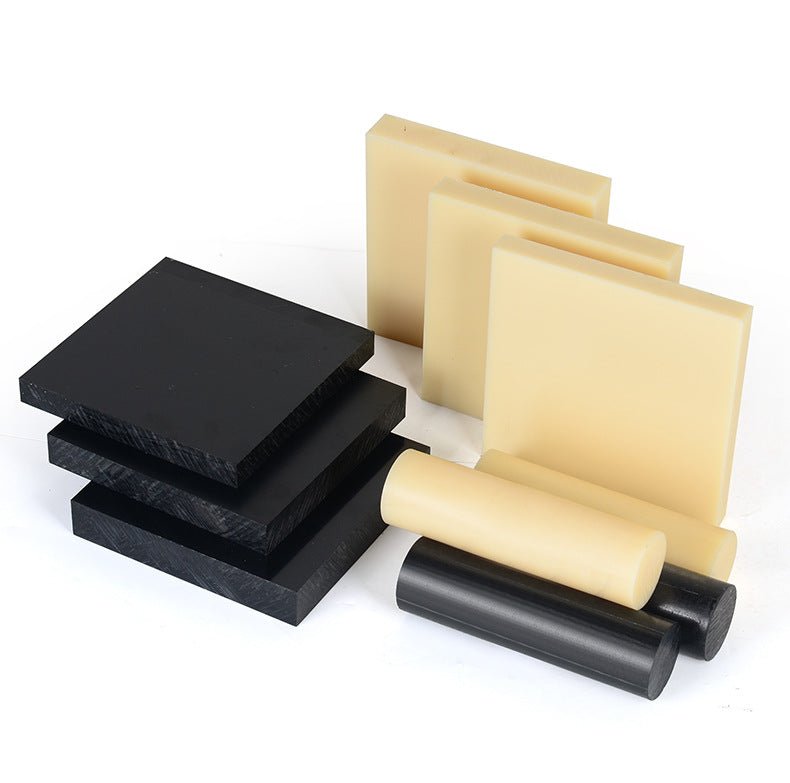
uhmwpe plastic sheets and rods
🎉🎉🎉Limited Time Offer Use code: QR4GNY08SHVR at checkout and enjoy a special discount on your entire order! 👉 UHMWPE plastic

To explore how specialty UHMWPE sheets can optimize your manufacturing operations, please contact our team of polymer experts at www.beeplastic.com. Or browse our online catalog for off-the-shelf and custom UHMWPE sheets purpose-built for your needs. 

Leave a comment


Please note, comments must be approved before they are published


Custom Plastic Fabrication

Send your drawing, material and quantity for review

🔧
Precision Machining
CNC milling & turning
✂️
Cutting & Engraving
Laser & waterjet cutting
🏭
Forming & Molding
Thermoforming & injection
🔗
Joining & Assembly
Welding & bonding
📐
Design & Prototyping
CAD design & samples

General

HDPE

PP

PVC

ABS

Engineering

POM

Nylon

PC

PMMA

High-Performance

PEEK

PEI

PTFE

Composites

FR-4

G10

Flexible

TPU

Silicone

Why Choose BeePlastic?

🎯
Perfect Fit
Custom specs eliminate adaptation needs
⚡
Clear Lead Times
Lead time confirmed with every quote
💰
Volume Pricing
Volume pricing available on bulk orders
🤝
Expert Support
Free engineering consultation included
📋
Submit
→
🔍
Review
→
💵
Quote
→
✅
Production
→
📦
Deliver

Request a Quote

Share your project details, selected material and quantity on our quote page. You can add a file link or use the email drawing route shown there.


Request Quote

Industries: Automotive • Medical • Food • Lab • Semiconductor

beeplastic@beeplastic.com


A Beginner’s Guide to Bending ABS Plastic Sheets and Rods

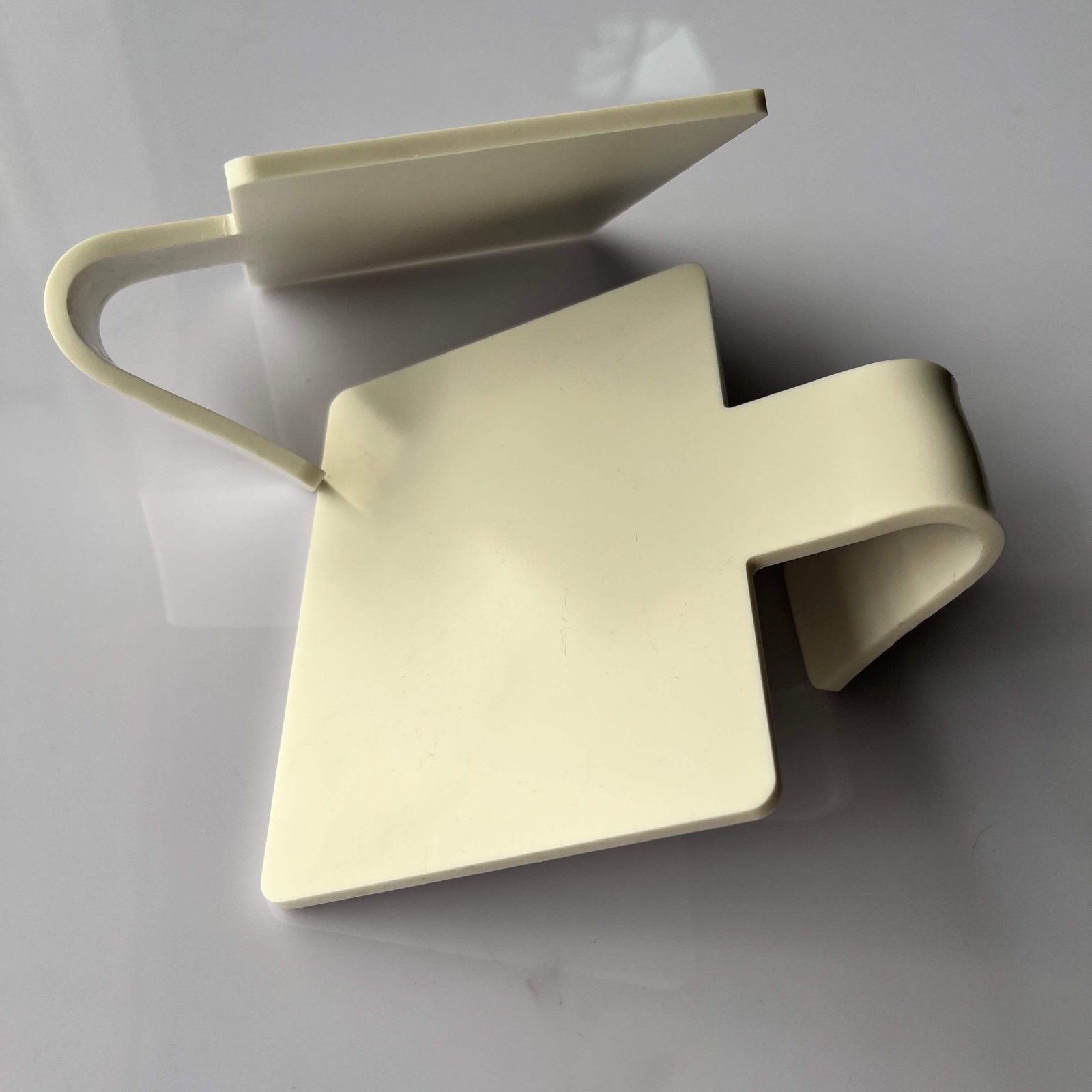
ABS concave bending

This overview introduces bending ABS plastic and the questions to confirm before specifying a forming process. It does not replace the processing guidance and safety data sheet for the exact ABS grade.

The sections below cover material selection, equipment considerations, forming stages and questions to review if a part does not meet its requirements. Conditions depend on the ABS grade, dimensions and equipment.

Before attempting forming, obtain the material supplier’s processing guidance and safety data sheet. If the grade or instructions are unknown, confirm them with the supplier before proceeding.

Quick Reference Guide

Ideal Temperature: Use the exact grade’s processing guidance.
Working Time: Confirm for the grade, dimensions and forming method.
Material Data: Check the grade’s technical data sheet; a material-property value is not a forming setting.
Cooling Time: Follow the supplier’s cooling guidance for the part and setup.

Looking for High-Quality ABS Sheets and Rods for Your Project?

Whether you’re bending ABS for DIY, prototyping, or light industrial use — we offer premium ABS sheets and rods in a variety of sizes and colors.

  • ✓ Smooth, thermoformable surface — perfect for heat bending
  • ✓ Standard sizes available: 2mm, 3mm, 5mm, 6mm, 8mm (more on request)
  • ✓ Color options: Natural, Black, White
  • ✓ No minimum order quantity — order exactly what you need
  • ✓ Free standard shipping available to selected regions

Browse ABS Materials →

What is ABS Plastic?

ABS, or acrylonitrile butadiene styrene, is an extremely common thermoplastic used across countless industries. Some major features of ABS materials are:

  • High impact strength – it’s very durable and impact-resistant
  • Rigidity and structural stability – it holds its shape well with minimal warping or deforming
  • Thermoplastic properties – ABS can be heated and reshaped/rebent when needed
  • Outdoor suitability depends on the ABS grade and exposure conditions. Confirm UV-stabilization and outdoor-use requirements with the material supplier.
  • Excellent machinability – easy to cut, drill, and fabricate with standard tools

These characteristics make ABS an ideal choice for bending into custom shapes and parts to meet the exact needs of hobbyists and professional manufacturers alike.

Some examples of places you’ll see bent ABS plastic used are:

  • Sprinkler pipes and irrigation systems
  • Model aircraft body panels and RC vehicle parts
  • Machine housings and protective enclosures
  • Car interior trim components and dashboard elements
  • Custom handles, grips, and ergonomic fittings
  • DIY home goods and furniture components
  • Cosplay armor and prop making

And thousands more – if you can dream it up, you can likely bend ABS plastic to create it!

Use the following sections to identify the information needed before selecting a forming process.

Examples of bent ABS plastic applications in indoor accessories and custom fabricated parts

Equipment You’ll Need for Bending ABS Plastic

ABS forming conditions depend on the grade, dimensions and equipment. Obtain the material supplier’s processing guidance before choosing a heating or forming method. Related: Bending ABS

To generate enough focused heat, you’ll need:

Heat Source

Popular options are:

Strip Heater – Electrically heated bending strip that directs heat exactly where it’s needed. Often used for precise line bending on sheets.

Heat Gun – Shoots a stream of very hot air to evenly and quickly heat the plastic. Offers good control over heating zones.

Oven – For bending larger ABS pieces, oven heating in an appliance dedicated to plastic treatment may be ideal. Provides even heating across large areas.

Equipment selection must be suitable for the exact ABS product, part geometry and processing guidance; a generic recommendation is not sufficient for every setup. Related: ABS rods or sheets

Heat gun being used for ABS plastic hot air blow molding and bending process

ABS Plastic Bending Equipment

Along with a heat source, having the proper plastic bending setup makes the process much easier and repeatable:

  • Tube bender – For bending ABS pipe or tubing to specific angles
  • Sheet bender – For precise bends along large ABS plastic sheets
  • DIY bending jig – A custom wood or metal structure with forming pins to bend ABS to an exact angle
  • Wood or aluminum molds – For shaping complex curves or multiple bends
  • Temperature probe or pyrometer – For accurate temperature monitoring

Safety Equipment

Use the exact material’s safety data sheet and equipment instructions to determine the required controls. The considerations below are not a complete safety procedure for a particular workplace:

  • Hand protection suitable for the material, equipment and handling conditions, as specified in the applicable safety instructions.
  • Eye protection like goggles/face shield
  • Ventilation and any respiratory protection specified by the material’s safety data sheet and workplace assessment; a generic mask does not establish adequate protection.
  • Flame-retardant clothing or shop apron
  • Fire extinguisher readily accessible

Before heating ABS: Do not select a heating limit from a generic article. Use the processing limits and safety data sheet for the exact ABS product. If the grade or instructions are unknown, confirm them with the supplier before proceeding.

Okay, you’ve got your essential ABS bending tools assembled – great! Now let’s look at how to actually bend this popular plastic.

Need Pre-Bent ABS Components? We Provide Custom Bending Services

For an ABS forming enquiry, send a drawing or dimensions, the material grade if known, quantity and critical requirements so feasibility can be reviewed.

  • ✓ Precision heat bending with controlled radius
  • ✓ Accepts technical drawings or sketches
  • ✓ Achievable dimensions and tolerances reviewed for the submitted part
  • ✓ No minimum order quantity
  • ✓ Trusted by engineers, designers, and hobbyists worldwide

Request Free Quote →

Step 1 – Prepare the ABS Plastic

To start, you’ll of course need some ABS plastic rods, tubes, or sheets to work with. Common sizes are:

  • Rods – Diameters ranging from 1/8 inch (3mm) to over 2 inches (50mm)
  • Sheets – From 1/32 inch (0.8mm) thin sheets up to 1 inch (25mm) thick slabs
  • Pipes/tubing – Inside diameters starting around 1/4 inch (6mm) all the way up to several inches

Whether stress relief or annealing is appropriate depends on the ABS grade and fabrication process. Use the supplier’s instructions for the exact product; do not apply a universal home-oven schedule.

Confirm Whether Annealing Is Required

  1. Identify the ABS grade and obtain its processing guidance.
  2. Confirm whether the specified material and process require stress relief.
  3. If required, use the supplier’s procedure and suitable equipment.
  4. Confirm handling and inspection requirements for the resulting part.

Prepare the blank dimensions and handling allowance according to the selected forming setup. Do not assume that an unspecified heat treatment has qualified the material for bending.

Sharpening blades and using proper shears will give cleanest cuts. Take your time to prep properly for best results.

Step 2 – Set up the Plastic Bending Area

Set up the workplace and equipment according to the material safety data sheet, equipment instructions and the controls required for the particular operation.

Choose and position forming tools, fixtures and the heat source for the particular part and equipment instructions. Check handling access and the agreed process before starting.

For repeatable results, build or buy bending forms like 90 degree aluminum jigs that enable accurate and consistent angles. Having robust framework prevents springback which can warp delicate bends.

Step 3 – Heat the ABS Plastic

Use the material supplier’s processing guide for the exact ABS grade, dimensions and equipment to establish heating conditions.

Forming conditions must be confirmed for the exact ABS product.

A generic temperature range is not suitable for all ABS grades, thicknesses or shapes.

Record the agreed equipment setup and process checks for the specific material and part, including:

  • Time required to fully heat to temperature
  • If any sections seem to lag behind others in heating
  • How the established process determines that the part is ready for forming.
  • How deviations from the agreed processing conditions are detected and handled.

Heating time depends on the grade, dimensions, method and equipment. Follow the exact product’s processing guidance instead of a universal time.

Use the heating arrangement established for the part; this article does not specify a universal temperature or heating time.

Professional plastic bending machine demonstrating precision ABS sheet bending process

Step 4 – Bend and Cool the ABS Plastic

Use the forming method, fixtures and working time established for the exact material and equipment. Confirm the part’s required geometry and acceptance criteria.

Common bent angles for various ABS projects are:

  • 90 degree bends – Perpendicular connections for handles, brackets, frames
  • Diagonal angles – Dynamic shapes for art sculptures or cosplay props
  • Gradual curves – Ergonomic grips, custom car interiors, architectural elements

The usable forming window depends on the material, dimensions and setup. Do not assume the same working time for every thickness or shape.

Use the cooling and support method specified for the material and forming process. Confirm when the part may be released from its fixture or handled:

  • Cooling time is established for the part and process.
  • Support and restraint are selected for the specified geometry.
  • Any active cooling follows the supplier’s processing guidance.
  • Release and handling conditions follow the agreed process.

Repeat bending sequential zones down the length of rods or tubes. Take notes on any tweak needed to perfect the process.

Step 5 – Repeat as Needed

To fabricate more complex components like handles, housings, ornate frames or cosplay armor, you’ll need to repeat the strategic heating and bending process in stages.

Mark measured zones along the raw materials where bends should be located using tape, grease pencil or other non-permanent methods.

Execute your bends incrementally, allowing proper cooling time before next steps. Having a master diagram or computer model helps envision the end goal.

Before reheating a rejected part, check the supplier’s guidance and whether the required material properties and dimensions can still be met.

In time you’ll be amazed at the intricate shapes and plastic art you can create by methodically bending abs plastic rods, sheets and tubing to your custom needs.

Common Bending Issues and Troubleshooting

Of course no process is without the occasional hiccup! Review some of the most frequent beginner issues when heat bending abs plastic here:

Problem: Cracking Sounds or Fractures

This depressing result indicates the ABS experienced highly uneven stresses either during heating, shaping, or cooling. Step back through those stages to find the flaw:

  • Did you allow enough heat soak time for even temperature?
  • Was quenching too severe creating internal tension?
  • Any extremely acute angles attempted?
  • Does the supplier’s guidance require stress relief for this grade and process?

Problem: Webbing or Thinning Around the Bend

Overheating and stretching ABS past its formable limits results in unsightly webs or weak spots at the inside/outside of bends. Revisit recommended temperature guidelines.

Review: Check heating conditions and bend geometry against the supplier’s processing guidance and the part requirements.

Problem: Warping or Distorting

If the final bend angle or shape changes, review material selection, geometry and the heating, forming and cooling conditions against the supplier’s guidance. Do not assume that every grade requires annealing.

Review: Check whether stress relief is appropriate for the exact grade and process, and confirm the required cooling and support method.

Problem: Bend Angle Inconsistency

Frustrating variances in replicated bends mean your guiding forms/jigs lack sufficient accuracy or clamping strength. Invest in quality equipment and robust framework to achieve precision project after project.

Solution: Use metal jigs with positive stops, maintain consistent temperature and timing, or consider professional bending services for production runs.

With attention to the right temperature thresholds, heating tools, and bending equipment – achieving smooth, strong, accurately shaped custom ABS creations is very attainable! Don’t be discouraged by initial failed attempts. Bending thermoplastics has a learning curve. Read up on as much theory around the chemical properties of ABS to understand why and how it behaves when heated/cooled.

Enjoy the process and be proud of each small win with every successfully bent ABS part you complete!

Summary

Mastering bending ABS only requires adherence to some key principles we’ve covered here:

  • Confirm the grade and whether stress relief is required by its supplier.
  • Invest in quality bending tools – Heaters, jigs, forms, gloves and safety gear
  • Establish heating conditions from the exact grade’s processing guidance.
  • Confirm the usable forming window for the dimensions and equipment.
  • Use the cooling and support method established for the part.
  • Take notes and test..test..test! – Your settings WILL need tweaking

Armed with the right scientific background, tools and patience through a potentially messy learning period; smoothly bending ABS plastic at will IS possible for even the newest hobbyists and students of manufacturing.

I wish you great success with all your custom abs plastic bending projects! Let me know if any other questions come up.

Professional example of concave ABS plastic bending technique showing smooth curved profile

Recommended ABS Products for Bending Projects

ABS Sheets 2mm-30mm

Black, White, Natural colors
Custom cut-to-size available

View Product

ABS Thin Sheets 0.5mm

Perfect for easy bending
Lightweight applications

View Product

ABS Large Panels

1000x2000mm format
Ideal for large projects

View Product

All ABS Products

Browse complete collection
Multiple sizes & colors

Browse All

Related Custom Fabrication Services

Plastic Bending Services

Professional heat bending, line bending, and thermoforming for multiple plastic types

Learn More →

CNC Machining

CNC milling, turning and routing for ABS parts; critical dimensions and achievable tolerances are reviewed for the project.

Learn More →

ABS Custom Fabrication

Complete ABS fabrication solutions from design to finished product

Learn More →

Frequently Asked Questions

What is the ideal temperature for bending ABS plastic?

There is no single forming-temperature range suitable for every ABS product. Use the processing guide for the exact grade, thickness and equipment; do not treat a glass-transition or service-temperature value as a forming setting.

How long does it take to heat ABS plastic for bending?

Heating time depends on grade, dimensions, heating method and equipment. Follow the supplier’s processing guidance and the agreed process for the part instead of a universal time.

Why does my ABS plastic crack when I bend it?

Cracking can have several causes. Review the material grade, geometry and heating, forming and cooling conditions against the supplier’s guidance; do not assume that annealing is required for every ABS product.

Can I re-bend ABS plastic if I make a mistake?

ABS is a thermoplastic, but reheating may affect properties and dimensions. Confirm the supplier’s guidance and the part’s acceptance requirements before attempting to rework it.

Do you offer custom ABS bending services?

Send the drawing or sketch, ABS grade if known, quantity and critical dimensions for review. Feasibility, achievable tolerances, production timing and shipping arrangements are confirmed for the quoted project. Related: ABS bending services Contact us for a free quote

What safety equipment do I need for bending ABS?

Use the safety data sheet for the exact ABS grade and the equipment instructions to determine protective equipment, ventilation and handling controls. A generic checklist does not establish that a particular forming operation is safe.

If you are interested in using ABS Plastic in your project or want to know more information, welcome to contact us. We are a professional supplier and manufacturer of all kinds of plastic custom processing and production, with a professional team of engineers and precision equipment, we can provide you with customized plastic solutions that meet your specifications and budget.

We are happy to serve you and help you fulfill your needs. Do you need a free quote or help with any questions or materials?

BeePlastic.com — Professional Plastic Solutions Provider

✓ No Minimum Order Quantity | ✓ Free Shipping Available | ✓ International Delivery

Contact: Custom ABS Plastic Services

Leave a comment


Please note, comments must be approved before they are published


Custom Plastic Fabrication

Send your drawing, material and quantity for review

🔧
Precision Machining
CNC milling & turning
✂️
Cutting & Engraving
Laser & waterjet cutting
🏭
Forming & Molding
Thermoforming & injection
🔗
Joining & Assembly
Welding & bonding
📐
Design & Prototyping
CAD design & samples

General

HDPE

PP

PVC

ABS

Engineering

POM

Nylon

PC

PMMA

High-Performance

PEEK

PEI

PTFE

Composites

FR-4

G10

Flexible

TPU

Silicone

Why Choose BeePlastic?

🎯
Perfect Fit
Custom specs eliminate adaptation needs
⚡
Clear Lead Times
Lead time confirmed with every quote
💰
Volume Pricing
Volume pricing available on bulk orders
🤝
Expert Support
Free engineering consultation included
📋
Submit
→
🔍
Review
→
💵
Quote
→
✅
Production
→
📦
Deliver

Request a Quote

Share your project details, selected material and quantity on our quote page. You can add a file link or use the email drawing route shown there.


Request Quote

Industries: Automotive • Medical • Food • Lab • Semiconductor

beeplastic@beeplastic.com


Exploring POM Plastic: Definition, Properties, and Custom Processing Applications

POM sheet

POM plastic, also known as acetal plastic or polyoxymethylene (POM), is an engineering thermoplastic widely used in precision parts manufacturing. With excellent mechanical properties, POM plastic has diverse industrial and consumer applications that highlight its strength, stiffness, and stability.

🎉🎉🎉Limited Time Offer Use code: QR4GNY08SHVR at checkout and enjoy a special discount on your entire order! 👉 POM plastic

As technology progresses, POM plastic has become increasingly valued for custom machined parts and injection molded components across transportation, electronics, medical devices, and more. This article will explore what makes POM plastic such an important material for custom processing.

custom POM plastic

A Primer on POM Plastic Materials

What is POM Plastic?

POM plastic, or polyoxymethylene, is a high-performance engineering thermoplastic created by polymerizing formaldehyde. The POM plastic molecular structure consists of repeating formaldehyde units connected by an ether linkage.

It has high crystallinity, molecular weight, and densification that grant POM excellent mechanical properties alongside chemical resistance. These characteristics make POM a popular choice for food processing equipment, consumer appliances, automotive systems, and industrial machineries.

Key Characteristics of POM Plastic

POM plastic stands out for being:

  • Extremely strong, stiff, and hard
  • Dimensionally stable
  • Naturally lubricious and low friction
  • Resistant to fuels, solvents, and other chemicals
  • Easy to fabricate using machining and injection molding

How Does POM Plastic Compare to Other Materials?

Compared to metals, POM plastic offers higher strength-to-weight ratios. Unlike nylons, POM has superior mechanical properties especially in wet environments. Against ABS and PVC, POM demonstrates better chemical and fatigue resistance.

This unique balance of strength, chemical inertia, and processability establishes POM as an extremely versatile engineering thermoplastic for custom applications.

POM in the medical industry

The Properties That Enable POM Plastic’s High Performance

What makes POM plastic well-suited for critical components across industries? POM owes its versatile high performance to exceptional mechanical properties.

Key Material Properties of POM Plastic

POM plastic possesses the following key material properties:

  • Tensile strength – 10,000 to 11,800 psi
  • Flexural modulus – 300,000 to 450,000 psi
  • Coefficient of friction – 0.25 to 0.35, low even without lubricants
  • Water absorption – Negligible, around 0.25% max
  • Operating temps – -40°F to 180°F (-40°C to 82°C)

These intrinsic physical characteristics already enable POM usage in demanding applications. On top of that, POM plastic offers excellent chemical resistance owing to its stable carbon-oxygen molecular linkages throughout the polymer chain.

POM material performance table

The Durability and Strength of POM Plastic

The high crystallinity grants POM its excellent strength-to-weight ratios, allowing substantial load-bearing capacity in small, lightweight components. At the same time, POM plastic parts retain the stiffness and dimensional stability crucial for precision fittings and moving assemblies even under cyclic strains.

Furthermore, POM’s abrasion resistance prevents premature wear even on moving parts that undergo constant frictional contact. Coupled with its natural lubricity, POM plastic enables smooth movements and long service life.

The Environmental Impact and Recyclability of POM

POM plastics are not derived from BPA or phthalates, thus avoiding major health concerns linked to those substances that may leach out from plastic parts. Properly processed POM plastic is food-contact approved by the FDA.

At end-of-life, POM can be recycled back into new plastic products just like PET and HDPE. POM plastic’s high value and ease of reprocessing make it economically attractive to regrind and remake into products.

custom pom plastic

Applications Benefiting from POM Plastic Parts

From tiny gears to huge structural components, POM offers engineers consistent performance meeting stringent requirements across applications.

POM Plastic in Manufacturing and Engineering

POM usage includes small precision parts that serve crucial functions:

  • Gears – Excellent strength and lubricity
  • Rollers – Low friction motion enablers
  • Bushings and bearings – Wear resistance
  • Clips, fasteners, handles – Snap-fitting capabilities
POM plastic gears

Larger structural POM plastic applications:

  • Conveyor chains – Constant movement resistors
  • Pulleys, cams, sprockets – Withstand cyclic stresses
  • Figurines, replicas, prototypes – Ease of machining

POM Plastic Parts in Automotive and Electronics

In vehicles, POM components help optimize:

  • Fuel systems – Fuel cap housings, impellers
  • Steering and suspensions – Bushings, rollers
  • Transmissions – Gears, shift fork pads

Consumer electronics depend on tiny POM plastic pieces guiding intricate mechanisms, like buttons, connectors, micro-switches, and more.

Industrial grade electronics encase sensitive innards in POM plastic housings that offer tough protection without interfering with signals.

POM Usage in Medical Devices and Consumer Goods

POM plastic possesses excellent bio-compatibility alongside machinability, allowing customized engineering of surgical tools, inhalers, orthodontic braces, pill casings, and other medical equipment where strength and precision matter.

For consumer applications, the FDA-approved food contact rating and high durability of POM enable usage in items such as:

  • Kitchen tools like slicers, peelers, graters
  • Lock mechanisms, buckles, and latches
  • High-wear components of appliances
POM material wire harness workwear

Custom Processing Techniques to Create POM Plastic Parts

Fabricating specialized POM components unlocked new potential in professional domains as diverse as aerospace and food processing. This section looks at producing custom POM parts.

The Benefits of Custom POM Plastic Parts

Machined POM stock allows engineers to create application-specific components with:

  • Precise dimensional accuracy
  • Intricate geometries impossible through injection molding
  • Small batches usable for prototyping and R&D
  • Shorter development cycles

Techniques for Machining and Fabricating POM

Common methods for machining fully dense POM plastic include:

  • CNC milling to carve extremely intricate geometries
  • Turning and boring to achieve cylindrically symmetrical precision parts
  • Sawing and cutting using calibrated commercial equipment

Whereas custom fabrication of large POM sheets, rods, and blocks employs:

  • Extruding molten POM through die heads
  • Compression molding POM resin under high heat and pressure
POM sheet precision parts processing

Injection Molding Parts from POM Plastic

For mass production, injection molded POM components offer extreme consistency and cost efficiency compared to CNC machining. Complex parts with tiny features or tight tolerances on critical dimensions can be injection molded with POM to reliably deliver high performance.

The Cost Effectiveness and Versatility Driving POM Plastic Adoption

What truly elevates POM is the unparalleled versatility enabling widespread adoption despite its engineering polymer price point. This high-performance thermoplastic empowers custom applications across domains to enhance user utility at relatively low costs.

POM Plastic’s Versatility in Diverse Applications

As explored throughout this article, POM allows excellent performance in areas that leverage:

  • Predictable mechanical properties from polymer consistency
  • Resistance to wear, abrasion, impacts, and harsh chemicals
  • Capabilities for machining, fabricating, and injection molding

This versatility makes POM suitable for uses where failure risks range from mere annoyances to life-threatening situations.

The Cost Effectiveness of POM Plastic

POM plastic offers substantial value, owing to:

  • Superb strength eliminating the need for metal parts in most cases
  • Production scalability from prototypes to millions of identical pieces
  • Part integration possibilities, consolidating assemblies

Customization Techniques Make POM Accessible

The machinability of POM plastic means:

  • No need for custom molds in low-volume production
  • Simpler systems by modifying off-the-shelf POM stock
  • Short design and testing cycles

Thus complementing high-volume injection molding for applications with established designs.

POM Plastic – An Essential Material for Present and Future Technologies

POM’s unique balance of mechanical properties, chemical resistance, machinability, and economy establish this high-performance thermoplastic as an essential engineering material for innumerable current and emerging applications.

As technology progresses, POM plastic usage will likely continue rising to meet demands for ever more complex, smaller, and higher precision components across industries. The material lends itself equally well to large-part structural design prototyping as tiny integrated mechanisms requiring reliability.

With capabilities spanning customized fabrication from stock forms as well as injection molded mass production, Polyoxymethylene is undoubtedly an indispensable material now and for the applications of the future.

POM cutting machine

Frequently Asked Questions About POM Plastic

What makes POM plastic ideal for gears?

Gears require maintaining precise dimensions and tight tolerances to effectively transfer motion. POM plastic’s stiffness, strength, hardness, and dimensional stability are vital for gears that encounter cyclic stresses through changing loads and directions while operating smoothly.

Why is POM plastic perfect for bearings and bushings?

Bearings and bushings greatly benefit from POM’s natural lubricity coupled with resistance to abrasive wear. Under loads, POM plastic parts retain dimensional accuracy while minimizing particle generation that could contaminate systems. The excellent consistency of injection molded POM’s properties take efficiency and service life to the next level.

How does POM plastic improve consumer appliances and products?

Many appliances and household items depend on small plastic components to drive mechanisms that would otherwise require metal pieces. POM offers high strength, low friction operation and long term structural integrity in the face of chemicals and humidity. Replacing metals with POM allows lighter products and far more design possibilities.

I aimed to create an informative, easy to follow guide explaining POM plastic’s significance in custom processing applications for industrial and consumer products. Please let me know if you would like me to modify or improve any part of this article further. I can also add more sections or content if needed.

POM medical devices
If you are interested in using POM Plastic in your project or want to know more information, welcome to harass us. We are a professional supplier and manufacturer of all kinds of plastic custom processing and production, with a professional team of engineers and precision equipment, we can provide you with customized plastic solutions that meet your specifications and budget. We are happy to serve you and help you fulfill your needs. Do you need a free quote or help with any questions or materials?

🎉🎉🎉Limited Time Offer Use code: QR4GNY08SHVR at checkout and enjoy a special discount on your entire order! 👉 POM plastic

Our website: www.BeePlastic.com
Click to contact: Custom POM Plastic

Leave a comment


Please note, comments must be approved before they are published


Custom Plastic Fabrication

Send your drawing, material and quantity for review

🔧
Precision Machining
CNC milling & turning
✂️
Cutting & Engraving
Laser & waterjet cutting
🏭
Forming & Molding
Thermoforming & injection
🔗
Joining & Assembly
Welding & bonding
📐
Design & Prototyping
CAD design & samples

General

HDPE

PP

PVC

ABS

Engineering

POM

Nylon

PC

PMMA

High-Performance

PEEK

PEI

PTFE

Composites

FR-4

G10

Flexible

TPU

Silicone

Why Choose BeePlastic?

🎯
Perfect Fit
Custom specs eliminate adaptation needs
⚡
Clear Lead Times
Lead time confirmed with every quote
💰
Volume Pricing
Volume pricing available on bulk orders
🤝
Expert Support
Free engineering consultation included
📋
Submit
→
🔍
Review
→
💵
Quote
→
✅
Production
→
📦
Deliver

Request a Quote

Share your project details, selected material and quantity on our quote page. You can add a file link or use the email drawing route shown there.


Request Quote

Industries: Automotive • Medical • Food • Lab • Semiconductor

beeplastic@beeplastic.com


The Evolution of Bakelite: The World’s First Fully Synthetic Plastic

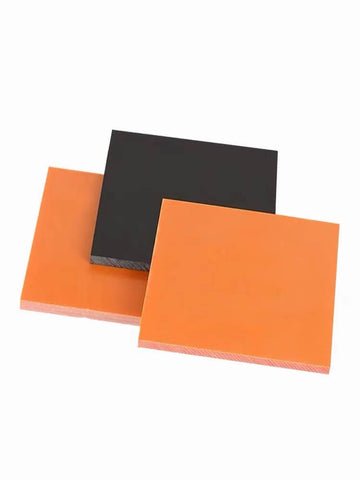
Bakelite boards and products

Bakelite, the world’s first fully synthetic plastic, marked a revolution in materials science when it was invented in 1907 by Belgian-American chemist Dr. Leo Baekeland. With its unique properties, versatility, and affordability, Bakelite was soon mass-produced and widely used in everything from electronics to jewelry to cookware. Though later eclipsed by other modern plastics, Bakelite still holds an important place in the history of industrial design and continues to attract collectors today.

🎉🎉🎉Limited Time Offer Use code: QR4GNY08SHVR at checkout and enjoy a special discount on your entire order! 👉 Bakelite plastic
Bakelite boards

A Revolutionary Invention by Dr. Leo Baekeland

The creation of the first fully synthetic plastic all started with Leo Baekeland’s quest to find a replacement for shellac, a resin secreted by the female lac bug. Shellac had become increasingly expensive due to supply shortages, yet it was an essential material used for insulation in the booming electrical industry in the early 1900s.

As a chemist experimenting in his home laboratory in Yonkers, New York, Leo Baekeland began combining phenol and formaldehyde under heat and pressure to produce a hard, molded material that could effectively replace shellac as an electrical insulator. After years of adjustments and refinements, Baekeland filed a patent for this pioneering “heat-resistant plastic” in 1907 and named his invention Bakelite. The patent outlined methods for the production of Bakelite that created strong, infusible, and insoluble materials made from phenol and formaldehyde.

Baekeland continued to refine Bakelite’s chemical formula, process, and applications. By 1909, the promising new material was unveiled to the public. The Belgian-born “Father of Bakelite” dutifully promoted his invention at the meeting of the American Chemical Society on February 5, 1909. There he described the history, technical details, and possibilities of Bakelite.

Baekeland boldly declared: ““The immediate future will see the use of Bakelite in various forms for electrical insulators, switch bases, lab wares, and other applications.” His predictions proved prescient. By 1912, Bakelite was in wide use for industrial applications across America and Europe.

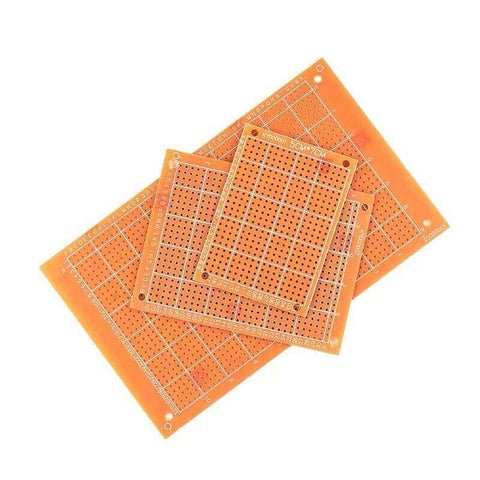
Bakelite Experiment Board

The Versatile Properties of Bakelite Make It Ideal for Mass Production

What set Bakelite apart from previous plastics was that it was truly the first synthetic plastic resin that could be completely molded while heated and retain its shape when cooled. Natural plastics like cellulose nitrate can be molded but are limited by their low melting points. In contrast, Bakelite offered high heat resistance and thermosetting properties that allowed it to be shaped into permanent, durable forms.

Some of the unique properties that contributed to Bakelite’s versatility as a molding plastic included:

  • Electrical insulation – As an electrical insulator, Bakelite made an optimal replacement for shellac. It resisted the flow of electrical current, provided protection from electrical shock, and insulated wiring.
  • Heat and flame resistance – Bakelite was resistant to heat and flames up to 350°C/ 662°F before charring would occur. This allowed it to be used for hot household appliances.
  • Low moisture absorption – Bakelite repelled water and moisture, which made it suitable for marine and bathroom applications.
  • Chemical resistance – Insoluble in alcohol, weak acids and bases, Bakelite was impervious to deterioration from common solvents.
  • Mechanical strength – Moldings had high strength and stiffness along with resistance to chipping and cracking.
  • Dimensional stability – Bakelite resists warping from exposure to heat, cold, or water over time. This stability and durability contributed to Bakelite’s long service life.

These characteristics enabled Bakelite to be both molded precisely into unlimited shapes, sizes, and colors while retaining exceptional structural integrity and longevity.

Bakelite boards  product designs

Bakelite Ushered in an Era of Plastics in the Early 1900s

The invention of Bakelite occurred just as revolutionary breakthroughs in synthetic materials like celluloid and rayon were galvanizing the plastics industry. Bakelite served as a key driver in the expansion of molded plastics by demonstrating the vast new potential of these materials for mass production and commercial use.

The Bakelite Corporation was formed in 1910, and the first Bakelite factory opened in Bound Brook, New Jersey in 1911. By 1912, designer and innovator Marcel Schmuziger had patented a technique to streamline the production of molded Bakelite products like billiard balls, poker chips, and varnish. Bakelite’s affordability and malleability soon made it ubiquitous.

As production scaled up to meet soaring demand, Bakelite was used for everything from electrical gadgets and automobile parts to cameras, costume jewelry, and even kitchenware. It was also famously used in patriotic applications during World War I and World War II, such as gas masks and helmet linings.

Vintage Bakelite radios first emerged in the 1920s and took on colorful, stylized designs with Catalin and Prystal models leading the market. Bakelite kitchen tools like egg beaters and hourglass egg timers also became popular during this era.

By the 1930s Art Deco period, Bakelite jewelry had come into vogue. Dramatic bangles, rings, earrings, and brooches showcased the smooth, polished patina and rich colors possible with molded Bakelite. Iconic designers like Coco Chanel began incorporating Bakelite into their avant-garde jewelry collections.

Bakelite jewelry

Key Characteristics That Made Bakelite a Go-To Industrial Plastic

During the interwar period of the 1920s to 1940s, Bakelite enjoyed immense commercial success and became embedded in everyday life. The world marveled at this wondrous new plastic material. So what exactly triggered the Bakelite sensation and made it the must-have plastic of its time?

Affordability – Bakelite could be produced very cheaply by molding a mixture of phenol from coal tar and formaldehyde under heat and pressure into a thermosetting resin. These inexpensive base ingredients made Bakelite products very affordable compared to other materials.

Versatility – As discussed earlier, Bakelite’s unique properties enabled it to be molded into practically any shape while retaining its structural integrity. This versatility opened up new horizons for plastic product design.

Ease of Application -Bakelite is lightweight, easy to machine into products and resistant to deformation, making it easy to incorporate into existing product designs. It provides the impetus for rapid prototyping and innovation.

Color and Finish – Pigments could be mixed into the resin to produce vivid colors like “apple juice” red and butterscotch. The smooth polished patina gave Bakelite an attractively glossy finish.

Strength and Durability – Bakelite’s high mechanical strength and resistance to heat, water, and chemicals gave it unrivaled longevity and performance over traditional materials like rubber or celluloid.

Electrical Insulation – With its electrical resistance, Bakelite elegantly solved the problem of dangerous shorts and fires in the thriving electronics industry.

These winning characteristics solidified Bakelite as a preferred industrial plastic across diverse manufacturing sectors. Bakelite fueled modern product design and allowed plastic to emerge as an essential general-purpose material.

Bakelite boards and products

The Decline of Bakelite in the Mid-20th Century

By the early 1940s, Bakelite accounted for thousands of daily use items, from telephones to toys. Over 5,000 US patents referenced Bakelite or featured Bakelite components. However, around this time, the plastic began losing ground to new synthetic polymers engineered to surpass Bakelite’s limitations.

Competitor plastics gradually chipped away at Bakelite’s market share:

  • Nylon (1930s) – Stronger, more flexible, with higher heat resistance
  • Polystyrene (1930s) – Cheaper and easier to mold than Bakelite
  • Polyethylene (1940s) – More chemically inert and flexible than Bakelite
  • PVC (1940s) – Tough and long-lasting; replaced Bakelite in wiring

These new plastics could be specifically formulated for designated purposes where Bakelite fell short. Combined with supply constraints during World War II, Bakelite was dealt a declining role in manufacturing by the 1950s.

Usage of Bakelite dramatically decreased further with the proliferance of high-tech thermoplastics like polycarbonate in the 1960s and 70s. These left thermosetting Bakelite behind.

The Collectible Allure of Vintage Bakelite

Though Bakelite became obsolete and was replaced by more advanced modern plastics, vintage Bakelite products from the 1920s-40s era continue to be sought-after collector’s items. The artistry, glamour, and nostalgia of old Bakelite radios, jewelry, and housewares fuels a thriving market of Bakelite aficionados.

Key drivers of the enduring appeal of vintage Bakelite include:

  • Distinct Material Qualities – The look and luster of aged Bakelite cannot be perfectly replicated. Collectors appreciate its unique patina.
  • Handcrafted Artistry – Each vintage Bakelite piece carries the fingerprints of dedicated designers and craftspeople. Their artistry is treasured.
  • ** Historic Significance** – Bakelite represents a milestone in materials history and industrial design evolution. It has special historical import.
  • Nostalgic Design – The Art Deco and mid-century modern aesthetic of Bakelite products trigger fond memories and feelings.

On sites like Etsy and eBay, authentic vintage Bakelite continues to command high prices from avid collectors. Bakelite’s legacy lives on thanks to those who value its origins.

Bakelite’s Pivotal Role in the Plastics Revolution

In spite of its gradual decline in favor of more advanced polymers, Bakelite still occupies an unforgettable place in the annals of plastics history. The invention of Bakelite marked a turning point by demonstrating the enormous potential of chemically engineered plastics to transform manufacturing and product design for the better.

Thanks to Dr. Leo Baekeland’s pioneering Bakelite research, the world saw plastics evolve from cheap substitutes to versatile high-performance materials offering endless possibilities. Bakelite paved the way for the plastics booms of the mid-late 20th century. It remains appreciated as a groundbreaking innovation both technologically and stylistically.

While Bakelite itself may no longer be a dominant plastic, it still continues to influence modern product manufacturing as well as industrial design. Bakelite’s legacy persists in its role establishing plastics as essential synthetic materials for building our fabricated future.

Bakelite CNC parts
If you are interested in using Bakelite Plastic Plastic in your project or want to know more information, welcome to harass us. We are a professional supplier and manufacturer of all kinds of plastic custom processing and production, with a professional team of engineers and precision equipment, we can provide you with customized plastic solutions that meet your specifications and budget. We are happy to serve you and help you fulfill your needs. Do you need a free quote or help with any questions or materials?
🎉🎉🎉Limited Time Offer Use code: QR4GNY08SHVR at checkout and enjoy a special discount on your entire order! 👉 Bakelite plastic
Our website: www.BeePlastic.com
Click to contact: Custom Bakelite Plastic

Leave a comment


Please note, comments must be approved before they are published


Custom Plastic Fabrication

Send your drawing, material and quantity for review

🔧
Precision Machining
CNC milling & turning
✂️
Cutting & Engraving
Laser & waterjet cutting
🏭
Forming & Molding
Thermoforming & injection
🔗
Joining & Assembly
Welding & bonding
📐
Design & Prototyping
CAD design & samples

General

HDPE

PP

PVC

ABS

Engineering

POM

Nylon

PC

PMMA

High-Performance

PEEK

PEI

PTFE

Composites

FR-4

G10

Flexible

TPU

Silicone

Why Choose BeePlastic?

🎯
Perfect Fit
Custom specs eliminate adaptation needs
⚡
Clear Lead Times
Lead time confirmed with every quote
💰
Volume Pricing
Volume pricing available on bulk orders
🤝
Expert Support
Free engineering consultation included
📋
Submit
→
🔍
Review
→
💵
Quote
→
✅
Production
→
📦
Deliver

Request a Quote

Share your project details, selected material and quantity on our quote page. You can add a file link or use the email drawing route shown there.


Request Quote

Industries: Automotive • Medical • Food • Lab • Semiconductor

beeplastic@beeplastic.com


Custom Plastic Manufacturing: Capabilities for Nylon and Other Materials

custom Plastic materials

Plastic manufacturing has become an indispensable part of product development across countless industries. From automotive to aerospace, medical devices to consumer goods, plastics play a vital role.

🎉🎉🎉Limited Time Offer Use code: QR4GNY08SHVR at checkout and enjoy a special discount on your entire order! 👉 Nylon plastic

With such a vast range of applications, off-the-shelf plastic components are not always suited for a company’s specific needs. This is where custom plastic manufacturing comes in – the ability to fabricate plastic parts tailored to unique specifications and requirements.

For engineers and product developers, partnering with a custom plastic manufacturer unlocks new levels of design flexibility and functionality. Materials can be chosen based on performance needs, part geometries can be fully customized, and secondary operations like machining, coating, and finishing can be incorporated.

This guide will explore the capabilities of working with a custom plastic manufacturing partner. We’ll focus on services for nylon as well as other commonly used engineering plastics like polycarbonate, polypropylene, ABS, PVC, and polyethylene.

plastic CNC machining center

Benefits of Custom Plastic Manufacturing

Choosing custom-designed and manufactured plastic components over off-the-shelf parts brings key advantages:

Flexibility and Customization

With custom plastic molding and fabrication, parts can be tailored to meet exact mechanical, dimensional, and aesthetic requirements. Complex geometries, textures, and features can be incorporated that would not be possible with stock components.

Parts can also be consolidated, reducing the number of separate components needed in an assembly. This simplifies the overall design and improves reliability.

Material Selection

While nylon and other engineering plastics have broad use, they are not suitable for every application. Custom manufacturing opens up more choices like ABS, PVC, polyethylene, and beyond. The optimal plastic can be selected based on temperature resistance, chemical compatibility, electrical properties, and other factors.

Cost-Effectiveness

Although custom tooling is required, plastic injection molding and other processes offer economical per-part costs at production volumes. Creatively designed parts can also replace complex assemblies, reducing long term costs.

For low-volume production runs, custom plastic molding avoids the high initial tooling investment while still benefiting from the efficiency of molding.

Nylon plastic Custom manufacturing

Capabilities for Nylon Manufacturing

Known for its strength, wear resistance, and dimensional stability, nylon is one of the most commonly used engineering thermoplastics. From mechanical parts to plastic fasteners, custom manufacturing offers extensive capabilities with this versatile material.

Custom Nylon Molding and Fabrication

All standard plastic molding processes can be applied to produce custom nylon parts:

  • Injection molding: Highly repeatable and efficient for complex, high-precision plastic parts in medium to high quantities.
  • Extrusion: Creates long plastic profiles with tight dimensional tolerances. Useful for tubes, rods, seals and more.
  • Blow molding: Hollow, thin-walled container shapes like bottles and tanks can be blow molded from nylon.
  • Thermoforming: Flexible process for producing shallow parts like trays and shrouds from nylon sheet.

Parts can also be machined from nylon stock shapes for prototypes or low volume applications.

Nylon Injection molding machine

Nylon Extrusion, Injection Molding, Machining

For high reliability parts, custom nylon injection molding is recommended over extrusion. Injection molding provides:

  • Consistent material properties throughout the part thickness.
  • Ability to mold complex geometries not possible with extrusion.
  • Excellent mechanical properties in all directions.

When combined with additional CNC machining and finishing, injection molding is ideal for small-scale manufacturing projects that require tight tolerances, precise features, and specified material grades.

Nylon extrusion is best suited for high volume, less complex applications where the plastic profile shape matches the desired part geometry. This is an economical option for long tubes, rods, and basic custom shapes.

Nylon injection molding products

Ideal for Durability and Wear Resistance

With its inherent lubricity, toughness, and abrasion resistance, nylon excels in wear-intensive applications like bearings, bushings, rollers, and gear teeth. The material avoids the need for external lubrication.

Nylon’s excellent fatigue endurance also suits it for flexible components and applications involving repeated cyclical stresses.

Common examples include consumable prototype parts for field testing, jigs and fixtures for manufacturing operations, and functional plastic components for harsh service environments.

Custom nylon injection molding combined with secondary machining operations produces durable, complex parts with the wear resistance needed for long service life under demanding conditions.

Custom nylon injection molding

Capabilities for Other Common Plastics

While nylon covers many general engineering needs, other plastics provide specialized properties. Custom manufacturing gives product designers access to these materials.

Polycarbonate

  • Custom polycarbonate molding is ideal for transparent, impact-resistant components like lighting lenses, protective covers, and screens.
  • Stable at higher temperatures than many plastics, important for sterilizable medical and laboratory equipment.
  • Flame retardant grades available.
  • Often combined with secondary CNC machining for precision.

Polypropylene

  • Low density, high chemical resistance, non-toxic properties suit polypropylene for food/drug-contact applications.
  • Injection molding, extrusion, and thermoforming capabilities.
  • Flexible, living hinge properties when co-molded with polypropylene elastomer grades.
  • Easy to color – useful for consumer goods.

ABS Plastic

  • Custom ABS plastic molding options include injection molding and extrusion.
  • Useful for enclosures, mechanical parts, automotive trim components.
  • Toughness and dimensional stability.
  • Stylish, colorable surface finishes.

PVC

  • PVC plastic molding produces chemical, corrosion resistant parts.
  • Clear grades useful for visualization.
  • Foamed PVC alternatives available.
  • Often combined with custom machining.

Polyethylene

  • Custom polyethylene molding via injection molding and blow molding.
  • Flexible, chemical resistant, buoyant.
  • Ideal for bottles, drums, tubing, and tanks.
  • Colorants and fillers easily added.

With experience across all common plastics, a custom manufacturer can help select the optimal material for an application based on temperature, chemical, electrical, mechanical, and aesthetic requirements.

Custom plastic molding

Secondary Capabilities Expand Possibilities

To produce finished plastic components often requires more than just the initial molding process. Custom plastic manufacturing providers offer a range of secondary services that eliminate the need for working with multiple suppliers:

Prototyping

Ideally, custom plastic parts are designed for optimized manufacturability and performance from the start. A prototyping stage helps achieve this by identifying potential design and tooling improvements early on.

Capable manufacturers offer in-house custom plastic prototyping using 3D printing, CNC machining from plastic stock, and other fast methods. This provides hands-on testing of early concepts before investing in hard tooling.

Machining

Milled, drilled, and tapped holes, slots, threads, and precision features can be added via custom CNC machining. This augments the geometric possibilities of molded parts. Machining also improves dimensional tolerance control.

Plastic welding fuses molded components into larger assemblies and adds molded-in inserts and fasteners. Vibration, spin, and hot plate welding options are available.

POM precision parts processing

Finishing

From basic cleanup to decorative enhancements, plastic parts often benefit from custom finishing operations:

  • Media blasting removes mold release agents and improves surface adhesion for printing or bonding.
  • Vapor smoothing eliminates fine tooling marks.
  • Precision holes can be reamed and honed to exact tolerances.
  • Decorative chrome plating or anodizing improves abrasion resistance and aesthetics.

Custom plastic coating via painting, powder coating, wet coating, and plating provides color and improves wear and chemical resistance.

Applications Across Industries

The versatility of custom manufactured plastic parts makes them invaluable across industries. Here are just a few examples:

  • Automotive: Engine and interior components, ducting, covers, fasteners.
  • Aerospace: Interiors, seats, non-structural aircraft parts.
  • Medical: Diagnostic equipment housings, handles, precision instruments, fluid system components.
  • Electronics: Connectors, encapsulations, insulators, bobbins, reels.
  • Industrial: Material handling equipment, maintenance tools, jigs, fixtures, guards, knobs, and dials.
  • Consumer Goods: Appliance parts, sporting goods, furniture, cases, crates, packaging.

Any application that benefits from the reduced weight, resistance to chemicals and corrosion, electrical insulation, and low-cost manufacturability of plastics is a candidate for custom plastic manufacturing.

Customized plastic parts for various industries

Partnering with the Ideal Manufacturer

Connecting with the right custom plastic manufacturing partner ensures a smooth project and optimized results. Use this checklist when evaluating capabilities:

  • Broad Plastic Material Experience: Look for expertise across nylon, acetal, ABS, polycarbonate, PVC and other engineering resins. Plastics have unique processing nuances – a specialty shop may be too limited.
  • Range of Services: Seek secondary operations like CNC machining, finishing, painting, chrome plating, elastomer overmolding, and assembly. This simplifies the supply chain.
  • Prototyping: Rapid in-house prototyping shows commitment to engineering development. Testing early prototypes reduces risk and prevents problems.
  • Small and Large Production Capabilities: Custom plastic manufacturing providers should be equipped for both short prototyping runs and higher volume production. This avoids sourcing changes down the road.
  • Vertically Integrated: Molding and secondary services should ideally be handled under one roof for quality control and efficiency. Shipping parts externally introduces variability and delays.
  • Experience with Custom Projects: Evaluate experience working on other unique plastic designs across industries. Look for complex problem solving skills – not just commodity production.
  • Engineering Collaboration: Partner with an organization that engages directly with product engineering teams. This ensures manufacturability and optimizes the end design.

Before selecting a custom plastic manufacturing source, request technical reviews of the application and participate in upfront prototyping. This establishes confidence and aligns expectations for the project early on.

Custom Plastic Parts Unlock Potential

This overview of custom manufacturing capabilities illustrates the versatility and value of producing plastic components tailored exactly to application requirements. More can be accomplished through specially engineering plastic parts than off-the-shelf catalog components allow.

Partnering with an experienced custom manufacturer unlocks the potential to improve designs by consolidating assemblies, enhancing functionality, reducing weight, and optimizing material performance.

From initial prototyping through full-scale production, custom plastic fabricators offer the experience and services to meet the needs of innovative product development teams across industries.

custom Plastic materials
If you are interested in using Nylon Plastic or other plastics in your project or want to know more information, welcome to harass us. We are a professional supplier and manufacturer of all kinds of plastic custom processing and production, with a professional team of engineers and precision equipment, we can provide you with customized plastic solutions that meet your specifications and budget. We are happy to serve you and help you fulfill your needs. Do you need a free quote or help with any questions or materials?
🎉🎉🎉Limited Time Offer Use code: QR4GNY08SHVR at checkout and enjoy a special discount on your entire order! 👉 Nylon plastic
Our website: www.BeePlastic.com
Click to contact: Custom Nylon Plastic

Leave a comment


Please note, comments must be approved before they are published


Custom Plastic Fabrication

Send your drawing, material and quantity for review

🔧
Precision Machining
CNC milling & turning
✂️
Cutting & Engraving
Laser & waterjet cutting
🏭
Forming & Molding
Thermoforming & injection
🔗
Joining & Assembly
Welding & bonding
📐
Design & Prototyping
CAD design & samples

General

HDPE

PP

PVC

ABS

Engineering

POM

Nylon

PC

PMMA

High-Performance

PEEK

PEI

PTFE

Composites

FR-4

G10

Flexible

TPU

Silicone

Why Choose BeePlastic?

🎯
Perfect Fit
Custom specs eliminate adaptation needs
⚡
Clear Lead Times
Lead time confirmed with every quote
💰
Volume Pricing
Volume pricing available on bulk orders
🤝
Expert Support
Free engineering consultation included
📋
Submit
→
🔍
Review
→
💵
Quote
→
✅
Production
→
📦
Deliver

Request a Quote

Share your project details, selected material and quantity on our quote page. You can add a file link or use the email drawing route shown there.


Request Quote

Industries: Automotive • Medical • Food • Lab • Semiconductor

beeplastic@beeplastic.com


The Hottest Trends in ABS Plastics – Colors, Textures, and More

ABS plastic housing

 ABS (acrylonitrile butadiene styrene) plastic is a common thermoplastic polymer used in many consumer products, toys, electronics housings, automotive parts and architectural details. Known for its durability, strength and ability to be injection molded into complex shapes, ABS plastic has been a go-to material for manufacturers and builders for decades.

🎉🎉🎉Limited Time Offer Use code: QR4GNY08SHVR at checkout and enjoy a special discount on your entire order! 👉 ABS plastic

But while ABS plastic has traditionally come in basic colors and glossy or matte finishes, new trends have emerged that enable ABS to be molded into a stunning array of textures, patterns, and vibrant colors. Consumer desire for individuality, visual interest, and tactile appeal has driven these innovative new ABS plastic options that make products and architectural details pop.

From matte textures, to marbleized effects, to neon brights, here are some of the hottest new trends in ABS plastic materials, textures, and chromatic options making waves in everything from cell phone cases to home furnishings.

ABS (acrylonitrile butadiene styrene) plastic

Matte Finishes Provide Understated Elegance

Once relegated to being high-gloss and shiny, ABS plastics are now available in stylish matte finishes for a more sophisticated, upscale aesthetic. This means products traditionally made with ABS plastic can now have a more muted, soft-touch effect instead of the shiny plastic look.

Matte ABS offers a number of advantages:

  • Provides a more premium feel and understated elegance, like the texture of finely milled soapstone or anodized metals.
  • Is simultaneously trendy yet timeless, with broader appeal than glossy finishes which can sometimes read as cheap or dated.
  • Is less prone to showing fingerprints, smudges, hairline scratches, and other signs of wear and tear over time compared to glossy plastic. Maintains a ‘like new’ appearance for longer.
  • Offers better grip and traction compared to slippery gloss finishes. This improves usability, safety, and control.

As such, matte finishes are growing in popularity for all kinds of ABS plastic applications, including:

  • Cosmetics packaging – Lipstick tubes, compacts, palettes, and cosmetic cases benefit from the upscale, soft-touch finish of matte ABS plastics.
  • Consumer electronics – Matte plastics have a modern high-tech look that appeals to gadget-lovers, and prevent embarrassing smudges on devices like phones, tablets, and laptops.
  • Appliances and kitchenware – The understated elegance and subtle sheen of matte finishes give appliances and kitchen tools like stand mixers, utensils, and storage containers a premium yet practical feel.
  • Office accessories – Desk organization and tech accessories like matte monitors, docking stations, and desk caddies blend into professional office spaces seamlessly while resisting fingerprints from heavy use.
  • Architectural accents – Doorknobs, handles, light switch plates, molding and trim pieces gain vintage appeal and versatility when produced in matte ABS plastics. Also used for decorative wall panels and dividers.

ABS plastic  palettes

Brands and manufacturers looking to elevate their products should consider incorporating matte textures into their ABS plastic products, packaging, and displays. The on-trend matte effect provides sophisticated edge at affordable production costs compared to metal, wood, or glass materials.

Metallic and Holographic Finishes Add Eye-Catching Intrigue

Once largely solid, static colors, ABS plastics are now available with metallic, foil, chrome, and even holographic finishes that attract the eye while connoting luxury. The addition of these dimensional, light-reflecting finishes makes ordinary plastic products and fixtures into dazzling focal points.

Metallic textures apply a thin, real metal foil layer to plastic materials through a vacuum metallization process. This allows ABS plastic parts to mimic the look and feel of advanced metals like stainless steel, anodized aluminum, titanium, and more for a fraction of the cost. Benefits include:

  • Provides sleek, cutting-edge aesthetic for products and architecture
  • Simulates luxury materials like brushed metal, chrome, and polished steel
  • Distinctive metallic sheen is eye-catching and intriguing
  • Can simulate anodization colors like emerald, sapphire, and gold
  • Durable, corrosion-resistant metal coatings protect the plastic underneath

Metallized plastics are popular in:

  • Electronics – Devices like headphones, laptops, and tablets gleam with metallic headphone bands, housings, bezels, and details for visual pop.
  • Auto Interiors – Chrome and color accents on dashboards, console trim, shifters and handles provide sporty flair.
  • Appliances – Refrigerators, stoves, and other appliances gain upscale appeal with metallic finishes along handles and doors. Stainless steel look is timeless.
  • Furniture – Metallized plastic legs, accents, and hardware provide mid-century modern and contemporary appeal.

In addition to metallic foils, holographic finishes are also emerging. These use light-reflecting micro-layers to add spectacular rainbow-like dimension and mesmerizing multi-toned effects. Holographic ABS plastic can mimic the entrancing depth of opals and oils for one-of-a-kind products.

custom ABS plastics

Faux Wood Grain ABS Offers Organic, Eco-Friendly Appeal

Nature is timeless, and faux wood grain ABS plastic provides consumers with the aesthetic benefits of natural wood without depleting precious forest resources. Using a molded-in pattern that mimics the organic look and feel of real timbers, wood grain ABS imparts beauty and warmth to products and architectural details in an eco-friendly production method.

  • Provides realistic, natural wood look without cutting trees
  • Warm, organic texture inferior to real wood
  • Consistent grain patterns and colors
  • Will not warp or crack like real wood
  • More durable, scratch resistant, and moisture tolerant than solid timber
  • Can be sawed, routered, and machined like real wood for versatility
  • Stainable and paintable to match any décor
  • Endless applications, both indoor and outdoor

faux wood grain ABS plastic

Faux wood ABS is popularly used in applications like:

  • Furniture – Tables, chairs, beds, and shelves provide the pleasing aesthetic of rich grained wood without heavy weight or risk of warping. Durable, consistent, and family/pet friendly.
  • Cabinets/Doors – Kitchen cabinets, bathroom vanities, garage storage solutions, interior/exterior doors gain rustic character and charm with faux wood grain textures molded into ABS plastic components. Provides authentic wood look without swelling and temperature fluctuations.
  • Molding/Trim – Interior crown molding, chair rail, window trim, wainscoting panels, and baseboards crafted of wood grained ABS plastic install easily and provide ageless appeal. More moisture tolerant than real wood.
  • Decorative pieces – Wall planking, decorative bowls/vases, candle holders, and more provide natural zen when molded from ABS plastic designed to mimic timber, bamboo, teak, and other woods.

ABS plastic Furniture

For beautiful wood inspired style without the cost or environmental impact of solid lumber, faux wood grain ABS offers the best of both worlds.

Marbleized ABS: Sophistication of Natural Stone at a Fraction of the Cost

    Faux marble ABS opens up so many possibilities for adding opulence with minimal maintenance. Some ideal applications include:

    • Bath/Kitchen – Shower walls, tub surrounds, backsplashes, countertops, and flooring gain incredible aesthetic appeal when cast in marbleized ABS plastic. Won’t stain or degrade like real marble.
    • Furniture – Tables, desks, cabinets, chairs, and shelving dazzle with the addition of marble ABS details like tabletop inserts, decorative legs, and hardware accents.
    • Wall Décor – Dimensional wall panels, wainscoting, fireplace surrounds, column accents, and trims crafted of marbleized ABS plastic provide showstopping sophistication.
    • Accessories – Vases, trays, canisters, tissue box covers, and objets d’art shine when produced in stained marble-look ABS plastic.

    Faux marble ABS plastic

    For exceptional stone-inspired beauty at a reasonable price point, marbleized ABS plastic delivers in home décor, construction, and consumer products.

    Vibrant Neon and Pastel ABS Plastics Inject Youthful Fun

    Consumer desire for playful self-expression and colorful personality has led to a surge in bright, vibrant ABS plastic color options ranging from bold neon brights to soft, enticing pastels. These saturated, on-trend hues provide eye-catching appeal for products aimed at kids, teens, and youthful minded demographics seeking to make a lively color splash.

    Dynamic neon ABS colors like lime green, orange, hot pink, and electric blue evoke a sense of fantastical fun with their high-energy hues. When molded into products, architecture, and signage, neon bright colors demand attention in the best possible way.

    For more subdued yet equally fun looks, a range of on-trend pastel ABS colors are also widely available, spanning mint, lavender, peach, powder blue, and more. These soft yet effervescent tones provide an irresistable pop of color that inspires smiles.

    ABS plastic colors

    Some creative ways youthful vivid ABS plastic colors are being utilized include:

    • Toys & Sporting Goods – Frisbees, playsets, infant toys, skateboards, protective gear, and more utilize neon brights and pastels to stimulate kids’ developing minds and eyes.
    • Kitchenware – Plates, cups, utensils, storage containers, and appliances like stand mixers and toasters gain energy and flair with brightly colored accents.
    • Tech Accessories – Tablet cases, phone chargers, laptop bags, and other tech gear pops with translucent neon ABS or pearlescent pastel cases and details. Protects with personality.
    • Home Décor – Vibrant accent furniture like chairs, stools, and decorative pieces liven up living spaces. Pastel details also provide a soothing color infusion.
    • Office Supplies – Notebooks, pen/pencil cases, organizers, whiteboards, and desk accessories encourage creativity.

    ABS material toys

    Youthful, vivid ABS plastic colors are a simple way to infuse ordinary products with spirited uniqueness that enlivens the spirit.

    Iridescent and Galaxy ABS Finishes Dazzle with Dimensional Depth

    Seeking to create products with mesmerizing visual intrigue? Look no further than iridescent and galaxy-inspired ABS plastic finishes. These innovative technologies layer color-shifting films and holographic sparkles within plastic materials to achieve hypnotizing depth reminiscent of opals and nebulae.

    Iridescent ABS treatments give products an oil slick-like array of magical rainbow colors that shift and shimmer as lighting and viewing angles change. This ever-evolving dance of colors provides organic depth that captures attention.

    Galaxy ABS finishes build on the magic by incorporating holographic flecks that twinkle like distant stars against richly pigmented backgrounds of deep purple, cobalt blue, and midnight black. These finishes evoke the vast mysteries of outer space.

    Some enthralling applications for iridescent and galaxy ABS plastic include:

    • Electronics – Phone cases, keyboards, headphones, and laptops dazzle with colors that flow and shine like cosmic phenomena. Equal parts beauty and function.
    • Home Décor – Wall panels, furniture accents, lighting, vases, and more mesmerize when cast in otherworldly iridescent and galaxy ABS plastic finishes. Creates focal points.
    • Accessories – Jewelry, handbag hardware, footwear, sunglass frames, and more captivate with colors that impress as both glitzy and artsy.
    • Auto Interiors – Custom dashboards, shifters, interior trim pieces, and wheel accents display hypnotic visuals reminiscent of nebulae to enhance the driving experience.

    Bring spectacular new dimension to otherwise ordinary ABS plastic products, architectural details, and décor by specifying iridescent or galaxy treatments. These technologies offer affordable means of achieving one-of-a-kind aesthetics.

    ABS plastic products

    Soft-Touch Textures Enhance Comfort and Appeal

    In addition to eye-catching colors and dimensional finishes, ABS plastics also now offer enhanced tactile appeal. New molding technologies allow for super-soft, ultra-matte finishes that feel exceptionally smooth to the touch. Textures range from velvet-like, to leather, silicon, powder matte, and custom etched patterns.

    These cozy softened textures not only feel sublime, they provide lasting aesthetic appeal and grippable functionality:

    • Provides appealing sensory experience – we gravitate toward what feels good!
    • Ultra-smooth textures increase perceived value and quality.
    • Matte finishes hide fingerprints and signs of wear and tear.
    • Improved grip vs. slippery glossy plastics for control and usability.
    • Distinctive etched textures for added visual interest and easier handling.
    • Custom molding enables unlimited possibilities for shaped comfort.

    Some clever applications of soft-touch textured ABS plastics include:

    • Consumer Electronics – Phones, laptops, tablets, gaming controls, and charging accessories gain enhanced tactile appeal with velvety or leather-like finishes. Improved grip prevents drops!
    • Kitchen Tools & Appliances – Soft-touch kitchen tools, small appliances, cutlery handles, and cookware provide both ideal grippability and pleasing hand-feel to improve the cooking experience.
    • Interior Finishes – Ultra-matte powder-soft wall panels, wainscoting, molding, and millwork add soothing textural interest to living spaces when cast in matte ABS materials.
    • Furniture – Sofas, office chairs, rockers, and other upholstered furniture gain cozy appeal with soft-hand backing materials and matte external hardware.
    • Medical Devices – Crutches, canes, wrist braces, and handles/grips for surgical tools benefit from the improved comfort and control offered by softened ABS plastic textures.

    With custom molding technology making virtually any texture possible, the opportunities to refine ABS plastics are endless for manufacturers and industrial designers seeking a competitive edge.

    ABS plastic housing

    Future ABS Plastic Trends and Possibilities

    ABS plastic has come a long way from the scratch-prone beige appliances and electronics housings of yesterday. Thanks to material science innovations like injection printing, 3D sculpting, and in-mold decorating processes, ABS plastic now provides beauty, depth, and texture once achievable only through much higher cost materials.

    Looking ahead, some intriguing possibilities include:

    • Digital Printing – This emerging technology will allow endless patterns, photographs, and complex graphics to be digitally printed onto ABS plastic for mass customization.
    • Smart Surfaces – ABS plastic with integrated LEDs, touch sensors, and other technologies will enable interactive walls, fixtures, interfaces, and displays.
    • Bioplastics – ABS enhanced with natural fillers like rice husks, coffee grounds, and cork promise even greater sustainability and custom aesthetics.
    • 3D Forming – As 3D printing improves, ABS plastic’s capacity for modeling infinite shapes will expand product design possibilities.
    • omniCoatings – Self-healing surface coatings will endow ABS plastic with scratch resistance and longevity like never before.

    With ABS plastic dominating markets from consumer goods to architecture due to its versatile performance, the coming decades will see continued imaginative enhancements that make products more beautiful, compelling, and environmentally progressive than ever before.

    ABS plastic has come a long way from its origins in the 1950s! Material scientists and industrial designers continue pushing the boundaries of aesthetic possibility while retaining ABS’ inherent practicality and manufacturing efficiency. Exciting advancements lie ahead.

    ABS plastic handle

    Conclusion

    From sophisticated matte finishes, to textured metallic foils, to marbleized opulence, today’s ABS plastics offer seemingly endless possibilities to elevate ordinary products into objects of intrigue and desire. Vibrant colors, dimensional patterns, and tactile textures enable ABS to achieve premium aesthetics in affordable, mass producible plastic components.

    Consumer tastes increasingly value uniqueness, visual impact, and enticing sensory experiences – all benefits available through innovative ABS plastic treatments utilizing cutting edge molding and printing technologies.

    Brands seeking to attract new audiences and breathe intriguing new life into existing product lines would do well to explore the spectrum of colors, patterns, and textures now achievable with ABS plastics. The “plastic fantastic” evolution continues opening new realms of possibility.

    custom ABS material

    If you are interested in using ABS Plastic in your project or want to know more information, welcome to harass us. We are a professional supplier and manufacturer of all kinds of plastic custom processing and production, with a professional team of engineers and precision equipment, we can provide you with customized plastic solutions that meet your specifications and budget. We are happy to serve you and help you fulfill your needs. Do you need a free quote or help with any questions or materials?
    🎉🎉🎉Limited Time Offer Use code: QR4GNY08SHVR at checkout and enjoy a special discount on your entire order! 👉 ABS plastic
    Our website: www.BeePlastic.com
    Click to contact: Custom ABS Plastic

    Leave a comment


    Please note, comments must be approved before they are published


    Custom Plastic Fabrication

    Send your drawing, material and quantity for review

    🔧
    Precision Machining
    CNC milling & turning
    ✂️
    Cutting & Engraving
    Laser & waterjet cutting
    🏭
    Forming & Molding
    Thermoforming & injection
    🔗
    Joining & Assembly
    Welding & bonding
    📐
    Design & Prototyping
    CAD design & samples

    General

    HDPE

    PP

    PVC

    ABS

    Engineering

    POM

    Nylon

    PC

    PMMA

    High-Performance

    PEEK

    PEI

    PTFE

    Composites

    FR-4

    G10

    Flexible

    TPU

    Silicone

    Why Choose BeePlastic?

    🎯
    Perfect Fit
    Custom specs eliminate adaptation needs
    ⚡
    Clear Lead Times
    Lead time confirmed with every quote
    💰
    Volume Pricing
    Volume pricing available on bulk orders
    🤝
    Expert Support
    Free engineering consultation included
    📋
    Submit
    →
    🔍
    Review
    →
    💵
    Quote
    →
    ✅
    Production
    →
    📦
    Deliver

    Request a Quote

    Share your project details, selected material and quantity on our quote page. You can add a file link or use the email drawing route shown there.


    Request Quote

    Industries: Automotive • Medical • Food • Lab • Semiconductor

    beeplastic@beeplastic.com


    The Strength, Versatility and Sustainability of ABS Plastic

    ABS material recycling

    Acrylonitrile butadiene styrene (ABS) plastic is an extensively used engineered thermoplastic polymer found across a wide range of industries and applications. First produced in the 1950s, ABS has become a popular material due to its advantageous mechanical properties, ease of fabrication and sustainability.

    🎉 Limited Time Professional Offer

    Use code: QR4GNY08SHVR at checkout and enjoy a special discount on your entire order!

    Acrylonitrile butadiene styrene (ABS) plastic processing material

    Key Properties and Advantages of ABS Plastic

    There are several key properties of ABS plastic that make it a versatile material suitable for diverse products and manufacturing processes:

    High Impact Strength and Toughness

    High quality ABS plastic housing for electronics

    One of the most notable characteristics of ABS is its high impact strength and toughness. The acrylonitrile and polybutadiene rubber components in ABS give it excellent shock absorbing properties. This ability to resist impacts makes ABS an ideal choice for durable consumer products that need to withstand drops, bumps and bangs throughout their lifecycle.

    Common applications that leverage the high impact strength of ABS include:

    • Automobile parts – interior and exterior parts like dashboards, bumpers, door panels and trim that need to handle impacts.
    • Electronics – cases and components for products like monitors, printers, laptops and game consoles that see regular use and transport.
    • Household appliances and consumer goods – used in products like refrigerators, washing machines, power tools and luggage that endure daily wear and tear.
    • Toys – popular for children’s toys that are dropped and banged around frequently.
    • Musical instruments – used for drum shells, clarinets and guitar picks where durability is essential.

    The inherent toughness of ABS also makes finished products resistant to scratches, abrasion and general wear. This improves product lifespan and reduces damage in shipping and daily use.

    Heat Resistance Properties

    Heat resistant ABS Plastic Housing and accessories

    ABS offers good heat resistance properties, being able to withstand temperatures up to 80°C continuously and up to 105°C for short periods of time. This high melting point allows products made from ABS to maintain their mechanical strength and integrity even with routine exposure to heat sources.

    Key uses that leverage ABS’s heat resistance include:

    • Automotive parts near hot engines like valve covers, headlamp housings and mirror housings.
    • Pipes and fittings used for hot water plumbing and heating systems.
    • Appliance parts near heat sources like ovens, coffee makers and hair dryers.
    • Electronics enclosures that require insulation around internal components that produce heat.

    Dimensional Stability and Rigidity

    ABS material rigidity application in toys and parts

    The acrylonitrile content in ABS imparts dimensional stability and rigidity to finished plastic parts. This allows ABS to hold its shape even through heating/cooling cycles and resist warping or deforming under load.

    The structural integrity provided by ABS has made it a go-to choice for:

    • Toys – building sets, action figures and outdoor playsets where stability is important.
    • Musical instruments – piano keys, guitar bodies and woodwind instruments rely on ABS’s rigidity.
    • Sporting goods – provides durable stiffness in golf club heads, bicycle helmets and protective gear.
    • Automotive parts – precision required components like steering wheels, dashboards and grills.

    Chemical and Scratch Resistance

    ABS offers good resistance to acids, alkalis, salts and other chemicals along with oils, greases and aliphatic hydrocarbons. This chemical resistance prevents swelling, warping or breakdown of the material.

    Combined with inherent scratch resistance, this allows ABS products to better withstand chemical and mechanical wear over long periods. This is a useful property for:

    • Kitchenware – sinks, tumblers and utensils exposed to daily use.
    • Gear and protective equipment – helmets, goggles and pads designed for active wear.
    • Medical devices – durable and easily sterilized components.

    Machining and Formability

    ABS is relatively easy to machine and form with conventional plastic fabrication techniques. It can be precisely milled, turned, drilled, tapped and saw cut. ABS sheets can also be thermoformed or vacuum formed into an array of product shapes using molds.

    This formability and machinability allows the production of detailed, complex geometries needed for:

    • Consumer electronics – precise components like housings, frames and buttons.
    • Automotive trim – customized and flowing interior trim parts.
    • Housewares – molded components for appliances, furniture and storage.
    Black ABS Rod Machinable Plastic

    Recommended Material: Black ABS Rod Stock

    High-quality machinable round bars for CNC turning and parts fabrication.

    View Product Details

    Custom ABS plastic injection molding and machining

    Electrical Insulating Properties

    ABS plastic electrical Sockets insulating

    ABS has good electrical insulating properties, meaning it does not easily conduct electricity. This makes it well suited for electronic device housings and components where insulation around parts and circuits is needed.

    Key electrical uses include:

    • Computer keyboards and other peripherals
    • Power tools – insulating motor housings
    • Appliance housings – around internal electronics
    • Electrical enclosures – junction boxes, switches and conduit

    Sustainability of ABS Plastic

    ABS has emerged as a relatively sustainable plastic choice as recycling programs evolve and manufacturers aim for closed-loop material flows:

    • Recyclability – ABS is recyclable in many municipal recycling streams, allowing reuse of the material.
    • Recycled content – recycled ABS has become widely available with virtually identical properties to virgin resin.
    • Lightweighting – the lightweight nature of ABS products improves fuel economy in vehicles and transportation.
    • Durability – long service life cycles due to ABS’s strength reduces waste generation.

    Recycling of ABS Plastic

    Sustainable ABS plastic parts showcase

    ABS is considered readily recyclable. While not all residential recycling programs accept it currently, many municipal recycling streams are now capable of effectively collecting and reprocessing used ABS.

    ABS’s thermoplastic properties allow it to be melted down and efficiently reformed into new products. This helps divert ABS from landfills and closes the loop on the material lifecycle.

    Recycled Content ABS

    Increased recycling has led to a growing availability of recycled ABS resins. Manufacturers can now use post-consumer or post-industrial recycled ABS content in new products.

    Testing shows recycled ABS grades offer equivalent mechanical and aesthetic properties compared to virgin ABS. This allows manufacturers to reduce their use of virgin plastic without sacrificing quality or performance.

    Lightweighting and Fuel Efficiency

    The low density of ABS compared to alternative materials allows lighter weight product designs. In automotive applications, lightweighting with ABS directly improves fuel economy and efficiency.

    Thinner, lightweight ABS bumper covers, dashboards, trim and body panels all contribute to reducing curb weight. This enhanced fuel efficiency provides environmental benefits over a vehicle’s lifetime use.

    Durability and Product Lifespans

    ABS’s inherent strength and durability gives products made from it exceptionally long working lifespans. Kids toys, electronics, appliances and gear often last for years before requiring replacement.

    By resisting wear, breakage and damage, durable ABS goods generate less waste over their use phase. This reduces the frequency of product replacements needed and their associated environmental impacts.

    Conclusion

    ABS offers an exceptional balance of mechanical properties, fabrication abilities and sustainability attributes that make it a versatile choice across many industries. From its high strength to allow detailed shaping to its recyclability and use of recycled content, ABS stands out among plastic options. Continued innovation and responsible use of ABS will ensure it remains integral to designing sustainable products for the future.

    ABS Plastic Sheet Cut to Size

    Featured: ABS Sheets Cut to Size

    Available in thicknesses from 2mm to 30mm. Customize your dimensions today.

    Get Quote & Order

    High quality ABS plastic sheet stock and parts

    Ready to Start Your Plastic Project?

    If you are interested in using ABS Plastic in your project or want to know more information, we are here to help. We are a professional supplier and manufacturer of all kinds of plastic custom processing and production. With a team of engineers and precision equipment, we provide customized plastic solutions that meet your specifications and budget.

    Visit our website: www.BeePlastic.com

    Leave a comment


    Please note, comments must be approved before they are published


    Custom Plastic Fabrication

    Send your drawing, material and quantity for review

    🔧
    Precision Machining
    CNC milling & turning
    ✂️
    Cutting & Engraving
    Laser & waterjet cutting
    🏭
    Forming & Molding
    Thermoforming & injection
    🔗
    Joining & Assembly
    Welding & bonding
    📐
    Design & Prototyping
    CAD design & samples

    General

    HDPE

    PP

    PVC

    ABS

    Engineering

    POM

    Nylon

    PC

    PMMA

    High-Performance

    PEEK

    PEI

    PTFE

    Composites

    FR-4

    G10

    Flexible

    TPU

    Silicone

    Why Choose BeePlastic?

    🎯
    Perfect Fit
    Custom specs eliminate adaptation needs
    ⚡
    Clear Lead Times
    Lead time confirmed with every quote
    💰
    Volume Pricing
    Volume pricing available on bulk orders
    🤝
    Expert Support
    Free engineering consultation included
    📋
    Submit
    →
    🔍
    Review
    →
    💵
    Quote
    →
    ✅
    Production
    →
    📦
    Deliver

    Request a Quote

    Share your project details, selected material and quantity on our quote page. You can add a file link or use the email drawing route shown there.


    Request Quote

    Industries: Automotive • Medical • Food • Lab • Semiconductor

    beeplastic@beeplastic.com


    The Future is Electric: How PEI Plastic is Powering Electronics Forward

    PEI Plastic

    Advances in plastic materials are enabling the future of electronics. One of the most promising plastics for electronics is polyetherimide, or PEI. This high-performance plastic has unique electrical properties that make it ideal for various electronics applications. As electronic devices become smaller, faster, and more powerful, the right materials are crucial. PEI plastic allows electronics manufacturers to innovate and push boundaries.

    🎉🎉🎉Limited Time Offer Use code: QR4GNY08SHVR at checkout and enjoy a special discount on your entire order! 👉 Polyetherimide (PEI) plastic
    custom PEI Plastic

    An Introduction to PEI Plastic

    PEI plastic, also known as Ultem, is an amorphous thermoplastic that offers an exceptional combination of properties. It has high heat resistance and mechanical strength combined with inherent flame retardancy. Importantly, PEI boasts excellent electrical properties like high dielectric strength. This enables it to insulate and protect components from electrical interference.

    PEI plastic maintains its strength and stiffness even at elevated temperatures. It has a high heat deflection temperature around 217°C. This high-performance material also provides great chemical resistance and corrosion protection. PEI resists a wide range of solvents, fuels, and acids.

    These properties make PEI an ideal choice for electronics and electrical applications where heat, corrosion, and dielectric strength are critical factors. As technology continues advancing, the capabilities of PEI will allow electronics to keep pace.

    PEI processed parts

    Key Properties That Enable Electronics Innovation

    PEI plastic possesses key characteristics that make it well-suited for the demands of modern and future electronics. Two of its most important electrical properties are high dielectric strength and heat resistance.

    High Dielectric Strength

    Dielectric strength refers to a material’s ability to act as an electrical insulator. The higher the dielectric strength, the better it can prevent current flow and resist electrical breakdown. PEI has a dielectric strength of 20 kV/mm.

    This high electrical insulation capacity allows PEI to inhibit current flow and prevent arcing in printed circuit boards, connectors, and other components. By controlling stray current, PEI protects sensitive electronic parts from interference and damage.

    Thermal Endurance

    In addition to dielectric strength, PEI plastic offers exceptional thermal properties. Its glass transition temperature is 217°C, and its heat deflection temperature is even higher at 260°C.

    This heat resistance allows PEI plastic to maintain its integrity and shape at the high temperatures encountered during electronics manufacturing processes. The stability also enables long-term use in hot operating environments.

    As electronic devices become more powerful and compact, heat management is crucial. PEI’s temperature durability provides the thermal endurance needed for robust and reliable electronics, even when miniaturized.

    Key Applications of PEI in Modern Electronics

    Thanks to these impressive electrical and thermal characteristics, PEI plastic is being utilized across a wide range of electronics applications:

    Semiconductors and Printed Circuits

    PEI offers an ideal substrate for manufacturing printed circuit boards (PCBs) to mount components like semiconductors. The high dielectric strength insulates against shorts and current leakage. This allows circuits to be packed more densely.

    PEI plastic also withstands the heat of soldering PCBs. And its dimensional stability enables highly precise circuit patterning for complex circuit designs. PEI plastic is revolutionizing PCB capabilities.

    5G Networks and High-Frequency Electronics

    The next generation of wireless communication depends on higher frequencies. 5G networks will utilize high-frequency bands up to 30GHz or more.

    These higher frequencies allow for faster data transmission rates and increased bandwidth. But they also introduce new engineering challenges.

    PEI provides the perfect balance of dielectric performance and heat resistance required for building 5G infrastructure hardware and devices. It will play a major role in ushering in tomorrow’s hyper-connected world.

    Aerospace and Automotive Applications

    The aerospace industry leverages PEI plastic for electrical components to be used in the extreme operating conditions encountered by aircraft.

    In jets, PEI provides reliable structural integrity along with electrical and flame resistance. It withstands the thin atmosphere at high altitudes, large swings in temperature, and exposure to fuels and hydraulic fluids.

    The auto industry also values PEI plastic for its robustness. It’s used for high-voltage electric vehicle battery packs and charging systems. PEI withstands heat and humidity inside vehicles while preventing dangerous electrical shorts.

    PEI processed part

    The Future: PEI Plastic & Emerging Technologies

    PEI plastic has already proven itself vital for current electronics like smartphones, WiFi routers, and laptops. But perhaps more exciting is how it will power emerging technologies, including:

    Flexible and Wearable Electronics

    Lightweight, flexible electronic components are the basis for wearable technology and foldable mobile devices. PEI films offer high flexibility while retaining dielectric strength, chemical resistance, and heat tolerance.

    Flexible PEI substrates will enable new form factors for electronics to be embedded into clothing, skin patches, and bendable displays. This will fuel innovation in smart wearables and medical technology.

    Internet of Things and Smart Devices

    The Internet of Things (IoT) depends on billions of connected smart devices, from home appliances to sensors. PEI can support the miniaturization and intelligence needed for ubiquitous computing.

    PEI plastic housings provide rugged protection for compact IoT endpoints. PEI PCBs allow for densely integrated device electronics. And PEI withstands the demands of edge computing hardware.

    Polymer Electronics and Printed Electronics

    Printed electronics and PEI plastic polymer electronics allow electronic circuits to be fabricated on flexible plastic substrates like PEI. This enables large areas to be covered, and even unconventional materials and surfaces.

    PEI’s heat and chemical resistance are critical when using printing techniques like inkjet printing. PEI plastic will enable electronics to become ubiquitous through rapid printed fabrication.

    The Future is Electric

    Electronics are an integral part of modern life, and innovation is rapidly accelerating. As components become smarter, smaller, and more integrated, materials science plays an increasingly important role. PEI plastic possesses the ideal combination of properties needed for the electronics systems of tomorrow.

    With its high dielectric strength, heat endurance, and design flexibility, PEI plastic will quite literally power the future. It will provide the electrical insulation, thermal stability, and resilience needed for emerging applications. PEI is transforming possibilities for printed circuits, high-frequency wireless, smart wearables, and flexible electronics.

    The unique electrical properties of PEI plastic make it an indispensable material for enabling the next generation of electronics. As technology progresses, so too will PEI progress the field of electronics into new and exciting directions. The future is electric, and PEI plastic has electrified the path ahead.

    Applications of polyetherimide (PEI)
    If you are interested in using PEI Plastic in your project or want to know more information, welcome to harass us. We are a professional supplier and manufacturer of all kinds of plastic custom processing and production, with a professional team of engineers and precision equipment, we can provide you with customized plastic solutions that meet your specifications and budget. We are happy to serve you and help you fulfill your needs. Do you need a free quote or help with any questions or materials?
    🎉🎉🎉Limited Time Offer Use code: QR4GNY08SHVR at checkout and enjoy a special discount on your entire order! 👉 Polyetherimide (PEI) plastic
    Our website: www.BeePlastic.com 
    Click to contact: Custom PEI Plastic


    Leave a comment


    Please note, comments must be approved before they are published


    Custom Plastic Fabrication

    Send your drawing, material and quantity for review

    🔧
    Precision Machining
    CNC milling & turning
    ✂️
    Cutting & Engraving
    Laser & waterjet cutting
    🏭
    Forming & Molding
    Thermoforming & injection
    🔗
    Joining & Assembly
    Welding & bonding
    📐
    Design & Prototyping
    CAD design & samples

    General

    HDPE

    PP

    PVC

    ABS

    Engineering

    POM

    Nylon

    PC

    PMMA

    High-Performance

    PEEK

    PEI

    PTFE

    Composites

    FR-4

    G10

    Flexible

    TPU

    Silicone

    Why Choose BeePlastic?

    🎯
    Perfect Fit
    Custom specs eliminate adaptation needs
    ⚡
    Clear Lead Times
    Lead time confirmed with every quote
    💰
    Volume Pricing
    Volume pricing available on bulk orders
    🤝
    Expert Support
    Free engineering consultation included
    📋
    Submit
    →
    🔍
    Review
    →
    💵
    Quote
    →
    ✅
    Production
    →
    📦
    Deliver

    Request a Quote

    Share your project details, selected material and quantity on our quote page. You can add a file link or use the email drawing route shown there.


    Request Quote

    Industries: Automotive • Medical • Food • Lab • Semiconductor

    beeplastic@beeplastic.com


    The Future of Implants is PEEK: How PEEK Plastic is Revolutionizing Medical Devices

    PEEK 3D printed teeth

    Medical implants have come a long way from early versions made of metal and silicone. Today, advanced plastics like PEEK (polyether ether ketone) are transforming the world of medical devices and implants. With its unique set of properties, PEEK plastic enables the next generation of safer, more effective, and longer-lasting implants across orthopedics, cardiology, dentistry and more.

    🎉 Limited Time Special Offer

    Unlock exclusive savings on your medical-grade materials.

    Use code: QR4GNY08SHVR at checkout
    PEEK 3D printed teeth dental implant applications

    An Introduction to PEEK Plastic

    PEEK is a high-performance thermoplastic polymer that is rapidly gaining popularity for manufacturing critical medical devices.

    With its unparalleled combination of strength, stability, biocompatibility and heat resistance, PEEK plastic presents enormous potential for improving patient outcomes and the overall effectiveness of medical implants.

    Unlike conventional plastics, PEEK exhibits an excellent tolerance to repeated sterilization methods including autoclaving, radiation exposure and ethylene oxide. This allows PEEK medical parts and components to be thoroughly cleaned for sensitive hospital environments.

    PEEK’s inert nature also prevents rejection or allergic reactions, giving it clear advantages over metal implants which have higher corrosion and toxicity risks.

    PEEK plastic raw materials for medical device manufacturing

    Key Properties Making PEEK Ideal for Medical Implant Applications

    PEEK for Medical Applications and bone reconstruction

    High Strength and Durability for Load-bearing Orthopedic Implants

    With a tensile strength exceeding most metals, PEEK is robust enough for structurally demanding implant applications like hip, knee and spinal cages.

    The lightweight PEEK material helps prevent stress shielding in bones while its stiffness provides critical load-bearing support. PEEK’s bone-like rigidity promotes faster osseointegration between implant and bone.

    Unlike metal implants, PEEK orthopedic parts are resistance to fracture and fatigue damage under repeated cyclic loading. This significantly extends the lifetime of high-wear PEEK knee and hip replacements.

    Featured Material: PEEK Rods for Machining

    Ideal for turning and milling medical components. High dimensional stability and biocompatibility.

    View PEEK Rod Sizes →

    Biocompatibility and Allergy-free for Improved Patient Safety

    Implants interacting with bodily tissue face risks of rejection which can necessitate removal. PEEK plastic practically eliminates this risk with its bioinert nature.

    With no detectable leaching or plasticizers, PEEK does not trigger allergenic or immune responses. This enables more patients to safely receive PEEK implants including those with metal sensitivities.

    PEEK’s neutral effects on blood and cells also prevent clotting and other complications during delicate procedures like cardiovascular surgery.

    Chemical and Radiation Resistance Allowing Wider Sterilization and Cleaning

    Metals and conventional plastics have limitations in the sterilization methods that can be applied. Repeated autoclaving or radiation exposure degrades most polymers.

    The high heat tolerance of PEEK enables repeated steam sterilization cycles above 130°C with no loss of mechanical integrity or damage.

    In addition, PEEK easily withstands gamma radiation and ethylene oxide sterilization. This facilitates sanitizing PEEK parts to extremely high standards for surgical environments.

    Thermal Resistance Retaining Material Integrity During Autoclaving

    Autoclaving with pressurized steam has become a ubiquitous sterilization technique for medical equipment and implants. However, the technique risks damaging components unable to withstand high temperature and moisture.

    PEEK’s extremely low thermal expansion makes it impervious to warping or degrading during autoclave cycles that often exceed 130°C. This enables PEEK plastic implants to be safely and repeatedly sterilized.

    PEEK high-performance plastic machining for medical implants aerospace and extreme environment applications

    The Benefits of PEEK Implants for Patients and Practitioners

    Beyond its innate material advantages, PEEK further provides valuable benefits when used in implants over metals and conventional plastics.

    Enhanced Imaging Compatibility with MRI Scans Due to PEEK Radiolucency

    Metallic implants can obstruct imaging and require MRI-unsafe devices. PEEK avoids this major limitation, showing as radiolucent with minimal interference in CT and MRI scans.

    This gives medical professionals clearer imaging for examining tissue-implant interfaces and identifying potential complications requiring intervention.

    Lower Risk of Implant Rejection or Infection Thanks to Inert PEEK Material

    Implant rejection and postoperative infections require invasive removal and replacement surgeries. PEEK plastic virtually eliminates rejection risks due to its inert biocompatibility.

    Along with easier sterilization, PEEK implants have markedly lower infection rates that improve patient outcomes and reduce avoidable repeat hospital visits.

    Greater Device Longevity, Reducing Need for Replacement Procedures

    Repeated stresses can accelerate wear and failure of orthopedic and cardiovascular implants, necessitating risky replacement surgery.

    PEEK plastic offers superior mechanical endurance. With a high fatigue limit and fracture toughness, devices experience longer service lives, delaying or eliminating additional surgery.

    CNC machining of PEEK inserts and precision medical parts

    Customizable with 3D Printing and Machining for Patient-specific Implants

    Standard implants often provide suboptimal fit, alignment and performance. PEEK allows custom manufacturing of patient-matched implants optimized for anatomy and needs.

    From 3D printing intricate geometries to computer-controlled machining, PEEK empowers a new generation of personalized implants and medical devices.

    Looking for precision fabrication? Explore our CNC Plastic Machining Services.

    PEEK Applications Revolutionizing Modern Medical Devices

    Leveraging its advanced properties, PEEK plastic has already started revolutionizing several medical device categories serving critical patient needs.

    Next-generation Pacemakers and Prosthetics Made with PEEK Plastic

    For pacemakers, PEEK provides a robust, non-allergenic enclosure that avoids biofluid corrosion. PEEK’s radio-translucency enables clearer device imaging while its chemical purity prevents immune responses.

    In prosthetics, PEEK similarly offers a lightweight, fatigue-resistant material for more dynamic artificial joints. PEEK allows lighter prostheses with greater comfort and mobility.

    Featured Product: Medical Grade PEEK Sheets

    Available in various thicknesses (1mm – 100mm) for custom implants and device fabrication.

    Browse PEEK Sheets →

    Dental Implants Utilizing PEEK for Improved Osseointegration

    Titanium dental implants can suffer from poor bio-integration, causing loosening and failures over time. PEEK dental implants promote faster bone ingrowth for superior long-term osseointegration.

    With custom-designed geometries optimized for jaw sites, PEEK dental implants achieve higher fusion rates and lower revision rates.

    Surgical Tools Leveraging PEEK’s Sterilization Resistance

    Metals risk corrosion and wear from repeated sterilization. PEEK allows surgical instruments like retractors, forceps and orthopedic drills capable of withstanding hundreds of autoclave cycles.

    PEEK hand tools maintain high dimensional precision and performance. PEEK’s visible autoclave endurance gives surgeons ongoing confidence in these critical implements.

    Medical Grade PEEK Spinal Fillers

    The Outlook for PEEK Medical Implants

    As understanding of PEEK plastic grows among medical professionals, the market adoption and penetration of PEEK devices continues rapidly rising.

    PEEK Set to Gain Wider Adoption for Implants and Disposable Medical Devices

    With over 25% growth annually, PEEK medical implants and components are projected to reach over US$1 billion in global revenues by 2030.

    Beyond implants, PEEK also promises to replace metals in single-use surgical instruments like blades and forceps which must withstand sterilization.

    Cost-Effectiveness and Safety Driving PEEK Growth in Healthcare Globally

    Despite marginally higher upfront costs compared to metal, PEEK implants save long-term expense by reducing failures and revision surgeries.

    With superior safety and effectiveness, PEEK adoption will accelerate to become the default choice for a growing number of medical device applications.

    Personalized Medicine and Patient-Matched Implants with 3D Printed PEEK

    3D printed PEEK implants structure

    Additive manufacturing unlocks fully customized PEEK implants tailored to optimize compatibility and performance for individual patients.

    With 3D printing, PEEK allows affordable batch production of patient-specific implants otherwise extremely costly and time-intensive using conventional methods.

    The Future of Medical Implants is PEEK

    From the operating room to surgical suites, PEEK plastic represents the future of medical implants and devices. With its expansive properties and fabrication potential, PEEK unlocks a new generation of personalized, safe and resilient solutions for patient needs.

    Driven by its profound material advantages and capacity to transform medical treatments, PEEK promises to become the gold standard substrate for life-enhancing and life-saving devices across every medical specialty.

    PEEK medical implants and future applications

    Partner with BeePlastic

    If you are interested in using Peek Plastic in your project or want to know more information, please contact us. We are a professional supplier and manufacturer of all kinds of plastic custom processing and production. With a professional team of engineers and precision equipment, we can provide you with customized plastic solutions that meet your specifications and budget.

    We are happy to serve you and help you fulfill your needs. Do you need a free quote or help with any questions or materials?

    Reminder: Use code QR4GNY08SHVR for a special discount on your order at checkout.

    Leave a comment


    Please note, comments must be approved before they are published


    Custom Plastic Fabrication

    Send your drawing, material and quantity for review

    🔧
    Precision Machining
    CNC milling & turning
    ✂️
    Cutting & Engraving
    Laser & waterjet cutting
    🏭
    Forming & Molding
    Thermoforming & injection
    🔗
    Joining & Assembly
    Welding & bonding
    📐
    Design & Prototyping
    CAD design & samples

    General

    HDPE

    PP

    PVC

    ABS

    Engineering

    POM

    Nylon

    PC

    PMMA

    High-Performance

    PEEK

    PEI

    PTFE

    Composites

    FR-4

    G10

    Flexible

    TPU

    Silicone

    Why Choose BeePlastic?

    🎯
    Perfect Fit
    Custom specs eliminate adaptation needs
    ⚡
    Clear Lead Times
    Lead time confirmed with every quote
    💰
    Volume Pricing
    Volume pricing available on bulk orders
    🤝
    Expert Support
    Free engineering consultation included
    📋
    Submit
    →
    🔍
    Review
    →
    💵
    Quote
    →
    ✅
    Production
    →
    📦
    Deliver

    Request a Quote

    Share your project details, selected material and quantity on our quote page. You can add a file link or use the email drawing route shown there.


    Request Quote

    Industries: Automotive • Medical • Food • Lab • Semiconductor

    beeplastic@beeplastic.com


    Caring for Your ABS Plastics: A Complete Guide to Maintenance and Repairs

    ABS Plastic Maintenance

    ABS plastic is one of the most ubiquitous and versatile thermoplastics across countless industrial and consumer applications. From automotive trim to appliance housings, ABS offers useful properties like impact resistance, durability, and ease of fabrication at an affordable price point. However, to maximize the lifetime and appearance of ABS plastic items, proper maintenance and care is required. This guide will provide tips on cleaning, polishing, preventing damage, conducting repairs, and restoring ABS components.

    🎉🎉🎉Limited Time Offer Use code: QR4GNY08SHVR at checkout and enjoy a special discount on your entire order! 👉 ABS plastic

    ABS plastic material

    What is ABS Plastic?

    ABS stands for acrylonitrile butadiene styrene, referring to the three monomers used to synthesize this widely used amorphous thermoplastic polymer. It provides characteristics intermediate between rigid, brittle plastics and soft, pliable plastics:

    • Impact resistance – ABS absorbs and dissipates shocks and blows, preventing cracks and fractures better than more rigid plastics.
    • Toughness – The chemical structure of ABS imparts high durability and resistance to scratching, gouging, and abrasion.
    • Temperature resistance – While not suitable for extreme heat applications, ABS retains stiffness and strength in temperatures ranging from -20°C to 80°C.
    • Easy processing – ABS can be readily injection molded, extruded, machined, and thermoformed using conventional plastic fabrication techniques.
    • Aesthetics – The glossy finish and ability to be easily colored and painted make ABS a popular choice for consumer products.
    • Affordability – Mass production keeps costs lower than engineering plastics while still providing useful material properties.

    These characteristics make ABS ideal for diverse applications from consumer goods to automotive components to medical devices and beyond. However, proper care and maintenance is crucial to ensuring long-term performance.

    White ABS plastic CNC machining

    ABS Plastic Care and Maintenance

    With occasional cleaning and polishing along with preventative steps to avoid damage, ABS plastic items can maintain their appearance and function for many years of use. Here are some tips for keeping ABS possessions looking their best:

    Cleaning ABS Plastic

    • Use mild soap and water to wipe down ABS plastic surfaces. Avoid harsh chemicals that could interact with the material.
    • For tough grease or grime buildup, isopropyl alcohol effectively cleans ABS without risk of damage.
    • Compressed air blows away dust in hard to reach crevices and vents in ABS components.
    • When using any solvents or cleaners, first check manufacturer guidance for ABS plastic to avoid cracking or hazing.

    Regular light cleaning prevents buildup of dirt and contamination and also makes polishing easier.

    wipe down ABS plastic

    Polishing Out ABS Scratches

    While ABS stands up to scratches better than soft plastics, it can still pick up light surface mars and scuffs over time. To remove minor ABS plastic scratches:

    • Clean the area thoroughly then use a plastic polish product with a microfiber cloth, buffing by hand.
    • For deeper gouges, try a more heavy duty plastic scratch remover along with a power buffer. This will smooth the surface by removing a thin top layer.
    • Replace badly scratched or worn ABS parts. Heavy polishing can only do so much to restore optical clarity.

    Proper polishing removes light scuffs and scratches, restoring the desired glossy finish of ABS plastic products.

    Hand polished ABS plastic

    Preventing ABS Plastic Yellowing

    ABS tends to yellow and fade when exposed to the ultraviolet rays of sunlight. To prevent ABS plastic discoloration:

    • Apply protective UV inhibiting sealants to transparent or light colored exterior ABS components. Reapply yearly.
    • Avoid leaving ABS products in direct sunlight for prolonged periods. Periodically rotate display merchandise.
    • When possible, choose ABS formulations that incorporate UV blocking additives. Automotive window tint can also help.
    • Keep spare or stored ABS parts covered to prevent UV exposure. A cool, dark place is ideal.

    With proper precautions against UV exposure, even decades old ABS plastic items can maintain their original color instead of taking on a faded, yellowed appearance.

    ABS Plastic Maintenance

    Lubricating ABS Plastic Parts

    ABS components are often integrated into moving assemblies like hinges, latches, and sliding joints. To prevent premature wear and noise:

    • Use light mineral oil or dry PTFE spray lubricants to reduce friction on ABS plastic moving parts.
    • Penetrating lubricants help free up “dry” moving connections in old, dirty ABS mechanisms.
    • Avoid grease or graphite lubricants which can attract contaminants over time.
    • Check manufacturer guidelines for proper lubricants for plastic/metal assemblies.

    Proper lubrication of any moving ABS parts extends service life while preventing annoying squeaks and sticking.

    Fixing Common ABS Plastic Issues

    Even with responsible care, ABS can still suffer various types of damage through regular use and age. Thankfully, many common ABS plastic issues can be repaired with simple DIY techniques.

    Tightening Loose ABS Joints

    Over time, cyclic loading can cause ABS press fits, snap joints, and screw connections to loosen. To tighten:

    • Clean joint then use plastic-safe threadlocker, super glue, or solvent cement on screws and press fits. Avoid super glues that can crack ABS.
      ABS plastic repair glue
    • When re-tightening screws into ABS, use care to avoid stripping the holes. Shims can take up slop in worn press fits.
    • For severe loosening, drill small pins through joints or add additional fasteners for reinforcement.

    Promptly fixing loose ABS connections prevents further damage like cracks and fractures.

    Repairing Cracked ABS Plastic

    While ABS is impact resistant, cracks can still develop through excessive loading, environmental exposure, solvent damage, and material defects. To fix cracks:

    • Sand the area to create fresh bonding surfaces then thoroughly clean with isopropyl alcohol.
    • Use ABS solvent cement or specialized plastic welding rods to fuse cracked sections back together. Clamp until the adhesive fully cures.
    • Small cracks can also be drilled at the ends to halt spreading, then filled with ABS epoxy.
    • Severe cracks may require professional help or reinforcement with pins, bolts, or fiberglass.

    Repairing cracks in ABS prevents part failures down the road. But badly cracked components may need replacement.

    Removing Stains from ABS Plastic

    Spilled chemicals, dye transfer, mineral deposits, and other contaminants can stubbornly stain ABS plastic. To remove stains:

    • Try gentle cleaners like diluted bleach, vinegar, or rubbing alcohol on ABS, testing first in an inconspicuous spot.
    • “Magic eraser” cleaning pads work well for scuff marks and surface discoloration on textured ABS.
    • Refinish badly stained components with paint or replacement ABS parts if stains resist removal. Harsh chemicals risk additional damage.
      ABS plastic painting
    • Cover nearby ABS plastic when spraying chemicals or using dyes to help prevent stains in the first place.

    ABS and other plastics are prone to stubborn staining, so gentleness and prevention are key.

    Preventing Rust on Internal ABS Metal Parts

    Many ABS plastic products contain embedded steel components or hardware which can eventually rust, especially if the item gets wet. To prevent corrosion inside ABS:

    • Thoroughly dry any exposed metals if the interior gets wet. Look for standing water in tight spaces.
    • Coat exposed fastener heads or unfinished metal edges with clear nail polish or specialty anti-rust products.
    • When possible, choose stainless steel or zinc plated hardware when metal will contact ABS to help resist rust.
    • Periodically inspect internal metals components during routine maintenance. Address any rust promptly before major damage occurs.

    Catching and preventing rust formation preserves both aesthetics as well as proper functioning of ABS assemblies.

    Restoring Severely Damaged ABS Plastic

    Heavily weathered or degraded ABS plastics often require more extensive renovation. Several options exist for restoring severely damaged ABS to near original condition.

    Painting ABS Plastic

    A fresh coat of paint commonly restores the appearance of faded, yellowed exterior ABS plastic products.

    • Lightly sand and degloss the ABS surface, then properly prime before applying paint. Use thin coats to prevent drips and runs.
    • For outdoor use, high quality automotive paint resists sun exposure. Follow all manufacturer curing instructions.
    • Specialty ABS plastic paints bond directly to the substrate instead of just coating the surface.

    Properly prepped and painted ABS often looks as good as new again, even after decades of use.

    ABS indoor accessories

    Professional ABS Restoration Services

    For valuable antique or specialty ABS requiring meticulous repair, professional restoration services may be justified. Experts can provide:

    • Full disassembly, cleaning, and polishing of complex ABS assemblies.
    • Color-matched dyeing or retinting to restore ABS plastic to original coloring.
    • Fabricating replacement ABS components by machining, bonding, or reforming.
    • Structural reinforcement, missing section repair, and cracks/puncture patching.

    While expensive, these professional services revive cherished ABS possessions beyond DIY repair capabilities.

    Replacing Damaged ABS Parts

    If ABS plastic damage is too severe, components are unavailable, or degradation is extreme, replacement may be the only option.

    • Source new or reproduction ABS parts from specialty suppliers supporting older products.
    • Fabricate replacements yourself from raw ABS sheet and rod stock via machining, 3D printing, or thermoforming.
    • Replace entire ABS assemblies with new versions if suppliers offer full plastic component upgrades.

    While daunting, finding replacement ABS plastic restores function and appearance when repairs are impractical.

    DIY ABS Plastic Repairs

    Many minor ABS repairs are straightforward enough for DIY completion with proper care:

    • Practice techniques first on inconspicuous ABS areas to optimize procedures.
    • Follow all safety precautions when cutting, sanding, or spraying ABS plastics.
    • Closely adhere to manufacturer instructions for repair products like cements, epoxies, and paints.
    • Ensure ABS surfaces are completely clean before bonding or painting.
    • Dry fit ABS replacement parts prior to permanent attachment.
    • Work slowly and test fit frequently when modifying or repairing ABS components.
    • Properly prime and prep ABS prior to painting for professional looking results.

    With some care and patience, many common ABS plastic fixes can be tackled without professional help.

    Care for Your Valuable ABS Plastics

    ABS remains one of the most ubiquitous thermoplastics due to its excellent balance of mechanical properties, chemical resistance, and affordability. But like any material, proper maintenance is key to maximizing the lifetime and appearance of ABS plastic items.

    Through responsible cleaning, polishing, preventative steps, and timely repairs, products fabricated from acrylonitrile butadiene styrene can maintain their as-new look and performance for decades. While ABS is inherently tough and impact resistant, it still benefits greatly from basic care to avoid degradation.

    In cases where damage does occur, relatively simple DIY techniques can often restore ABS to near original condition. More extensive professional restoration is also an option for treasured ABS pieces suffering from advanced UV damage, discoloration, or other flaws.

    By leveraging these ABS plastic care and maintenance tips, consumers can keep even inexpensive ABS items looking pristine while extending service life. So be sure to properly care for your valuable ABS possessions – a little effort goes a long way!

    ABS plastic repair effect
    If you are interested in using ABS Plastic in your project or want to know more information, welcome to harass us. We are a professional supplier and manufacturer of all kinds of plastic custom processing and production, with a professional team of engineers and precision equipment, we can provide you with customized plastic solutions that meet your specifications and budget. We are happy to serve you and help you fulfill your needs. Do you need a free quote or help with any questions or materials?
    🎉🎉🎉Limited Time Offer Use code: QR4GNY08SHVR at checkout and enjoy a special discount on your entire order! 👉 ABS plastic
    Our website: www.BeePlastic.com
    Click to contact: Custom ABS Plastic

    Leave a comment


    Please note, comments must be approved before they are published


    Custom Plastic Fabrication

    Send your drawing, material and quantity for review

    🔧
    Precision Machining
    CNC milling & turning
    ✂️
    Cutting & Engraving
    Laser & waterjet cutting
    🏭
    Forming & Molding
    Thermoforming & injection
    🔗
    Joining & Assembly
    Welding & bonding
    📐
    Design & Prototyping
    CAD design & samples

    General

    HDPE

    PP

    PVC

    ABS

    Engineering

    POM

    Nylon

    PC

    PMMA

    High-Performance

    PEEK

    PEI

    PTFE

    Composites

    FR-4

    G10

    Flexible

    TPU

    Silicone

    Why Choose BeePlastic?

    🎯
    Perfect Fit
    Custom specs eliminate adaptation needs
    ⚡
    Clear Lead Times
    Lead time confirmed with every quote
    💰
    Volume Pricing
    Volume pricing available on bulk orders
    🤝
    Expert Support
    Free engineering consultation included
    📋
    Submit
    →
    🔍
    Review
    →
    💵
    Quote
    →
    ✅
    Production
    →
    📦
    Deliver

    Request a Quote

    Share your project details, selected material and quantity on our quote page. You can add a file link or use the email drawing route shown there.


    Request Quote

    Industries: Automotive • Medical • Food • Lab • Semiconductor

    beeplastic@beeplastic.com